






During the 2018 Kerala floods, around 17,500 new cars sitting in various dealerships in the state were reported to have gotten destroyed due to the floods. That’s more than a thousand crore rupees worth of cars down the drain. While these were the cars which were not yet sold by the dealership, there were plenty of other cars, already under ownership which the floods wrecked. Reportedly, some luxury cars like Porsche Cayenne, Mercedes GLS, and Mercedes E-class also faced the wrath of this catastrophe.
Also Read: 12 Most Practical Monsoon Car Care Tips which are Actually Useful
We all know how cars have been ruthless to our mother nature, so every now and then mother nature tends to get her retribution from our beloved cars. Flood or water damage to cars is as real as it gets. People residing in areas where floods were never an issue may find it hard to realise just how terrifying floods can be for car owners. It won’t be an exaggeration to say that heavy rains keep people living in areas prone to floods up at night as they are worried about their cars.
But this threat to cars is not just prevalent in the coastal areas anymore. This year’s monsoon saw dense waterlogging on roads in some of the prominent regions in North India. The waterlogging was so dense that reportedly cars and even buses got submerged in them.
Knowing how to protect your car in events of flood or waterlogging is now a must for everyone unless you have a knoll reserved for car parking. Hence, today we would like to discuss certain ways in which you can keep your car protected from floods and water damage.
How to prevent your car from water or flood damage
There are two aspects to it, either is that you are on the road while there’s a rainstorm going on or your car is parked outside and is rapidly being surrounded by water.
Most Viewed: How to Spot a Counterfeit Fake Spare Part | An Expert Analysis
Prevention from water damage while on the road
-
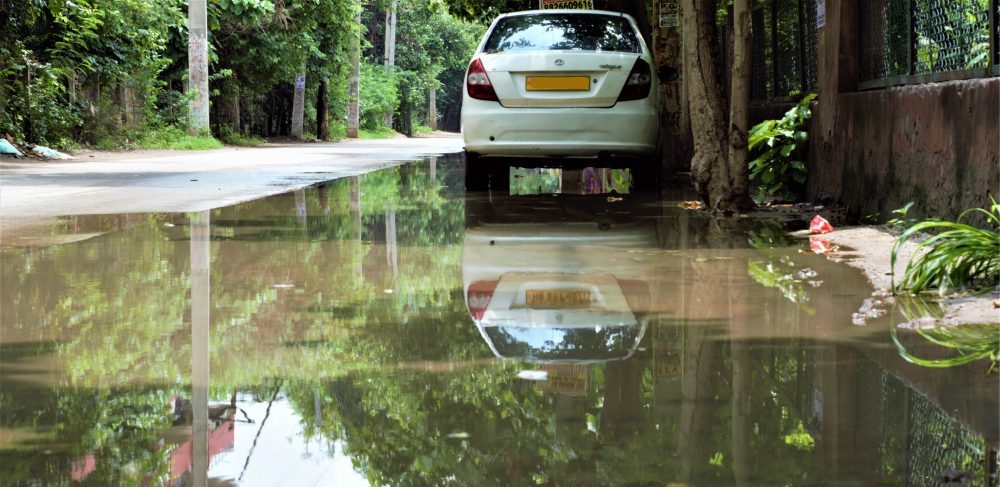
Avoid passing through standing water

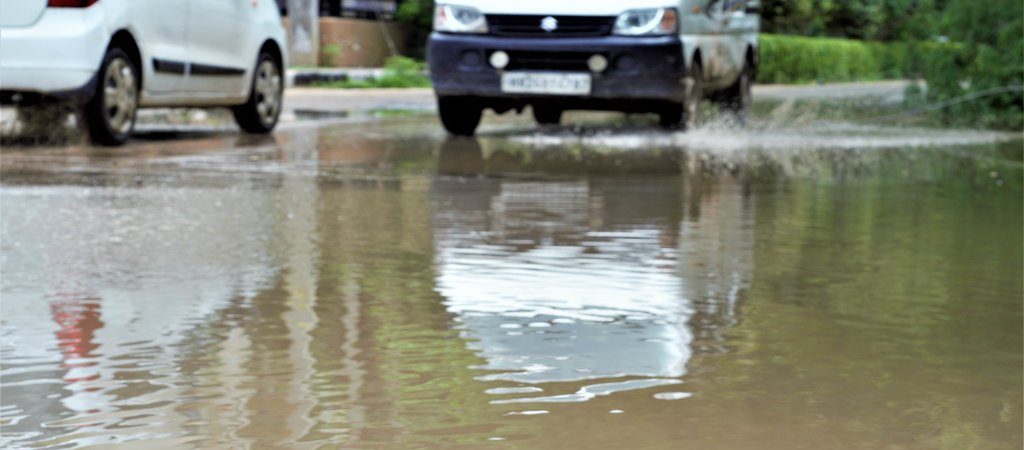
Car driving through a flooded road Most of have probably made this mistake at some point or the other. One can never know how deep the standing water can be and still go-ahead anyway, that’s where it goes wrong. Your car can stall mid-way and you probably won’t have a way out then. Also, water can seep into the cabin if your car stranded in the water for too long, leading to a lot of damage.
Hence one should always avoid making theirs through standing water and instead find an alternative route
-
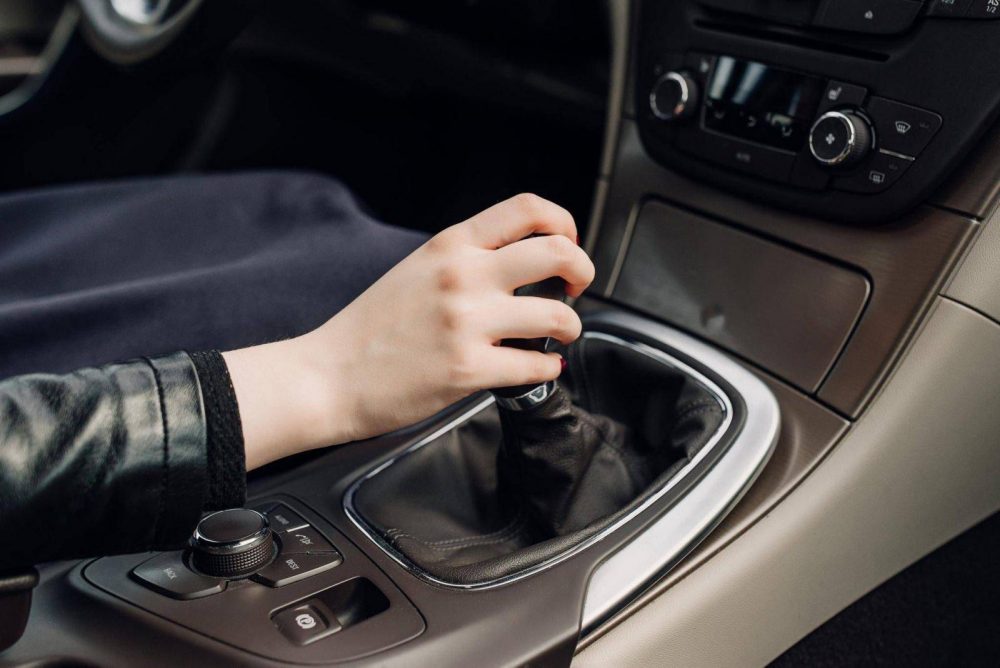
Keep your car in 1st gear and keep the revs high

Use the first geat when wading through water In case you are not able to figure an alternate route and don’t have any other option but pass through the mini pond being made on the road then always keep your car in 1st gear. The benefit of keeping it in first gear and the revs up high is two-fold. One, it lets you keep your car steady at low speeds and have a strong grip on the car’s trajectory. Second, it allows you to drive at higher revs which helps in preventing water coming in from the exhaust.
Must Read: 10 Most Common Car Problems and their Easy Solutions
-
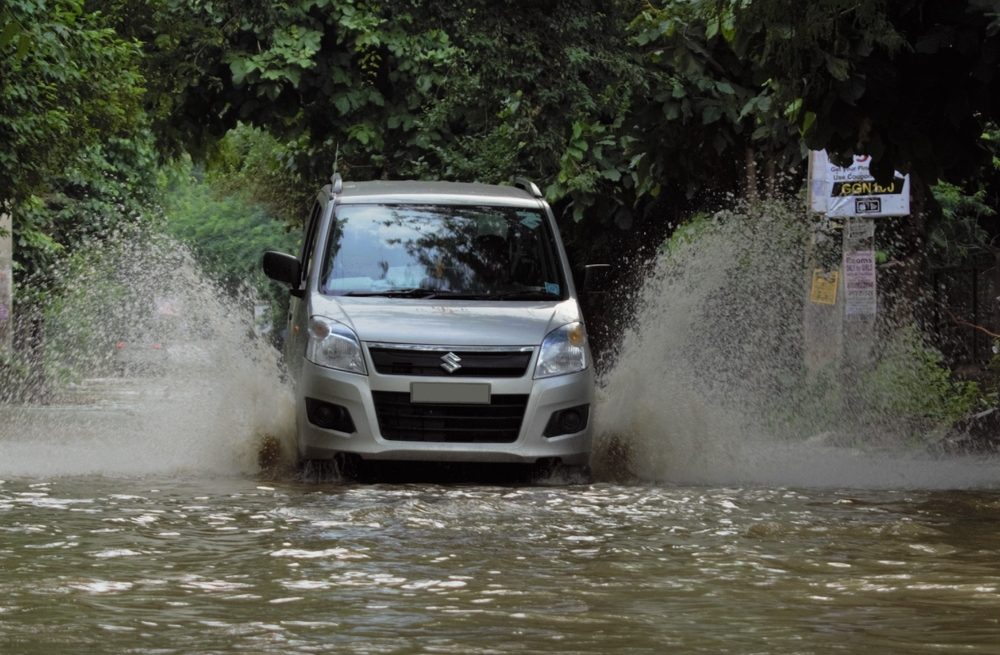
Drive through the higher part of the road

WagonR driving through water If possible, try and get out of the car and assess the road conditions before going you decide to jump into the standing water. Look for the highest part of the road and take your car ahead from there. This simply reduces the chances of your car getting caught up in the middle of the water.
-
If your car stops in the middle of the water

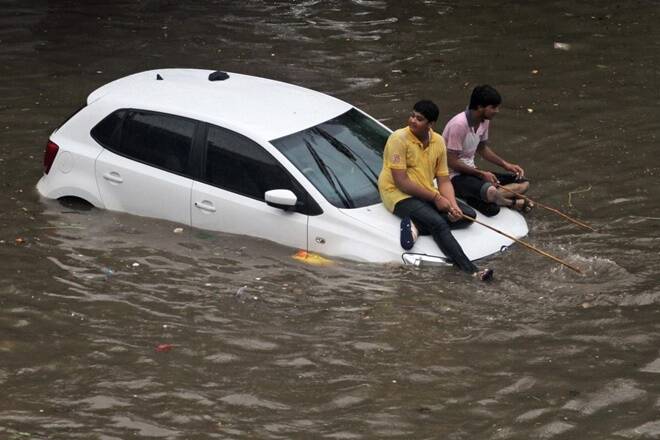
Volkswagen Polo submerged in Mumbai rains This one is not exactly “how to protect your car” and is rather how to protect yourself. If your car gets stuck in the flood and the water is gradually creeping up then it is best to abandon the car and climb out of it. The car is not worth more than your life.
-
Starting your car back
If your car stalls in the middle of the water then either turn it back on as fast as you can or don’t do it at all. You should be doing it quickly because you need to crank up the engine before the water tries to seep in. If you get too late and the water level is above the exhaust pipe, in that case starting the car may lead to the worst thing possible, ‘Hydrolock’.
Hydrolock is when water enters into the cylinder block, damaging the spark plugs, valves, etc and probably making the car incapable to combust fuel.
Preventing your car from flood damage while it is parked
-
Park your car on higher grounds

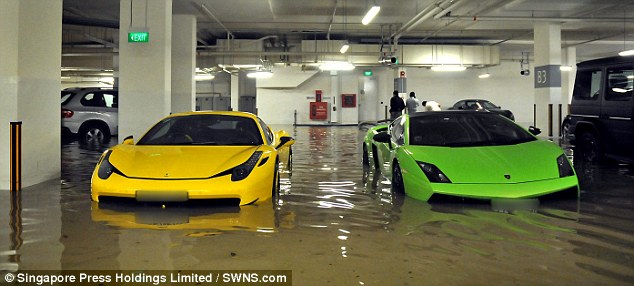
Lamborghini Gallardo and Ferrari 458 Italia submerged in flood water Prevention is better than cure and this point is the best example of that. If you have access to an elevated parking spot, then don’t think twice before pulling up there. This is especially necessary if you own a sedan or a hatchback as they are comparatively lower.
Position your car on higher grounds during a rainstorm or flood reduces the chance of water making its way into the vehicle and damaging the electronics and mechanical parts.
-
Pull up the windows
Make sure that your car’s all four windows are closed properly. There shouldn’t be even a slightest of a gap as this could allow water into the cabin and that can turn out to the scariest thing that can happen to your car.
-
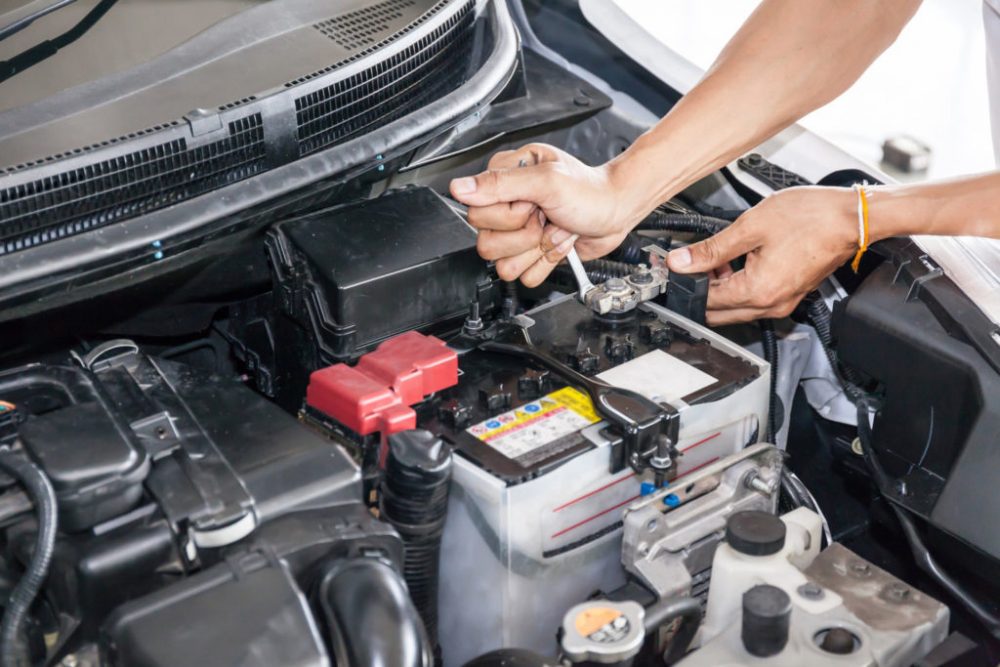
Disconnect the batteries

Car Battery In case you are lucky enough to suspect a flood or dense waterlogging then it is advised to unplug your car batteries priorly. This will help in protecting all the electricals of your car in case it gets submerged.
Suggested: 10 Common Car Noises and their Diagnosis | Explained By Experts
How to protect your car after it’s been in a flood
-
Do not restart the car
Once you get your car out, do not make the mistake of starting it up right away. One needs to make sure that internals of all the mechanical parts of the car has dried up completely.
-
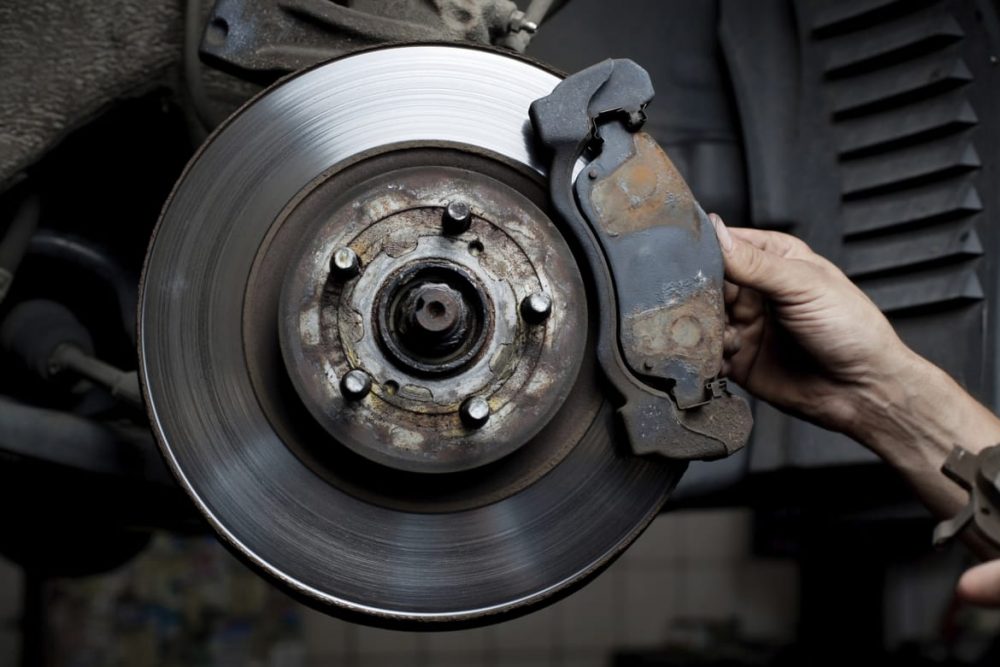
Get the brakes dried up
Car Disc Brakes Being submerged in the water, your car’s tyres were the most exposed and that includes the brakes. The brakes of your car need to be completely dry in order to work properly. Hence you need to make sure there’s not even a little drop of water left on the brake discs.
-
Drying up the interiors

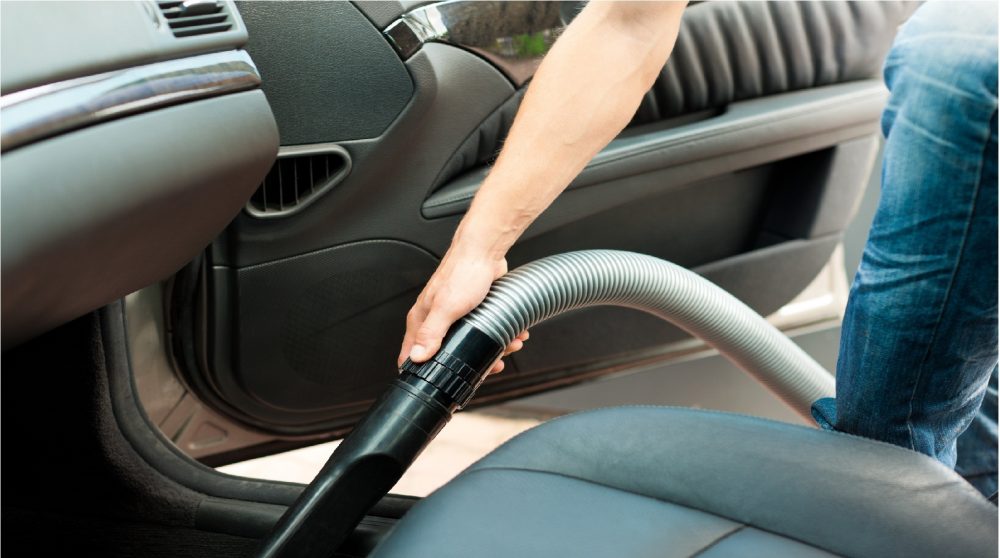
Cleaning the interior If unfortunately, the water made it’s into the cabin then after getting it all out make sure to dry the cabin up properly. Open all four doors of the car and also the boot lid and the bonnet and place the car in direct sun and let the sunlight do its job. You can also use portable fans and heaters to dry the upholstery.
Use a wet/dry vacuum cleaner to soak up puddles of water from the insides of your car.
-
Replacing all the fluids of the car
 It’s very likely that the water also got mixed with the fluids in your car. Like into the engine oil, brake oil, transmission fluid, etc. Hence it is best to drain the existing fluids and replace them with new ones before starting the car.
 -
Replacing the Air Filter
Similarly, your car’s air filter also would’ve soaked up with water. And it critically advised stopping using your car when this happens. Failing which it would let moisture into the combustion chamber and disrupt the whole combustion process. Hence, it is necessary to swap out the old filter and use an all-new one.
-
Get your car serviced at GoMechanic

Trust GoMechanic for car recovery post water damage Apart from replacing all the fluids and the filter, one should also get their car serviced comprehensively. And what better than GoMechanic! We offer bumper-to-bumper comprehensive car inspection for rust and water damage. GoMechanic specialises in post-flood-damage car repair and recovery.
Frequently Asked Questions
How to protect a car during floods?
Floods are unpredictable. If you see water rising, move your car to higher ground. It is simple, no low spots, no parking near water. Waterproof covers help. Keep windows up. And, the battery? Disconnect it. No chance of electrical issues. Protecting your car doesn’t take much—just a few quick steps.
Is it safe to drive a car in a flood?
Safe to drive through floodwaters? Never. Even a few inches of water can be trouble. Engine could flood. Brakes could fail. What’s under the water? Who knows. Debris, downed wires—hidden. You don’t want to find out the hard way. Turn around. Don’t risk it. Your car’s safety, your safety—it’s just not worth it.
How do I stop my engine from flooding?
Flooding an engine? Happens when things go wrong. Don’t rev it up. Don’t force it. Give it air. Don’t crank too much. That only makes it worse. If it stalls, don’t panic. Let it sit. Wait. Excess fuel evaporates. After a few minutes, you’re good. Restart. Engine saved. Simple steps—big difference.
Can water damage transmission?
Water in the transmission? Not good. Rust, corrosion—damage. Internal parts can be seized. Transmission fluid gets contaminated. Performance drops. Shifting becomes rough. Not a situation you want. If your car gets submerged, inspect it immediately. Replace fluids. Don’t wait. It’s costly to fix. A few steps now can save you major repairs later.
Up Next! Decoding VIN (Vehicle Identification Number) | Explained in Detail
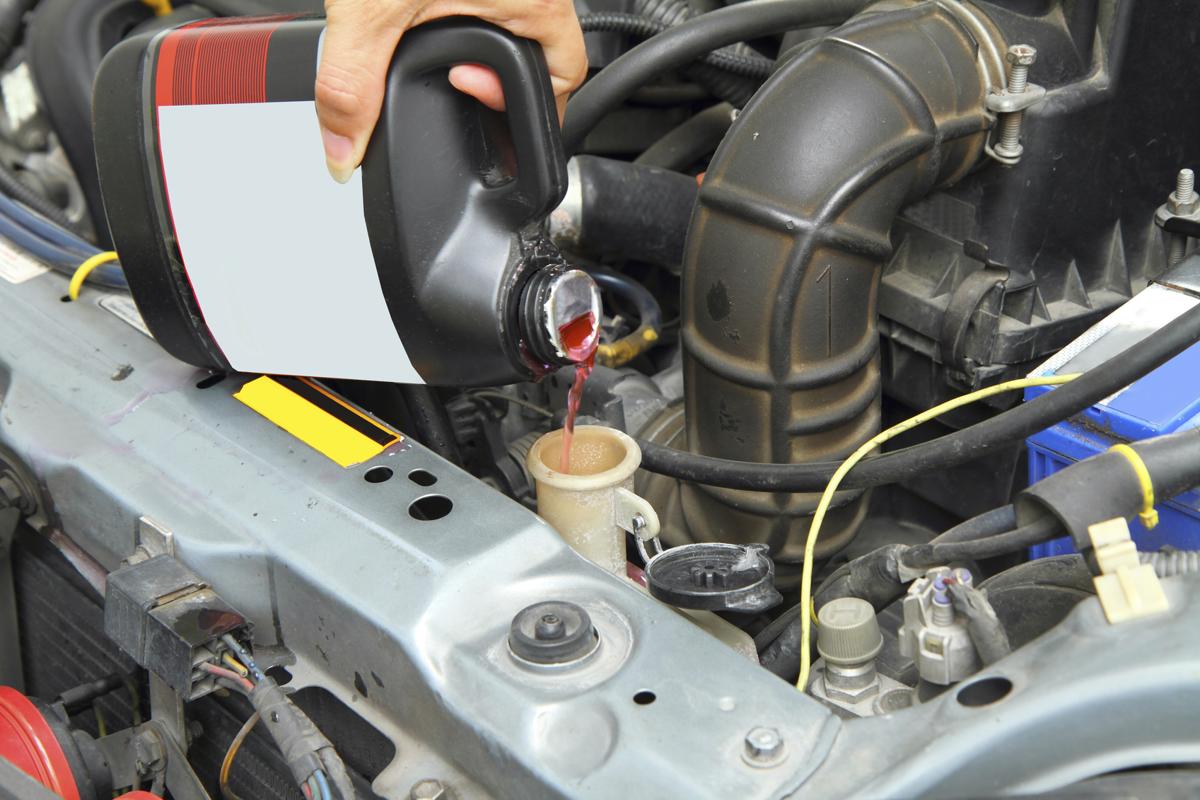 It’s very likely that the water also got mixed with the fluids in your car. Like into the engine oil, brake oil, transmission fluid, etc. Hence it is best to drain the existing fluids and replace them with new ones before starting the car.
FAQs
1. How to protect a car from flood water?
The first thing to know is where you park the car; always try to leave it on higher ground when heavy rain or flood alerts are expected. Avoid the basement at all costs, as parking is risky because water usually collects there first. If the water level around the car starts rising, move it early before it reaches the engine area. And never try starting the car after it has been underwater, that can damage the engine badly.
2. Is it better to cover a car or leave it uncovered?
In most situations, covering the car is better, a good cover protects the paint from rain, dust, bird droppings and strong sunlight. Over time these things slowly damage the exterior surface. But the cover should be breathable. If moisture gets trapped underneath for long time, it can affect the paint and sometimes create mildew spots in humid weather.
3. How to protect a car from heavy rain?
Start with basic maintenance check. For example, wiper blades should be in proper condition so visibility stays clear during rainfall. Also, check the rubber seals around doors and windows as well, they stop water entering the cabin, as it also helps to keep drainage channels near the windshield clean. When parking, avoid low areas because rain water tends to collect there quickly.
4. Why do Japanese cars not rust?
Japanese manufacturers spend a lot of effort on corrosion protection. Steel panels are treated with protective coatings before paint is applied. Many cars also use galvanised metal which resists rust better over time. Designers also add drainage points inside doors and body panels so trapped water can escape.
5. Which type of car cover is best?
A multi-layer car cover usually works the best. It should be waterproof so rain cannot pass through, but also breathable so moisture doesn’t stay trapped inside. Soft inner lining is important too because it reduces chances of small scratches on the paint. Always pick a cover made for your specific car model. A proper fitting cover protects the vehicle much better.



[…] The most obvious of these is to avoid passing through standing water, primarily because there’s no accurate way of telling how deep this runs or whether this has the potential to leak into your cabin if immersed for an extended period of time. […]