






The suspension is something everyone has heard about and are aware that they are one of the important components of a vehicle. So much so, it is responsible for how your car or motorcycle handles. With the car suspension already clear, let’s focus on the motorcycle front suspension.
USD Full Form
USD stands for Upside-Down suspension, a type of front fork commonly used in motorcycles. In this design, the thicker and stronger part of the fork is placed at the top, near the handlebars, while the thinner part stays at the bottom near the wheel. This setup gives the front end more strength and reduces flex when riding on rough roads or braking hard. Because the heavier portion is mounted higher, it improves stability and helps the bike stay more controlled during turns. USD forks are often used in sports bikes and premium motorcycles because they offer better performance, sharper handling, and a more planted feel on the road. Although they are more expensive to make and maintain than normal telescopic forks, riders who enjoy spirited or long-distance riding appreciate their advantages. Overall, USD suspension provides a stronger, more stable, and performance-focused front-end design for modern bikes.
USD forks vs telescopic forks work in the same basic way, but they are built differently and feel different on the road. USD forks place the stronger, thicker tubes at the top, giving better stability and less flex during braking. Telescopic forks have a simpler design, cost less, and are easier to maintain. USD forks are preferred for sporty riding because they improve handling and cornering feel. Telescopic forks, on the other hand, are ideal for daily use and rough roads thanks to their comfort and low repair costs. Each type has its own benefits depending on riding style and budget.

Here is more about car suspension.
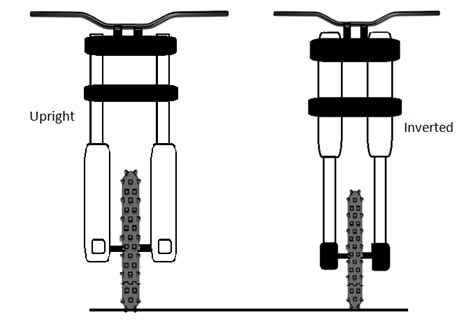
A motorcycle, depending upon its use gets two types of suspension in front:
- Telescopic Suspension
- Up-Side Down Suspension
Motorcycle Suspension
Before diving into the types let’s look at how a motorcycle suspension works. The two main components of a front suspension system are a spring and a damper.
- It is the spring that is responsible for the amount of compression.
- On the contrary, the velocity with which the whole system reacts is governed by the damper. The dampers are filled with oil and provide resistance when compressed.
- Fun Fact: The suspension systems, be it USD or conventional telescopic both have the same components. Now the question comes, why choose USD over telescopic or vice versa.
Telescopic Front Suspension
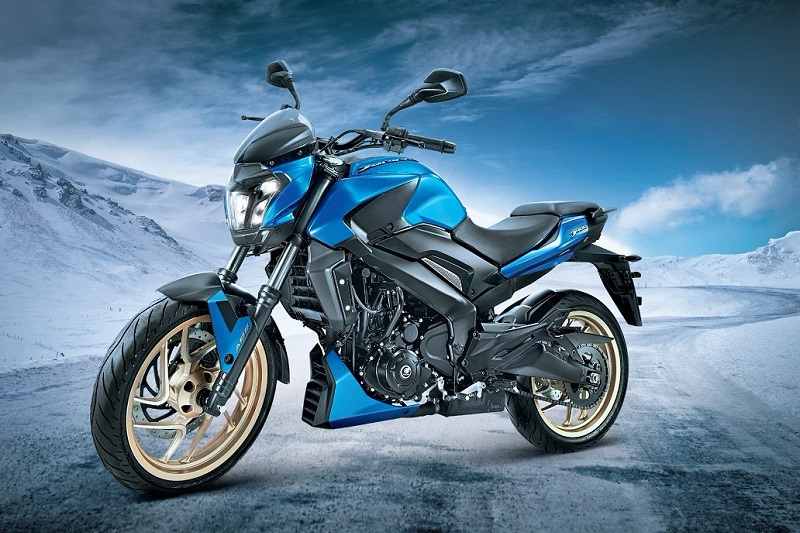
Most of the motorcycles on the Indian roads come equip with telescopic suspension. These are mainly the commuter motorcycle.
- A telescopic suspension consists of two parts that house all the mechanisms, an outer tube and inner tube.
- The system consists of spring and a damper filled with fork oil that provides resistance when they move.
- In this type of suspension, the slider bar of the inner tube is attached to the triple clamp. Well, a triple clamp is a part on which the handlebars are mounted.
- That said, the outer tube or primary barrel is mounted on the lower side, on the wheel.
- This is where the telescopic suspension’s flaw lies. That is, most of the weight of the suspension system is on the wheel. This makes it difficult to change directions or basically steer.
Why they are used then?
- The telescopic suspension is cheaper to design and manufacture.
- This conventional suspension is easy to repair if anything goes south with it.
So, Usually, the commuter motorcycle uses a telescopic suspension as they are not meant to be driven hard. Nor they have to suddenly change direction at high speed. Also, due to the lower cost telescopic suspension makes more sense at a low price. This suspension hampers the performance of high-end motorcycles.
Up-Side Down Suspension
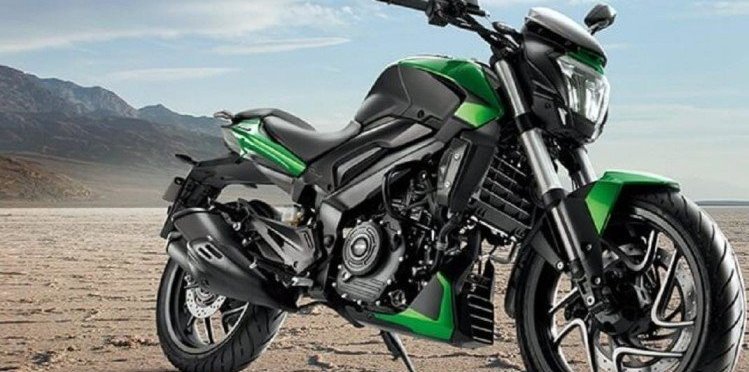
Just like the former suspension type, this too has an inner tube or slider bar and outer tube or a primary barrel.
- But the difference lies in their placement. In USD suspension, the sliding tube is on the lower side on the wheel of the motorcycle.
- The primary barrel is attached to the triple clamp. This allows the triple clamp to take most of the suspension weight. It is this mount that takes most of the suspension system’s weight.
- This arrangement makes the motorcycle nimble and easy to manoeuvre. Also, it allows agile and crisp handling from the motorcycle.
Why use USD Forks?
This type of suspension is restricted to only high end and performance motorcycles. In the end, fast motorcycles are all about cornering speeds and lightning-fast direction changes. So, it is the USD fork that allows the rider to extract the most out of the motorcycle without any compromise in performance. This comes at a cost.
- Exactly COST. USD front forks are way more expensive than conventional telescopic suspension.
- However, these more advanced USD forks allow more bump absorption that makes the suspension more prone to damage.
So, which one is better you may ask?
Well, for the most part, it all depends on what you want from the motorcycle. If it is a fast motorcycle USD is the way to go but if the commute and value of money is the preference, the telescopic suspension is the right choice. After all, both are good in their own way.
Watch: Airmatic Suspension Of Mercedes-Benz ML 350 Being Converted To Coilovers
Also, Read The “By-Wire” System Explained (Drive, Brake, Steer, Shift, Throttle)
FAQs
1. What is the benefit of USD suspension?
Upside-down forks make the front end more rigid, reduce unsprung weight at the wheel, and give you better control during hard braking and aggressive cornering.
2. Which is the best suspension brand?
For cars, top names like Bilstein, Fox, and Old Man Emu are common picks for performance and reliability. For two-wheelers, on the other hand, KYB and Showa are well known across the industry.
3. Is USD better than telescopic suspension?
Upside-down suspension is better for rough or high-end riding, as it provides better handling with more stability, whereas Telescopic suspensions are less costly, simple to service, and ideal for regular use, but are not safe at high speed.
4. Which suspension is preferable, USD or telescopic?
This is a matter of preference; USD (upside-down) suspension is more suitable in performance riding – it can be more rigid, and the front-end control is improved. Telescopic suspension is less complicated, less expensive and ideal for daily commuting. Usd is usually the preferred option when one wants to do sporty or aggressive riding; when doing normal riding, telescopic is quite convenient.
5. What are the advantages of the USD suspension?
The inverted design of USD forks decreases the unsprung weight and enhances torsional stiffness due to inverted design, which enhances handling and cornering accuracy. They also have better resistance to flex when under heavy braking. This creates a more stable feeling to the bike and provides more prominent feedback.
6. Is a telescopic suspension good?
Yes – telescopic suspension is quite good in everyday use. It is simple with a proven design, which is cheap to produce and maintain. In commuting or the city, or just an everyday street bike, it is a dependable, comfortable ride that does not need to be as expensive or complicated as high-performance suspensions.
7. Are USD forks better to handle?
Absolutely. USD forks enhance the handling by making them stiffer and tougher, particularly when braking or taking fast corners. The heavier weight is positioned higher and nearer to the triple clamp, causing less flex, thus the rider can have better front-end control and steer response.


