






Introduction
Here we have listed the most common 5 Types Of Car Suspension Available In India! The suspension of a car is one of the most important components in its design. It allows the vehicle to absorb bumps, vibrations, and impacts so that it can continue with its journey without any problems. There are many types of suspension available on the market today but not all of them are suitable for your car. So what kinds do you need? Here we will discuss 5 Types Of Car Suspension Available In India that are commonly used in India along with their advantages and disadvantages:

- Double Wishbone Suspension
- Non-Independent Suspension
- Independent Suspension
- Leaf Spring Suspension
- Trailing Arm Suspension
- Multi-Link Suspension
- McPherson Strut and Torsion Beam Axle
- Air Suspension
Double Wishbone Suspension
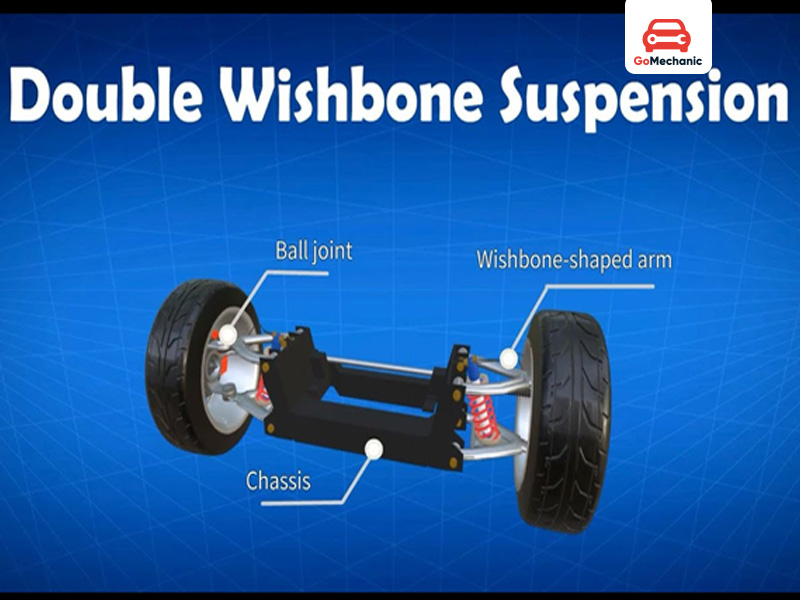
The double wishbone suspension is a type of suspension where the wheels are mounted on two arms. This type of suspension is used in sports cars and sports coupes, as well as some trucks and SUVs. It’s also one of the lightest suspensions available on the market today, making it ideal for high-performance vehicles that need to carry more weight than other types of suspensions can handle. Double wishbone suspensions are the most common type of suspension used in cars. They are also known as McPherson axles or double A-arm suspensions. It is usually found on the front and back of a vehicle, but can also be found on the sides of it.
This type of suspension has many advantages over other types like coil-over shocks or airbags since it offers great handling, stability, and control at high speeds because it has an extremely low center of gravity making it very easy to corner properly without losing traction on turns or jumps as you would experience with an airbag system which may cause wheel hop if you’re not careful enough when driving your car fast enough down hills so you don’t lose control while going downhill towards cliff edges where they might not have been built yet again this time around just imagine what would happen then…
Non-Independent Suspension

In this type of suspension, there is no individuality. In a non-independent suspension, both wheels share a fate. A solid beam connects them, moving in tandem. No solitude, no separate stories. When one wheel bumps or dips, the other reacts. A rigid axle transfers motion directly. It sounds limiting, but for heavy-duty tasks, it is the simplicity that shines.
Non-independent suspensions thrive under heavy loads. Trucks, buses, and even some rugged SUVs rely on this steadfast system to carry their weight over the hardest terrains.
Advantages
- Handles weight with confidence
- Durable on rough roads
- Easy to maintain due to fewer components
Limitations
Comfort takes a hit, and cornering lacks finesse. But it gets the job done without breaking down or breaking apart.
Multi-Link Suspension
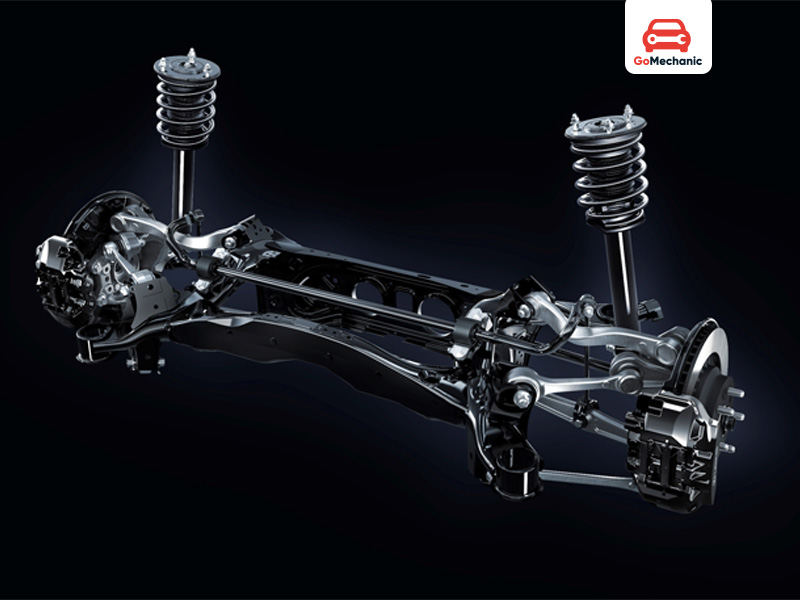
Multi-link suspension is a type of car suspension that connects each wheel to a separate arm. This type of suspension allows for better control and handling, which makes it ideal for sports cars and luxury cars. Multi-link suspensions can be found on most modern automobiles, including:
- Sports cars (for example, the Ford Mustang GT)
- Luxury vehicles (such as BMW’s 7 Series)
Leaf Spring Suspension
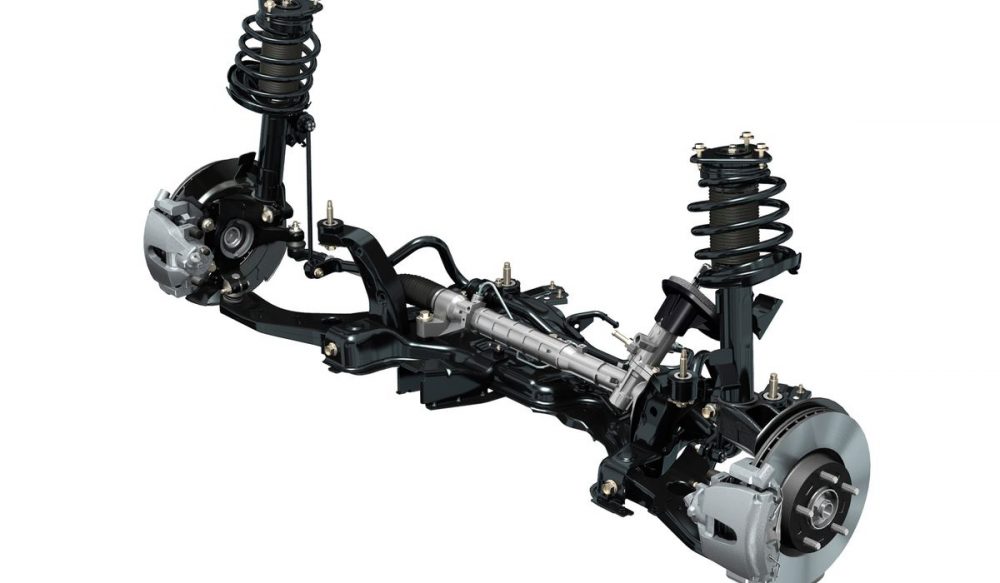
A leaf spring suspension is a straightforward arrangement of metal strips called leaves. Each strip bends and flexes, absorbing shocks and vibrations from the road. The leaves are stacked, clamped, and held together at the centre. They work together to spread the load and manage impacts from uneven surfaces. The design is simple, almost ancient, but its utility endures.
This system stands firm beneath heavyweights like trucks and buses, carrying their burdens over endless miles. In India, it sneaks into the rear axle of some cars too, steadying their journeys over uneven roads. Not the most refined, not the most modern, but undeniably reliable. Leaf springs do their job without fanfare. They endure.
Advantages
- Rugged and reliable under heavy loads
- Low maintenance, withstanding rough conditions
- Keeps the vehicle stable, especially for larger bodies like trucks and buses
Limitations
The ride can feel stiff, and comfort takes a backseat. But for heavy loads, it rarely lets you down.
Trailing Arm Suspension
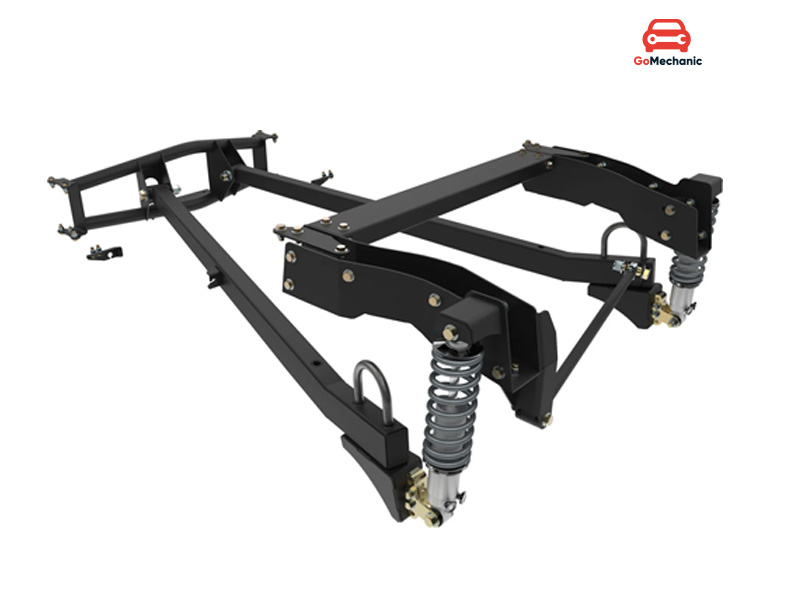
The trailing arm suspension feels like an artist’s sketch come to life. This automotive suspension type is minimalistic. A single, solid arm reaches backwards from the frame, cradling the wheel hub, letting it rise and fall with every groove of the road. It pivots near the front of the wheel, its simple geometry designed to manage the chaos of motion.
Found mostly in the rear of vehicles, this system works quietly, independently, with an almost understated grace. It does not boast complex linkages or multiple moving parts. Instead, it focuses on one purpose. Control. On rough surfaces, the trailing arm holds its ground, making sure the wheel responds smoothly, and faithfully. It has no time for pretensions, only the road.
Advantages
- Smooth handling of undulating roads
- Simple design with fewer moving parts
- Reduces vibrations transferring to the car’s body
Limitations
While effective, it lacks the precision of more complex independent suspension systems. The design prioritizes basic functionality.
Related: How to Maintain Your Car’s Suspension System for a Smooth Ride
Different suspensions come with different driving experience
Different suspensions come with different driving experiences. It is used in racing cars and it gives a better ride quality than other suspensions. It’s also used in sports cars, high-performance cars, and sedans.
Our Take
We have covered a lot of details about the 5 Types Of Car Suspension Available In India. We hope that you have gained some knowledge about the different features and advantages each type provides for your car. If you are looking for a vehicle, then it is important that you know what type of suspension is best suited to fit your driving needs.
FAQs
1. What does suspension do in a car?
Suspension acts as a shock absorber between the road and the car, while maintaining the car’s balance and absorbing vibrations on rough roads.
2. Is suspension expensive to fix?
Yes, suspension work can be expensive, but not with GoMechanics, as we provide 40% off on services compared to other authorised dealerships. They also give warranty on their service for up to 6 months.
3. Can suspension be repaired?
Yes, Suspension can be repaired, as it has some components that can wear out and be damaged with regular use. These parts can be repaired in the service, which enhances car performance.
4. What happens if a car suspension is bad?
If the car suspension is bad, then one can face uneven shocks, difficulty in braking, instability in cars, and steering problems. All this can lead to uncertainty in the future.
5. How do I check my suspension?
You can check the suspension by bounce test from each side that it is bouncing back smoothly or not. If the car bounces back smoothly, the car’s suspension is good, and if it sticks or suddenly bounces back, then there is a problem in the suspension.
6. What are the 4 types of suspension systems?
You’ve got dependent, independent, semi-independent, and hydropneumatic suspension — dependent ones link both wheels, independent lets them move freely, semi-independent sits somewhere in between, and hydropneumatic is more advanced and usually in luxury cars.
7. What are the 4 types of suspension springs?
There are coil springs, leaf springs, torsion bars, and air springs — coil is most common, leaf is for heavier loads, torsion bars twist to absorb shocks, and air springs are super smooth but mostly found in luxury cars.
8. What is the best suspension for daily driving?
Coil spring-based independent suspension is the best for daily use since it’s smooth, reliable, and handles city roads and bumps well without needing much attention.
9. Which car suspension is best in India?
Independent suspension with McPherson struts in the front and torsion beam or multi-link at the rear works best here because our roads are rough, and this setup gives a good mix of comfort, handling, and low maintenance.

