






Upon declaration of Euro Seven norms, all the mass-manufactured cars will now have to comply with a new set of rules from July 1, 2025, under 7 norms. India is getting ready for Bharat Stage 7 which will be replacing the previous Bharat Stage 6, one of the standout norms in BS7 is On Board Monitoring which is meant to record and analyze emissions from a running vehicle. Nothing is official yet, but BS7 will be based on Euro Seven norms similar to how Bs6 was based on Euro Six norms.

History of Emission Norms in India
Vehicle Emission is one of the leading reasons behind pollution as we all know and there are continuous efforts going on behind the scenes to decrease vehicle emissions. As a study conducted by an organization in Delhi on CO2 emission, it is expected that the emission of CO2 on Indian roads is likely to reach 1212 million tonnes by 2035 from 208 million tonnes in 2005.
The automobile industry is not new to this fact and constant work is being done in order to control emissions.
To understand, the progress which has been made let’s look at the history of Emission Norms in India:
| Year/Period | Norms |
| 1991 | Mass emission regulations for gasoline-powered automobiles were introduced. |
| 1992 | Mass emission norms were introduced for diesel vehicles |
| April 1995 | Introduced the mandatory installation of catalytic converters in new petrol cars in Delhi, Calcutta, Mumbai, and Chennai. |
| 2000 | Adapted the Euro 1 equivalent “India 2000” norms for passenger and commercial vehicles; tight emissions norms for two-wheelers. |
| 2001 | Bharat Stage 2 norms same as Euro were implemented in Delhi, Mumbai, Chennai, and Kolkata. |
| August 2002 | First Auto Fuel Policy announced, outlining the Emission and Fuel Roadmap up to 2010. |
| April 2005 | Commission of BS3 norms in 13 metro cities |
| April 2010 | Bharat Stage 4 norms were implemented in 13 metro cities; Bharat Stage 3I norms were followed by the rest of the country. |
| October 2014 | Bharat Stage IV norms were introduced to 20 additional cities. |
| 2013 (Document Date) | Auto Fuel Policy 2025 submitted to the Ministry of Petroleum & Natural Gas, outlining a roadmap up to 2025. |
| Proposed 2017 | Planning for national implementation of BS IV norms. |
| Proposed 2020/2021 | Planned implementation of BS V emission norms. |
| Planned 2024 (Revision to 2020) | Because of the increasing pollution levels in Delhi NCR, the BS VI standards were introduced in 2020 instead of 2024, jumping ahead of the BS V standards. |
Additional Standards to be Introduced
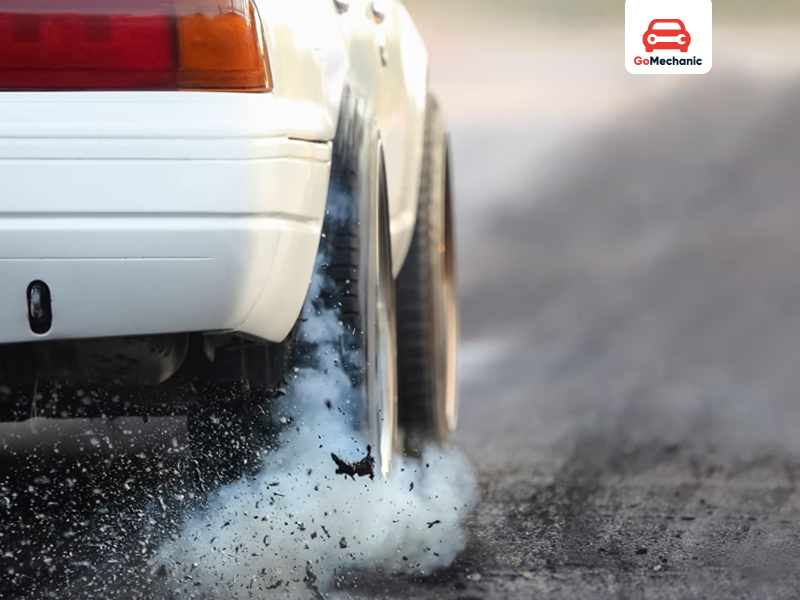
The Bharat Stage 7 norms establish a certain set of rules for emission standard that applies to all kinds of cars, vans, buses, etc. These new rules are independent of fuel type and technology, with the same restrictions being applied to petrol cars, diesel cars, electric drive trains, and all other types of cars.
They will help to control the following:
- Pollution from Brakes and Tires – Vehicles release microplastics and brake dust, which are harmful pollutants. BS7 norms will regulate and limit these pollutants.
- Monitoring Lifetime Emission – A key addition to BS7 was On Board Monitoring (OBM) which is meant to monitor’s a vehicle emission throughout its lifetime.
- Sensors for Emission Detection – Vehicles under BS7 norms will have specialized sensors to detect issues that cause increased pollution over time.
- Regulations for EVs – EVs and plug-in hybrids will undergo stringent testing for:
- Battery longevity.
- Charge-holding capacity over specific time periods and distances.
5. Overall standard – BS7 norms aim to control not only tailpipe emissions but also non-exhaust pollutants like microplastics and brake dust.
Challenges to BS7
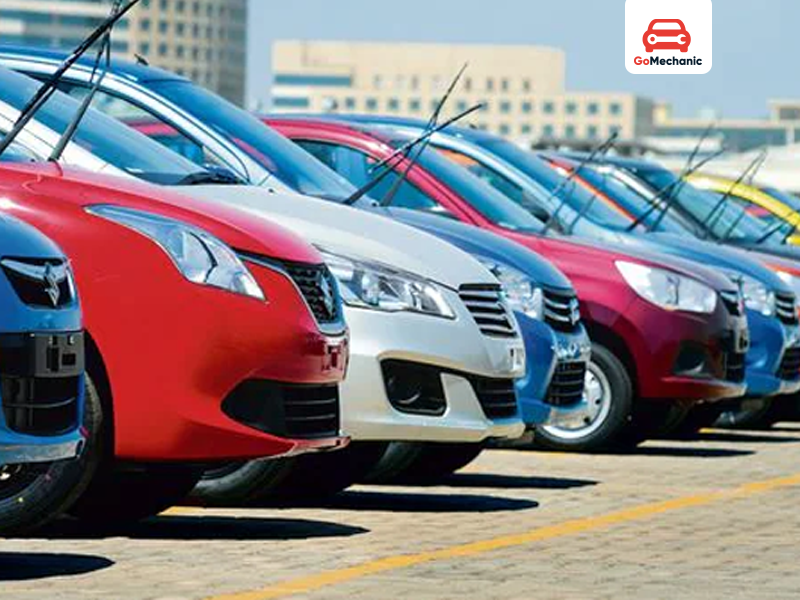
Implementation of BS7 norms is necessary for controlling vehicular emissions but it brings certain challenges for Manufactures and Buyers as well, which we will be discussing below:
- Higher Investment by Manufactures – With the new norms manufacturers will have to invest heavily to meet the new BS7 norms. The installation involves sensors, an advanced emission control system, etc.
- Higher Vehicle Cost for Buyers – With the heavy investment on the manufacturer’s part, the vehicle price will be higher for buyers as well.
- Time-taking upgrades – Upgrading cars to BS7 norms requires a significant amount of time, which may delay manufacturing causing non-availability
- Risk of Discontinuation – Vehicles that fail to meet BS7 norms might be discontinued, similar to what happened at the implementation phase of Bs6
- Impact on Market – The introduction of BS7 norms may lead to reduced model options and increased financial strain on both manufacturers and buyers.
Other’s Read –BH Number Plate: Everything you need to know
Bharat Stage 7 Vs Bharat Stage 6
| Aspect | BS6 | BS7 | |
| Emission Limits | Significant reduction in pollutants like NOx (70%) and PM (80%) compared to BS4. | Further reduced limits on NOx, HC, and PM, aiming for near-zero emissions. | |
| Technology requirement | a. Diesel Particulate Filters (DPF)
b. Selective Catalytic Reduction (SCR) c. Advanced OBD systems. |
a. Enhanced SCR
b. Second-generation RDE compliance c. Possible Hybrid or electric integration. |
|
| Testing Method | Real Driving Emission (RDE) testing was introduced in BS6 Phase 2 for diesel engines. | More robust RDE testing and on-road emissions monitoring for stricter compliance. | |
| Fuel Quality | Requires ultra-low sulfur fuel with a maximum of 10 ppm sulfur content. | Likely to maintain ultra-low sulfur fuel standards while emphasizing alternative fuels. | |
| Fuel Efficiency | Improved compared to BS4 but at higher costs due to advanced emission systems. | Expected to further improve efficiency but with increased production and maintenance costs. | |
| Vehicle cost | Increased vehicle prices due to the implementation of new emission control systems. | Further price hikes are anticipated owing to advanced and costlier technologies. | |
| Environmental Impact | Significant reduction in air pollution compared to BS4 norms. | Aims for even cleaner air and aligns with global efforts to combat climate change. | |
| Vehicle Discontinuation | Some models were discontinued due to the inability to comply with BS6 norms. | More models may face discontinuation if upgrading is not feasible. |
Read this as well – Bharat Stage 6 (BS6) Explained: A Complete India’s Latest Emission Norms
When will BS7 be Introduced?

There is currently no official announcement or timeframe provided for the Bharat Stage 7 implementation in India. However, the automobile industry has been asked to prepare for the BS7 implementation. According to some reports, some car manufacturers have already started working on BS7-compliant changes.
FAQ’s
- What do BS7 norms aim to achieve?
BS7 norms aim to reduce vehicle emissions and improve air quality.
- What are On-Board Monitoring (OBM) systems?
OBM systems will track and analyze vehicle emissions throughout its lifetime.
- What changes will BS7 bring for vehicle sensors?
Vehicles will have advanced sensors to detect emission issues and improve compliance.
- Will BS7 norms be similar to Euro 7 standards?
Yes, BS7 norms will be based on Euro 7 standards, like how BS6 was based on Euro 6.
- Is BS7 coming in India?
Yes, India is preparing to roll out Bharat Stage 7 emission norms. The expected launch window is sometime in mid‑2025, with phased implementation across states through 2026–27.
- What is the Bharat Stage 7?
Bharat Stage 7 (BS7) is the next-gen emission standard modelled on Euro 7. It tightens limits on pollutants like NOx, PM, CO, and even brake and tyre dust. Real‑time emission tracking (OBM) and stricter EV battery standards are part of it too.
- Will BS7 ban diesel?
Not an outright ban. However, diesel cars must meet the same low NOx limits as petrol—around 60 mg/km. Many older or non‑compliant diesel models may be discontinued due to cost and complexity.
You might find this interesting – Sedan vs Hatchback: Comprehensive Guide to Pick the Right Ride for You


