






If you’re shopping for a compact car under ₹6 lakh, you’ve probably seen the Tata Tiago and the Renault KWID – affordable, stylish in their own way, and both designed for India’s busy roads. But when you inspect them, you’ll see they are very different in themselves. So, to give you a proper comparison, we analysed both cars in real time and gathered information related to both, and here’s what we found. And in this blog about Tata Tiago vs Renault KWID, we will break it down, from design to performance to long-term costs, and help you figure out which one suits your daily life better.
Detailed Comparison of Tata Tiago vs Renault KWID
1. Looks and Style
The KWID looks like a mini SUV. It sits high with 184 mm of ground clearance, gets roof rails, a chunky front grille, and even LED DRLs. It’s small in size but bold in design. You’ll see flashy colours like red, variants of white, blue, mustard, etc, great for someone who wants their car to stand out in the crowd.
Tiago has full LED headlamps and a nice shark-fin antenna that gives it a modern touch. It’s longer, wider than the KWID and comes with several colour options such as white, grey, variants of blue and copper. Inside, it’s got a classy black and grey dashboard with chrome detailing that gives it an upmarket vibe.
2. Engine and Mileage
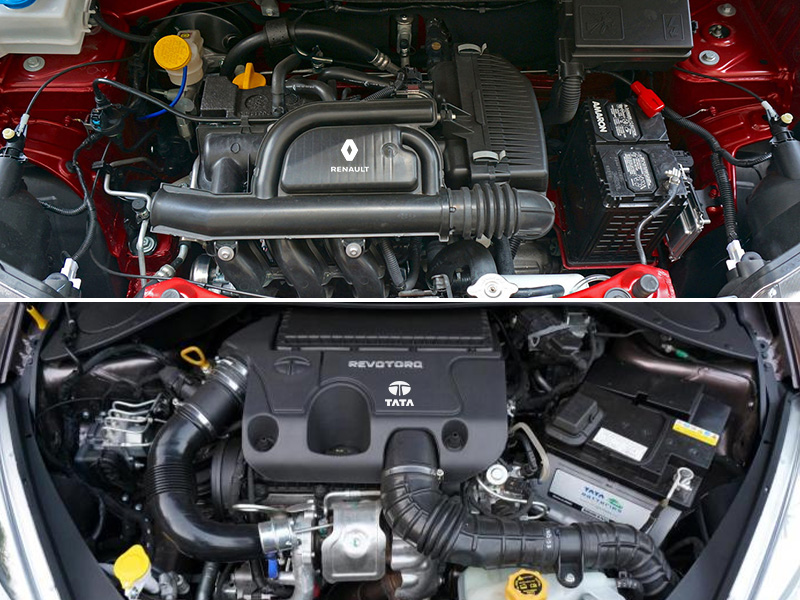
Let’s talk power and efficiency.
| Engine | Renault KWID Vs Tata Tiago | |
| Capacity | 999cc, 3-cylinder | 1199cc, 3-cylinder |
| Power | 67 bhp | 85 bhp |
| Torque | 91 Nm | 113 Nm |
| Gearbox | Manual / AMT | Manual / AMT |
KWID feels lighter and quicker in tight spaces. It’s super easy to steer in traffic, and the mileage is impressive – ARAI claims 22.3 kmpl, but in real-world use, expect around 18. Perfect for everyday short trips or first-time drivers.
Tiago has more power. The engine pulls harder, especially when you go beyond 3000 rpm. If you’re into longer drives or want a car that feels stronger on highways, Tiago has the edge. And if you go for the CNG version, the savings are crazy good—over 26 km per kg.
3. Cabin & Features
KWID feels surprisingly spacious for its size. It’s easy to get in and out, and the boot space at 279 litres is more than Tiago’s 242 litres. But tall passengers may feel cramped in the back seats, especially if you’re over 5’10”.
Tiago feels more solid. It has better headroom and overall comfort. The rear seats also fold in a 60:40 split, which helps with extra luggage, but fitting three adults in the back might feel tight.
| Feature | Renault KWID Vs Tata Tiago | |
| Screen | 8-inch | 10.25-inch |
| AC | Manual | Automatic |
| Cluster | Fully Digital | Digital with more info |
| Extras | Roof rails, DRLs | Rear camera, cooled glovebox |
4. Infotainment & Tech Features
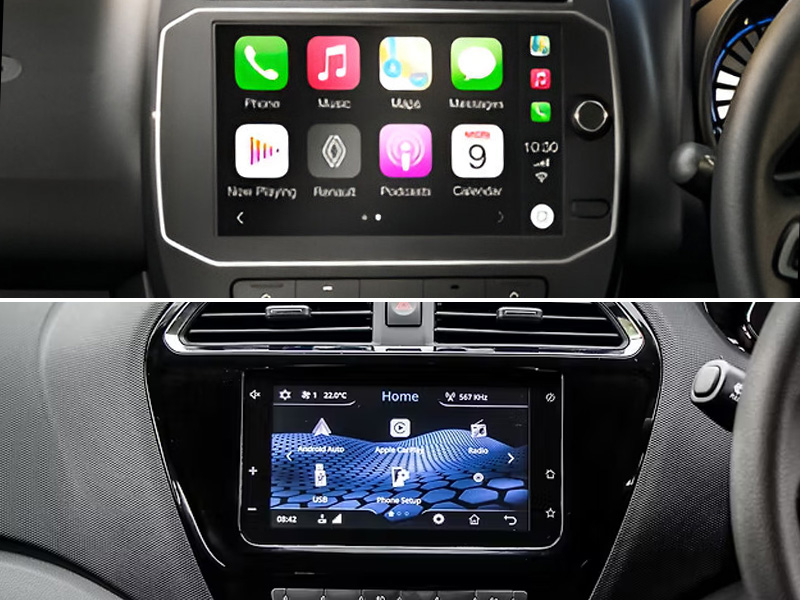
KWID comes with an 8-inch touchscreen infotainment system, the screen is bright and responsive, and supports Android Auto and Apple CarPlay. You get a decent two-speaker setup in the base trims, and the higher variants get four speakers. Also, features like a digital instrument cluster and theatre-dimming cabin lights add a touch of modern flair.
Now this is where Tiago starts to feel like a class above. The newer models come with a large 10.25-inch touchscreen in the top trims – bigger than what you’d find in some costlier cars. It runs smoothly, supports Android Auto and Apple CarPlay, and is placed high up on the dash for better visibility while driving. You also get steering-mounted controls, voice commands, and a four-speaker + four tweeter Harman audio system that offers much better sound quality than the KWID. And let’s not forget useful touches like a rear parking camera with dynamic guidelines, auto-folding ORVMs, and great headlamps – they may sound small, but they make everyday life easier.
5. Safety
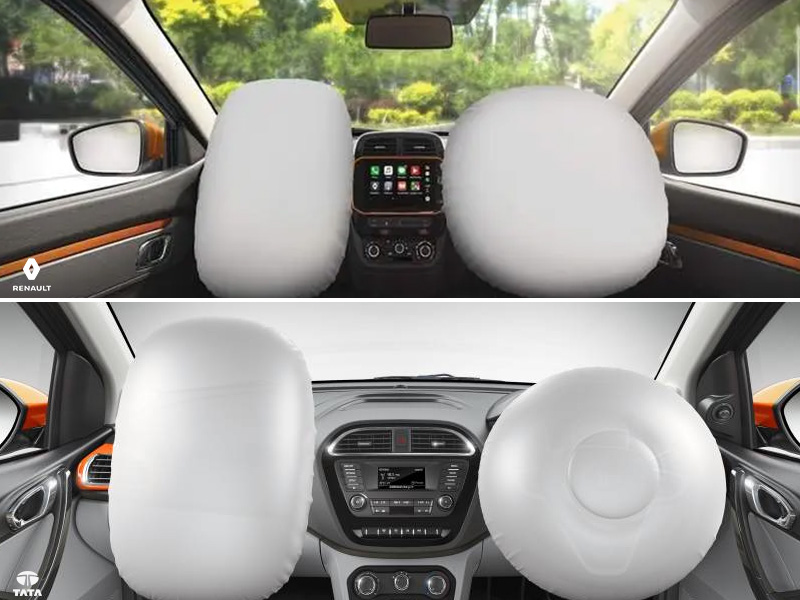
The Tiago has earned a 4-star safety rating from Global NCAP, which is one of the highest scores in this price range. It’s not just about airbags – it’s about the entire structure of the car. Tata uses high-strength steel in the Tiago’s body, which holds up better in a crash. You also get dual airbags, ABS with EBD, corner stability control, ISOFIX child seat mounts, and rear parking sensors as standard. Higher variants even come with a rear camera and day-night IRVM for better visibility. Tata has taken safety seriously here, and it shows.
The KWID, on the other hand, has only received a 1-star safety rating in crash tests, due to the instability of the car’s body shell, which caused it to score only 8.25 out of 17 in adult occupant protection and 10.91 out of 49 in child occupant protection. On the plus side, it was observed that the airbags provided effective protection to the neck and head of the driver.
Know more about Safety rating – Tata Tiago Safety Rating 2025: Is It the Safest Hatchback in India?
6. Running Costs
| Cost Factor | Renault KWID Vs Tata Tiago | |
| Starting Price | ₹4.70 lakh | ₹5.00 lakh |
| 5-Year Service Cost | ₹10,600 approx | ₹23,500 approx |
| Resale Value (5 years) | 55–60% | 60–65% |
| Yearly Insurance | ₹33,700 | ₹38,200 |
KWID keeps your wallet happy in the short term. It’s cheaper to buy, easier to maintain, and costs less to insure. But owners have mentioned rusting issues and brakes that need more frequent checks.
Tiago is more expensive to maintain, but you get better resale value, a larger service network with over 1,500 centres, and more trust in long-term reliability. The CNG variant can stretch your budget, though.
Which One’s Right for You – Renault KWID Vs Tata Tiago?
Pick the Renault KWID if:
- You’re on a tight budget
- You want good mileage
- You’re mostly driving in the city
- You love the mini SUV look
Pick the Tata Tiago if:
- You want a safe car for your family
- You care about better features and comfort
- You plan to keep the car for a long time
- You drive a lot and might consider CNG
You might find this interesting – Renault Upcoming Cars in India 2025
Final Summary on Renault KWID Vs Tata Tiago
| Category | Renault KWID Vs Tata Tiago | |
| Price Range | ₹4.70 – ₹6.45 lakh | ₹5.00 – ₹8.55 lakh |
| Engine Power | 67 bhp | 85 bhp |
| Mileage (Petrol) | Approximately 18 – 22 kmpl | Approximately 16 –19 kmpl |
| Boot Space | 279 litres | 242 litres |
| Touchscreen | 8-inch | 10.25-inch |
| Safety Rating | 1 Star (Global NCAP) | 4 Star (Global NCAP) |
| Best For | Budget buyers, city use | Safety-focused families, long-term users |
The Bottom Line
The KWID is stylish, light, and super budget-friendly, great for first-time buyers or anyone who wants a city car. But if you want something safer, stronger, and better equipped, the Tiago is worth it. So, if every rupee matters, the KWID does the job. But if you can stretch your budget a bit, go with the Tiago. In today’s world, safety is not something to compromise on and the Tiago offers peace of mind without losing the fun. Test drive both and see what feels right. But unless budget is your only concern, the Tiago is the smarter pick.
Others Read – Renault Most Expensive Car in India 2025: Renault Kiger
FAQ’s
- Why don’t people buy Renault KWID?
Some people avoid the KWID mainly because of its 1-star safety rating and lower build quality. It looks good and is affordable, but when it comes to long-term trust or highway confidence, many just don’t feel safe enough in it.
- Which car is better than the Tiago?
It depends on what you want, but in this segment, the Maruti Swift or Hyundai Grand i10 Nios might feel more premium and refined. They offer smoother engines, better after-sales support in some cities, and more brand recall, but Tiago still wins in terms of safety.
- What are the disadvantages of KWID?
The KWID struggles when it comes to safety and build quality. It’s great for city drives, but not ideal for highways. Taller people find the back seats tight, and there have been complaints about rust and brake issues over time.
- Is KWID’s resale value good or bad?
KWID’s resale value is okay but not great. You might get around 55–60% of its original price after 5 years if it’s well maintained, but the lower safety rating and rust issues pull down its demand in the used car market a bit.
- What is the weakness of Tata Tiago?
Tiago’s engine feels a bit noisy, especially when you increase the speed. The backseat isn’t big enough for three adults, and its service cost is higher than entry-level hatchbacks like the KWID. But other than that, it holds up well overall.
Want to Compare More Cars? Read these:
- Tesla Model Y vs Kia EV6: Which is Better?
- Hyundai Creta vs Toyota Hyryder – SUV Showdown 2025
- Volkswagen Virtus vs Hyundai Verna – Sedan Showdown 2025
- MG Astor Vs Kia Seltos – Which Compact SUV is Better?
- MG Astor vs Honda Elevate: Battle of the Compact SUVs
- Aura vs Dzire – A Complete Comparison of Compact Sedans
- Maruti Dzire vs Honda Amaze (2025) – Fuel Efficiency, Safety & Comfort Face-Off


