GoMechanic





People who drive diesel vehicles or plan to drive them should know about DPF because it has become a crucial system. Many people still ask about DPF because they do not know its complete name. The DPF full form is Diesel Particulate Filter. The Diesel Particulate Filter functions as a vital exhaust system element for contemporary diesel-powered automobiles. The Diesel Particulate Filter main function performs emission reduction through its ability to capture exhaust particulate matter which includes soot from exhaust gases before they reach the environment. The Indian government established the BS6 emission standards which now require all diesel vehicles to use Diesel Particulate Filter systems. The implementation of this technology enables organizations to achieve their emission targets because it serves as essential equipment that supports their emission control efforts.
The DPF full form with its function, operational details, a few of its various regeneration methods, along with maintenance methods and reasons for its critical role today in diesel engines, will be explained in this blog. Let’s dive into it!
DPF Full Form and Meaning
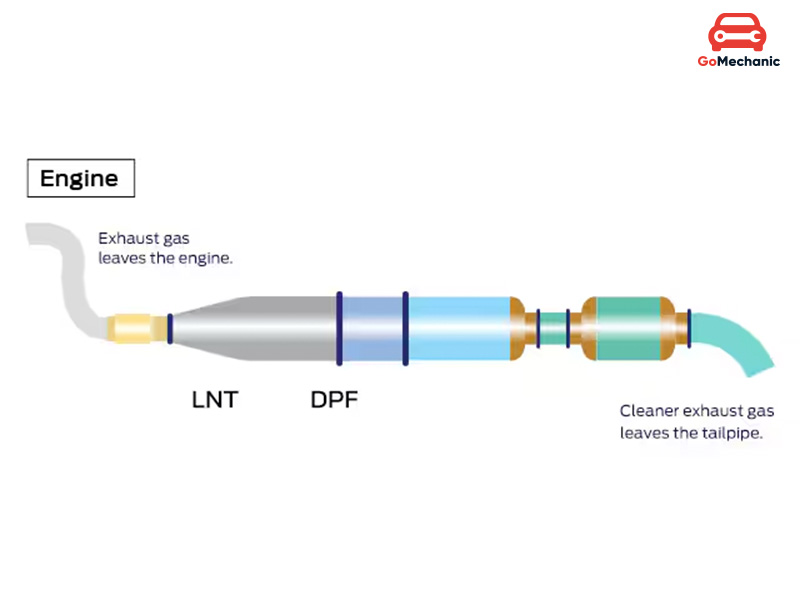
The DPF full form is Diesel Particulate Filter, which we explained before. The exhaust system of diesel engines uses this device as a filtration system. The system performs a crucial task by capturing and keeping soot particles that result from combustion. The particles which come from soot have the scientific name particulate matter (PM). Diesel engines produce more soot than petrol engines because of their efficient design and powerful performance. The Diesel Particulate Filter helps control this pollution and makes diesel vehicles cleaner and more environmentally friendly.
Why is the DPF in Cars Important?
When diesel engines operate, their combustion process generates minute carbon particles as a byproduct. The particles exist in two size categories which include:
- PM10 – particles smaller than 10 microns
- PM2.5 – particles smaller than 2.5 microns
The human body absorbs these microscopic particles through lung inhalation which allows them to enter the bloodstream and create severe medical problems. They contribute to the formation of smog while worsening air pollution.The international community established rigorous emission standards to combat these dangerous emissions. The 2020 transition from BS4 to BS6 standards in India resulted in major reductions for both particulate matter and nitrogen oxide emission limits which apply to diesel vehicles. The Diesel Particulate Filter has become essential equipment for all diesel vehicles because of these updated regulations. The diesel vehicles need this component to comply with BS6 standards.
Do read: What Is DPF And SCR In BS6 Diesel Cars? | Explained
How Does a Diesel Particulate Filter Work?
The DPF full form establishes its meaning, which now allows us to explain its operational process. DPF in cars uses ceramic materials which include cordierite and silicon carbide to construct its filter structure. The filter system consists of a honeycomb structure that contains multiple tiny channels. The system operates inside a stainless steel casing, which it uses as its exhaust component while positioned at the engine location to sustain high-temperature conditions.
The process operates according to these steps:
1. Soot Trapping
The exhaust gases leave the engine through the filter. The honeycomb design forces the gases to move through its permeable walls. The filter captures the soot particles because they are bigger than the filter’s tiny openings. The exhaust system releases cleaner gases through the exhaust system.
2. Soot Accumulation
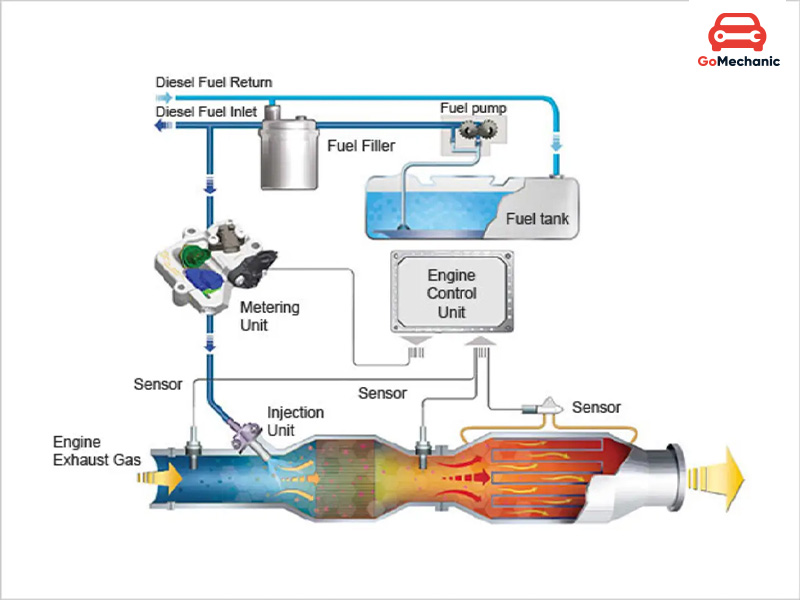
The filter becomes progressively clogged with soot throughout its entire lifespan. The increasing blockage creates resistance, which affects the exhaust system operation. The pressure monitoring system employs sensors which track pressure changes before and after the diesel particulate filter to send results to the car’s engine control unit. Excessive soot buildup leads to decreased engine performance while increasing fuel consumption.
3. Regeneration
Engine performance depends on removing collected soot which blocks engine components. The process of cleaning is referred to as regeneration. The process of regeneration transforms soot into ash together with carbon dioxide. The Diesel Particulate Filter system requires regeneration as its standard operational function.
Related blog: BS6 Engines: The Future of Cleaner, Smarter Vehicles
Types of Regeneration in Diesel Particulate Filter
There are three main types of regeneration:
1. Passive Regeneration
This occurs when drivers maintain steady speeds between 60 and 80 kilometers per hour for an extended time period. Exhaust systems during highway operation experience temperature increases that reach 250 to 450 degrees Celsius. Soot begins to burn at this temperature without any visible signs to the driver. Passive regeneration operates seamlessly without needing the driver to perform any specific tasks.
2. Active Regeneration
The ECU will initiate active regeneration when passive regeneration fails to take place during city driving which involves traffic conditions. The system uses exhaust temperatures which reach 550 to 600 degrees Celsius to eliminate soot from the system. The system may inject extra fuel into the exhaust or adjust engine settings to raise temperature. The active regeneration process makes it possible for drivers to experience these changes The engine RPM shows a slight increase The engine uses more fuel The engine produces a temporary burning smell because the start-stop system has been turned off. The engine must remain operational throughout the active regeneration process. The process needs to be stopped because it will create this problem.
3. Forced Regeneration
If soot build-up reaches a critical level and active regeneration fails to operate then forced regeneration will become necessary. This process typically occurs at service centers through the use of diagnostic equipment. The engine maintains a particular RPM level which allows it to produce enough exhaust heat for filter cleaning. Manual cleaning and replacement operations require forced regeneration as their final procedure.
Maintenance Tips for Diesel Particulate Filter
To ensure the long life of your diesel particulate filter, follow these best practices:
- Drive on the highway occasionally. The driver must take the vehicle to the highway for a 30 to 45 minute drive because they primarily drive short distances within the city. This helps with the process of passive regeneration.
- The DPF Warning Light needs to be monitored. The DPF warning light exists in all modern diesel vehicles. The vehicle will enter a regeneration mode when the warning light remains activated and you drive at highway speed. The vehicle needs immediate service when the warning light starts to blink.
- Diesel particulate filter systems need vehicles to use low-sAPS engine oil. The regular engine oil creates ash, which will permanently block the filter. The driver must always use the recommended low-sulphur diesel fuel.
- The use of low-quality fuel will result in higher soot emissions. Idling for extended periods needs to be avoided. The exhaust system will not reach high temperatures during excessive idling, which results in soot buildup.
Common Diesel Particulate Filter Problems
| Problem | Cause | Symptoms | Solution |
| Soot Clogging | Short trips, low speed driving | DPF light, power loss | Highway drive or regeneration |
| Ash Build-Up | Incorrect engine oil | Reduced performance | Professional cleaning |
| Damaged Filter | Overheating or impact | Loud exhaust, engine issues | Replacement |
| Sensor Failure | Faulty pressure sensors | Warning lights | Diagnostic scan and repair |
Ignoring these issues can damage other components like turbochargers and injectors. Early diagnosis saves money.
Conclusion
We have understood what is dpf in cars, which stands for Diesel Particulate Filters. This essential part of the vehicle functions to minimize dangerous soot emissions while enabling the vehicle to comply with important BS6 emission regulations. The Diesel Particulate Filter operates by capturing exhaust particulate matter which it subsequently eliminates through its regeneration process.
The system demonstrates strong durability but its operational effectiveness hinges on drivers practicing proper driving techniques and conducting regular system upkeep. The system will continue to function at its optimal level when the engine oil specifications are followed and highway driving occurs and excessive idling is avoided and warning lights are addressed immediately. The Diesel Particulate Filter will remain an essential technology for maintaining diesel engine operations within environmentally sound limits because emission regulations are becoming increasingly stringent.
FAQs
What is a DPF used for?
A DPF (Diesel Particulate Filter) is used to reduce pollution in diesel cars. The device captures dangerous soot emissions from the exhaust system before they can escape into the atmosphere.
What is the DPF problem in cars?
The most common DPF problem is clogging. The filter will not reach sufficient temperatures to initiate its cleaning process when the vehicle operates at low speeds for brief time periods.
What is DPF in BS6?
The DPF system functions as a major component of emissions control systems in BS6 diesel vehicles. The system enables compliance with advanced pollution standards by removing tiny particulate matter from vehicle exhaust streams.
What happens if a DPF is blocked?
A dashboard warning light indicates a DPF blockage situation. The vehicle will experience reduced power levels while it requires higher fuel usage and may enter a state of operational restriction known as limp mode.
Can a diesel run without a DPF?
The vehicle can operate without it but doing so violates Indian laws. The removal of a DPF system leads to increased environmental pollution which results in financial penalties and failed emissions tests.