






The Maruti Suzuki Ertiga is one of India’s most practical family cars. Built to accommodate more people comfortably. In terms of segment, the Ertiga comes under the compact MPV space. That means three rows of seating, usable boot space, and dimensions that are still manageable for city driving. But what stands out is the balance it offers between space and running costs. Families prefer it because it solves problems, like accommodation, gives decent mileage and the option to choose between petrol and CNG, depending on budget and preference.
With the same 1.5-litre petrol engine, the Ertiga comes with manual or automatic transmission in petrol, while the CNG version comes with a manual gearbox. This variety gives buyers like us more choices. Some want smoother automatic convenience. Others want lower running costs through CNG. Both options are available, and that matters in India, where fuel pricing and usage patterns vary widely. Because of this variety, one question keeps coming up: What is the real Ertiga mileage in petrol? How does the Ertiga diesel mileage compare historically, and does the Ertiga car CNG mileage actually justify the switch? That is exactly why we’ve written this blog on Maruti Ertiga Mileage Comparison, so you can understand the numbers properly and choose the variant that fits your usage, not just your budget.
Maruti Ertiga Mileage Comparison – ARAI Figures
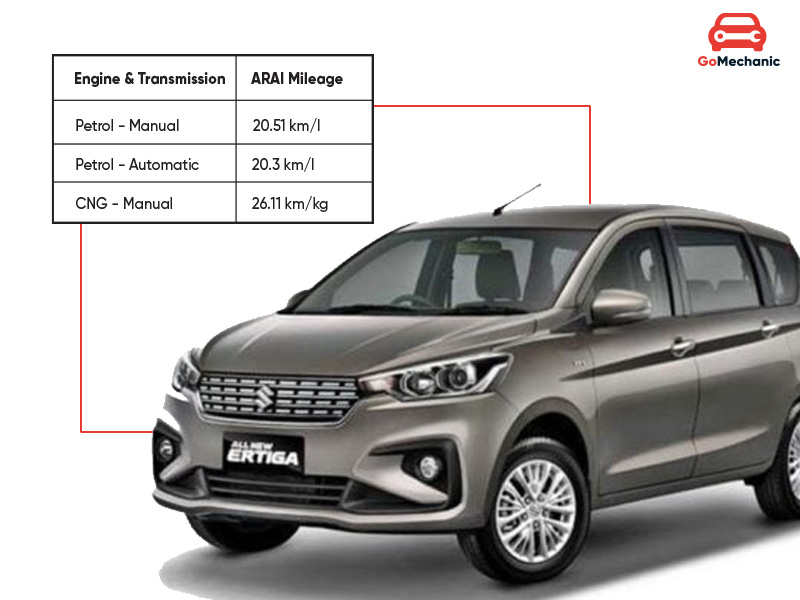
Before we get into real-world numbers, let’s look at the official ARAI mileage figures. These are tested under controlled lab conditions, so they reflect ideal efficiency. They don’t account for traffic, load, or driving habits. But they give us a standard reference point to compare all variants fairly.
Here are the official figures across engine and transmission options:
| Engine & Transmission | ARAI Mileage |
| Petrol – Manual | 20.51 km/l |
| Petrol – Automatic | 20.3 km/l |
| CNG – Manual | 26.11 km/kg |
On paper, the CNG version clearly leads in fuel efficiency. The difference is nearly 6 km/kg more compared to petrol variants in official testing.
Between the two petrol options, the manual is slightly more efficient than the automatic. That difference largely comes from transmission type. A torque converter automatic usually consumes a bit more fuel compared to a manual, where power delivery is more direct. However, these are lab-tested figures. They don’t account for traffic jams, full passenger load, aggressive acceleration, or AC usage. Which is why the next section becomes more important.
Let’s now compare these numbers with what owners actually experience on real Indian roads.
Maruti Ertiga Mileage Comparison – Real-World Mileage vs ARAI Mileage
The ARAI mileage numbers are tested in controlled conditions. Real roads are different. Traffic, braking, AC usage, and passenger load change the outcome. So it’s important to see what owners actually get in daily driving.
In city use, the Ertiga mileage in petrol is usually 16 to 18 km/l. The petrol automatic delivers around 14 to 16 km/l. The automatic consumes more fuel in slow traffic because of the transmission type. The CNG manual delivers around 22 to 24 km/kg in city conditions. On highways, it comes closer to the official 26.11 km/kg figure because speeds remain steady and braking is limited.
Here’s a clear comparison:
| Variant | ARAI Mileage | Real-World City Mileage | Real-World Highway Mileage |
| Petrol – Manual | 20.51 km/l | 16–18 km/l | 18–20 km/l |
| Petrol – Automatic | 20.3 km/l | 14–16 km/l | 17–19 km/l |
| CNG – Manual | 26.11 km/kg | 22–24 km/kg | 24–26 km/kg |
The difference between ARAI and real mileage comes down to a few practical factors:
- Driving style.
- Traffic conditions.
- Passenger load and AC usage.
- Maintenance level.
Maruti Ertiga Fuel Mileage Comparison: Petrol vs CNG
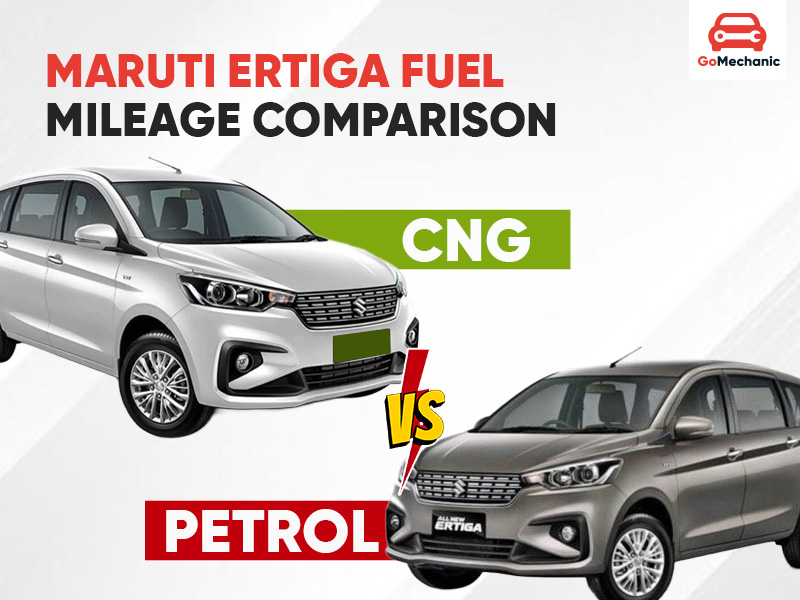
Now that we know both the official and real-world numbers, the decision really comes down to how and where you drive the car. The Maruti Ertiga uses the same 1.5-litre engine for both petrol and CNG versions of the car, but the fuel you choose changes the experience, and more importantly, the monthly expense.
If we give attention to the CNG variant, the mileage is clearly higher. As in normal city driving, it gives around 22–24 km/kg and roughly 16–18 km/l for the petrol manual, and the automatic stays around 14–16 km/l. On paper, the difference does not look that big. But stretch that over 1,500 km every month, and the difference starts reflecting directly in your fuel cost. It’s not a minor variation then, it becomes a pattern you notice regularly. Still, mileage alone does not decide everything. Petrol versions produce slightly more usable power. When the car is fully loaded or you are overtaking on highways, that extra power makes a difference. The engine feels less strained. Refuelling is also easier, because petrol pumps are available almost everywhere, whereas CNG availability still depends on the city.
The CNG variant, however, is focused on running cost. In stop-go traffic, where speeds are low and steady, it performs consistently and keeps fuel expense lower. For high daily usage, that matters. So the choice is simple but personal. If your driving is mostly within the city and mileage is high, CNG makes financial sense. But if your usage includes highways, slopes, and mixed conditions, petrol gives more flexibility and fewer refuelling concerns.
| Variant | City Mileage | Estimated Fuel Pattern Over 1500 km |
| Petrol – Manual | 16–18 km/l | Higher monthly fuel expense |
| Petrol – Automatic | 14–16 km/l | Slightly higher than manual |
| CNG – Manual | 22–24 km/kg | Noticeably lower monthly fuel cost |
Maruti Ertiga Mileage Comparison: City vs Highway Fuel Efficency
Fuel efficiency in the Maruti Ertiga changes depending on where you drive. City and highway conditions are completely different, and petrol and CNG behave differently in each case.
In city driving, stop-go traffic, signals, idling, and AC usage directly affect mileage. The petrol manual typically delivers around 16–18 km/l, while the petrol automatic gives about 14–16 km/l. The automatic consumes more fuel in traffic because of the torque converter setup. Every time you accelerate from standing idle, fuel use increases, and in dense traffic, that cycle keeps repeating, causing you to use more fuel. The CNG variant delivers around 22–24 km/kg in city use as it runs efficiently at lower speeds and maintains better consistency during slow traffic. That’s where it builds a clear cost advantage over time. On Highway driving, the number changes. The petrol manual can deliver 18–20 km/l, while the automatic gives around 17–19 km/l. The CNG version delivers roughly 24–26 km/kg on highways.
Here’s a clearer comparison:
| Variant | City Mileage | Highway Mileage |
| Petrol – Manual | 16–18 km/l | 18–20 km/l |
| Petrol – Automatic | 14–16 km/l | 17–19 km/l |
| CNG – Manual | 22–24 km/kg | 24–26 km/kg |
Conclusion
The Maruti Ertiga mileage comparison shows that the right choice depends on how you actually use the car. The petrol manual and automatic deliver balanced efficiency with slightly better power. This helps on highways and during full-load driving. The CNG variant clearly focuses on higher mileage and lower running cost. Especially in daily city traffic where fuel use adds up quickly. The ARAI numbers give a benchmark. But real-world mileage changes with traffic, driving style, load and maintenance. Over time, the fuel expense difference becomes noticeable. If your usage is mostly city-based and distance is high, CNG makes financial sense. If you need flexibility and easier refuelling, petrol remains the practical option.
FAQ’s
1. What is the real mileage of Ertiga?
Real mileage depends on where and how you drive. In city traffic, the petrol manual usually gives around 16–18 km/l. The automatic stays closer to 14–16 km/l because slow movement increases fuel use. The CNG version delivers roughly 22–24 km/kg in city conditions. On highways, petrol can reach 18–20 km/l and CNG can move closer to 24–26 km/kg if speeds are steady.
2. Which model of Ertiga is best?
The best model depends on your daily usage. If your running is high and mostly city-based, the CNG version keeps fuel expense lower. If you want a balance between mileage and driving control, the petrol manual works well. If traffic comfort matters more, the automatic becomes practical. The choice should follow your routine.
3. What is the disadvantage of Ertiga?
The Ertiga is not performance-oriented. When fully loaded, especially in CNG mode, acceleration feels moderate. Overtakes need planning. The build is practical rather than heavy-duty. It is designed for efficiency, not aggressive driving.
4. Which car is more comfortable, Innova or Ertiga?
The Innova offers stronger build and better highway stability. It feels more planted at higher speeds. The Ertiga is lighter and easier to drive in city conditions. It is also more affordable to maintain. Comfort depends on your expectation and budget.
5. Is Ertiga good for long travel?
Yes, it supports long highway trips well. The petrol version feels more relaxed at cruising speeds. Cabin space handles passengers and luggage without much issue. While it may not match a full-size MPV in stability, it remains dependable and efficient for family travel.


