






Cars are changing. Getting smarter. Not just faster. Not just more efficient. Smarter.
And at the center of this evolution? ADAS full form is Advanced Driver Assistance Systems. It’s a shift. A way of making cars more aware, more responsive, more capable of preventing accidents before they happen.
But what exactly is the ADAS system in cars? Why is it important? How does adas work?
Here’s the breakdown:
What is ADAS?
ADAS full form is Advanced Driver Assistance Systems. A suite of technologies. Designed to improve safety. Built to prevent accidents.
It doesn’t replace the driver. It assists. It watches the road, processes data, reacts faster than human reflexes. Some systems warn you. Some intervene. The goal? Fewer accidents. Safer roads. Better driving.
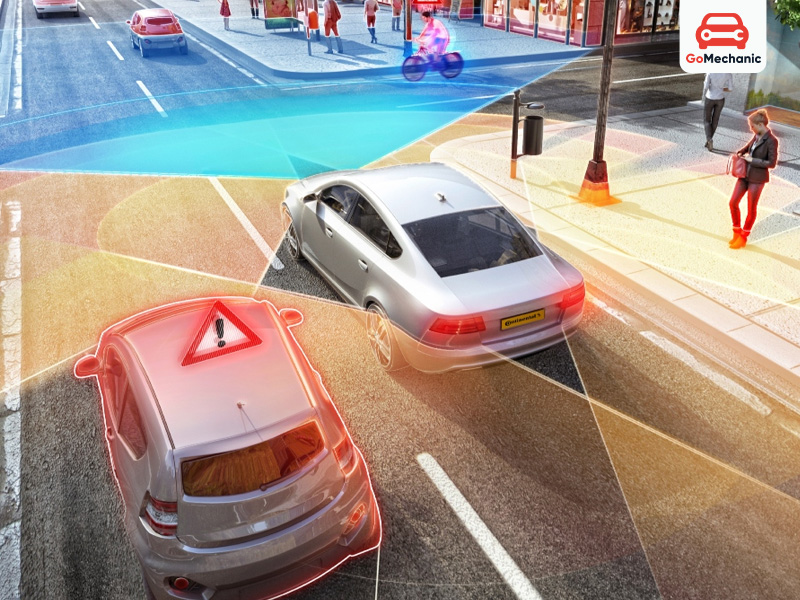
ADAS isn’t a single feature. It’s a network. A system of cameras, sensors, radar, AI. All feeding data to the car’s brain, helping it make decisions in real time.
Do read: Understanding ADAS: The Future of Car Safety and Servicing
How Does ADAS Work?
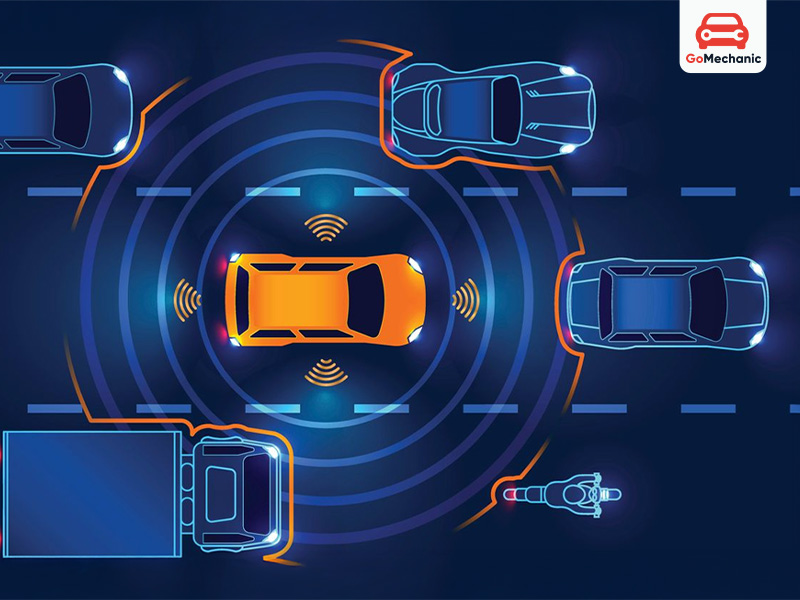
So, how does adas works. It starts with perception. Your car sees. More than you do.
- Cameras capture lane markings, signs, pedestrians, vehicles.
- Radar sensors measure distances, detect objects beyond your vision.
- Ultrasonic sensors help in parking, low-speed maneuvers.
- Lidar (in advanced systems) builds 3D maps for precise detection.
All this data flows to the ECU (Electronic Control Unit). It processes. It decides. It reacts. It can warn you, assist your steering, adjust speed, or take control if needed.
Imagine driving at night. A pedestrian steps onto the road. Your ADAS system sees them before you do. It sounds an alert. You don’t react in time. The system does. Brakes engage. Collision avoided.
That’s ADAS. A second set of eyes. A faster pair of reflexes.
How ADAS is Changing Car Ownership
Car buying was different. It was about horsepower. About fuel efficiency. About sleek design.
Now? It’s about intelligence. About safety. Buyers don’t just ask about mileage and engine power anymore. They ask about ADAS features, crash test ratings, automation levels.
This shift is everywhere.
- Luxury Brands: They are pushing Level 2 and Level 3 autonomy. Hands-free highway driving. AI-powered lane assist.
- Mass Market Cars: Tata Harrier. Hyundai Tucson. Honda City. These aren’t luxury cars. Yet, they come with adaptive cruise control, lane departure warnings, blind spot detection.
- Budget-Friendly Options: Even entry-level models now feature basic ADAS—automatic braking, collision alerts, driver monitoring.
ADAS isn’t for premium buyers anymore. It’s becoming standard.
ADAS Features: What’s Inside?
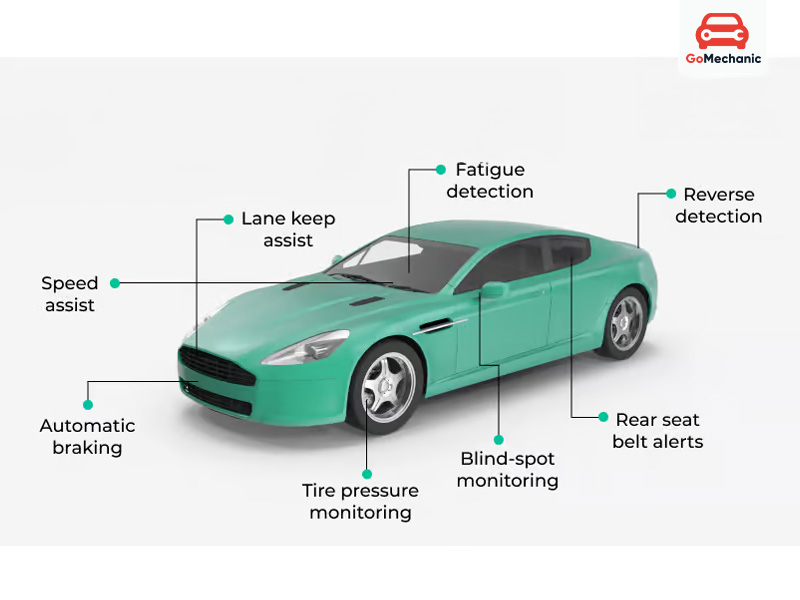
Not all ADAS system in cars are the same. Some assist. Some prevent. Some take over. Here’s what makes up an ADAS system in cars:
1. Adaptive Cruise Control (ACC)
Maintains a set speed. If traffic slows, it slows down. If traffic clears, it speeds up again.
2. Lane Departure Warning & Lane Keep Assist
Drift too close to the lane edge? It warns you. Some systems steer you back automatically.
3. Automatic Emergency Braking (AEB)
Detects obstacles. The technology brakes for you if a collision is imminent.
- Blind Spot Detection
If there’s a car in your blind spot, the warning sign goes on. Some systems stop you from merging into danger.
5. Traffic Sign Recognition
Reads road signs. Speed limits. Stop signs. No-entry zones. Displays them on your dashboard.
6. Parking Assistance
Uses cameras. Uses sensors. Guides you into tight spaces. Some systems park the car for you.
7. Driver Drowsiness Detection
Monitors eye movements, steering patterns, reaction time. Any signs of fatigue detected, it warns you to take a break.
8. Rear Cross-Traffic Alert
Reversing out of a parking spot? It watches for approaching vehicles. It alerts you before you see them.
Individually, these features assist. Together, they protect.
Also read: Does India Really Need ADAS? Deep into the Potential Benefits
Levels of ADAS: From Assistance to Autonomy
ADAS evolves. The Society of Automotive Engineers (SAE) defines six levels of automation:
Level 0: No Automation
The driver controls everything. No ADAS features.
Level 1: Driver Assistance
Basic features like adaptive cruise control, lane departure warnings. The driver remains fully in control.
Level 2: Partial Automation
The car can be put on autopilot. But the driver must stay alert.
Level 3: Conditional Automation
The car handles driving in specific conditions. The driver takes over when needed.
Level 4: High Automation
Self-driving in controlled environments—highways, city traffic. Manual control is still possible.
Level 5: Full Automation
No driver. No manual controls. The car does everything.
Most ADAS systems in cars today operate at Level 1 or 2. Assistance, not autonomy.
Why ADAS Matters: The Impact on Road Safety
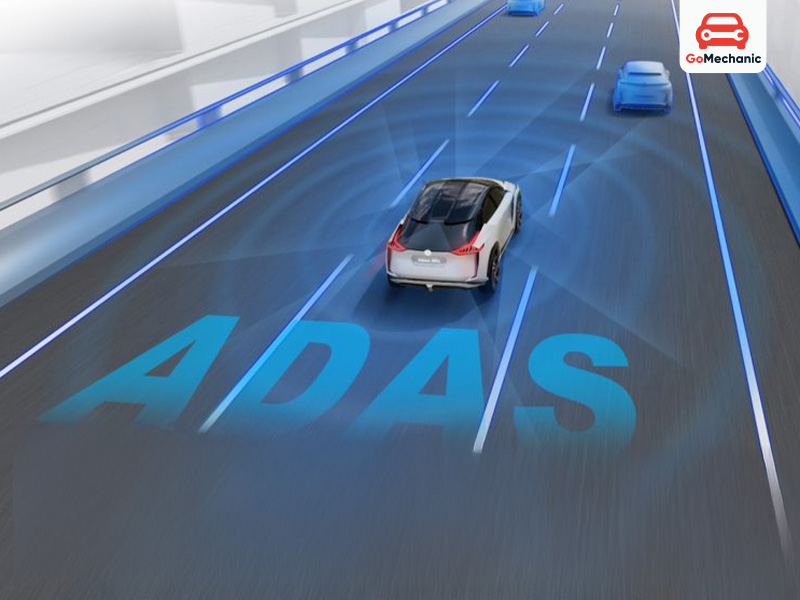
Roads are unpredictable. Drivers make mistakes. Big ones. Small ones. Some don’t matter. Some change lives. ADAS steps in. It watches. It reacts. It fills the gap where human reflexes fall short. Over 90% of accidents are caused by the negligence of drivers. Missed signs. Late braking. Distractions. A second too slow, a meter too close. Countries with strict ADAS laws see fewer crashes. Fewer injuries. Automatic Emergency Braking (AEB) helps to prevent rear-end collisions by 50%. That’s thousands of lives saved, Not just a number.
In India? The stakes are higher. Roads are chaotic. Lane discipline is a suggestion, not a rule. Accidents aren’t rare. They’re expected. Manufacturers know this. Tata. Mahindra. Hyundai. Honda. They’re putting ADAS into more models. Not just for luxury buyers. For everyone.
Because this isn’t about features anymore. It’s about survival. And soon? It won’t be an option. It will be the standard.
The Growing Role of AI in ADAS
Cars aren’t just mechanical anymore. They think. They learn. They predict.
AI is the reason.
- AI-Powered Perception: The system doesn’t just detect objects. It understands. It reads traffic behavior, identifies erratic drivers, predicts road hazards.
- Self-Learning Algorithms: The more a car drives, the smarter it gets. AI-powered ADAS learns from real-world driving patterns, adapting to different environments.
- Seamless Human-Machine Interaction: Future ADAS won’t just assist. It will anticipate. It will adjust settings. It will match driver intent.
Cars won’t just react anymore. They’ll predict.
Challenges & Limitations of ADAS
ADAS isn’t perfect. It has limitations.
- Weather Conditions: Heavy rain. Fog. Snow. Can obstruct cameras and sensors.
- Infrastructure Issues: Faded lane markings. Poor road signs. ADAS struggles without clear data.
- Human Over-Reliance: Drivers trust the system too much. Stop paying attention. That’s a problem.
- Cost Factor: ADAS increases vehicle cost. Not all buyers can afford it.
Manufacturers are working on solutions. Better AI. More reliable sensors. Smarter software. The system is improving.
The Future of ADAS: What’s Next?
ADAS isn’t static. It’s evolving.
- AI-Powered Decision Making: Systems will learn from drivers. They’ll adjust, improve, and predict risks before they happen.
- 5G Connectivity: Faster data exchange means real-time communication between vehicles and traffic systems.
- V2V & V2I Communication: Cars will be able to talk to each other. To roads. To traffic lights. Accidents will reduce.
- Full Autonomy: Level 5 self-driving? Not yet. But ADAS is building the foundation.
The next generation of cars won’t just transport you. They’ll think. They’ll react. They’ll anticipate.
ADAS is Not Optional Anymore
ADAS isn’t a luxury. It’s the future. It’s changing driving. Slowly. Then all at once.
Understanding what ADAS is, how ADAS systems in cars work, and why ADAS features matter? That’s no longer optional.
This isn’t just any regular technology. It’s transformation. From basic driver assistance to cars that think, react, and prevent accidents before they happen—ADAS is rewriting the rules of the road. The question isn’t if ADAS will be standard. It’s when. And when that moment arrives. Driving won’t be what it was. It’ll be what it should have been all along. Safe. Smart. Predictable.


