






Cars are more than just transport. They are a way of life. Probably this is the reason why each one of us loves to modify our vehicles as per our tailor-made liking. And talking about modification, audio systems are one of the most highly modified aspects of any vehicle. But the first suggestion that we get before every audio upgrade, is to get car dampening done. While car dampening might be a great thing to do before a major audio upgrade, its effects are far deeper than just audio.

And if you are wondering what vehicle dampening is, then you are in the right place. Because in this article, we will be having a deeper look into what car dampening is and whether or not you should get it done.
Car Noise Insulation: Meaning
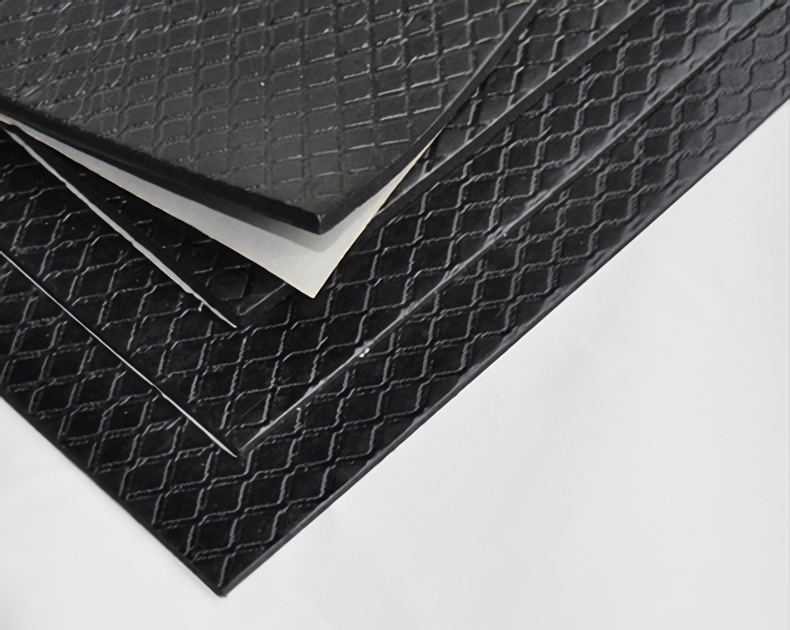
Car noise insulation is a way or an action of reducing or wiping off any unwanted sound, coming from both inside and outside a vehicle. This is the process of utilizing different materials and techniques to block road noise, engine sounds, and vibrations, and bring about a good, quieter driving experience. Different noise types that come into play in car heat insulation include the following:
- Road noise: This noise relates specifically to the sound made by tires rolling over a road surface, sounding rather loud, especially on highways.
- Engine noise: This consists of sound emissions from the engine, as well as the noise associated with the exhaust system.
- Vibrations: Major sources of these are the engine, the road surfaces, or the suspension system of the vehicle and can be experienced as resonances within the vehicle’s body.
- Wind noise: This constituted the sound produced when air passes over the car at high speeds.
How is Car Noise Insulation Made?
Car noise insulation means diminishing or eliminating unwanted sounds from inside the car and noises coming from outside. Car noise insulation can include methods and materials used for insulating road noises, engine noise, and vibrations in order to create a more interesting driving experience. Common noise insulation for cars materials are:
- Soundproofing Mats: These are mats usually made up of very dense rubbery materials that should help absorb vibrations, while also blocking sound.
- Foams and Fiber Materials: These are placed in door panels, floors, and ceilings to dampen sound.
- Acoustic Windshields: Some production models of cars have windshields made as designed to reduce noise from wind.
- Sealants: Door frames and windows are sealed with these materials against noise getting inside the cabin.
How Does Car Sound Proofing Work?
Car sound proofing is the best way of enjoying driving by keeping all unwanted noises away. Road noise, engine sounds, and vibrations make the drive uncomfortable, whereas car sound proofing specializes in these areas by applying materials such as sound-deadening mats, foams, and sealants. In this way, car noise proofing provides a quiet cabin improving the driving audio system quality while reducing fatigue and distractions caused by confinement in the car. It therefore makes driving more enjoyable. Car sound proofing is a worthy investment for every car owner looking for a quiet driving experience, whether using professional service or self-installation.
The Need for Car Dampening
People tend to spend a substantial amount of their time, travelling from one place to another. While driving itself might not be fatiguing for everyone. A noisy cabin can surely spoil your driving experience, and make your journeys a frustrating memory. In fact, with too much noise in the cabin, sooner or later you will end up hating your car’s audio system. Even if you don’t happen to be an audio enthusiast, higher NVH levels will eventually make you feel uncomfortable with your own vehicle. Vehicle dampening is a solution that can largely reduce the noise that infiltrates your cabin. With dampening, you can achieve lower vibrations, less noise and more silence.
What is Car Dampening?
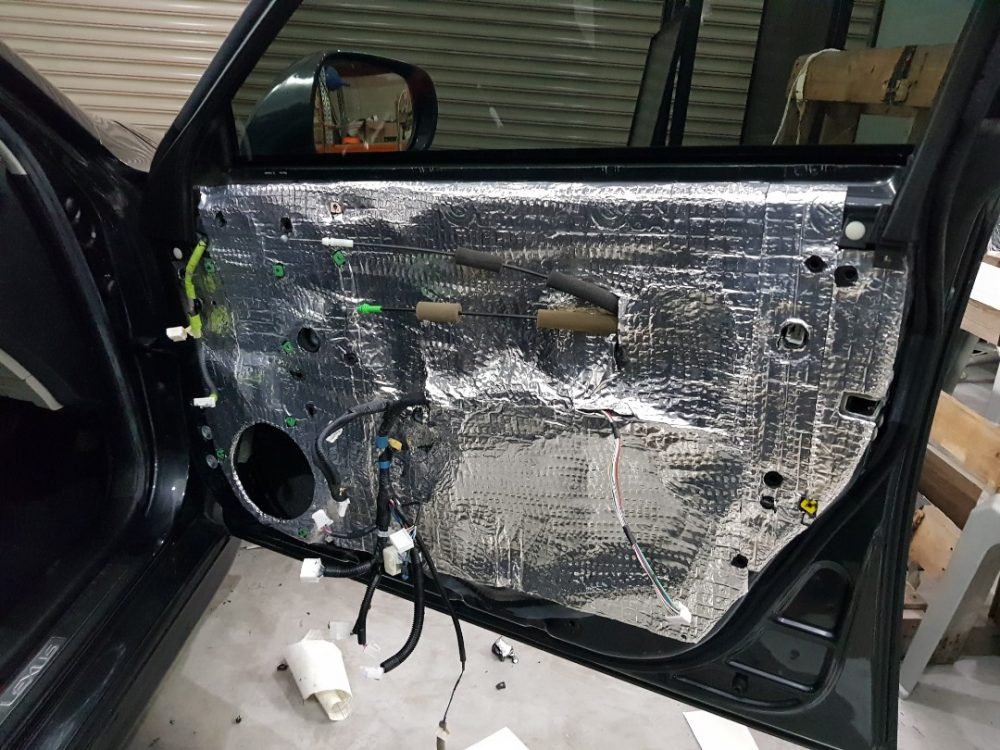
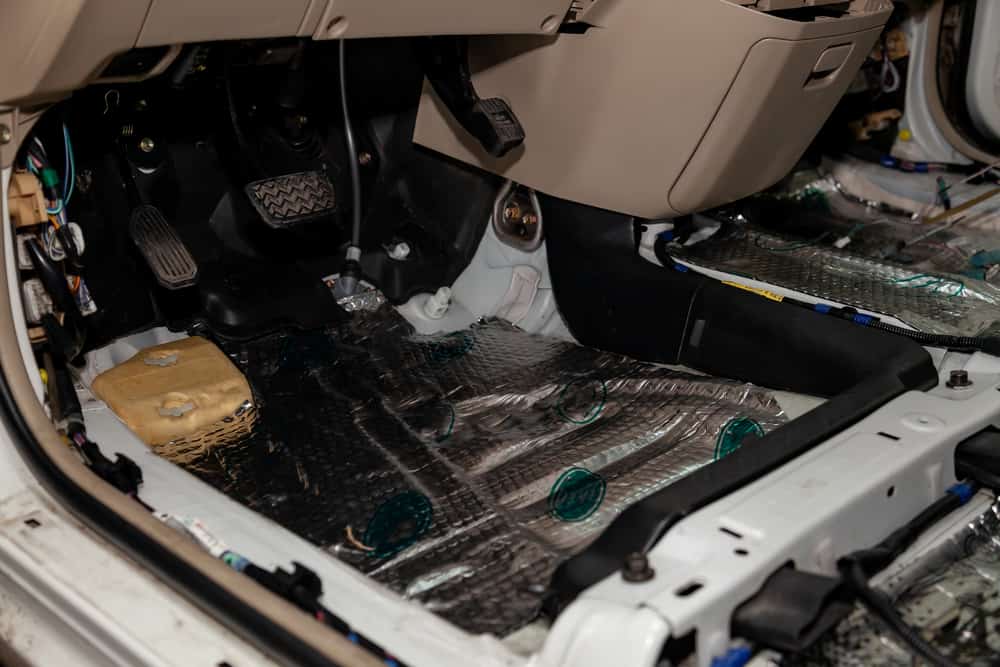
In simple words, car dampening is a procedure in which sound deadening or sound-absorbing materials are used to reduce NVH levels inside a vehicle’s cabin. These materials are placed over places prone to vibration such as door panels, pillars, roof and floor of the vehicle. Once attached, these materials reduce background noise and eliminate echo that may bounce off the panels. They also enhance the audio experience inside the vehicle and prevents outside noises to overpower your music experience.
The Pros of Dampening
- Vehicle dampening can increase the acoustic experience of your vehicle by reducing the background noise, and preventing sound escape. As a result, what you get is a superb audio experience without the noise of the road overpowering your music
- dampening reduces the level of vibration and rattling felt inside the cabin since much of the rattle is absorbed by dampening materials such as acoustic foams, staple fibres etc.
- dampening can also make your vehicle more comfortable as sound-deadening materials are known to be thermal insulators. As a result, dampening keeps your vehicle cooler during the summer and warmer during the winter.
- Lastly, dampening reducing the infiltration of road noises inside the vehicle, thereby making them soundproof and silent; a boon for chauffeur-driven vehicles.
The Cons of Dampening
- Since vehicle dampening is a labour intensive procedure, it can be costly and time-consuming.
- dampening involves the use of glue to affix sound-absorbing materials to various parts of your vehicle. This means that dampening material cannot be reused if you decide to change your vehicle. Secondly, any internal repair would require the removal of dampening material which is also a time-consuming process.
- The use of heavy dampening materials and denser foams can increase the mass of your vehicle, leading to more fuel consumption over the year.
Noise Insulation For Cars: What Do We Conclude
Simply stating, the noise insulation for cars, the dampening will surely make your car cabin quieter. It will greatly reduce background noise so that you can hear each and every note of your favourite song. As an added advantage, vibration and rattling noises are also suppressed in a damped vehicle. And with the pros outweighing the cons, getting your vehicle damped can turn out to be a great decision.
FAQ’S
What can I do to silence my car?
Soundproofing materials such as mats, foams, and sealants can be placed in the doors, floors, ceilings, etc. for the purpose of noise dampening.
Is it worth sound dampening in a car?
Absolutely, for that particular type of sound quality, a quieter and therefore more comfortable ride can definitely be had.
Can you soundproof cars?
Sure, by installing sound deadening mats and foam insulation in the car, you could achieve realistic soundproofing for the vehicle.
Which is the best soundproofing technique for cars?
Call the best soundproofing methods for vehicles those that mainly consist of sound-deadening mats (like Dynamat), foam insulation, and some acoustic seals for the doors and windows.
What is dampening for cars?
Damping is essentially a layer applied inside a car, mostly to the doors, floor and roof. Its main function is to reduce vibration & noise from the road. When applied, the car’s cabin feels a little quieter & comfortable, especially on long drives.
What does damping do to a car?
Within an automobile, damping controls vibration & noise. Damping reduces vibrations from the engine or road while the vehicle is in motion. Driving appears to be easier, the music sounds better, and the interior becomes calmer as a result.
Is damping good for your car?
Getting damping is an excellent idea. It makes the car feel heavier when the doors are closed & reduce the noise level inside. It somewhat lowers heat, making the cabin feel cooler throughout the summer. All things considered, dampening boost comfort by lowering noise and creating a more upscale, peaceful cabin atmosphere.
How much does car damping cost?
This completely depends on the size and material of the car. Basic damping on a small car can cost 4,000-8,000 rupees. Sedans cost a little more, around 10,000-15,000 rupees. For an SUV or full-body car, it can even go up to 20,000 rupees.
Does car damping reduce heat?
Yes, it does. The sheets provide an insulating effect, reducing heat inside. The cabin seems colder & the air conditioner cools a bit quicker. It doesn’t cool the cabin as much as an air conditioner does, but it still makes a noticeable difference, especially in summer.
Also Read:



I want to talk with the manager because I want a branch of gomechanic in my area with franchise or with workshop.
Plz send this to the Manger and plz contact me.
Hi Jasraj,
Please give us your contact details and we’ll get back to you asap.
when you say weight of the vehicle, how much are we talking here ? assume an SUV or Sedan ?
The overall weight of the vehicle largely affects fuel efficiency. The use of heavy dampening materials and denser foams can increase the mass of your vehicle, leading to more fuel consumption over the year. This is one of the cons of Dampening, along with several Pros it offers.
How much total dampening material weigh?
It must less then 60kgs i.e less then 1 individual weight
Rarely all seats in vehicle is acquired these days considering small family size
We want to sounddeadner primer and paint pl. Raw materials details with technical guideline formulation
Your query seems a bit unclear. Please write to us in detail for a meaningful conversation.
I wish to add some sound damping to my old Innova as it has become a bit too noisy on the highway. I want to do the floor, doors, boot area. The door rubber also needs replacement I beleive as there are some gaps. Please advise recommended materials. Please PM / call on 9927591640
Hi Anuj
We don’t deal in vehicle damping yet. However, we will keep you posted if we ever expand into this business!
Thanks for reaching out.
Hi
Can you do road noise dampening in Škoda superb
Hi Jagjeet
Yes, we can do that for sure. Please drop your contact number for me to arrange a callback
Hi,
I am Karthik. I need sound dampening for my ignis vehicle. I am based out of Hyderabad. May I know the cost.
Hi Karthik!
We don’t do vehicle damping as of now. Please contact your nearby accessories shop for the same
I want sound dampening in my Amaze in Ahmedabad. Also want to replace existing foglamp with Projector. Please contact me. M 8460704939
What about warranty and insurance,does it’s get void ?
Hey Pradipts,
Sound Dampening will not void your car warranty at all. However, for peace of mind you can always reach out to you car insurance providor.
How much the cost of damping
Heyy
I wanted damping for my honda city….what will be the cost
Hey Darshit
Kindly leave your contact number for us to call you back and help with the exact estimate.
Have ecosport 2014 titanium. Looking for car dampening/deadening/sound proofing.
What products do you use?
Please share your quotes.
Hi Mukesh
Please share your contact number. We will get a call arranged from our experts
I have a Hyundai Getz. I’m fixing new doors in the vehicle. What thickness of dampening sheets should I use for the doors and floor so that it isn’t too heavy and affects the mileage of the car.
Thanks
Hi Ashwin
We would be able to advise you regarding damping sheets only once we have a look at the components of the car in its present state. Please walkin to the nearest workshop or frop your contact for us to call you back
I have a 10 year old XUV 500 and want to improve nvh in the cabin. I am from Hyderabad, will be great if I can get a call on various options available.
Hey Anil
Please drop your contact number for us to call you back
I have a 10 year old Nissan micra and want to improve NVH (noise levels) in the cabin. I am from Pune,
will be great if I can get a call on various options available.
My contact n umber: 85055505229
Hi Kiran
We have forwarded your details to the concerned department. You will get a callback soon!
Hi
I was looking for sound damping to be fixed to my Honda city. My no 9901428144
Hey Dhilip. Our executive will be reaching out to you shortly.