






We Indians are obsessed with being frugal, always looking to extract the best and the most efficient possible result from anything we undertake. And with such a significant investment like that of a car, the expectation of being economical further enhances.

Buying a car is a conscious decision probably involving a great deal of your savings, a decision you cannot afford to see turn into a shitty call. To control the further drain of your savings (on something at which you already have projected a majority of it), you need a fuel-efficient car.
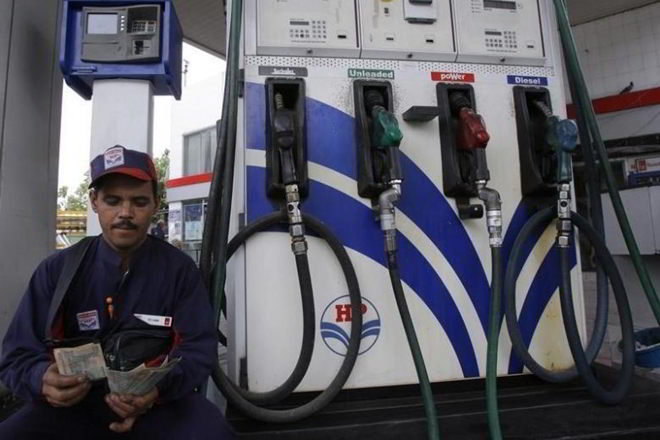
Latest News: Buying a Diesel Car a Wise Move? Rising Fuel Prices says otherwise!
Car manufacturers are familiar with such ethics of an Indian car buyer. They know that fuel efficiency is a top priority of the car buyer and car companies take advantage of this by Integrating huge fuel efficiency numbers in their car’s Advertising campaigns to lure customers into the dealerships.
These Fuel economy figures are Automotive Research Association of India (ARAI) approved, a Co-operative governmental body that is engaged in activities ranging from Research and Development to evaluate the Automotive industry products and equipment.
Over the years we all came to know for a fact that the fuel efficiency figures sanctioned by ARAI are nowhere near the economy figures we get in real-time driving conditions. There are various factors affecting this difference and today we take a look at some of these factors and also get to know why companies are still using these figures for promoting their cars.
Also Read: 5 Best Mileage (Fuel-Efficient) 7-Seater Cars in India
ARAI Vs Actual Fuel Efficiency | Why is there a difference?
-
ARAI’s test is not on an actual road
The ARAI test is done using a chassis dynamometer which aims to simulate the Indian Driving Cycle (IDC) to test the cars in conditions as close to the real world as possible. The test tries to achieve this by taking into consideration several forces that act upon a car in actual conditions (like inertia). However, despite all the efforts, the simulation is not at all a close match for the actual driving conditions and hence the fuel efficiency figures for a car tested on a dynamometer is askew.
-
ARAI tests are very brief
The ARAI test has a duration of mere 19 minutes (1,140 seconds) for a distance of 10 Km with the simulated city and highway road conditions on a Dynamometer at an average speed of around 31Km/h. The speeds do not exceed 90 km/h with the deceleration and acceleration happening gradually.
Suggested: The 20 Best Mileage Cars (Fuel-Efficient Cars) of 2020 | Petrol and Diesel
It is literally very hard to fathom how such a short spanned test can bring about an apt economy figure for the cars it tests. In the case of real-time driving, a car has to go several kilometres in order to achieve an optimal fuel economy figure.
-
ARAI’s IDC test is not entirely meant for testing fuel efficiency
The primary objective of ARAI’s IDC test being conducted on all sorts of automobiles is to ensure that all the vehicles abide by the emission standards of our country and primarily measures the emission levels of the vehicle. The fuel efficiency rating is something the test shows alongside the emission levels. It calculates the Fuel economy rating using an empirical formula.
The reason behind ARAI releasing these figures is to have an understanding of the rate at which the fuel efficiency of two different vehicles varies from each other (which vehicle is more fuel-efficient and which is less). The figures from the test do not signify the actual fuel efficiency of a vehicle in real-time conditions.
-
Tests are conducted on new vehicles only
The economy that you’ll be able to fetch from a new vehicle won’t remain the same after putting some thousand kilometres on the odometer. ARAI’s test doesn’t consider this factor. It performs its test only on vehicles which have just been rolled off the factory line. Hence, there is no way you’ll be able to know the fuel efficiency of your vehicle on the later stages of its lifespan from ARAI’s an emission/economy test.
-
There are other factors left unconsidered
Several other factors are not considered by ARAI while conducting a test for fuel efficiency of the vehicle, some of them are as below:
- Test conditions: The ARAI test is conducted in a simulated city and highway road conditions which are not able to take into consideration several factors from the real-time driving like altitudes and elevation of certain roads, diverse traffic conditions, idling at traffic signals, etc. The test does not even include turning the air condition on while it is being conducted. Absence of all these factors means that ARAI’s fuel efficiency rating is far from being accurate for real-time driving conditions.
- Driving Dynamics: During the test, the vehicle is made to run on average speeds of around 31 Km/h where the throttle, clutch and braking actions are computer-controlled. This means that the test fails to keep into consideration the fact that every driver has a different driving dynamic which is the most important factor for keeping a car fuel-efficient.
Most Viewed: 30 Best Mileage Cars | Petrol, Diesel and CNG BS6 Cars
Why do car brands use ARAI fuel efficiency figures?
Well, who doesn’t like a bagging a big number? Since fuel efficiency is the top priority of the Indian car buyer and ARAI rated test figures are always much greater than the actual economy figures, car companies use it to their advantage in showcasing their products as a more fuel-efficient offering. These figures are used as mere marketing tools by these brands to influence sales. Company personal try their best to convenience the potential customers that under optimal driving conditions, these economy figures can be achieved. Hence, it serves as a very attractive sales pitch.
These figures are more or less a long-shot on actual road conditions. So next time while you hit a dealership for your new car, don’t let the sales executive fool you with the ARAI rated figures. Ask them for Actual road-tested fuel efficiency figures.
Subscribe to the GoMechanic Youtube Channel
Next Up! 10 Best Used Second-Hand Cars Under 75k | Thrifting & Driving
FAQs
- What is the difference between ARAI mileage and actual mileage?
ARAI mileage is tested in ideal lab conditions with minimal load and perfect driving habits. But in the real world, with traffic, AC use, and varying speeds, actual mileage is usually lower, sometimes by 20–25%.
- Why is ARAI’s mileage so high?
Because it’s calculated in a controlled lab setup without real-world factors like bad roads or rash driving. So while it gives a benchmark, it rarely matches what you’ll see on daily drives.
- Is fuel mileage accurate?
It’s accurate enough to give you an idea, but it always varies based on how and where you drive. It depends up on several factors such as driving habits, road quality, tyre pressure, etc.
- Which fuel efficiency is the best?
There’s no single best number, it depends on the car type. For hatchbacks, anything above 18–20 km/l is great. For SUVs, 15+ km/l is solid. Hybrids and CNG cars usually top the chart when it comes to fuel efficiency.
5. Is 8 litres per 100km good?
Yes, 8 litres per 100km is decent. It means your car gives around 12.5 kmpl, which is fair for city driving or older petrol cars. Not excellent, not terrible, just enough to get by without thinking twice.
6. What is a good mileage for a car in kmpl?
In India, anything above 17–18 kmpl is seen as good. Small hatchbacks often give more, SUVs a bit less, but in the end, it depends on how and where you drive.
7. Are fuel consumption and fuel efficiency the same?
They’re two sides of the same coin, fuel consumption tells you how much fuel you burn, while fuel efficiency tells you how far you go. One measures cost, the other possibility, and both are quietly linked.



[…] All mileage figures in this list are sourced from ARAI (Automotive Research Association of India), there is a difference between actual and ARAI mileage. […]
I owe Hyundai grand I10 sports model 2017. It gives mileage of 20 + kmpl. As i daily drive aprox 150 km on average speed of 70 – 80 km/h.