






175/65R15U, 185/60R15T, 185/65R15S Gets quite confusing, doesn’t it? You may have heard these cryptic being tossed around when you are at the shop getting your tyres replaced. Found on the sidewall of a car tyre, these markings on the tyres; numbers, letter, symbols whatever it may be, contain all the crucial information about a car tyre. In this blog post, we will learn about these car tyre markings.
Pro Tip: Get your vehicle’s tyre aligned and balanced after every 6 months.
For better understanding, let’s take an example;
185/55 R16 83H, which is a popular car tyre size typically found in mid-size sedans like the Honda City, Hyundai Verna, Maruti Suzuki Ciaz etc. Here, we will explain what each digit and number means; in-depth.
185/55 R16 83H
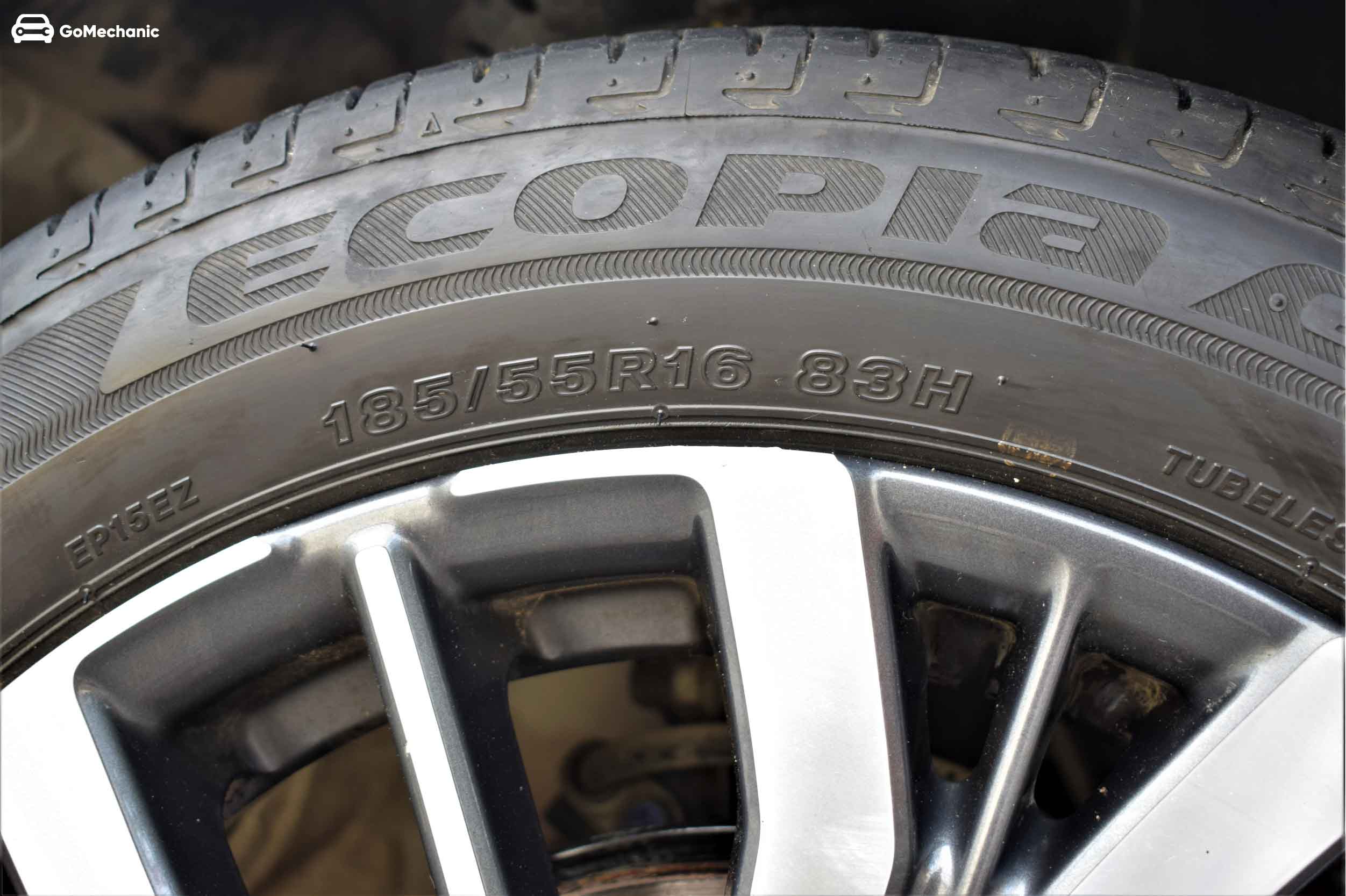
185: This is the maximum width of the car tyre in mm (millimetres), measured from sidewall to sidewall (basically how fat a car tyre is). This is an important number as it determines vehicle handling, traction and fuel economy.
55: This is the aspect ratio of the height of the car tyre sidewall with respect to its width. In this context, it is 55% of the width of the tyre. The higher the number, the greater the sidewall height. SUVs have a greater sidewall height (high profile tyre), thus providing better comfort and rigidity. On the other hand, performance and sports car have less tyre height (low profile tyre) that helps in handling and reduces rolling resistance.
R: This alphabet denotes the construction of the car tyre. R, in this case, stands for Radial. Bias Ply Tyres are denoted with the letter B.
[table id=1 /]
Radial Vs Bias Ply Vs Bias Belted Tyres
- Radial Tyre is the most commonly used tyre found on most cars and motorcycles. Radial tyres have steel belts running at a 90° angle from the tyre tread centre.
- Bias-Ply, also known as cross-ply or diagonal tyre have nylon belts running at a 45° angle from the tyre tread centre.
- Bias-Belted tyre is kind of a hybrid of bias ply and radial tyres. They have the same 45° construction like that of bias-ply but with steel, cables found in radial tyres.
16: This number after the alphabet signifies the wheel diameter. This number is of the highest importance as it is directly related to the size of the rim.
83: This is the load index of a car tyre. The maximum load-bearing capacity of the car tyre. In this respect, 83 stands for a maximum load-bearing capacity of 487 kgs.
[table id=2 /]
H: Finally, the last piece of the puzzle. This alphabet sets the maximum speed rating of a car tyre, which is the maximum speed the car tyre is can endure. H here translates to a maximum speed rating of 210 kmph.
[table id=5 /]
Nitrogen Vs Air: Which is the best for your car? Read Here.
Car Tyre Care: Top 3 Tips
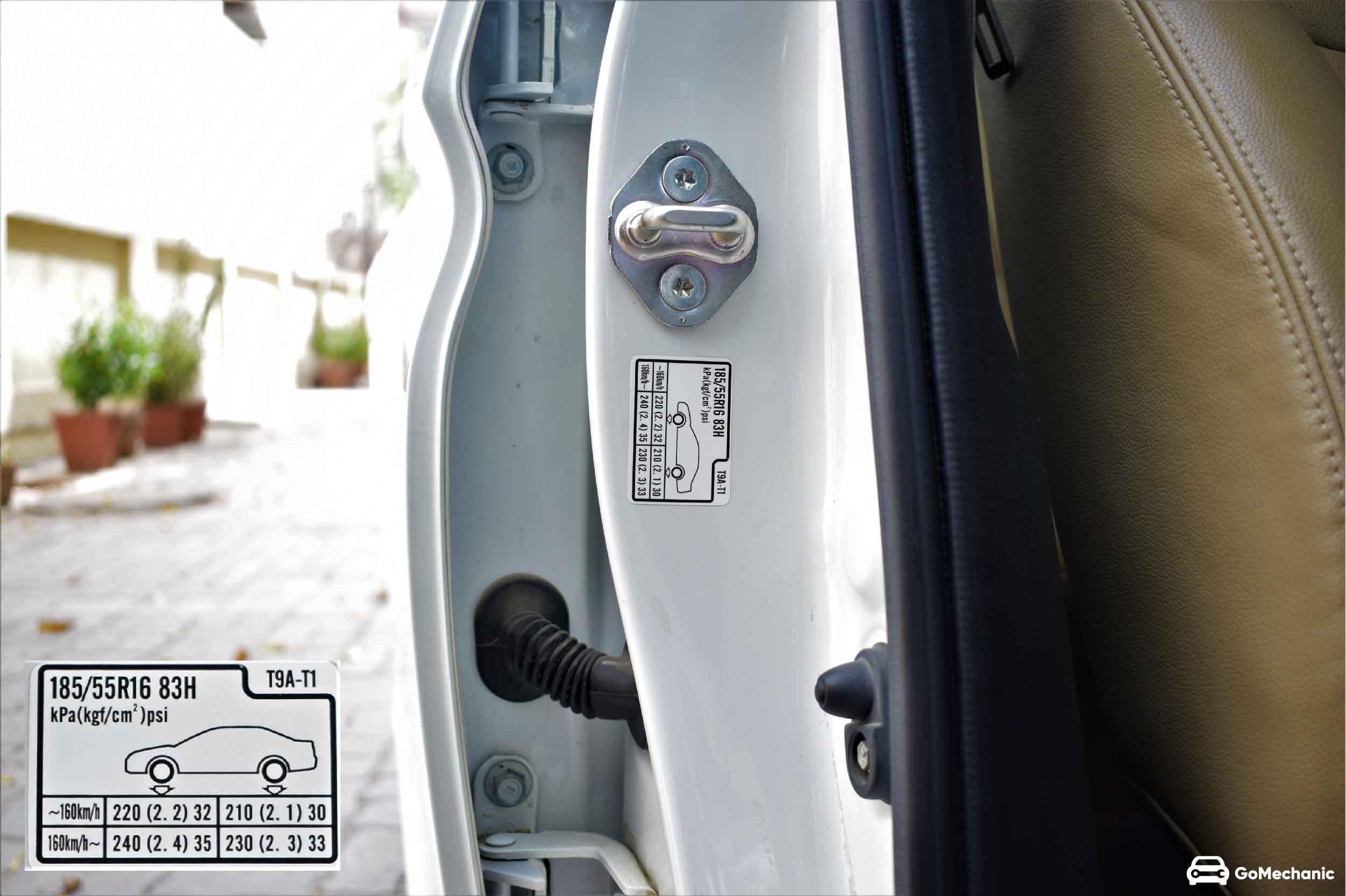
Here are some tops tips on car tyre maintenance:
- Maintain recommended tyre pressure
This one is the most obvious. Find the recommended tyre pressure information on a sticker near the driver side door sill. Check tyre pressure weekly. - Do not overload your car
Overloading your car will put stress on the suspension, which in turn will cause the tyres to wear out or wear uneven. - Wheel Balancing/Alignment and tyre rotation; periodically
Get the wheels balanced and aligned every 5,000 kms to 10,000 kms. Tyre rotation every 10,000 kms.
FAQs
1. What does the marking on a tyre mean?
The printed symbols on the sidewall of a tyre provide important information about its size, load capacity, speed rating, and construction type. These markings help you choose a tyre that is suitable for your vehicle and its intended use. For example, they indicate the type of vehicle the tyre is designed for – such as a passenger car, truck, or SUV- as well as the maximum weight it can support and the maximum speed it is rated to handle.
2. What are C1, C2, and C3 tyres?
There are C1, C2 and C3 commercial vehicle tyres. C1 tyres are applied in light commercial cars, C2 in the middle-duty trucks, and C3 in the heavy-duty trucks. These tyres are designed that be more durable and able to carry more weight than the normal passenger-car tyres. Selecting the appropriate type is significant in order to suit the vehicle’s weight and purpose, avoiding accidents, decreasing wear, and maintaining safe handling.
3. What does 205 55 R16 mean on a tyre?
The specifications of a tyre are identified by the figures on the tyre. The width of the tyre, indicated by the first number in the sequence (205/55 R16), is 205 millimetres. where 205 is the width of the tyre, 55 is the aspect ratio (height of the width 55mm), R indicates radial type of construction and 16 indicates the rim diameter in inches. Such knowledge plays a major role during the process of matching tyres to the vehicle and also appropriate handling of the car, braking and fuel efficiency.
4. How to tell if a tyre is LT or P?
An LT tyre means that the tyre is a Light Truck tyre (that is capable of supporting heavier loads) and it has a higher life cycle, usually used on vans and SUVs. P tyre is a passenger tyre which is fitted to normal cars, sedans or hatches. The rationale of grabbing this marking is to ensure that you are buying the right tyre to fit your car in terms of weight, load and the proposed use to ascertain the safety and performance.
5. Are 7-year-old tyres ok?
The tyres which are not less than seven years old are largely unsafe even when the tread is good. Rubber is also hardened by age, and this reduces the grip, leading to cracks or even explosions. The sidewall of the tyre has a date of manufacture and the sidewall of the tyre has to be scrutinised to determine whether the tyre is worn out or damaged. The replacement of tyres will ensure safety and performance in the road.


[…] Must Read: Car Tyre Markings: What do they mean? […]