






With fuel prices keeping a steady rise and the environment remaining a major concern throughout the world, it is important for consumers to keep themselves updated with fuel prices. Alternative fuels have begun gaining a good response to these issues, out of which CNG ranks as the premier choice. CNG fuels are not only cheaper than conventional fuels but also much cleaner as far as pollution is concerned. It is, therefore, an eco-friendly and inexpensive option for daily rides. Consequently, the number of car owners converting their vehicles to CNG is growing by the day, hence establishing the reason that making a smart investment results in benefiting both the present cash in hand and the future of the planet. Then what’s in the mix behind the migration? It is economics, efficiency, and a shirt to more sustainable means of transport.
In this blog, we shall go over the understanding of CNG, its composition, its advantages of CNG and disadvantages, and how it makes transport more sustainable.
What is CNG in Car?
The first question to think about is what are CNG cars, right? Well, CNG stands for Compressed Natural Gas which is clean and economically viable. It is the substitution for other fossil fuels such as petrol and diesel. Going by the definition of CNG in car , the gas has more than 90% Methane (CH4) and is only one percent of its original volume.
CNG is different from liquefied petroleum Gas (LPG) even though they both use gas under high pressure, gas contained in liquefied state in tanks is stored in a vaporous state in CNG even after compression. These characteristics makes it a viable gas for mobile, residential, as well as industrial application.
Also Read: 7 Seater CNG Cars in India: The Future of Sustainable Family Driving
Key Properties of CNG
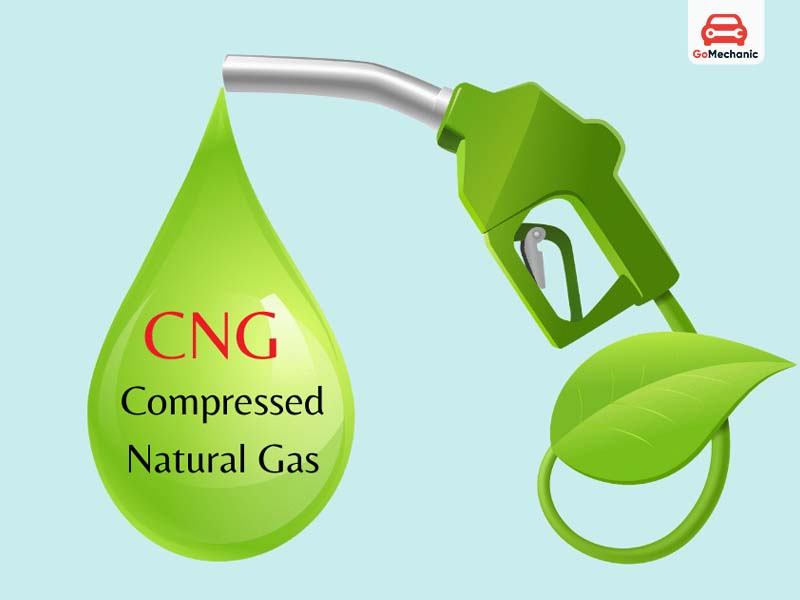
- Composition: Primarily methane (85–95%) with small amounts of ethane, propane, and carbon dioxide.
- State: It is stored in high-pressure cylinders but remains gaseous
- Flammability: This is an inflammable one since it has a higher ignition temperature (~540°C) than petrol and it is also rather inoffensive
- Eco-Friendliness: Relatively much fewer emissions compared to the traditional fuel-based
- Weight: More light than air, will vanish immediately in case of leaks.
Knowing what is CNG and its properties helps us understand why it is becoming rapidly quite preferred in transportation.
Also Read: RTO Full Form: The Essential Guide to India’s Regional Transport Office
CNG Full Form Explained

The CNG full form is Compressed Natural Gas, which comprises three main properties:
- Compressed: CNG undergoes compression to put a large amount of energy in a small volume, thus feasible to use in automobiles.
- Natural: Extracted from natural reserves, CNG is a cleaner-burning fossil fuel compared to petrol or diesel.
- Gas: Unlike LPG or LNG (Liquefied Natural Gas), CNG stays in its gaseous state, which enhances its safety profile.
CNG Cars: The Future of Sustainable Transport
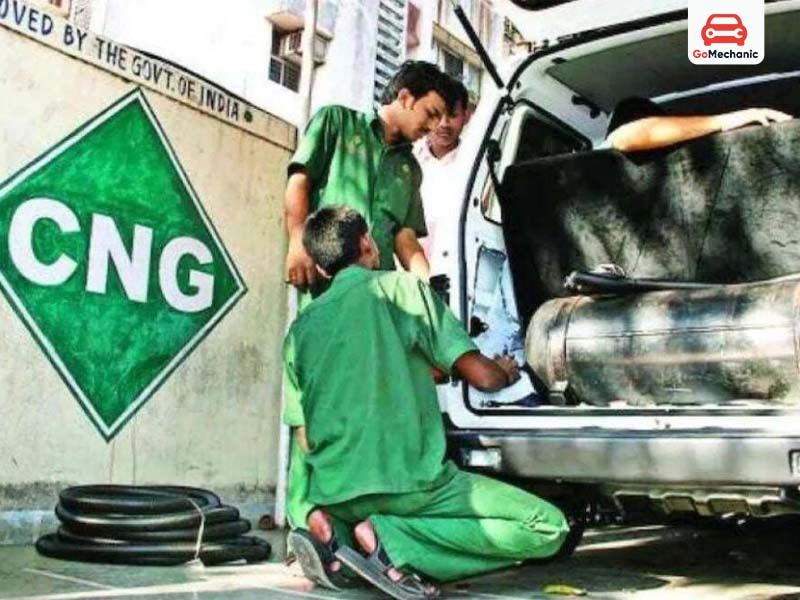
Compressed Natural Gas vehicles have been developed for running on compressed natural gas, a sustainable auto fuel alternative. CNG cars may be either pure CNG-running or fitted for dual-fuel operation, switching over from CNG to petrol, depending on availability or stipulations of driving conditions. Meanwhile, due to the advancement of technology and extending the fueling infrastructure, it provides further attraction to consumers as well as manufacturers with CNG cars-the cheapest in the price for transport of the future.
Related: Best CNG Cars Under 10 Lakhs in India
Advantages of CNG (Compressed Natural Gas) Cars
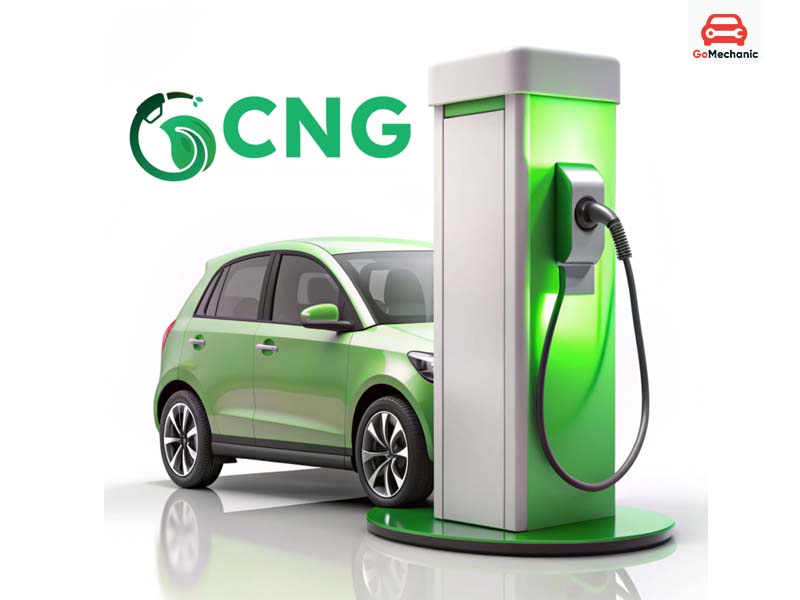
- Environmental Advantages: Compared to gasoline and diesel cars, CNG cars emit much less harmful emissions. This reduces air pollution caused by combustion. Carbon dioxide (CO2), nitrogen oxides (NOx) and particulate matter levels are low.
- Cleaner Burning Fuel: CNG burns cleaner than petrol or diesel, thus contributing to greenhouse gas emissions reduction.
- Low Fuel Cost: CNG is relatively cheaper than gasoline or diesel and saves on a long-term fuel cost.
- Low Maintenance Costs: The wear and tear on CNG engines is less than that of traditional internal combustion engines; hence lower maintenance costs.
- Mostly Domestic: Natural gas is mostly sourced in the immediate vicinity, meaning less dependence on imported oil and much more energy security.
- ICleaner Combustion: CNG is a cleaner fuel that results in less carbon build-up in the engine, thereby increasing its lifespan.
Read This too, RPM Full Form and Meaning Explained: Everything you need to know
Disadvantages Of CNG Cars:
- Limited Infrastructure: Limited CNG Stations: CNG refuelling stations are lesser as compared to gasoline or diesel stations, thus making it less convenient to travel long distances.
- Costlier Initial: Costly Conversion: Converting the traditional vehicle to run on CNG can be expensive. CNG cylinders add the cost to the vehicle.
- Spaces of CNG Cylinders: The CNG cylinders take up valuable trunk space thus reducing the storage capacity in the car.
- Power Output Reduction: Evaluating the output power, CNG engines usually produce less power than gasoline or diesel engines, thereby affecting performance, especially for those vehicles that are essentially high power.
- Natural Gas Availability: Natural gas is virtually everywhere; however, it may be less reliable or accessible in some areas, thus affecting the viability of CNG cars in that region.
- Less Range: Most vehicles with CNG have shorter driving distances than gasoline or diesel vehicles because CNG tanks have limited capacity. Well, even with these disadvantages, the environmental benefits and cost advantages of CNG cars have proven them to be a worthy alternative in some cases especially where good infrastructure for CNG fueling stations exists.
Most Selling CNG Car Models in India
Due to the increasing consumer preference towards eco-friendly ventures, many vehicle manufacturers have introduced CNG variants of their vehicles in the market.
Following are some of the most suitable CNG vehicles available in India:
1. Maruti Suzuki WagonR CNG

- Performance: ~34.05 km/kg
- Price: ₹6.89 lakh (ex-showroom)
- The Maruti Suzuki WagonR CNG is a leading fuel-efficient hatchback in India. The car gives you impressive mileage of 34.05 km/kg. It has a unique tall-boy design, roomy cabin, and dependable driving performance. Priced at ₹6.89 lakh (ex-showroom), the WagonR CNG model is an excellent budget-friendly option. Great for city commuting, it has a great dealer service network from Maruti.
2. Hyundai Grand i10 Nios CNG

- Performance: ~27 km/kg
- Price: ₹7.68 lakh (ex-showroom)
- The Hyundai Grand i10 Nios CNG is a great stylish hatchback with an excellent balance of comfort and smart features. The mileage is a respectable 27 km/kg, in the CNG segment. The i10 Nios CNG starts at ₹7.68 lakh. This pricing is slightly higher attributed to the premium interior & tech features. The vehicle is a daily driver, with both city commuting and occasional use on the highways. Hyundai offers valuable after-sales service.
3. Tata Tiago CNG

- Fuel Economy: ~26 km/kg
- On-road Price: ₹6.55 lakh
- The Tata Tiago CNG is a good value option in the budget hatchback space. It offers decent efficiency with an economy of approximately 26 km/kg, as well as Tata’s emphasis on safety and build quality. Considered one of the more economically viable CNG options on the road, the price comes in around ₹6.55 lakh. It has most of the features and driving character of the petrol variant, and it delivers a stable driving experience. This is a practical option for first-time buyers, especially focused on lower running costs.
4. Toyota Glanza CNG
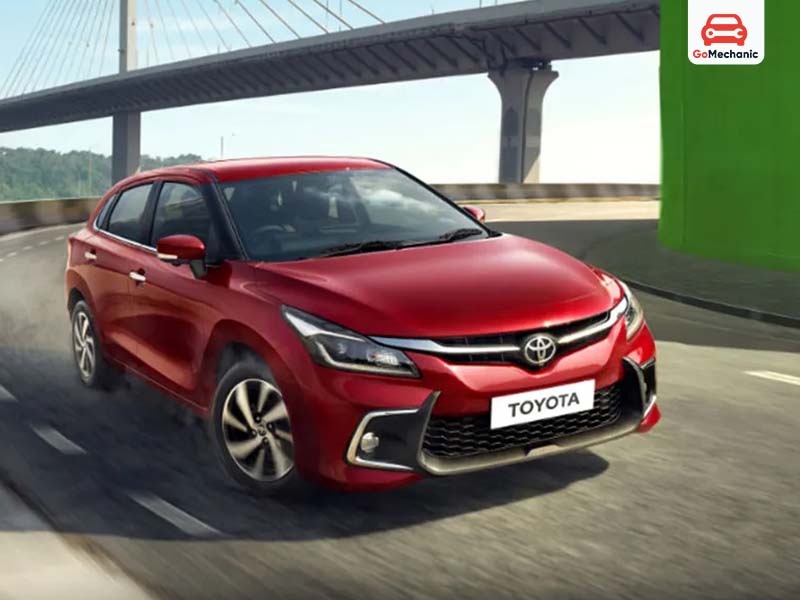
- Fuel Economy: ~30.61 km/kg
- On-road Price: ₹9.70 lakh
- The Toyota Glanza CNG is a premium hatchback and offers one of the best mileage figures at 30.61 km/kg. The Glanza shares its platform and features with the Maruti Baleno while being supported by Toyota’s warranty and aftersales expertise. While pricing may not be entirely fixed, it aims at buyers who are looking for a stylish, feature-rich, and efficient CNG car. The Glanza is considered smooth to drive, offers good cabin space, and offers fuel savings in the long term.
Also Read: Top 10 Most Fuel Efficient CNG Cars in 2024
CNG Car Safety and Maintenance Tips
- CNG kit installation by professionals is a must: Always ensure that certified professionals install your kit of CNG in car to avoid safety hazards or malfunctioning systems.
- Regularly inspect the fuel system for leaks: The system should be checked for gas leaks. CNG itself is odorless; however, it is treated with a sulfur-based odorant. Address it immediately if you smell any gas or see any signs of a leak.
- Visually inspect the CNG cylinders for damage or corrosion: Continuously check the CNG cylinder for any visible signs of damage, rust, or wear. Anything less than perfect integrity in a cylinder can be dangerous, and, thus, needs to be replaced.
- No smoking or open flames near the vehicle: Since CNG is highly flammable, avoid smoking or lighting any flames around the vehicle, especially during refueling, which could ignite fires or explosions.
- Use official CNG dispensing stations and turn the engine off: Ensure that certified dispensing stations are used while the engine is turned off during the battery recharge to avoid unnecessary accidents.
- Learn the procedures: Learn the step-by-step procedures to be followed in a gas leak or fire incident. The knowledge could save a precious life in case of an emergency.
- Regular checks for engine oil, spark plugs, and air filters: Sustaining engine efficiency involves regular checks and replacement of engine oil, spark plugs, and air-filters. The three are crucial with respect to engine wellbeing.
- Check the CNG fuel lines, regulator, and connections: The fuel lines and regulator must be assessed for any damage. Any cracks or loose connections should be checked for any leakages at regular intervals.
- Periodically inspect and pressure test the CNG cylinder: Periodic pressure testing of the CNG cylinder must be carried out to establish that it is safe, and the cylinder must be replaced after 15 years as per regulations.
- Check exhaust systems and catalytic converters: Make sure that the exhaust system and catalytic converter are in proper functioning condition to reduce harmful emissions and ensure trouble-free operation of the vehicle.
CNG Infrastructure in India
India has always been ahead in the infrastructure development of CNG as it has adopted it fast by the public. By 2024, more than 4,500 CNG refueling stations will be in operation within the country. Major metropolitan cities such as Delhi, Mumbai, Pune and also Ahmedabad are leading among others in the integration of CNG not only in the public transport system but also in private vehicles.
The Indian government aims at boosting the contribution of natural gas to the energy sector from the current 6.7% that was recorded in 2020 to 15% by 2030 and hence CNG infrastructure is going to be of great importance in this sector.
Do Read: ADAS Full Form: Understanding Advanced Driver Assistance Systems in Cars
Final Thoughts
Those who are looking to choose such an environment-friendly fuel should know what CNG means. Moreover, they are inexpensive types of vehicles that also do not cause much damage to the air. There are also some other kinds of CNG services, which are very comprehensive in nature and can provide service for installation and maintenance and also consultation services in installation.
Make the sensible choice, both for your budget and the environment—take up CNG now!
FAQ’s
1. What is CNG in a car?
CNG, or compressed natural gas, can be considered an alternative fuel source for powering the combustion engine of the car. Like petrol or even diesel, it burns in cylinders to produce power, but in a cleaner and more efficient way.
2. Are CNG cars better than petrol cars?
Of all the advantages that CNG has to offer against petrol, it is the lesser cost of fuel and low emissions, and better fuel efficiency. It is very environmentally friendly though not having much of pollutants harmful to the environment. But the range of driving can be limited and lack filling stations.
3. Is CNG safe in cars?
CNG is completely safe if used inside cars, as long as it is installed and maintained correctly in the vehicle. The CNG is generally fully equipped with safety features like pressure relief valves and safety shutoff valves to avoid accidents. Remaining safe also needs frequent safety and maintenance checks.
4. Why use CNG instead of petrol?
CNG is much better than petrol in and due to the above reasons, cheaper than petrol, environmentally friendly and less emission, cleaner burning, oil consumption, and creating better air quality, renewable energy reduces dependency on oil.
5. Do CNGs have a better life so compared to petrol cars?
CNG has a longer engine life than petrol because it burns cleaner than petrol and diesel, which leads to less carbon formation in the engine and reduces wear on the engine. In life span, other factors, including driving habits and maintenance, also weigh in.
6. Can CNG be used in all cars?
Not all cars are designed to run on CNG. The car has to be fitted with a certified CNG kit to make sure that it can safely use CNG as fuel. Only vehicles with certain specific engine designs can be converted, and it is advisable to refer to an expert for proper installation.
7. What is CNG and LPG?
CNG (Compressed Natural Gas) and LPG (Liquefied Petroleum Gas) are alternative fuels for vehicles and cooking purposes.CNG is methane that has been compressed into a high-pressure cylinder.LPG is a mixture of propane and butane that can be stored in a liquidise form. CNG is much used in vehicles while LPG is utilized for cooking. Both of the fuels are considered to be cleaner fuels than petrol and diesel.
8. What gas is used in CNG?
Methane gas is the main CNG gas, being a natural fuel that burns cleanly. Methane being lighter than air, it is generally considered safe for use in open areas since it disperses fairly quickly in case of leaks. Methane produces less harmful emissions compared to burning other fossil fuels.
9. What is the mileage given by 1 kg of CNG?
Mileage offered by CNG varies from car to car and depending on the driving conditions. Generally, most CNG-powered cars give mileage of about 20 to 30 kilometers per kg. The mileage for a smaller car would be more, whereas for a larger car it would be less. Good maintenance along with smooth driving will also help further with this performance metric.
10. Is CNG better than diesel?
While CNG is cleaner, meaning less smoke, CO2 and harmful pollutants than diesel, it is also cheaper almost anywhere. Diesel engines tend to get more power and generally are better suited for long, heavier driving.
11. Is it safe to drive a CNG car?
CNG cars are think of as safe as long as the CNG systems are installed correctly and routinely maintained. Factory-fitted CNG kits may already come with systems designed to detect leaks (to keep CNG from rising dangers) and to relieve pressure if needed. However routine oil changes, filter replacement, and servicing is still needed to keep it both safe and to maintain its performance.
12. What is the range for CNG?
Once again you use it in your vehicle, you typically get around 150 to 250 kilometers of range depending on the vehicle and what kind of road it is driving on. The CNG cylinder itself can last 15 to 20 years if properly maintained and tested and met safety standards.
13. Is CNG used for cooking?
CNG can be used for cooking, but generally, it is not used in homes. In homes, we would have what is referred to as Piped Natural Gas (PNG), which is delivered through a direct discussion pipe. CNG would be used more often in vehicles due to its delivery and storage.
14. Is CNG cheaper than LPG?
Yes, since CNG is used as a fuel in vehicles, it is cheaper than LPG in general. However, LPG has greater energy density; thus a vehicle would require less LPG as compared to CNG to cover the same distance. It would eventually depend on your consumption level, the type of vehicle you own, and local fuel price.
15. Should I buy a CNG or petrol vehicle?
A CNG vehicle will be making huge savings on fuel if one is driving daily and for long distances. Petrol vehicles give better drive and demand lower maintenance cost work up quicker refueling when there is an absence of CNG filling station nearby. It all goes down to your budget or driving habits.
16. What gas is used for cooking?
The usual gas used for cooking in almost all households is either LPG or PNG. LPG comes in a cylinder and is used in both urban and rural settings. PNG is similar to CNG and is supplied through pipelines in cities, which is convenient since you do not have to worry about running out of gas in a cylinder.
17. Which is better, PNG or LPG?
Both are good, efficient, and safe to use when cooking, but PNG is easier to use because it is delivered direct through a pipeline and does not require you to replace the cylinder. LPG is better for locations without gas pipelines, and there is a flexibility in the sense that it can be used in different locations since it is portable.


