






Compressed natural gas (CNG) has emerged as the most favorite among car owners in India for its cost-effectiveness, environmental-friendly nature, and government patronage. With the ever-increasing fuel prices, owning a CNG car safely can really save you a few bucks here and there, along with doing your bit with respect to lowering carbon emissions. By the year 2027, ICRA expects CNG to emerge as the second most-preferred fuel choice for passenger cars in India, with the Ministry of Petroleum and Natural Gas has planned for about 17,500 CNG stations across India by the year 2030. This blog tries to serve a complete data-based guide on everything you need to know about car CNG kit prices, ancillary costs, types of kits, benefits, and how to switch.
What is a CNG Kit?
It is a system primarily used in an automobile, either petrol or diesel, and converts it into running on compressed natural gas, commonly referred to as CNG. CNG Kit Installation of components specifically designed for the vehicle to be supplied to the combustion chamber, collecting, regulating, and delivering enriched fuel-where the fuel is CNG-due filling and dripping-off of gas, from the combustion. This is the value addition available for the car owner in the ancillary segment, which includes low fuel costs and lower pollution.
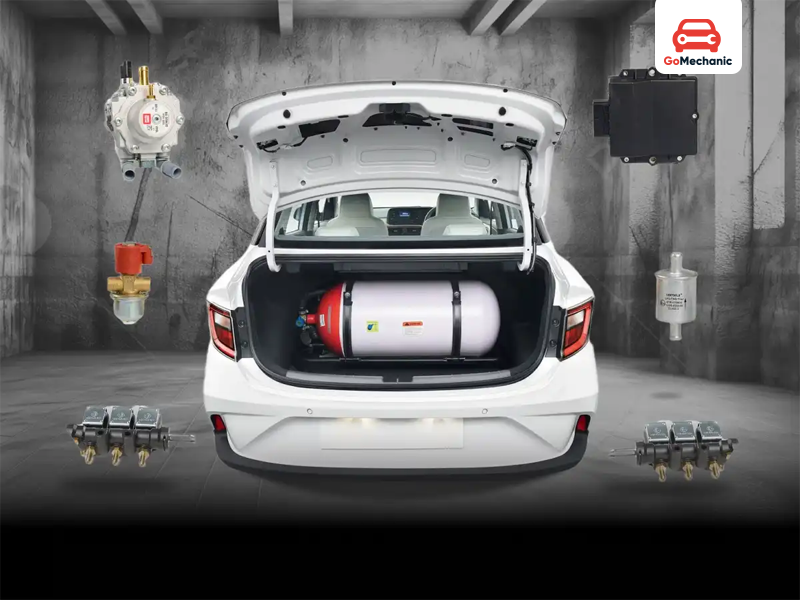
Components of a compressed natural gas CNG installation kit include
- CNG cylinders: CNG cylinders stock compressed natural gas at high pressure. Before usage, the gas is safety checked and the sizing of the cylinder is determined by the types of the vehicle’s gas requirement.
- Electric Control Unit (ECU): Helps by managing and time-to-time filing of gas to the propulsion system. On the cars set into CNG the setting of the fuel air mixture, control on the amount of fuel and correction in the ignition timing are all managed by the ECU.
- Pressure Gauge and Regulator: Pressure gauge detects, as the term suggests the pressure of the gas at the CNG kit and prevents such pressure to lift off center making you experience problems. The regulator also prevents the compressor from pumping more gas than the engine can handle.
- High-Pressure Tubes and Clamps: This is the house that carries the gas, going from the cylinder to the engine. The tubes are made to withstand high pressure, and clamps are used to fasten the gas tubes to prevent any leakage.
- Switching Module: Contrary to common belief, the automobile actually runs momentarily on a blend of CNG and diesel. The control strategy of the switching module allows the driver to select which fuel should be used depending on the availability of the desired fuel.
Types of CNG Kits and Their Features
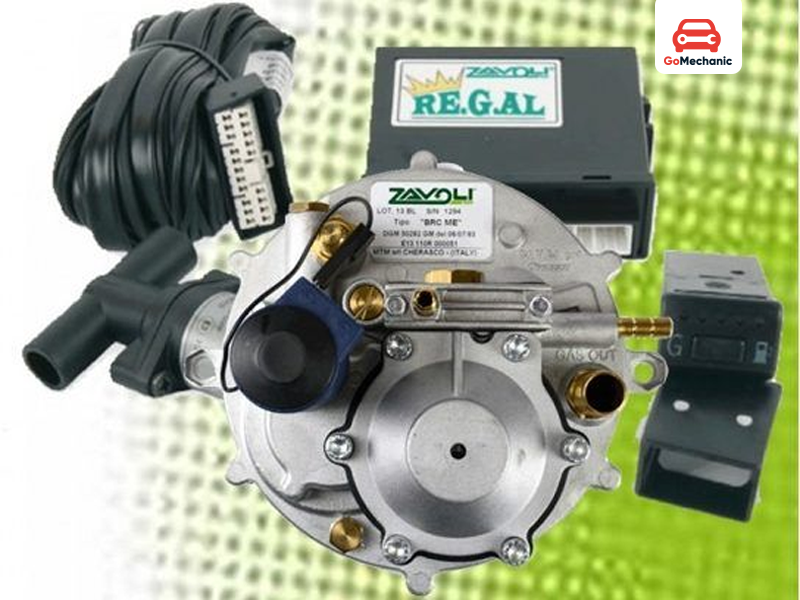
There are several categories of CNG kits, with each aimed at different purposes and, of course, auto characteristics. Three of the most prevailing kits are the sequential cng kits, venturi cng kits, liquid phase cng kits, bi-fuel cng kits and lastly the Mono-fuel CNG Kit.
A Sequential CNG Kit
This works the best, being the most sophisticated in structure and employing an electronic control unit (ECU) to inject CNG in the engine in the desired sequence, on a cylinder by cylinder basis. This reduces requirements, especially when the vehicle is equipped with electronic fuel injection. The operation is easier with more data and operates according to engine request, live in action.
Merits:
- Improvement in the consumption of fuel and the performance of the vehicle.
- Decrease in knocking in the engine and smoothened engine performance.
- In contrast to the other prior systems, lower emissions.
- Such a system is best suited for vehicles with EFI system.
Demerits:
- The cost of installation is high.
- It requires more care in its maintenance given the high level of the kit’s sophistication.
- It does not fit cars with holes in place of any other older carburetor systems.
There are two types of sequential CNG Kit
| Feature | Closed Loop | Open Loop |
| Emissions | Lower emissions, eco-friendly | Higher emissions, less eco-friendly |
| Engine Performance | Slightly reduced performance for eco-efficiency | Enhanced performance with higher power |
| Fuel Efficiency | Improved fuel efficiency | Potentially lower fuel efficiency |
| System Design | Closed-loop, adjusts for emissions | Open-loop, no feedback, performance-focused |
| Ideal Users | Eco-conscious individuals | Performance enthusiasts |
| Maintenance | More complex due to emission control | Simpler, but performance parts need attention |
| Cost | Higher initial cost | Lower initial cost |
| Usage Environment | Best for city driving | Best for high-performance or race environments |
| Environmental Impact | Lower impact, reduces pollution | Higher impact, increases pollution |
Do Read: Understanding CNG Automatic Cars: A Guide
Venturi CNG Kit
Additionally, unlike Sequential CNG kits, venturi CNG kits are considered quite an antiquated technique even though they take advantage of a vacuum-based venturi valve to combine CNG with air getting in the engine.
Advantages:
- Lower initial cost.
- It is simpler to set up and keep.
- Can be incorporated in old carburetor-driven vehicles.
Disadvantages:
- Less effective compared to sequential kits.
- Partial drop of engine performance and fuel efficiency may be experienced.
- It’s not suitable for today’s more modern high performance cars.
Liquid Phase CNG Kit:
This system is designed to preserve CNG in a liquid state therefore making it possible to push the liquid into the driving compartments at a very close range. The liquid CNG is expanded very speedily upon entering the engine enabling more reliable combustion and greater efficiency.
Advantages:
- Increased fuel efficiency and better power output.
- Decreased emissions rates are enabled by the enhanced combustion encountered.
- Specified for recreational use and sports vehicles due to their performance.
Drawbacks:
- Compared to the majority of other solutions, the setup is much more sophisticated and requires more resources.
- Has to be ordered separately and installed additionally.
Bi-Fuel CNG Kit
Bi-fuel set-up in the vehicle means that the vehicle runs on natural to pertrol (or diesel) and also most to natural gas. This means when the petrol/diesel tank is empty the vehicle will not stop because the system automatically switches to natural gas.
Advantages:
- It has got some great design concepts that helps it perform without cng and also without interruption.
- Good for distance covering vehicles.
Disadvantages:
- It involves the installation of components related and two fuel tank mechanism biingly fuel system.
- Also compared to mono-fuel kits its fuel economy is a bit lowered.
- The bi-fuel is more extensive to install and maintain. Also it will cost more to have it in the car.
Monofuel CNG Kit
Mono-fuel CNG kits are designed for vehicles that exclusively run on CNG. These kits are often installed in vehicles with advanced fuel systems, such as sequential gas injection. In other words, the conventional fire can run on petrol as well as on gaseous fuels.
Advantages:
- CNG offers the highest compression ratio potential among the alternative fuels.
- Intelrink CNG powered engines are simple in design and feather less components.
- It is less demanding like the engines of any other fuel types in terms of maintenance.
Disadvantages:
- No backup fuel option if CNG runs out.
- Limited driving range compared to bi-fuel systems.
Why Choose CNG? Key Data and Insights
Compressed Natural Gas (CNG) has been in demand among vehicle owners wishing to reduce fuel losses and also prove less hard on the environment. From cost savings to being environmentally friendly, CNG is full of positive aspects, attracting car owners in India. Let us take a look at some solid reasons to consider a switch-over to CNG backed by the appropriate data and information:
- Savings on Fuel
One of the main reasons that owners of cars were inclined toward CNG is high savings on fuel. Let’s compare CNG with traditional petrol and diesel from close quarters. The details are:
- CNG Cost: ₹70-₹80 per kg (varies from state to state).
- Price of petrol: ₹100-₹110 per litre;
Once again, CNG has the lowest running cost, on a per-kilometre basis, and this translates into a long-term value proposition for owners with high annual mileages.
- Greener Alternative
Along with economical sides, it possesses environment friendly nature meeting the world requirements for achieving harmful emissions reductions:
- Reduction of CO2 Emission: CO2 CNG emits about 25% less CO2, which is much less than petrol and diesel. Cleaning of air will be enhanced and thus opened a portal for greenhouse effect reduction.
- Reduced Nitrogen Oxides (NOx): CNG releases much lower quantities of nitrogen oxides-pollutants contributing to smog and respiratory diseases than petrol and diesel.
- Cleaner Combustion: Compared to petrol and diesel, CNG vehicles combust much cleaner and emit fewer particulate matters into the atmosphere.
Also Read: Best CNG Cars Under 10 Lakhs in India: A Comprehensive Guide for Practical Buyers
- To bolster its infrastructure
With CNG demand on a constant rise, filling stations are emerging fast across different states in the country. The greater the number of CNG refueling stations, the easier vehicle owners find it to access this cleaner fuel.
- Present CNG Stations in India (2023): There are currently said to be some 4,500 CNG refueling stations across India, i.e., a number that keeps on rising with adoption of CNG as mainstream fuel in more and more urban regions.
- Future Projections (by 2030): The expected increase by about 17,500 CNG stations in the coming years would imply a major upside for the easy access and availability pattern in the country.
- Long-Term Savings that Go With Sustainability
Compressed natural gas (CNG) could be a short-term measure in fuel economy calculations but actually facilitates the recovery of investment costs on CNG conversion kits over a number of years. The operational costs of maintaining a CNG vehicle are less than those of petrol or diesel vehicles:
- Less Maintenance Cost: CNG burns cleaner, which results in engine wear and tear being lessened. Therefore, this saves on repairs and increases engine life.
- Reduced Oil Change Frequency: CNG vehicles use less oil change than petrol or diesel vehicles, leading to time and cost savings.
- Engine life enhanced: The clean-burning nature of CNG results in less frequent and longer overhaul intervals, thus further reducing maintenance costs in the long run.
- Government Incentives and Support
The Indian government has pioneered the promotion of CNG vehicles with an eye toward controlling pollution and reducing dependency on fossil fuels. Several state governments are also providing CNG vehicles with incentives and subsidies including:
- Tax Benefits: CNG vehicles are subject to reduced registration taxes, road taxes, etc.
- Subsidies: Subsidies are offered for fitting CNG conversion kits to vehicles.
- Exemptions: CNG vehicles are often exempted from certain regulations put on them in pollution control purposes, especially in ultra-polluted regions.
All of the above grants provided by the government have made conversion to CNG a lot more lucrative for anyone willing to cut down on the initial cost.
CNG Kit Price in India: Comprehensive Cost Breakdown
| CNG Kit Type | Price Range (₹) |
| Factory-Fitted Sequential Kit | 90,000–1,00,000 |
| Aftermarket Sequential Kit | 40,000–50,000 |
| Venturi Kit | 20,000–35,000 |
| Open Loop Setup | 15,000–20,000 |
| Closed Loop Setup | 22,000–25,000 |
- Factory-Fit Sequential Kit:
- Costs Range-90,000-1,00,000₹.
- This kit was generally installed at the time of manufacturing the vehicle. Much reliability is expected as it is optimized for that specific model of the car. Factory-fitted pack sequential gaskin comes with better performance and efficiency in fuel consumption and a warranty from the vehicle manufacturer.
- Secondary Sequence Kit:
- Cost Range-40,000-50,000₹.
- These are aftermarket kits intended for retrofitting the vehicle with a CNG system not originally equipped by the car manufacturer. These aftermarket kits provide sequential fuel injection, letting the smooth effect between petrol and CNG. While this set is relatively cheaper than factory-fitted kits, a proper installation could still give fantastic performance.
- Venturi Kit:
- Cost Range:20000-35000.
- This is the kit that achieves application on old vehicles or simple ones. It needs the vacuum system for controlling the flow of CNG into the engine, which gives an economical process for fuel conversion. Not as efficient as sequential kits, Venturi kits can be good for the economy of a buyer.
- Open Loop Setup:
- Cost Range-15000-20000.
- An open loop system is not dependent on anything from the engine that modifies the fuel-to-air ratio. A cheaper setup for sure but promises lower mileage and slight erosion in engine performance with respect to the more sophisticated systems one may choose from.
- Closed Loop Setup:
- Cost Range-22000-25000.
- Closed-loop systems have a feedback system that modifies the air-fuel ratio concerning performance optimization. This system is pretty much good in comparison to an open-loop setup with its efficiency but still isn’t as sophisticated as the sequential ones.
Additional Costs to Consider in CNG Kit Price in India:
- RTO Registration and RC Endorsement: ₹2,000–₹3,000.
- Insurance Premium Increase: Adds about 10% to your annual premium.
- Maintenance: Varies based on components like filters, spark plugs, and cylinders.
Top RTO-Approved CNG Kit Brands
Choose an RTO-approved kit for safety and reliability. Here’s a list of trusted brands along with CNG kit price in India:
Brand |
CNG Kit Cost |
| Tomasetto | 40,000 |
| Lovato Autogas | 31,999 |
| Bugatti | 45,000 |
| Longas | 42,000 |
| Zavoli | 39,999 |
| Landi-Renzo | 30,000 |
Advantages of Switching to CNG
- Lower Operating Costs:
CNG has been one of the major reasons to switch to CNG due to low running costs. It saves you around ₹2.5/km as compared to petrol. Thus, expenses on fuel will be less and hence CNG becomes more economical for daily or long-distance driving. An increase or decrease in fuel prices may not affect the consistency in rates of CNG and would be helpful to car owners in budgeting their expenses as well.
- Environment Friendly:
CNG is again much cleaner fuel than conventional fuels like petrol and diesel. The CNG has its reduced tailpipe emissions carbon monoxide, nitrogen oxides, and particulate matter, thus being an eco-friendly alternative. Lesser carbon footprint complements the national agenda of India to bring down air pollution and improve environmental quality. The CNG option is also an opportunity for auto users to participate actively in the fight against global warming and the necessity of sustaining energy sources.
- Better Mileage:
If you are talking about fuel economy, then CNG offers you a better fuel economy than petrol. Basically, 1 kg of CNG gives you about 25% more mileage than 1 liter of petrol because it saves you on fuel and you will need less filling in potential cross-country travel.
- Safe Fuel:
CNG is safer compared to petrol or diesel. CNG has a higher auto-ignition temperature of 540° C which makes it less flammable as compared to petrol which ignites at much lower temperature. Moreover, CNG being lighter than air disperses readily in the event of leakage thus avoiding harbored ignition.
- Less Engine Wear:
With CNG, mixing with the engine lubricants is less likely, therefore there is less possibility of creating deposits and sludge formation. Reduced wear on engine components from deposits and sludge will occur over time. Furthermore, the cleaner combustion will also increase the life of some of the engine components, for example, pistons, and valves. This will mean less repair work and reduced maintenance costs.
Challenges to Consider
- High Initial Costs:
Retrofitting a car for CNG operations would mean huge upfront costs. The installation of a CNG kit varies from ₹50,000 to ₹60,000, depending on various factors such as the vehicle and the type of system used. This installation cost excludes regular maintenance costs over the years that might be required. While the initial investment might seem exorbitant, it generally pays off in the long run due to lesser fuel expenditures.
- Limited Boot Space:
One of the practicalities with CNG conversion would be that the CNG cylinder consumes a lot of boot space. Large amounts of luggage or cargo would be an inconvenience for some car owners. Depending on the car model, a considerable reduction in luggage space would therefore be created, thus severely limiting its utility for long trips or family vacations.
- Performance Issues:
While CNG does have plenty of fine advantages, it may put in a slight reduction in performance as compared to petrol or diesel. The CNG generally has less energy given to drive the vehicle, which may lead to just enough weak performance needed against very intense road requirements.
- Refueling Lines These Could be Long:
CNG is still emerging in India, so CNG refilling stations still might not be decentralized as most petrol and diesel stations. Many of these CNG filling stations may keep long queues for filling gas, especially during peak hours. This inconveniences the motorist traveling long distances or near CNG stations of which there are few.
CNG Kit Maintenance Expert Tips
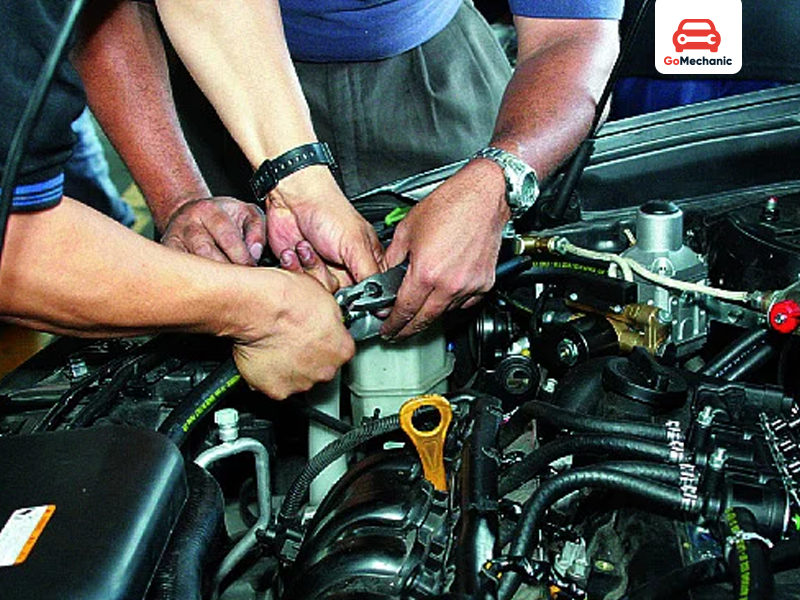
- Air Filters: Proper air filtration is the life of Engine Efficiency and serves as the life-extending air passage of any CNG system installed. It is recommended to clean the filter every 5,000 km and replace it with a new one once every 10,000 km to guarantee optimal air flow to the engine. Dirty or choked air filters tend to make engines lack performance, efficiency, and sometimes cause the engine to sound rough. A healthy air filter would thus ensure smooth combustion route, which further leads to perfect smooth running and fuel economy.
- Spark Plugs: Working closely with the CNG ignition mixture formation in the engine, spark plugs are rapidly confirmed as having been worn out by misfires. Because of this, the engine performance is poor with the misfires resulting in fuel efficiency degradation. The range of replacement being at 20,000 to 40,000 km ensures that optimal ignition remains and ensures smooth operations of the engine. Checking the condition of the spark plugs at regular intervals should help control engine misfires and enable the optimum usage of CNG.
- Throttle Body: At the intake system, this is the part that regulates the amount of air that goes into the engine. Over the time, carbon deposits start building up, especially from running on CNG. Cleaning the throttle body every 10,000 km can help prevent this buildup and results in better engine acceleration and overall performance. Maintaining throttle cleanliness also ensures constant fuel consumption while preventing stalling and rough running while idling.
- Cylinder Testing: Routine checking of the CNG cylinder will, from time to time, prove to be essential to the safe and reliable operations of the system. CNG cylinders are hydro-tested every three years for structural integrity, leaks, and damage. The tests reveal the safety of use with no hidden defect that would hinder the safe use of the cylinder. Regular testing would prolong its lifespan and the continuous best condition for your CNG system.
- Using Quality CNG Kits: With a price difference and low-quality kits being cheaper, it may seem that it’s a way to save costs while, in fact, they lose efficiency at performance and burn fuel quickly. Moreover, they would need repair frequently. Go for trusted and certified brands that comply with safety standards and designed for your vehicle. High-quality kits assure their customers smooth driving, efficiency in performance, and safety.
- Drive Smoothly and Maintain Steady Speed: As already mentioned, smooth driving is often the best means of using CNG engines like any other engine. Fast acceleration and hard braking should be avoided for fuel economy purposes. Maintain a steady speed, especially over the freeways, and get the best mileage from your CNG system. Besides, smooth driving reduces wear and tear on the CNG system and assures a longer duration for its components
Interactive Tools You Can Use
- CNG Fuel Consumption Monitor: This tool can help in the tracking of fuel consumption in a CNG vehicle with time. The input of fuel consumption; distance traveled; and refuel costs helps monitor the efficiency of the vehicle in using CNG. It can be important in identifying the underlying problems for poor efficiency-related cases, such as malfunctioning systems or driving habits, which can help adjust them accordingly.
- Cost-Savings Calculator: Cost Savings Calculator enables a user to predict potential savings from switching to CNG. It takes input like daily kilometers, the current fuel usage, and price information for fuel to use to project a possible savings forecast on fuel and overall running costs. This is a very important tool for those that want to look at the economics of their switch before they actually make the switch as it can provide forecasts of considerable savings over time.
- Valification of conversion: Among all vehicles, some are not suitable for conversion to CNG. The compatibility checker is supposed to inform users whether their specific model can be converted to CNG or not. Enter the make and model of your vehicle to know if your car is fit to be retrofitted by a CNG kit and detail on the type of conversion kit required.
- CNG emission savings calculator: It should indicate to you the approx portion of carbon emissions reduced due to using CNG as compared with petrol or diesel. Components kept account of: distance driven, engine size, and average consumption of fuel. For the eco-sensitive people this gives an indication of an accurate amount being contributed in clearing the environment by using CNG.
- CNG Kit Maintenance Reminder: A digital reminder application or mobile app can be designed to remind users of routine maintenance on CNG kits. Typical tasks include air filter change, spark plug check, cylinder test, throttle body cleaning. Set up reminders so that important maintenance schedules are not missed to ensure CNG systems run smoothly and efficiently.
Should You Make the Switch to CNG?
For Indian car owners searching for an economy and environmentally concerned fuel alternative, the answer is yes. They may consider the conversion and maintenance costs to be rather high, but savings in money over emissions in the greater long run make CNG a choice they cannot pass. Individuals who spend more time behind the wheel and with a concern for high fuel prices can save quite a lot on CNG. Thus, in a way, by reducing air pollution, they are themselves contributing to the national goal of having a cleaner and greener India.
One should consider the pros and cons, their own driving styles, and whether their car is capably convertible to CNG before taking the plunge. If you are keeping up with your CNG studies, other things hard to ignore are financial and environmental benefits.
FAQs
1. Does CNG improve mileage?
Yes, CNG offers around 25% better mileage compared to petrol due to its higher energy efficiency. It is a cost-effective fuel choice for long-distance driving.
2. Which is the best CNG kit brand?
Trusted CNG kit brands include Tomasetto, Lovato Autogas, and Bugatti, known for their reliability and performance. These brands offer RTO-approved kits for various vehicles.
3. What is the price of a CNG kit?
The price of a CNG kit ranges from ₹30,000 to ₹50,000, depending on vehicle type, kit quality, and installation. Always ensure the kit is RTO-approved for safety.
4. How many km can 1 kg of CNG take?
One kg of CNG generally covers 20-25 km, depending on factors like vehicle type, driving style, and the CNG system’s efficiency. Mileage may vary with engine power and terrain.
5. What is the price of 1 litre of CNG in India?’
The cost of 1 kg of CNG is usually ₹70-₹80, as CNG is sold by weight rather than volume. Regional variations can affect the price based on local taxes and supply-demand.
6. What is the price of CNG kit for automatic cars?
The price of a CNG kit for automatic cars typically ranges from ₹40,000 to ₹60,000, depending on the vehicle model and the complexity of installation.
7. Is CNG kit successful in automatic cars?
Yes, CNG kits can be successfully installed in automatic cars, provided they are compatible with the vehicle’s transmission system and properly installed by professionals.
8. Is CNG automatic available?
Yes, CNG automatic cars are available, but they require specialized kits designed for automatic transmission to ensure smooth operation.
Others Read: Best CNG Cars Under 10 Lakhs in India


