






Pollution in Delhi becomes unmanageable, government implements GRAP stage IV, BS-III petrol cars and BS-IV diesel cars temporarily banned.
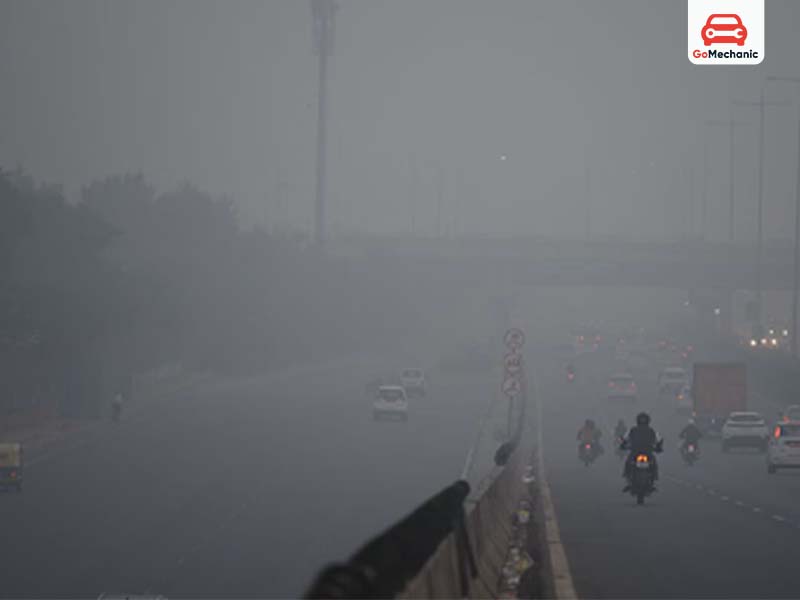
Delhi’s Air Quality Index(AQI) had never seen such figures in the past that came out in the last few weeks. With the AQI crossing 800, Delhi seems to be covered in a blanket of smoke. The government has planned to implement GRAP-IV(Graded Response Action Plan) in Delhi-NCR regions to tackle this dreadful situation, shifting from GRAP third stage. During this implementation, BS-III petrol and BS-IV diesel cars will be temporarily banned on roads.
On Friday(15th November), Delhi Traffic Police issued 514 challans, each for Rs 20,000 to those who defied the implementation. The combined challans stand-alone over Rs 1 crore. Moreover, Delhi Traffic Police also impounded more than 2000 overaged vehicles, which includes 260 diesel cars and 2000 petrol cars and two-wheelers.
What is Allowed and What is Not?
Under the GRAP-IV, petrol cars with BS-III emission norms and diesel cars with BS-IV emission norms are restricted on Delhi-NCR roads. Anyone caught driving such a vehicle during this ban will be charged Rs 20,000, the vehicle may also be impounded. However, petrol cars with BS-IV or above and diesel cars with BS-V or above certification are allowed to drive with no restrictions. CNG cars and electric vehicles(EVs) do not have restrictions either.
What Documents Are Essential During This Ban?
Drivers with vehicles that are exempted from GRAP-IV restrictions also need to be cautious during this time. A PUC(Pollution Under Control) certificate copy is essential to avoid penalty. On Friday(15th November), Delhi Traffic Police issued 4855 challans for not carrying a valid PUC certificate. The combined amount for challans stands over Rs 4 crore, Rs 10,000 for each vehicle.
What are BS emission Norms?
BS-III
BS-III (Bharat Stage III) emission norms were first introduced in India in 2005 for two-wheelers and later for four-wheelers in 2010. These standards aimed to reduce harmful pollutants like carbon monoxide (CO) and nitrogen oxides (NOx) by improving vehicle fuel combustion and efficiency. However, with higher levels of emissions compared to advanced standards, BS-III vehicles were officially phased out in 2017 to promote cleaner transportation technologies.
BS-IV
BS-IV (Bharat Stage IV) norms were implemented across India in April 2017 to combat increasing pollution levels. They introduced stricter limits on harmful pollutants, especially particulate matter and NOx, while mandating the use of low-sulfur fuel (50 ppm). Vehicles were required to adopt technologies like fuel injection and exhaust after-treatment systems. These norms paved the way for BS-VI in 2020, aimed at further reducing environmental impact.


