






Do you happen to be on a quest to provide your car with a futuristic touch? If so, a conversion kit for an EV could be useful for you. It does not matter if you are deeply concerned with how green it is, you want to save money, or you just happen to have a general interest in electric vehicles – a power conversion of your vehicle is always a sustainable and affordable option. Choosing the right kit will allow you to replace your beloved gas-guzzling car with a quiet and smooth electric car that will aid the world and save your money in the process too. Are you excited to learn how an EV conversion kit is able to unlock the potential of your vehicle? We have curated everything you have to know, so let’s leap right in.

What is an EV conversion kit? The Upsides
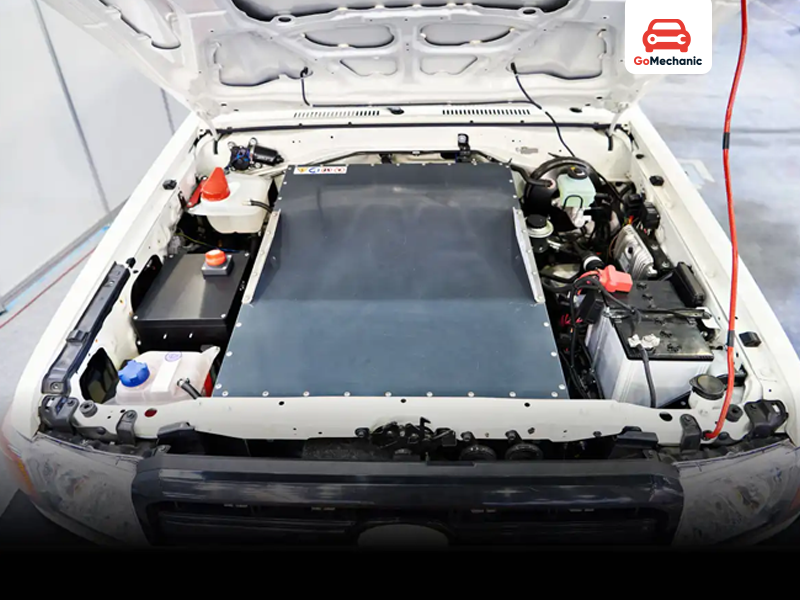
An EV kit will allow you to transform your diesel or gas-powered vehicle into an electric vehicle. The kit typically includes essential components like an electric motor, battery pack, controller, charger, and all other parts necessary for the conversion. With the help of this kit, you can breathe new life into a car that originally ran on an internal combustion engine, turning it into a fully functional electric vehicle. This is an excellent choice for individuals who wish to support the environment but have fewer resources. The popularity of electric cars, in view of the rising focus on sustainability, is encouraging increasing numbers of people globally to pursue them. Subsequently, demand for EV conversion kits has substantially risen.
THE UPSIDES OF EV CONVERSION KIT
- Reduced Operating Cost –A key benefit is reduced operating costs. Electric vehicles are cheaper to run than traditional ones because of the reduced fuel and maintenance costs. Furthermore, these conversion kits can prolong the life of older cars, especially in countries with severe restrictions on old fossil fuel cars. These vehicles can be kept on the road longer by converting them to electric.
- Environment Friendly – One more major advantage of EV conversion is the environmental impact. As no fuel is burned in electric cars, their carbon footprint is significantly smaller than [traditional cars], and they help to mitigate inner-city air pollution. The use of renewable energy for charging further increases these environmental benefits. Additionally, there are fewer moving parts than in traditional vehicles, resulting in reduced maintenance.
Types of EV Conversion Kit
- AC Conversion Kits: More efficient but expensive (₹4 lakh to ₹10 lakh).
- DC Conversion Kits: More affordable (₹2 lakh to ₹5 lakh).
- DIY Conversion Kits: Cost-effective option but requires technical skills.
Here is a list of some of the Best EV conversion Kits available in India.
| NAME | PRICE |
| Bharat Kit | Rs 5 Lakh |
| E-Trio | Rs 4 Lakh onwards |
| Bosch eAxle | NA |
| Northway Motorsport | Rs 12.5 to Rs 14.5 Lakh |
| doReal Motors | Rs 3 to Rs 9 Lakhs |
1.Bharat Kit
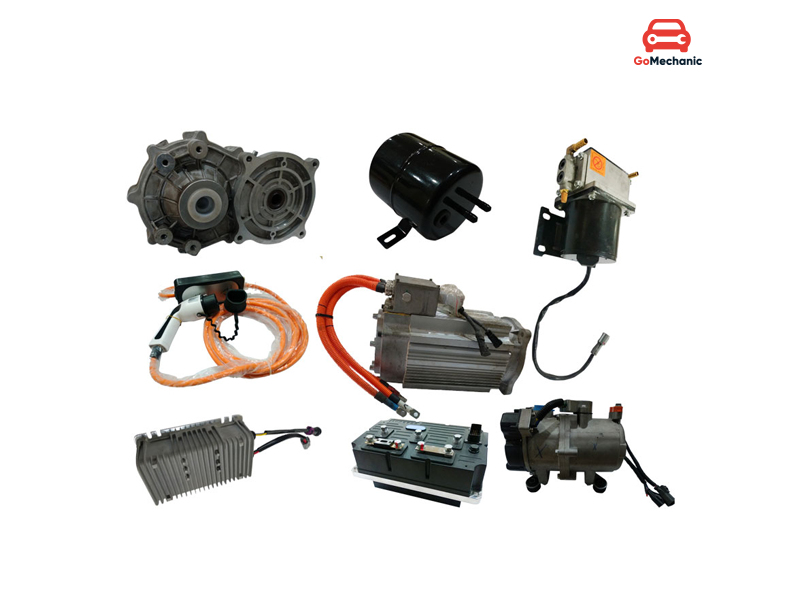
Bharat Kits, or Bharatmobi converts hatchbacks and sedans like Maruti Suzuki Alto, Wagon R, and Swift Dzire using certified kits. These include a battery, motor, controller, gearbox, and charger. The customized LiFePO4 battery offers an 80 km range, 80 km/h speed, charges in 5 hours, and costs about ₹5 lakh.
Key Specs:
- Range: 80 km
- Top Speed: 80 km/h
- Motor: 15 kW
- Battery Type: LiFePO4
- Charging Time: Up to 5 hours
2. E-Trio
E-Trio converts internal combustion engine vehicles to electric ones, focusing on affordable models like the Maruti Suzuki Alto, Wagon R, and Dzire. They offer two kits, EV-150 and EV-180, starting at ₹4 lakh. The conversion takes 48 hours and includes an upgraded suspension.
Key Specs:
- Battery Type: Lithium-ion
- Range: Up to 180 km
- Conversion Time: 48 hours
3. Bosch e-Axle
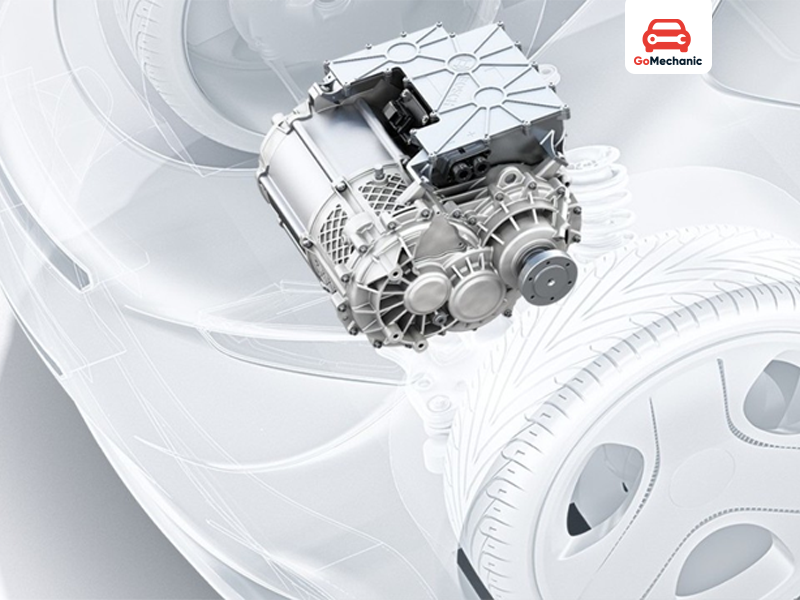
It features 96% efficiency, scalable outputs from 50 kW to 300 kW, and operates at 400V/800V. The integration reduces extra parts, potentially lowering costs.
Key Specs:
- Output: 50-300 kW
- Torque: 1,000-5,000 Nm
- Motor Speed: 16,000-18,500 RPM
- Weight: ~90 kg
- Voltage: 400V / 800V
4. Northway MotorSport

Northway Motorsport specializes in developing electric vehicle powertrains and conversion kits for cars, including light commercial vehicles like the Tata Ace. They offer popular kits for models such as the Maruti Suzuki Dzire.
Their Drive EZ kit for the Dzire provides a range of 120 km, with a charging time of 5-6 hours. For longer range, the Travel EZ kit offers up to 250 km, but it requires up to 10 hours for charging. The cost of the kits depends on the vehicle, with the Travel EZ kit reaching up to ₹14.5 lakh for certain cars
Key Specs:
- Top Speed: 200 km/h
- Range: Up to 300 km
5. doReal Motors
doReal Motors, located in Haryana, converts petrol and diesel vehicles to electric. They provide conversion kits for models like Maruti Suzuki 800 and Hyundai Grand i10. Costs range from ₹3 lakh to ₹9 lakh based on the vehicle.
Key Specs:
- Top Speed: 115 km/h
- Range: Up to 320 km
- Battery: 40 kWh
- Motor: 50 kW
Key Considerations Before Converting Your Car to Electric
- Legal Requirements
In India, EV conversions are allowed, but you must use ARAI-approved kits. Without these kits, your converted vehicle cannot be legally re-registered with the RTO, making the conversion illegal. Choose a kit that meets the necessary regulations to avoid legal issues.
- Vehicle Compatibility
Not every vehicle can be converted to electric. Check if your car’s structure and platform are suitable for retrofitting. Major brands offer ready-to-install kits, but unique vehicles may need custom solutions, which can be more expensive.
- Battery and Performance Considerations
It’s an integral part of your battery conversion and various options like solid-state, lithium-ion, etc all offer their advantages and disadvantages. It’s important to work closely with the manufacturer to find the right battery and motor setup that fits your driving style and requirements.
Check this out The Rise of Electric Vehicles: What It Means for Car Servicing
Steps for Conversion
Step 1: Remove the Internal Combustion Engine Components
Internal Combustion Engines Disassembly: The first step involves extracting the internal combustion engine system. This process includes the engine dismantling, which encompasses the fuel tank, starter, muffler, radiator, and even exhaust systems. Additional components removal: Any parts linked to the conventional sputter engine, which include the fuel lines, are deemed unnecessary and will be disassembled.
Step 2: Install the Electric Motor
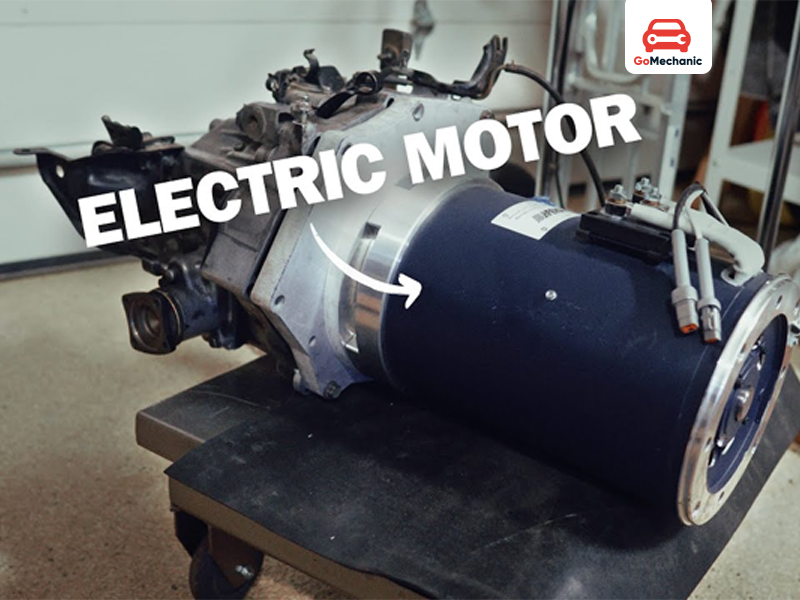
Electric motor: The center of the conversion is embedded in the electric motor. As a result, the size and type of the vehicle dictate the type of motor chosen. The conventional sputter engine is replaced with an electric one which is mounted to the driveshaft after transmission.
Step 3: Install the Battery Pack
Battery placement: The location of the electric motor is fitted with the battery pack, which is determined by the type of vehicle. The pack is secured in an adequate location and the quantity of batteries is determined by the car’s size, range of motion, as well as space inside. Battery type: Effective batteries, which are mostly lithium-ion, have a longer life span and high energy density.
Step 4: Incorporating the Power Controller
Assembly Instruction: The power controller is a very important component because it manages the supply of electric current from the battery to the electric motor. It is also responsible for the correct amount of current received by the motor.
Step 5: Modifying and testing
Upgrade the suspension and other hardware to support the extra weight of the batteries. Modify brakes and axles for smooth operation. After conversion, re-register the vehicle at the Regional Transport Office (RTO) to get a new registration certificate. Test the vehicle to ensure proper performance and efficiency.
The Bottom Line: Is it worth the money and hassle?
The bottom line is if you are concerned about sustainability and long-term cost saving, then although a bit daunting as an investment, it would prove to be fruitful in the long run. It all depends on you, how you want to weigh the investment with the environmental and long term financial gains.
Check this out Electric Vehicles: Why Should You Consider One?


