






Lamborghini was never built to be quiet, it started in 1963 with a one goal to build cars that were faster and exciting than ever. And the idea always stayed the same – powerful engines and sleek design, no interest in blending in. Over time, that approach created a reputation built around speed. That is why the question of the fastest Lamborghini cars still matters and when people talk about it, they’re usually looking at numbers. Numbers like Lamborghini’s highest speed figures, acceleration times, and verified top speed runs. All these numbers has always been the result of engine size, weight balance, and how the car stays stable at high speeds. Hence, as engineering evolved, Lamborghini pushed its limits further. What started with large naturally aspirated engines now includes hybrid assistance and better aerodynamics. In this blog, we will look at the fastest Lamborghini cars ever made, compare their performance, and see which model truly deserves the title of Lamborghini’s fastest car based on real numbers.
Top Fastest Lamborghini Cars in the World
1. Lamborghini Aventador 780-4 Ultimae Roadster
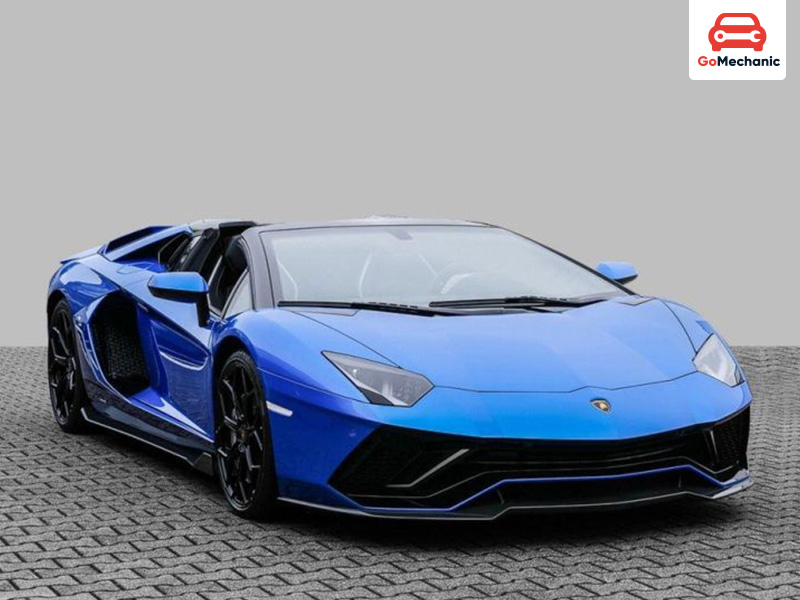
The Aventador LP 780-4 Ultimae Roadster was built to close the V12 era with a wide body like the Aventador line, but with lighter panels and revised airflow channels its stability is improved. Large air intakes and a fixed rear wing help manage balance once the car moves beyond 300 km/h. Nothing about it feels softened. It was designed to remain stable when the speed climbs toward its claimed 355 km/h, which places it at the top in terms of Lamborghini’s highest speed figures.
Inside, the cabin stays close to the SVJ layout. Alcantara covers most surfaces. Carbon fibre appears across the centre console and door panels. The seats are firm and hold the driver tightly in place. Even in Roadster form, where the roof panel can be removed, the focus remains on performance first. It does not try to make the experience quiet or relaxed. It is built around the idea of speed, and it delivers that without relying on electric assistance.
| Specification | Details |
| Engine | 6.5-litre Naturally Aspirated V12 |
| Max Power | 780 PS |
| Transmission | 7-speed ISR (Independent Shifting Rod) |
| 0–100 km/h | ~2.9 seconds |
| Top Speed | ~355 km/h |
2. Lamborghini Revuelto
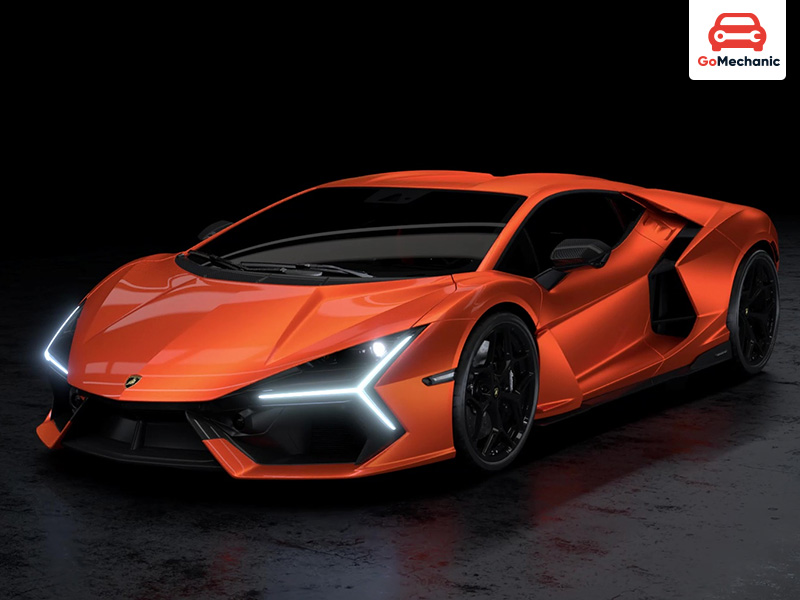
The Lamborghini Revuelto keeps the V12 at the centre, but it does not depend on displacement alone anymore. The body is shaped to move air where it is needed, through the side channels and over the rear, because stability at high speed is not optional. The carbon fibre structure keeps it light weight while increasing sturdiness, and balance, which becomes important once the speed climbs past 300 km/h.
Inside, the cabin feels compact and direct. The driver sits low, surrounded by digital screens that replace older physical switches, and everything is placed within reach without feeling crowded. The seats are firm. The surfaces are mostly exposed. It is built for control and performance not for comfort second. The Revuelto reaches 100 km/h in about 2.5 seconds and reaches close to 350 km/h, placing itself as the fastest Lamborghini cars in production today.
Specs at Glance:
| Specification | Details |
| Engine | 6.5L NA V12 + 3 electric motors |
| Max Power | 1,015 PS (combined) |
| Transmission | 8-speed dual-clutch |
| 0 – 100 km/h | ~2.5 seconds |
| Top Speed | ~350 km/h |
3. Lamborghini Aventador SVJ
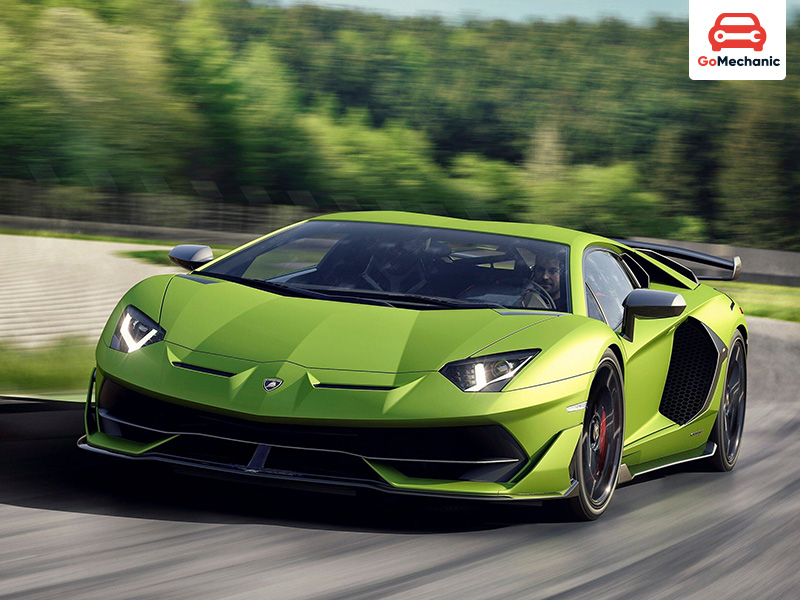
The Aventador SVJ is the last phase of Lamborghini’s pure naturally aspirated V12 speed. It does not use electric support, it relies fully on displacement, revs, and mechanical engineering. The body is shaped with large air openings and a fixed rear wing, that keeps the car stable once speeds move beyond 300 km/h.
Inside, the cabin feels raw compared to newer models. Alcantara covers most surfaces. Carbon fibre appears across the console and door panels. The seats are firm and hold you in place rather than isolate you. There is little separation between driver and engine sound. The SVJ reaches 100 km/h in under three seconds, and even today it remains one of the fastest Lamborghini cars built without hybrid assistance.
Specs at Glance:
| Specification | Details |
| Engine | 6.5L NA V12 |
| Max Power | 770 PS |
| Transmission | 7-speed ISR |
| 0 – 100 km/h | ~2.8 seconds |
| Top Speed | ~350+ km/h |
4. Lamborghini Huracán STO

The Lamborghini Huracán STO approaches speed differently, it does’nt try to compete with the highest top speed in the range. Instead, it focuses on lower weight and better balance. The body is designed with a longer front section and a large rear wing to manage airflow at higher speeds. Air passes over the bonnet and through the rear to keep the car stable. It may not reach the Lamborghini’s highest speed figures of the V12 models, but it delivers speed in a more controlled way.
Inside, the cabin feels simple and focused. The seats are fixed and firm. Carbon fibre is visible across the dashboard and door panels. There is very little insulation, so engine sound remains constant inside the cabin. The Huracán STO reaches 100 km/h in around three seconds and has a top speed close to 310 km/h, placing it among the fastest Lamborghini cars in production.
Specs at Glance:
| Specification | Details |
| Engine | 5.2L NA V10 |
| Max Power | 640 PS |
| Transmission | 7-speed DCT |
| 0 – 100 km/h | ~3.0 seconds |
| Top Speed | ~310 km/h |
Does the Fastest Lamborghini in the World Make Sense for Real Roads?
On paper, the Aventador LP 780-4 Ultimae Roadster stands at the top with a figure touching around 355 km/h, holding the strongest case for being the fastest Lamborghini car in the world in terms of top speed. It’s close rival, the Revuelto sits close behind in top speed, but leads in overall output and acceleration. With hybrid assistance and 1,015 PS, it delivers power more consistently than previous V12 models. However, it is wide and low, and like the Ultimae, it requires space to use its potential properly.
The Aventador SVJ offers similar numbers, but without electric assistance. It feels more mechanical and direct. The Huracán STO does not chase the highest top speed, instead it focuses on balance and response, which changes how speed feels on real roads. The Huracán STO, on the other hand, makes the most sense if balance matters more than numbers. It is not Lamborghini’s fastest car, but it feels lighter and easier to manage. For drivers who value control over straight-line dominance, it offers a different kind of speed.
In the end, Lamborghini’s highest speed figures tell only part of the story. What matters is where and how that speed can actually be used.
Comparison of Fastest Lamborghini Cars at a Glance
| Model | Engine | Power Output | Transmission | 0 – 100 km/h | Top Speed |
| Aventador LP 780-4 Ultimae Roadster | 6.5-litre Naturally Aspirated V12 | 780 PS | 7-speed ISR (Independent Shifting Rod) | ~2.9 sec | ~355 km/h |
| Lamborghini Revuelto | 6.5L NA V12 + 3 electric motors | 1,015 PS | 8-speed dual-clutch | ~2.5 sec | ~350 km/h |
| Lamborghini Aventador SVJ | 6.5L NA V12 | 770 PS | 7-speed ISR | ~2.8 sec | ~350+ km/h |
| Lamborghini Huracán STO | 5.2L NA V10 | 640 PS | 7-speed DCT | ~3.0 sec | ~310 km/h |
Conclusion
Lamborghini never built cars just to look fast, speed was always part of the foundation. From early V12 models to the current hybrid system, the goal stayed the same. When we talk about the fastest Lamborghini cars, the Aventador LP 780-4 Ultimae Roadster stands at the top in terms of pure the fastest lamborghini in the world, touching around 355 km/h without any hybrid support. It represents the final and most powerful version of the naturally aspirated V12 era.
The Revuelto, however, leads in overall output with 1,015 PS and hybrid support, it accelerates quicker than any Lamborghini before it and sets the benchmark for the fastest Lamborghini in the world right now. The Aventador SVJ represents the last stage of pure naturally aspirated V12 performance, no electric help, just displacement and engineering, and that character still attract many driver. The Huracán STO, on the other hand, does not aim for the highest top speed, it focuses on lower weight and sharper response instead. So which is Lamborghini the fastest car? On numbers, the Revuelto leads. In feel, the answer depend on the driver.
FAQ’s
1. Which model of Lamborghini is fastest?
If you chase only the highest number, the Aventador LP 780-4 Ultimae Roadster stands at the top, touching around 355 km/h. That figure places it ahead in terms of pure Lamborghini’s highest speed. But speed is not always a single number carved in stone. The Revuelto reaches 350 km/h, yet it moves to 100 km/h quicker, and that changes the story slightly.
2. What is the top speed of the Revuelto?
The Revuelto reaches close to 350 km/h, but it does’nt claim the absolute highest Lamborghini fastest car top speed, but it arrives at its pace faster than any before it. That difference matters more than it seems.
3. Is the Huracán STO the fastest Lamborghini?
No, its top speed stays near 310 km/h. It does not fight for the crown. Instead, it sharpens balance and response, and that makes it quick in a different way. Not slower in spirit, just different in aim.
4. Which Lamborghini feels fastest on road?
On open highways, the Revuelto feels brutal and immediate. The Ultimae feels raw and mechanical, almost heavy with purpose. The STO feels lighter, easier to guide. Each one moves fast, but the feeling change from driver to driver.
5. Does Lamborghini still make pure V12 cars?
The pure naturally aspirated V12 era ended with the Ultimae and SVJ. The Revuelto keeps the V12 alive, but now it shares its work with electric motors. The heart remains, but the method is different.
6. What truly defines Lamborghini fastest car top speed?
It is not only power. It is balance, airflow, stability beyond 300 km/h, and how long the car can hold that speed without losing composure. Numbers begin the conversation. Control decides the ending.


