






Ford’s exit from India in 2021 was one of those announcements that genuinely stung, not because Ford was the biggest player in the market. But because cars like the EcoSport had built a real, loyal following over nearly a decade. Owners who had picked it over Creta and Duster at launch, people who bought it for the road presence, the tight handling, and yes, the fuel efficiency claims were suddenly left without an official service network or a new model to upgrade to. It was abrupt and it left a gap that many buyers are still navigating even today.
Here is the thing though: the EcoSport never actually went away. Walk into any used car market in India right now and you will find plenty of well-maintained examples sitting in the 4 to 7 lakh range, which is genuinely attractive value for a car with this build quality. A lot of first-time buyers who cannot stretch to a new compact SUV are landing on the EcoSport as a sensible alternative. Service support has also steadied out, with several independent workshops now comfortably handling Ford servicing. The car’s relevance in 2025 is less about nostalgia and more about cold, practical logic.
The first question almost everyone asks before buying or after noticing something odd on the fuel gauge is about ford ecosport mileage. What does it actually return in Indian city traffic? Does the diesel really do over 20 kmpl? What about the EcoBoost? Is the automatic version as thirsty as people say? These are reasonable questions and the answers are not as complicated as some reviews make them sound, but you do need honest numbers rather than ARAI figures that nobody actually achieves on a Bengaluru Monday morning.
This blog is going to give you exactly that. Engine-wise mileage figures with both official ARAI numbers and real-world estimates, a variant breakdown, a comparison against current rivals, and practical tips to genuinely improve your fuel average. No diplomatic non-answers, no inflated ranges. Just the actual picture of the Ford Ecosport mileage across every engine and trim this car was ever sold in India.
ARAI vs Real World Ford EcoSport Mileage: What the Numbers Actually Mean
ARAI numbers are generated in a lab, not on a road. There is no AC running, no traffic, no idling at signals for four minutes while an autorickshaw cuts in front of you, and definitely no Bengaluru pothole that sends your speed to zero mid-corner. The test is designed to produce a consistent, comparable figure across all cars, which is useful for comparing two cars against each other but not particularly useful for knowing what your fuel bill is going to look like. Think of it less as a promise and more as a best-case theoretical ceiling that most Indian owners will touch maybe once or twice on a long highway drive with a tailwind.
For the EcoSport specifically, city owners on the 1.5 petrol manual regularly report a day-to-day ecosport car average of 10 to 13 kmpl. The official ARAI figure is 15.9 kmpl. That gap is not a sign something is wrong with your car, it is just what happens when a 1,200 kg SUV sits in stop-go traffic with the AC on full blast for forty minutes each way. On a steady highway cruise at 80 to 90 kmph the same engine can get back to 15 or sometimes 17 kmpl, which is where the official number starts making sense again.
Petrol vs Diesel vs EcoBoost: Which EcoSport Engine Gives the Best Ford EcoSport Mileage?
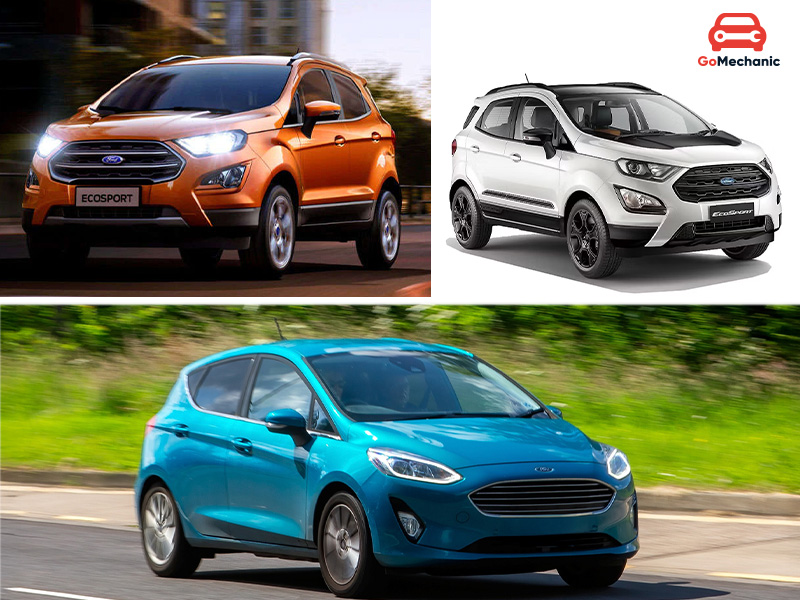
Quick Answer The diesel gives the best EcoSport car mileage by a clear margin. The EcoBoost is the most interesting petrol option for efficiency. The 1.5 petrol automatic is the thirstiest of the three. Choose based on how and where you drive.
This is the section most people are really here for. The EcoSport was sold in India with three engine options: the 1.5-litre Ti-VCT naturally aspirated petrol, the 1.5-litre TDCi diesel, and the 1.0-litre EcoBoost turbocharged petrol. Each has a genuinely different mileage character and suits a different kind of driver and usage pattern. The numbers below are based on official ARAI figures supplemented with real-world owner estimates.
Engine-wise Ford EcoSport mileage comparison:
| Engine | ARAI Mileage | City (Real World Est.) | Highway (Real World Est.) | Transmission |
| 1.5 Ti-VCT Petrol | 15.9 kmpl | 10–13 kmpl | 15–17 kmpl | Manual |
| 1.5 Ti-VCT Petrol | 14.7 kmpl | 9–11 kmpl | 13–15 kmpl | Automatic |
| 1.0 EcoBoost Petrol | 18.88 kmpl | 12–15 kmpl | 17–20 kmpl | Manual only |
| 1.5 TDCi Diesel | 21.7 kmpl | 15–18 kmpl | 19–22 kmpl | Manual only |
Real world estimates based on aggregated owner reports. Actual figures will vary with driving style, traffic, and vehicle condition.
Variant Wise EcoSport Car Mileage Differences
Quick Answer The engine choice affects mileage more than the variant trim level. However, the automatic transmission and certain heavier top-spec variants do carry a small mileage penalty. The diesel manual in any trim is your best bet for fuel efficiency.
Variant-wise mileage reference:
| Variant | Engine | Transmission | ARAI Mileage |
| Ambiente | 1.5 Petrol | Manual | 15.9 kmpl |
| Trend | 1.5 Petrol | Manual | 15.9 kmpl |
| Trend+ | 1.0 EcoBoost | Manual | 18.88 kmpl |
| Titanium | 1.5 Petrol | Manual | 15.9 kmpl |
| Titanium AT | 1.5 Petrol | Automatic | 14.7 kmpl |
| Titanium+ / S | 1.5 Diesel | Manual | 21.7 kmpl |
Key variant choice takeaways:
- Ambiente and Trend with 1.5 petrol manual are the entry level picks. Decent mileage, lower purchase price, fewer features.
- Trend+ with 1.0 EcoBoost offers the best petrol mileage in the range. Harder to find on the used market.
- Titanium AT is the most convenient daily driver but carries the heaviest fuel cost.
- Titanium+ and S with the diesel manual give you the best balance of features and fuel efficiency in the entire EcoSport lineup.
How Does Ford EcoSport Car Mileage Compare to Its Rivals?
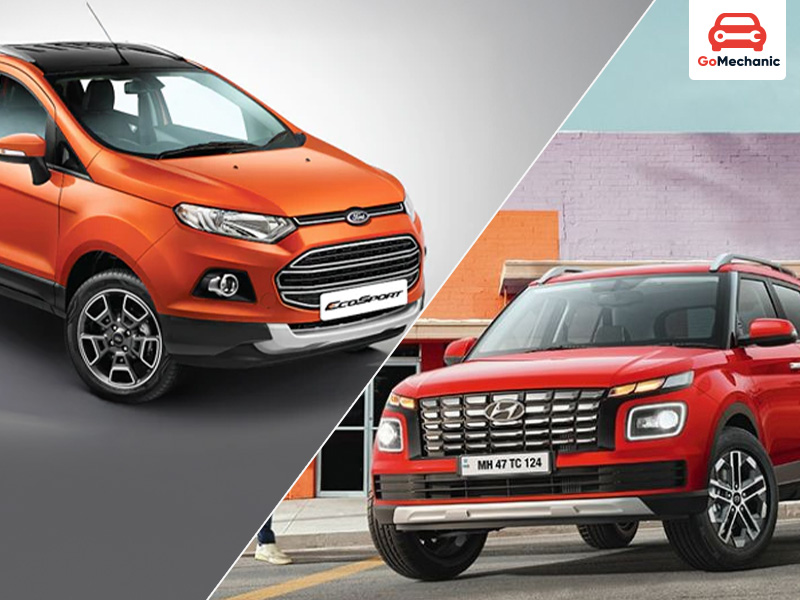
Quick Answer The EcoSport diesel is competitive with most of its rivals. The petrol versions fall behind newer, more efficient competitors. If the Ecosport car average is your primary concern, the diesel is the variant that keeps this car relevant against current competition.
The compact SUV segment has moved on since the EcoSport’s launch years, and newer rivals have newer engines with better efficiency figures. That is just the reality of buying a car that has been out of production since 2021. Still, the comparison is worth doing properly because the used car price gap between an EcoSport and a newer Venue or Nexon is significant, and the mileage difference might not be as dramatic as you expect.
Rival mileage comparison (ARAI figures):
| Car | Best Petrol Mileage | Best Diesel Mileage | Price Range (New, approx) |
| Ford EcoSport | 18.88 kmpl (EcoBoost) | 21.7 kmpl | Discontinued (used: 4–8 lakh) |
| Hyundai Venue | 18.15 kmpl | 23.4 kmpl | 7.94–13.35 lakh |
| Tata Nexon | 17.01 kmpl | 19.82 kmpl | 8.10–15.50 lakh |
| Maruti Suzuki Brezza | 19.89 kmpl | N/A (petrol only) | 8.34–14.14 lakh |
| Kia Sonet | 18.2 kmpl | 24.1 kmpl | 7.99–15.69 lakh |
The Ford EcoSport mileage picture looks respectable in this comparison, particularly on the diesel side. The 21.7 kmpl ARAI figure holds up reasonably well against the Nexon diesel and is within range of the Venue. Where it falls behind is in real-world petrol efficiency, partly because the 1.5 petrol engine is older technology compared to the more modern turbocharged petrols that the Venue and Sonet now use. The EcoBoost, when you can find one, is genuinely competitive on paper.
The real advantage the EcoSport still holds is price. A well-maintained used EcoSport diesel in the 5 to 7 lakh range is going to deliver broadly similar running costs to a new Venue or Sonet that costs nearly twice as much. The Ford EcoSport mileage on the diesel is good enough that the running cost argument in favour of the EcoSport remains valid for a buyer who does not need the latest features and just wants a solid, honest compact SUV without spending new car money.
Practical Tips to Improve Your EcoSport Car Average
Quick Answer Tyre pressure, air filter condition, and driving in the right rev range make the biggest real-world difference on the EcoSport. A properly serviced car returns noticeably better fuel economy than a neglected one, and this car rewards smooth, unhurried driving specifically.
Tyre pressure is genuinely the most underrated variable in EcoSport car average, and it is the one most used car owners neglect completely. The EcoSport runs on 205/60 R16 tyres and the recommended pressure is around 33 PSI front and rear for most variants. Drop even 5 PSI below that and you are adding rolling resistance that the engine has to work against all day, every day. Check the sticker on the driver door jamb for your specific variant’s recommendation and check pressure cold, before you have driven the car that morning. Takes five minutes. Makes a measurable difference.
The EcoSport’s air filter is one of those maintenance items that suffers quietly in Indian conditions. Dusty roads clog it faster than temperate market cars are designed for, and a dirty air filter restricts airflow to the engine and forces it to compensate in ways that hurt both power and fuel efficiency. If you are buying used, pull the air filter during your inspection. If it looks grey and clogged, factor in a replacement. If you already own one and cannot remember the last time the filter was changed, it is probably overdue. GoMechanic’s service includes filter checks as part of the standard periodic service, and on a car like this, staying current on that alone can recover a full kmpl or more.
Engine-specific tips that actually move the needle:
- 1.5 petrol manual: Keep the revs between 1,500 and 2,500 rpm in city driving. This engine returns its best city economy in the 1,800 to 2,200 rpm band. Avoid revving past 3,000 in normal traffic.
- 1.0 EcoBoost: Drive it like a naturally aspirated engine, not a performance car. Shift early. The turbo is there for when you need it, not for every gap in traffic. Smooth inputs are everything on this engine.
- 1.5 diesel: Stay between 1,500 and 2,200 rpm on the highway for the best economy. The diesel has torque from low revs, so you do not need to push it. Over-revving the diesel is the single biggest avoidable way to hurt your fuel average.
- Automatic variant: Use the manual mode more than you think you need to on highways. The automatic tends to hold lower gears longer than necessary at moderate speeds, and selecting a higher gear manually can noticeably improve the Ford Ecosport mileage on long runs.
AC management is one more area where EcoSport owners lose efficiency without realising it. Below about 60 kmph in the city, AC adds meaningful load to the engine. Use the fan without compressor when the car has cooled down inside, or park in shade when possible. On the highway above 80 kmph, keeping windows up and AC on is actually more efficient than windows down, because the aerodynamic drag from open windows costs more than the compressor at that speed. It sounds like the kind of tip you would dismiss, but it makes a real difference on longer drives.
Conclusion
The Ford EcoSport mileage story is a straightforward one once you have all the numbers in front of you. The diesel is the standout, returning 21.7 kmpl on ARAI and a genuinely useful 15 to 18 kmpl in Indian city conditions. If you are buying a used EcoSport primarily because running costs matter, the diesel manual in a Titanium or Titanium+ spec is the one to look for. The EcoBoost is the most interesting petrol option and punches well above its engine size on efficiency, but it is harder to find and requires a smoother driving style to realise its potential.
The 1.5 petrol manual is the most common variant on the used market and it is a perfectly adequate daily driver, but go in knowing that your city average is going to be 10 to 13 kmpl on most days, not the 15.9 kmpl on the sticker. The automatic is the most relaxed option to live with but carries a real fuel cost premium that adds up over time. Neither of those is a dealbreaker at the right price, but they are facts worth having before you decide.
Wherever you land on which variant to buy or own, one thing stays constant: a properly maintained EcoSport always returns better Ford EcoSport mileage than a neglected one. Fresh air filter, correct tyre pressure, clean fuel injectors, and a timely service interval genuinely move the numbers. GoMechanic offers Ford-compatible servicing across major Indian cities, and if your EcoSport has not seen a proper service in a while, that is the single best investment you can make in its fuel efficiency right now.
FAQ’s
What is the price of Ford EcoSport in 2026?
There is no official price anymore because Ford is no longer selling new cars in India. What you see now is the used market, and that is where most EcoSports are available at fairly accessible prices. The exact cost depends a lot on condition, ownership history and whether it is petrol or diesel.
Is the Ford EcoSport 5 or 7 seater?
The EcoSport is strictly a five seater. It was never designed as a three-row family car, so there is no third row option at all. For a small family it works fine, but if you regularly travel with more people, you will feel the limitation quickly.
What is the mileage of Ford EcoSport petrol and diesel?
The petrol versions are average in city driving and feel a bit thirsty in stop-go traffic, especially the automatic. On highways they improve and feel more reasonable. The diesel is where the EcoSport really makes sense, it gives consistently better efficiency and feels more relaxed for long drives.
What is the mileage of Ford EcoSport 1.0 EcoBoost Titanium MT petrol 2014?
The EcoBoost was the most interesting petrol engine in the lineup. On paper it looks very efficient, and on highways it can actually deliver that kind of performance. But in city driving, the numbers depend heavily on how gently you drive, push it hard and the efficiency drops quite quickly.


