






If you’ve been planning to get a sport motorcycle with power, brand presence, and performance, this is probably the last moment to grab it at the present prices! The government plans on a new tax revision that would increase the prices of motorcycles with engines more than 350 cc. The central proposal is to increase the GST (Goods and Services Tax) on motorcycles of higher capacities from the effective 31% to a 40% steep rate. To give you an idea, that would translate to an almost ₹80,000 increase on a ₹2,00,000 two-wheeler. Now, let’s explain the changes, the stakeholders, and the follow-ups if you are a bike shopper or a bike lover.
What is the Proposal About?
As of now, motorcycles in India with engine sizes above 350cc have a GST of 28% along with an additional 3% cess, making the effective tax 31%. Bikes with an engine size below that pay only 28% GST,without the cess.
Under the new proposed structure:
- All motorcycles above 350cc would be charged at 40%
- All motorcycles and scooters below 350cc would be charged at an 18% GST
This adjustment is connected to the wider reforms in the GST reforms in which the Government seeks to streamline the numerous tax slabs into just two that is 5% and 18%, along with a high 40% tax slab for sin and luxury goods. Motorcycles that are large in capacity are regarded by the Government as luxury items, and this is the reason why they are being considered for such a high tax.
How Much Could Prices Rise?
Premium motorcycles would undergo a drastic increase in their prices with the implementation of the 40% GST. Currently the tax rate stands at 31% for the bike priced at ₹2 lakh which amounts to ₹62,000, while the proposed rate would set the tax at ₹80,000 which would in turn increase the ex-showroom price to ₹2.18 lakh, which is ₹18,000 due to the tax difference alone. The effect on higher-end models is worse, as a ₹3 lakh bike would go up by over ₹27,000 and superbikes in the ₹5 lakh and above price range will rise price by ₹40,000 to ₹60,000 or more, already outside the reach of most customers.
Also read: 10 Best Bikes For Commuting On The City Roads In India
Who Will Be Affected?
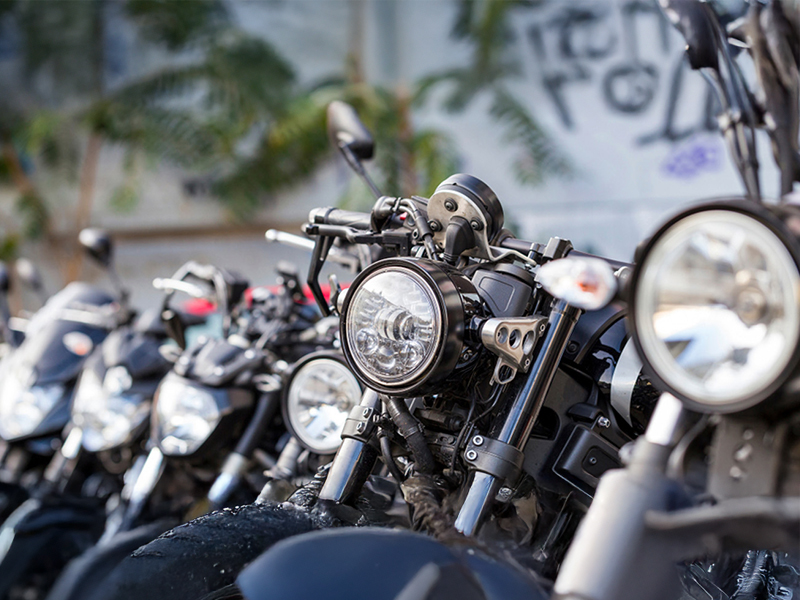
The effect of this tax change on the industry will not be uniform.
Winners: Budget Motorcycles and Scooters
Approximately 97% of two-wheeler sales in India are of models that fall under the 350cc cap. These include daily commuter bikes, scooters, and entry level motorcycles. GST will go from 28% to 18%, lowering prices on these vehicles as well. This will help brands like:
- Honda (Activa, Shine)
- TVS (Jupiter, Apache 160)
- Hero MotoCorp (Splendor, Glamour)
- Bajaj (Pulsar 150, CT 100)
Consumers looking for budget-friendly options would welcome this tax cut, making bikes and scooters cheaper by thousands of rupees.
Losers: Premium and Big Bike Brands
Brands that focus on motorcycles above 350cc will feel the pinch. These include:
- Harley-Davidson
- Triumph
- BMW Motorrad
- Bajaj-Triumph
- Honda BigWing
- KTM (390 Duke and above)
- Royal Enfield (models like the Interceptor 650, Super Meteor, Himalayan 450)
Prices in this category are already somewhat high because of import taxes, advanced parts, and reduced production runs. Raising GST would only place a greater financial strain on owning these bikes for a greater number of aficionados.
Why the Industry Is Concerned
The leaders of the industry have reason to worry about how this proposed action could bring to a halt the rise of a certain segment in the motorcycle market. Premium bike sales witnessed a 32% growth, selling over 1.7 lakh units in the last financial year. This marked an encouraging turn for the Indian manufacturers and the international brands. The anticipation of heavy tax increase has already put a brakes on further purchases. A drop in bookings is being registered by the dealerships, particularly for the 350cc to 650cc motorcycle range. There is also worry about how this step would impede India’s vision of becoming the world’s manufacturing centre of mid-capacity motorcycles. Some Indian enterprises, including Royal Enfield, have successfully penetrated many global markets, including the UK, the US and Europe. Higher taxes could negatively impact growth and ability to compete.
Read this too, 9 Iconic Bikes of The Decade (1990-2000)
What About the Global Consequences?
An extreme tax placed on motorcycles of higher capacity would affect not only local sales but would also impact exports. India is also one of the top exporters of motorcycles. Lots of bikes made here, especially bikes in the 350cc to 650cc category, will end up sold overseas. If the local demand begins to decline as a result of the new taxation structure, then manufacturers will likely have to slow down manufacturing as it will be harder to maintain any local manufacturing or cut costs, which will further affect their local manufacturing, the local jobs, and overall manufacturing and jobs in India. This is a chain reaction that the government should consider.
Thinking of Buying a Motorcycle: Right Now or Later?
If you are thinking of buying a premium motorcycle,whether it be a premium motorcycle like Royal Enfield 650, or a Triumph Speed 400, or a KTM 390, you might want to think about whether it makes sense to do it before the GST policy is decided. If you are looking at a commuter motorcycle or scooter, it probably makes sense to wait since those prices will likely decrease as vehicles below 350c will fall within an 18% slab for road tax. The council will meet and make a decision at the next GST Council Meeting of 3-4 September 2025.
Final Thoughts
The supported GST shift is more than just a price change,it’s an outright change in how motorcycles are taxed and grouped in India. It’s nice to see GST simplified, but equating motorcycles above 350cc to “luxury goods” is likely a bridge too far. Premium motorcycles are aspirational but they aren’t out of the reach of the average Indian buyer today. Raising their prices could suppress a nascent industry, restrict exports, and reduce India’s international competitiveness. Whether you are a hobbyist, a first-time buyer or you are just following the industry closely, the decision made in September will set the stage for the future of biking in India.


