






Honda City is one of the most prominent and compact sedans in the Indian market known for its luxury, performance, comfort, and reliability. It matches the style of all premium car brands and comes at a very reasonable price. Apart from that, the Honda City safety rating is unparalleled and offers premium built quality. The Global NCAP rating has given this car four stars when it comes to driving security.
Read this blog to learn about its safety rating and understand how it is a smart choice for Indian consumers.
Honda City Global NCAP rating
Honda City was first launched in India in 1998. Since then, it has been a power figure in the Indian auto car market. From luxury to performance to safety, it ticks all the boxes with adequate standards. The latest variant was launched in March 20203, and over the years, the safety of this car has been quite consistent. According to Global NCAP rating the last model got 4 stars. Below is the video link that showcases its power, the test is conducted by Global NCAP. Watch the video to have a better understanding of how this car will perform in emergency situations.
Honda City Safety Features
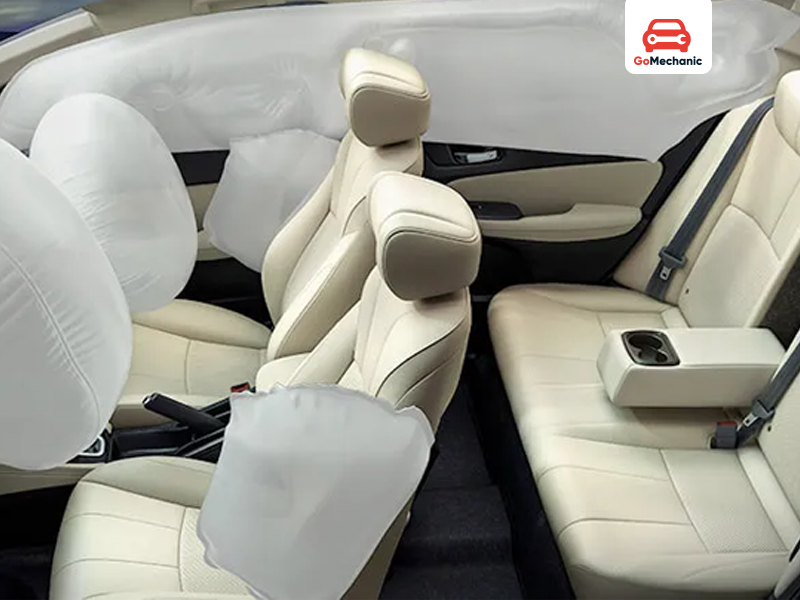
Safety. That’s what Honda City delivers. Six airbags, standard, front and rear, protection in every seat. It’s not an option. It’s a given. Braking? Controlled. ABS with EBD keeps things steady. Rain? Sharp turns? Sudden stops? No problem.
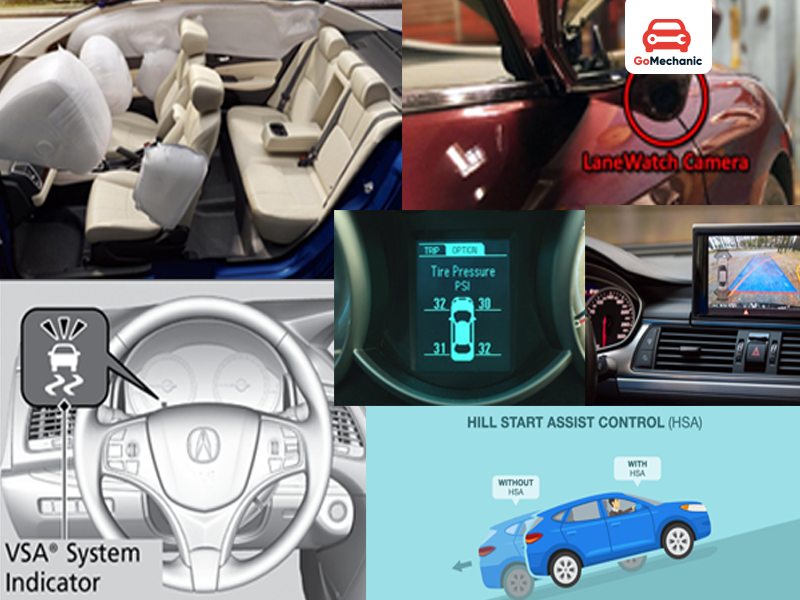
The system ensures the wheels don’t lock up, keeping you in command. Stability? That’s where VSA steps in. Understeer? Oversteer? Handled. Your car stays where it should—firmly on course.
And inclines? No sweat. HSA has your back. No rolling back, no panic on the hill starts. Just smooth movement, exactly when you need it. Blind spots? LaneWatch™ fixes that. A camera, right where it should be, gives you a real-time view. No more guessing. No more near misses.
Tires? Monitored. TPMS keeps an eye on the pressure. A drop? You’ll know. No sudden blowouts. No surprises. Every safety feature, every assist, every system, designed for you and for the road. For those who ride with you. Honda City isn’t just a sedan. It’s security on four wheels.
Below we have provided Honda City Safety Features in a tabular format for a better understanding.
Key Safety Features in Honda City
| Feature | Functionality |
| Six Airbags | Front, side, and curtain airbags provide enhanced protection for both front and rear passengers. |
| ABS with EBD | Prevents wheel lockup during braking, ensuring better control and shorter stopping distances. |
| Vehicle Stability Assist (VSA) | Enhances stability by reducing understeer and oversteer while cornering or making sudden maneuvers. |
| Hill Start Assist (HSA) | Prevents the car from rolling back on inclines, ensuring smooth uphill starts. |
| LaneWatch™ Camera | A side-mounted camera provides real-time visuals of blind spots, reducing lane-changing risks. |
| Tire Pressure Monitoring System (TPMS) | Monitors tire pressure and alerts drivers in case of any significant fluctuations to prevent blowouts. |
| Rear Parking Sensors & Multi-angle Camera | Assists in parking with improved visibility and detection of obstacles. |
| ISOFIX Child Seat Mounts | Secure anchoring points for child seats, ensuring enhanced child safety. |
Others Also Read: Maruti Suzuki Wagon R Safety Rating
Measures taken by GNCAP to identify safety rating
Since now, you know everything about this car, let us dive into what measures GNCAP conducts to reach a conclusion about how safe a car is for driving on specific roads.
GNCAP conducts a series of standardized tests to evaluate the vehicle safety graph. These tests are designed to match real-world collision scenarios. Hence, in case, you happen to involve yourself in an unfortunate accident, you will already have an idea about how safe your car is for specific situations.
Primarily, these tests are divided into six categories. Below we have discussed them:
Frontal Offset Crash Test
A 64 km/h head-on crash. Not full-frontal. Just 40% overlap on the driver’s side. That’s how real-world crashes happen. Not perfect, not symmetrical. The structure? It bends. It crumples. But does the cabin hold? That’s the question. The dummies inside? They feel it all. Head, chest, legs—everything measured. Safety isn’t about surviving. It’s about walking away.
Side Impact Test
A mobile barrier, 50 km/h. Straight into the side. A moment of stillness. Then—impact. Doors, pillar, airbags, do they hold? Do they protect? The dummy inside takes it all. Head, chest, pelvis, abdomen. Sensors don’t lie. Weak structures crumble. Strong ones? They protect. Side airbags inflate, a split second deciding survival.
Pole Side Impact Test
The car moves sideways. 29 km/h. Straight into the rigid obstacle. No give, no cushion, just steel against steel. And inside? A driver, and a passenger. Direct impact on the head. That’s why curtain airbags matter. That’s why reinforced frames exist. The test isn’t about the crash. It’s about what happens after.
Pedestrian Protection Assessment
A pedestrian. A car. No airbags. No seatbelts. Just flesh and bone. The front end strikes. But where? The head, pelvis, legs—everything is tested. The hood bends. The bumper absorbs. Or at least, it should. Good designs reduce damage. Crumple zones save lives. Some cars break bones, some prevent it. The numbers don’t lie. Safety isn’t just for those inside. It’s for those outside too.
Electronic Stability Control (ESC) Evaluation
Skid. Spin. Lose control. It happens fast. ESC fights back. Brakes engage. Power adjusts. The car corrects itself. But does it work? That’s the test. A sudden swerve. A slippery road. ESC either saves you—or it doesn’t. No second chances. No manual corrections. The system either keeps you straight or sends you spinning.
Child Occupant Protection
Tiny hands. Small seats. But big safety. A dummy. Strapped in. Then—impact. Frontal. Side. The forces hit hard. Can the child seat hold? Do the anchors stay in place? The head. The chest. Protected or vulnerable? The test shows it all. Some seats fail. Some don’t. When safety is for the smallest ones, there’s no room for mistakes.
Conclusion
Safety isn’t an afterthought—it’s a necessity. And Honda City proves that. With a solid 4-star Global NCAP rating, it stands tall as one of the safest sedans in its segment. The combination of six airbags, ABS with EBD, VSA, and LaneWatch™ ensures that every drive is secure, no matter the road conditions. The GNCAP tests highlight its resilience in real-world crashes, making it a smart choice for Indian roads. Whether it’s protecting occupants or pedestrians, Honda City delivers. Because a car isn’t just about luxury and performance. It’s about getting home safe—every single time.
Also Read: Maruti Fronx Safety Rating NCAP: An In-Depth Analysis for 2025
Frequently asked questions
1. What is the Global NCAP rating of the Honda City?
The Honda City has received a 4-star safety rating from Global NCAP, reflecting its strong structural integrity and reliable occupant protection. The car performs well in frontal and side-impact tests, ensuring a secure driving experience.
2. What safety features does the Honda City offer?
The Honda City comes with six airbags, ABS with EBD, Vehicle Stability Assist (VSA), Hill Start Assist (HSA), LaneWatch™ Camera, and ISOFIX child seat mounts. It also includes Tire Pressure Monitoring System (TPMS) and rear parking sensors for added safety.
3. Is Honda City a safe car for families?
Yes, the Honda City is a safe family car, thanks to its ISOFIX child seat mounts, six airbags, pedestrian protection measures, and electronic stability control (ESC). It ensures both adult and child safety in case of a collision.
4. How does Honda City’s safety compare to its competitors?
The Honda City competes well against sedans like the Hyundai Verna and Skoda Slavia, offering a balanced mix of safety features, strong build quality, and driver-assist systems. Its 4-star NCAP rating places it among the safer choices in its category.


