






In India, having a vehicle permit is an important part of driving legally in public areas, whether you are a sole car owner, a business with multiple cars or a transport company using a number of cars to establish a logistics system. It is important to understand what exactly a vehicle permit is and why it is important. A vehicle permit legitimizes you, ensures compliance with Indian traffic laws, respects road safety and environmental protection, and strikes an effective and efficient path for vehicle and transportation solutions.
This guide will detail what a vehicle permit is, the associated types of vehicle permits in India, and the importance of receiving one. We will also take you through the processes of applying for a vehicle permit using our online or offline method (noting when correspondence happens either online or offline).
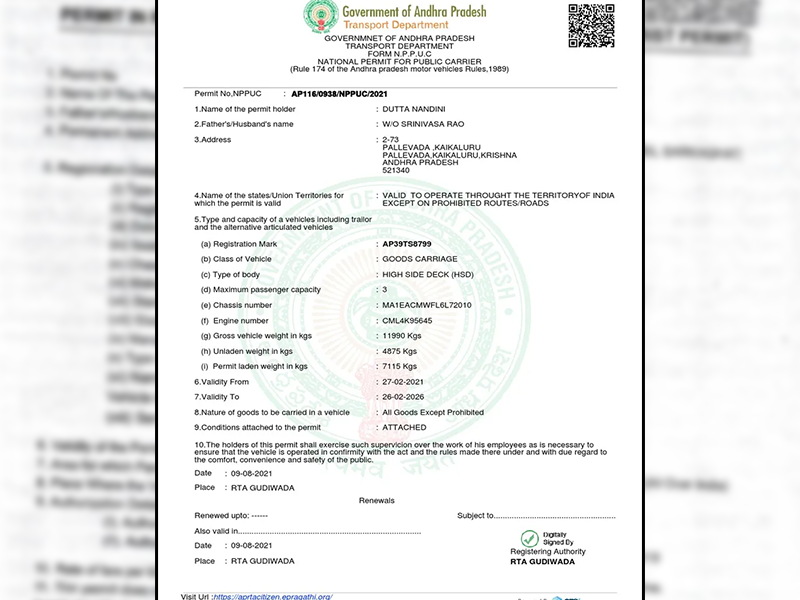
What is a Vehicle Permit?
A vehicle permit is a formal document published by either the Regional Transport Office or the Ministry of Road Transport and Highways in India that allows for the lawful use of a vehicle on public roads. It functions essentially as an “identity card” for the vehicle, verifying that it is legitimately operable in accordance with regulation and law.
Before granting a vehicle permit, authorities check to see that it meets safety, roadworthiness, and environmental standards, including emissions; further, they check that the vehicle is registered and that there is insurance and taxation in relation to the government.
Do read: RTO Full Form: The Essential Guide to India’s Regional Transport Office
Types of Vehicle Permits
- Vehicle Registration Permit: This is the typical vehicle permit type. You require a vehicle registration permit for every vehicle that is operating on public, shared, or leased work zones, etc. It creates a link between the owner and the vehicle and ensures that the vehicle does not contravene local regulations (e.g., emissions tests or safety standards).
- Temporary Vehicle Permit: This permit is issued for vehicles needing to use a highway on a temporary basis. It can be for vehicles in transit, or for vehicles that have been purchased and are awaiting registration, or when a vehicle may need limited special use authorization.
- International Vehicle Permit: An International Vehicle Permit (IVP) is for individuals travelling outside of their country with their vehicles. It is similar to a translation of an individual’s local driver’s license and vehicle document and allows for easier international travel.
- Commercial Vehicle Permit: This commissioned permit is generally mandated for any vehicle used for commercial uses—e.g., transporting goods or transporting passengers. It ensures that vehicles are compliant with regulations for commercial use.
- Special Use Vehicle Permit: Vehicles that are used for special uses (eg, construction vehicles, emergency vehicles, or agricultural vehicles) often are required to have a special permit. They often have special lanes, or need zones, and this permit initiates them to be accountable to local regulations for equipment and road use
Vehicle Permits Issued Appeared Through the Parivahan Portal
The Parivahan portal is a government effort to improve and ease the process of applying for vehicle-related services in India. Some of the most common types of vehicle permits include:
- Goods Carrier Permit: For trucks and vans transporting goods in a state or country.
- National Permit: For long-distance goods vehicles, the national permit will allow their operations to cover multiple states.
- Tourist Permit: To allow for intercity or interstate travel in buses and taxis designated for tourists.
- Contract Carriage Permit: Issued for vehicles such as company buses or school vans are operating on fixed passenger-based contracts.
Stage Carriage Permits: For buses operating on a fixed public route, normally regionally or within a city.
Must read: Vehicle Transfer Made Easy: Download Form 29 & 30 for RTO Process
How to Apply for a New Vehicle Permit Online?

The process of applying for a new vehicle permit on an online application is generally fast and easy since they exist in virtually every area as online portals for the purpose. Below is a general process to apply for a vehicle permit online.
- Go to the Parivahan Portal
Access the Parivahan Sewa’s (Parivahan Portal) official website. Every state in India has its own portal, maintained by the Ministry of Road Transport and Highways (MoRTH). When using Parivahan, be sure to access their official website to avoid third-party service or payment platforms. This page should direct you to the portion of the site for vehicle registrations or the vehicle permit application.
- Choose Vehicle Permit Type
Choose the correct permit type for the application based on your need- private vehicle registration, commercial vehicle permit, temporary vehicle permit, vehicle permit for special use etc. Be sure to choose the needed type as each one has different requirements and fees associated with it.
- Enter Vehicle Information
Complete the application form with information such as the Vehicle Identification Number (VIN), Engine Number, Chassis Number, Make, and Model. You will also be asked to upload documents, including Proof of Ownership, the insurance certificate, and Proof of Address. Make sure your details are accurate, you do not want a delay in processing due to wrong data.
- Payment of Fees
Once you filled your form, you can make payment on the payment page. The fee will be identified based on the permit type on the portal. The methods of payment will usually be credit card, debit card, net banking or UPI. After making the payment, you can submit your application.
- Submission
Once you have made payment, you can submit your application. Please ensure that all your uploaded documents are correctly attached and your details are correct.
Also read: NOC Full Form, Meaning, and Application Process
How to Track Your Application Status?
You can track your vehicle permit application status when you have applied online. You can track your application in these steps:
- Return to Your Account: Go back to the website to which you applied for your vehicle permit and sign in.
- Application Status Section: Most websites have an Application Status or Track My Permit section. Enter your reference number or application ID to check the current status.
- Get Updates: This website would keep you up-to-date in real time, with your application being under review, approved, or rejected. Where necessary, you may be able to request further documents or clarifications.
How to Download a Vehicle Permit Online?
In India, if you are approved for a vehicle permit, you could also have an electronic version of your vehicle permit available, if you want to have access to one. First, search and locate the official transport authority for your state or union territory, and log into your account. After logging in, you should find the area of your vehicle details and look for a “Download Permit” or “Print Permit” button. Once you select the button, you will receive a PDF for your approved permit. At that time you can save a copy of that document to your device and print it. It is always good practice to regularly maintain a physical and digital copy of your vehicle permit, for legal obligations and practical use, in case of needing to show it to authorities while driving your vehicle or for one of many inspections.
Do fancy number plates excite you? Read about the 0005 number plate.
How to Apply for a Vehicle Permit Offline?
To apply for a vehicle permit offline in India, follow these steps:
- Contact your local transportation authority: Go to your local RTO or motor vehicle office. Bring the required documentation you may need, such as vehicle registration documentation, proof of insurance, ID proof (Aadhaar or voter id, etc.) and documentation requested by the RTO.
- Complete the application at the office: Once you are at the RTO, you will be given a hard copy application for the vehicle permit. Complete the application and ensure that every field has the correct information. If you do not understand a field of the application, do not hesitate to ask the rto staff for assistance; they are able to assist you if you ask.
- File application with documentation: After you fill out the application, file the application with the appropriate documentation. This may include vehicle title/registration certificate, insurance certificate, driver’s registered license, proof of address and other material needed by the RTO.
- Fees required: After applying, sending in your application form and documents, you will need to pay your fees. Once your permit application has been processed and approved you with either receive a temporary permit that day, or be told when you can come and get your permit.
Must read: Driving Licence Application Status: Step-by-Step Guide to Check it Online
How to Keep Your Vehicle Permit Safe?
- Retain a copy: Always have a physical copy of your permit on your person while driving – since it is your permit, then carrying a digital copy on your cell phone does not hurt either as a backup/emergency.
- Renew Early: While penalties are so uncommon, stay active on your duties by setting reminders for permit renewal dates so that you do not miss tech timeline or face fines or penalties.
- Stay informed: Always ensure you stay informed if changes are made to policy/rules and permit information in your region.
- Report lost or stolen permits: If you lost or just had your vehicle permit stolen then make sure that you report this to your local enforcement agency or department and Apply for a replacement form.
Vehicle Permit Renewal
If you’ve timely submitted your vehicle permit renewal application and didn’t receive a new permit (where you’ll have received some kind of temporary approval), you’re not legally allowed to drive your vehicle. If you are caught driving your vehicle without your permit and the police believe you haven’t paid a fine/penalty for not renewing your permit, they may issue you fines and/or penalties and/or impound your vehicle. They can not impound your vehicle if you have shown proof of your application submission with the RTO to obtain a replacement for your expired permit that does not have a fine/penalty.
Be proactive and keep an organized file to keep track of all your permit documents and submission records, as well as attach your business information and court paperwork. And remember the transport departments will work with you for renewals and late payments if you stay on top of things, so there’s no need to bury your head in the sand when it comes to vehicle permits!
Must read: How To Change Ownership of a Car: A Complete Guide
The Importance of Vehicle Permits
- Legitimacy: Permits will also ensure that a vehicle can be considered legitimate and, therefore, that it is allowed on the road legally.
- Safety: Paramount to safety is the recognition and affirmation of adherence to safety standards and regulations. A permit helps narrow down the acceptable vehicles to only those appropriately registered.
- Convenience of Use: While doing so, you are validating your right to use the vehicle without being confronted with infringements in relation to your right to use that vehicle.
- Tracking: NGOs and authorities use the permits and permit numbers to track unregistered vehicles that may or may not be involved in accidents and road disputes.
- Vehicle valuation: Most legitimately registered vehicles will hold their value better, especially when you prepare the vehicle for return to your evaluated state, through appropriate registration, as registration indicates to a user a level of quality assurance of maintenance in regards to state registration.
Want to know about the International Driving License
Final Thoughts
In conclusion, vehicle permits are an important mechanism of making vehicle use safer and legitimate. Whether you have acquired a new vehicle or you are renewing your registration, or you require specialized use authority, understanding the various forms of vehicle permits available and the application processes can at least save you time for unexpected communication and headaches down the road. Generally, by following the appropriate steps either online or in person and identifying your registration renewal periods, you will hopefully continue to operate a legally permitted vehicle on the road.
FAQs
- What is a permit of a vehicle?
It is the official authorization given by the government or a transport authority. This allow the vehicle to operate on public roads legally. It implies that the vehicle adheres to safety codes, environment norms, and other regulations.
- How much will an All India permit cost?
An All India permit’s cost depends on the vehicle in question (commercial, personal, etc.), its state, and the period for which the permit is issued. For commercial vehicles, it usually ranges between ₹2,000 to ₹5,000 per year. One should get the exact details from the concerned RTO.
- Why do I require a permit?
The permit makes sure of the vehicle with various laws relating to road safety, environment, and registration. It is proof that the vehicle is directed by an authority to operate on certain public roads, keeping the traffic laws and safety norms in force.
- Is a permit applicable for a private car?
Yes, all vehicles need a permit; in the case of private cars, the vehicle registration permit is applicable. This permit would vouch for the car’s legal registration and roadworthy status as per government specifications.


, renewal, and downloading from the Parivahan portal. Ensure road compliance today.)