






Selling a car is easy. Right? No. Finding a potential buyer has become easier because of the internet, but the process of transferring the ownership of the car still remains a challenge for people–waiting in long queues and filling up forms. People keep asking this question, “How to change ownership of a car” and why should I do it? Answer is simple: The transfer of ownership is legally necessary. Imagine enjoying your morning coffee and a notification pops up on your phone. A speeding ticket in your name or maybe something worse.
So, how do I transfer ownership of a car? The process is not that complicated at all. With the right information and a little patience, it will be done smoothly.
When do you need to transfer ownership?

You don’t only need to transfer the ownership when there is a dealership involved. Family transfer, Gifts and inheritance also needs transfer of ownership. And it is not just a paper works, it’s a safety net for both buyer and seller.
| Situation | Is Ownership Transfer Required? | Additional Notes |
| Selling a car to someone else | Yes | Standard process through RTO |
| Buying a used car | Yes | Buyer must apply for transfer |
| Inheriting a car (death of the owner) | Yes | Requires succession certificate |
| Gifting a car to a family member | Yes | Can be treated as a sale |
| Moving to another state | Yes | Requires re-registration and road tax payment |
| Buying a car at an auction | Yes | Requires Form 32 and sale certificate |
Documents Required For The Transfer Of Ownership
Whether you are selling or buying the vehicle, you need to have the right documents. If you miss any document, that means you are stuck. Just submit everything correctly, and you are good to go.
The Complete List of Documents for Car Ownership Transfer
| Document | Why It’s Needed | Who Provides It? |
| Original Registration Certificate (RC) | Confirms legal ownership of the vehicle. | Seller |
| Form 29 | Notifies the RTO that ownership is being transferred. | Seller |
| Form 30 | Official request to transfer ownership to the buyer. | Seller |
| Valid Insurance Certificate | Mandatory for the transfer process to be approved. | Seller |
| Pollution Under Control (PUC) Certificate | Ensures the vehicle meets emission norms. | Seller |
| Buyer’s Identity Proof (Aadhaar, Passport, etc.) | Confirms new owner’s details. | Buyer |
| Buyer’s Address Proof | Required for RTO records. | Buyer |
| Passport-size Photographs | Used for RTO documentation. | Buyer |
| Sale Agreement (If Applicable) | Proof of transaction in private sales. | Seller & Buyer |
| Bank NOC (If Loan Exists on the Car) | Confirms no outstanding dues on the vehicle. | Seller’s Bank |
| Road Tax Clearance Certificate (For interstate transfers) | Confirms no pending road tax payments. | Seller |
| Death Certificate (For inheritance cases) | Needed when transferring ownership of a deceased person’s vehicle. | Legal Heir |
| Succession Certificate / Legal Heir Certificate | Confirms rightful ownership in inheritance cases. | Legal Heir |
Do Read: Vehicle Transfer Made Easy: Download Form 29 & 30 for RTO Process
How Do I Transfer Ownership of a Car– Step-by-Step
A car ownership transfer is the process of transferring the ownership of your vehicle (four-wheeler or two-wheeler) to a new individual (Buyer). This will replace your name from the registration certificate of your vehicle with the name of the buyer.
The transfer of ownership can be quite hectic, but if you follow the steps properly, it isn’t that hard.
The Transfer of ownership can be done when:
- Standard ownership transfer
- Ownership Transfer When Moving to Another State
- Ownership Transfer in Case of Owner’s Death
- Buying a Car at an Auction – Special Transfer Process
- Standard Ownership Transfer: This transfer method is applicable when the buying and selling of the vehicle is done within the state.
Process:
| Step | What You Need to Do | Who Handles It? |
| Step 1 | Fill out Form 29 & Form 30 (available at RTO or Parivahan website). | Seller & Buyer |
| Step 2 | Get buyer’s ID proof, address proof, and passport-sized photos. | Buyer |
| Step 3 | Submit RC, insurance, PUC certificate, and signed forms at the RTO. | Seller |
| Step 4 | Pay the RTO transfer fee (varies by state). | Buyer |
| Step 5 | RTO verifies details, checks for pending fines, and processes transfer. | RTO |
| Step 6 | New RC issued in buyer’s name (usually within 15-30 days). | RTO |
Estimated Timeframe: 15-30 Days
If the car still has an active loan, a Bank NOC is required before the RTO approves the transfer.
- Ownership Transfer when moving to a new state: If you are moving to a new state and taking your car with you or simply selling your car to someone from a different state, the process can be a bit long. Different states mean new RTOs which have different road tax rules.
Process:
| Step | What You Need to Do | Who Handles It? |
| Step 1 | Get a No Objection Certificate (NOC) from the current RTO. | Seller |
| Step 2 | Clear any pending road tax in the original state. | Seller |
| Step 3 | Re-register the vehicle in the new state (submit Form 20, 29, 30). | Buyer |
| Step 4 | Pay road tax in the new state (amount varies). | Buyer |
| Step 5 | Submit all documents at the new RTO. | Buyer |
| Step 6 | New RC with updated state details issued. | RTO |
Estimated Timeframe: 30-45 Days
Skipping this process means your car remains illegal in the new state. Not a risk worth taking.
- Ownership Transfer in Case of Owner’s Death: In case the registered owner passes away, the legal heir has to take the ownership before using or selling to a new individual.
Process:
| Step | What You Need to Do | Who Handles It? |
| Step 1 | Get the Death Certificate of the registered owner. | Legal Heir |
| Step 2 | Obtain a Succession Certificate / Legal Heir Document. | Legal Heir |
| Step 3 | Fill out Form 31 (Application for Transfer of Ownership). | Legal Heir |
| Step 4 | Submit all documents, including RC, insurance, and ID proofs, to the RTO. | Legal Heir |
| Step 5 | RTO processes and verifies ownership claims. | RTO |
| Step 6 | New RC issued in the legal heir’s name. | RTO |
Estimated Timeframe: 30-60 Days
Until the transfer is done, insurance claims and reselling the car remain impossible.
- Buying a Car at an Auction – Special Transfer Process: when buying a car from the auction, the new set of rules apply to it.
Process:
| Step | What You Need to Do | Who Handles It? |
| Step 1 | Obtain Form 32 and sale certificate from the auctioning authority. | Buyer |
| Step 2 | Submit all documents (RC, insurance, PUC, ID proof). | Buyer |
| Step 3 | Pay applicable auction vehicle transfer fees. | Buyer |
| Step 4 | RTO processes transfer after verification. | RTO |
| Step 5 | New RC issued under buyer’s name. | RTO |
Estimated Timeframe: 15-30 Days
Auction cars often come with pending fines or unpaid loans. Always verify before purchase.
How Can I Transfer Ownership of a Car Online
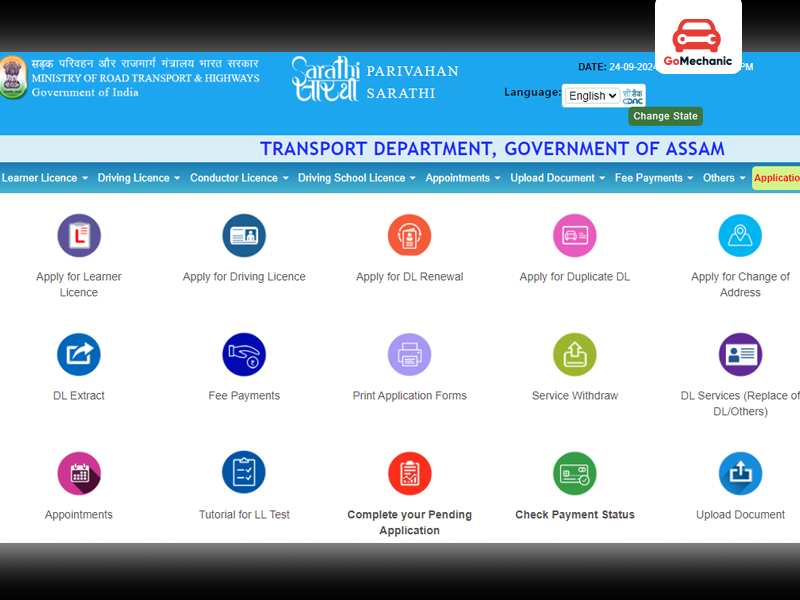
Standing in long queues has taken enough toll on your mind and now you’re wondering, ‘How to change ownership of a car’, you don’t need to worry anymore. The government has also set up an online platform to transfer the ownership of a car. This has made the process much easier and smoother.
Now you can transfer the ownership online at your home. Simply follow these steps:
| Step | What You Need to Do |
| Step 1 | Visit parivahan.gov.in |
| Step 2 | Click on “Online Services” → “Vehicle Related Services” |
| Step 3 | Select your State & RTO |
| Step 4 | Click on “Apply for Transfer of Ownership” |
| Step 5 | Enter vehicle details, RC number, and buyer’s details |
| Step 6 | Upload scanned copies of RC, insurance, PUC, and ID proofs |
| Step 7 | Pay the RTO transfer fee online |
| Step 8 | Download the receipt and track the transfer status |
Once the online process is done, you’ll need to visit the RTO for document verification and biometric authentication. After that, the new RC is issued in the buyer’s name.
Documents Required for Online Ownership Transfer
Only the process is digital. The documents remain the same. Scan the documents from your phone and upload them in the Parivahan portal.
| Document | Who Provides It? |
| Original RC | Seller |
| Form 29 & Form 30 | Seller |
| Valid Insurance Certificate | Seller |
| Pollution Certificate (PUC) | Seller |
| Buyer’s ID & Address Proof | Buyer |
| Bank NOC (if car had a loan) | Seller’s Bank |
| Death Certificate (for inheritance cases) | Legal Heir |
| Succession Certificate (if applicable) | Legal Heir |
Pro Tip: Upload clear, high-resolution scans. If the documents are blurry, the RTO will reject them, and you’ll be back to square one.
Estimated Timeframe: 15-30 Days
Also Read: Vehicle Ownership Transfer Simplified in India?
How Much Does It Cost to Transfer Car Ownership?
Now that you have got all the documents done. It’s time for you to pay the fees for this process. The cost of transferring ownership depends on the car’s age, engine size, and state regulations. Some fees are fixed, while others vary.
Breakdown of RTO Transfer Fees
| Vehicle Type | Age of Vehicle | Ownership Transfer Fee |
| Two-Wheeler | Less than 8 years | ₹150 – ₹300 |
| Two-Wheeler | More than 8 years | ₹100 – ₹200 |
| Car (Light Motor Vehicle – LMV) | Less than 8 years | ₹300 – ₹600 |
| Car (Light Motor Vehicle – LMV) | More than 8 years | ₹200 – ₹500 |
| Medium/Heavy Vehicles | Any age | ₹500 – ₹1,500 |
Note: Fees vary by state and additional charges may apply based on your RTO. Always check with your local RTO for exact costs.
Additional Charges You Might Have to Pay
| Charge Type | When It Applies | Estimated Cost |
| Road Tax | If the car is registered in a different state. | Varies (5-15% of car’s value) |
| Late Transfer Penalty | If ownership transfer isn’t completed within 30 days. | ₹100 – ₹500 |
| Bank NOC Charges | If the car had an active loan. | ₹200 – ₹500 |
| Smart Card RC Fee | If you want the new RC in smart card format. | ₹200 – ₹400 |
| Agent Fees (if applicable) | If you hire an RTO agent to handle paperwork. | ₹1,000 – ₹3,000 |
If you’re buying a car from another state, expect road tax payments to be the biggest expense. Some states allow a tax refund from the previous state, but it’s a separate process.
What Happens If You don’t Transfer The Ownership?
Not transferring ownership is a bad idea. People skip it thinking it’s just paperwork, but it’s more than that. It’s a legal liability. If the car is still in your name, any trouble it gets into comes back to you.
Imagine selling a car and, months later, getting a traffic fine. Not yours, but linked to your name. Or worse—a car you no longer own is involved in an accident, and you’re legally responsible.
Consequences of Not Transferring Car Ownership
| Risk | Who It Affects | What Happens? |
| Traffic fines in your name | Seller | If the new owner breaks the law, you get the fine. |
| Accident liability | Seller | If the car is involved in an accident, you could be legally responsible. |
| Insurance claims rejected | Buyer | If the RC is still in the seller’s name, the insurance won’t cover claims. |
| Resale problems | Buyer | Selling the car later is complicated if ownership wasn’t updated. |
| Legal trouble | Seller & Buyer | Any criminal activity linked to the car traces back to the registered owner. |
Conclusion
The changing of the ownership of the is not that difficult. It’s about getting some paperwork done and you are good to go. Once you have submitted your necessary documents to your RTO, verified your identity and paid the fees, then it’s a matter of a few days for your new RC to arrive in the new owners name.If you want to sell a car, pass it on, or just make the ownership transfer official, understanding the process is key. Ensure you’ve got all your documents in order, and head to the RTO to get the job done.
FAQs
- What documents do I need to transfer car ownership?
Original RC. Form 29. Form 30. Proofs. Bank NOC (if needed). Simple. - How long does the transfer process take?
Usually 15-30 days. RTO checks. Everything falls into place. - Can I transfer car ownership online?
Yes. Visit Parivahan. Upload documents. It’s straightforward. - What happens if I don’t transfer ownership?
Fines. Accidents. Legal mess. You don’t want that.


