






There are a couple of things that all car owners need to learn how to do—and one of them is doing it yourself at home: changing your car’s engine oil. It sounds like something to trust to the workshops or the mechanics, but the truth is, with a bit of elbow grease and some instructions, you can do it for yourself, right in your garage or driveway. Consider engine oil to be the lifeblood of your car. It pumps around the engine, keeping all the moving pieces lubricated and providing heat management. But with time, that oil gets old and starts forming sludge in it. That’s the time when you should understand that it needs to be changed, and don’t worry, you can do it yourself with no special tools or know-how.
Let’s understand it step by step, so that you don’t get confused and as it is rocket science.
Why Engine Oil Matters More Than You Think

You may not see what’s happening inside your engine but believe us, it’s busy in there. Tiny metal parts are moving fast and creating friction. Engine oil keeps that friction under control by acting as a cushion between parts. It not only oils the components of the engine, but it also takes dirt away with it and assists in cooling the engine. But after some time, when the engine operates, it picks up gunk, dust, and carbon and loses its protective value. That’s why an oil change is not an option thing it is a must.
A smooth engine runs better, lasts longer, and saves you hard-earned money from getting burned in costly engine repairs. So it’s not just about oil, it’s also about keeping your car alive longer without giving any major repair headaches.
To know more: Why is It Important To Change Your Engine Oil Regularly?
How to Know It’s Time for an Oil Change
Here’s the thing: your car tries to tell you when it’s not feeling well. And engine oil is no exception.
Pay attention to these signs:
- Engine Oil Light or Engine Warning Light on the dashboard
- Oil looks dark and dirty instead of clear or amber
- Unusual engine noise, like ticking or knocking
- Decreased fuel efficiency
- Burning oil smell inside the car
Also, most modern cars have a digital oil life monitor. It calculates oil change intervals based on your driving style. But even if your car has one, checking the dipstick once in a while is always a good idea.
What You’ll Need
Before you begin your DIY oil change, just get some of these required things:
- A brand new bottle of engine oil (for the type of engine oil required and how much? Refer to your owner manual)
- New oil filter
- Oil filter wrench
- Socket wrench (usually 14mm or 17mm for the drain plug)
- Oil drain pan
- Funnel
- Car jack and jack stands (or ramps)
- any old piece of cloth
- Gloves (optional, but handy)
- Safety goggles (again, optional but smart)
This might look like a long list, but once you buy these, you’ll have them for every future oil change.
Preparing Your Vehicle: Safety First, Always
Now, let’s get the car ready for the oil change.
- Park on a level surface and engage the parking brake.
- Let the engine cool down for at least 20–30 minutes. Warm oil flows better, but a hot engine can burn you.
- Lift your car using a jack and place the jack securely under the car. If you have ramps, even better.
- Locate the oil pan and drain plug. It’s usually a big bolt at the bottom of the engine.
- Place the drain pan underneath. Be sure it’s centered—you don’t want oil splashing all over.
The Actual Oil Change – Step-by-Step
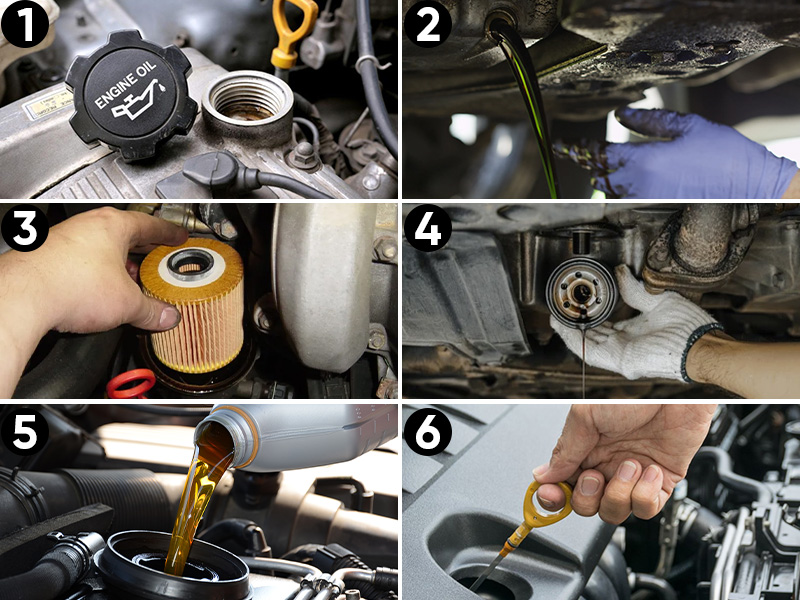
Step 1: Open the Oil Cap
Pop the hood and remove the oil fill cap on top of the engine. This lets air in and helps old oil flow out faster.
Step 2: Drain the Old Oil
Using your socket wrench, slowly loosen the oil drain plug. When it is a bit loose, remove it by hand and let the old oil drain out completely. Be careful—the oil might still be a little warm if you drove the car just a while ago. Once it’s drained fully, clean the plug with a rag and screw it back in tightly.
Also Read: Reasons Why You Should Use Engine Flush During Oil Change
Step 3: Remove the Old Oil Filter
The oil filter might be under the engine or on the side. Use your oil filter wrench to unscrew it. A little more oil will drip out, so keep the pan beneath it. Check if the rubber gasket comes off with the filter. If it sticks to the engine, don’t just scratch it, just gently peel it off.
Step 4: Install the New Filter
Before you fit in the new oil filter, dip your finger in the new oil and rub it lightly around the rubber gasket. This helps it seal better. Screw it in by hand until it’s snug. No need to overtighten.
Step 5: Add the New Oil
Using your funnel, pour the fresh engine oil into the oil fill hole on top of your engine. How much should you pour? You should just check the owner’s manual of your car, and you will get to know the exact amount of engine oil needed to be filled.
Step 6: Check and Adjust
Put the cap back on. Start the engine and let it run for 30–60 seconds. Turn it off and wait 2–3 minutes. Now check the oil level using the dipstick. Wipe it, dip it in again, and read the oil level. It should be between the two dots or lines. Add more oil if needed, but slowly, slowly, don’t be in a hurry.
Clean up all the mess and dispose of the used Oil
Used engine oil is very harmful to the environment and should never be thrown in the trash, drains, or soil. Here’s what to do:
- Fill the old oil into the empty oil container or into a clean plastic jug.
- Wipe any spills.
- You can just take it to any local recycling center nearby or an auto work repair shop, which generally they often accept used oil for free.
- Seal the old filter in a plastic bag and recycle it if possible.
Being responsible here helps the planet and keeps groundwater clean.
Some Bonus Tips to Keep Your Engine Happy
- Plan a schedule. After every 10,000 km your car runs or every 6 months, whichever comes first. It’s time for an oil change.
- Use the right oil. All engine oils are not the same, and also not every oil can be used in all cars. You should always check for the right grade of engine oil that should be used in your car.
- Just check for leaks. After an oil change, peek under the car every few days. Any drips? Re-check the plug or filter.
- Don’t ignore the dashboard. If the oil light comes back on, double-check everything.
- Track your changes. Note down the date you serviced your car and the mileage of your car in a diary or on your phone. It will help you keep things organized.
Conclusion
Learning how to change the engine oil in your car at home is worth more than just saving money on car maintenance; it’s a useful skill that makes you the master of your car’s upkeep. After you’ve done it a time or two, it becomes second nature. And consider this—every time you do the oil change yourself, you’re doing your engine an enormous good deed. You’re extending its lifespan, increasing fuel efficiency, and keeping your car running like new.
You no longer need to wait for a full day off for your service appointments at the service center or get tense about the quality of the oil they are using. With a bit of care, some basic tools, and this guide, you’ve got all it takes to be your own car’s best friend.
FAQs
Q1. Is it compulsory to change the engine oil regularly?
Of course, it is really important to change the engine oil of your car at a regular interval of time. Generally all the companies and service partners suggest to change the engine oil of the car in every 10,000 km or in every six months whichever comes first.
Q2. I’ve never touched a wrench in my life. Can I still do this?
Totally. There is no rocket science in this. With the help of the guide, follow these simple steps, and you can easily change the oil of your car. It’s way less scary than it sounds. Just follow the process, take your time, and you’ll be surprised how capable you actually are.
Q3. How do I know which oil to buy?
If you don’t know about which specific engine oil should be used in your car you can check your car’s owner manual to see which grade of engine oil is used in your car by the company, or you can visit any of your nearest car spare part shop and tell him the make and model of your car and he will give you the best suitable engine oil according to your car.
Q4. What can really happen if the engine oil I used is the wrong one?
To be honest, please try to avoid this blunder. Wrong oil can mess with the performance and engine of your car. It will have to work really hard, and over time, it could cause severe damage to the car. And the worst that can happen is that your engine can seize. It is better to spend five minutes double-checking than spending five figures on fixing a damaged engine.


