






Safety is one of the key factors of car selection and with Hyundai Venue safety is not a concern. After achieving a good 4-star rating in global NCAP The Venue is presented both from a structural perspective, but also as a reward for its outstanding full range of safety features in relation to occupant safety.

In this blog, we’ll take a closer look at how the Venue performs in various safety categories, from adult occupant protection to child safety and pedestrian safety. Also, we’ll point out the main characteristics which make the Venue one of the safest compact SUVs on the market today.
What is the Global NCAP Rating?

- Adult Occupant Protection:
This is the method by which the capacity of a car to save its adult (car) occupants in the event of an impact. Frontal and side crash tests to assess driver and front seat passenger safety.
- Child Occupant Protection:
It evaluates child passenger risk on car rides, which depends on the level to which an item (car restraint, child restraint system (ISOFIX), and braking performance of the car) affords protection to the passenger during a crash.
- Pedestrian Protection:
Global NCAP also tests the extent to which a vehicle is able to offer protection to a cyclist struck from the front in a collision as well as estimates the presence and sensitivity such as the front bumper, bonnet, windshield and so on.
- Safety Assist Features:
This includes fitting advanced safety items such as Electronic Stability Control (ESC) and Anti-lock Braking System (ABS) (lane assist and automatic emergency braking). These functions are tested, with the aim of demonstrating that these functions can avoid or mitigate accidents and collisions.
Hyundai Venue Safety Rating Global NCAP

Hyundai Venue (NCAP rated) retains a four-star crash safety rating (the latest models. The following is the description of the main safety classes that are discussed below.
-
Adult Occupant Protection:(34.9/38 points)
Within this category, the vehicle’s performance in defending the adult occupants during various crashes, i.e., frontal, lateral and rear crashes is assessed.
Key Highlights:
Side Impact Strength: This test yielded 8/8 (i.e., best product as to side-impact crash protection of driver of driver’s torso-upper and driver’s torso-lower involved compartments and participant’s cervical and cranial compartments) suggesting there will be protection of the driver’s upper and lower torso and head from high impact forces in the event of a side-impact crash. This test helps to improve the overall score of the Hyundai Venue Safety Rating.
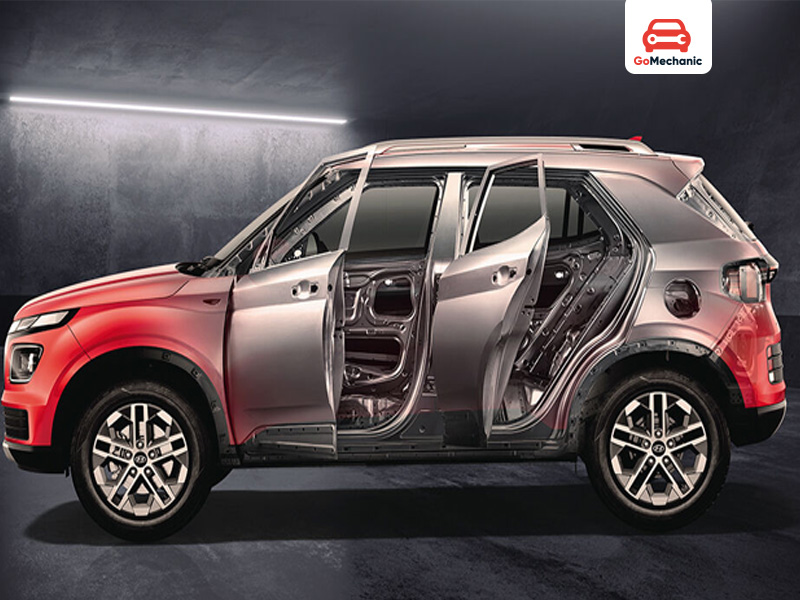
Structural Integrity: Since high-strength steel has been used in the body structure of Venue an energy impact could be dissipated and distributed in the body thereby minimizing the risk of injury.
Safety Systems: (Advanced systems, such as the system of Electronic Stability Control (ESC), Anti-lock Braking System (ABS), and Electronic Brake-force Distribution (EBD), can be applied for vehicle control critically in manoeuvres to improve the safety of all road conditions).
Why This Matters:
This is why the Venue should, to the best practical limits, attempt, as far as reasonably may and should be predicated, to avoid injury to all fare-carrying adults in the most probable, though, by no means the most common, injury fatalities in trips, though, of course, side-impact accidents, i.e., one specific risk factor. Which increases the Hyundai Venue Safety Rating.
-
Child Occupant Protection:(40/49 points)
In this test, the vehicle’s efficacy during a crash to protect child occupants is simulated by using dummies representing children ages 6 and 10.
Key Highlights:
6-Year-Old Dummy: The Venue offers sufficient shielding for extreme infants, particularly and preferentially, for sensitive regions, i.e., head, chest, and abdomen.
10-Year-Old Dummy: Good protection for the neck, but where it can be made even better.
ISOFIX Anchorages: These limited attachment points for child restraints provide rigidity and shock absorption in a crash, thus improving impact safety for small passengers.
Why This Matters:
For families, the Venue offers solid protection for children. Of great concern is, however, the correct use of ISOFIX car seat restraints for optimum safety and improves the overall Hyundai Venue Safety Rating NCAP Score good.
-
Safety Assist Systems: (8.1/13 points)
This subcategory measures active safety functionalities that are there to avoid crashes, ie braking intervention systems/support and lane support technologies.
Key Highlights:
Autonomous Emergency Braking (AEB): It still detects near misses automatically engages the brakes, and is especially adapted for high-speed driving. This reduces the risk of rear-end collisions.
In order to alert the driver as soon as the vehicle moves out of the lane of traffic can therefore make very tight steering corrective adjustments to recenter the car.
Blind-Spot Monitoring: Vehicle detection in the neighbouring lanes, thus decreases the chance of side-swipe crashes during a lane change.
Why This Matters:
These technologies reduce human error and increase driver reliability, especially for freeways and long distances. They’re essential for preventing accidents before they occur and improving the overall Hyundai Venue Safety Rating NCAP score.
-
Vulnerable Road User Protection: (29.8/48 points)
Key Highlights:
Bonnet Design: Reasonable protection of pedestrian skulls in impact but insufficient protection in, for example, the stiff zones, e.g., the base of the windscreen and pillars.
Leg Protection: In contrast, a Bumper offers a significant protective effect on the hand. limbs and reduces the severity of injury.
Challenges: Like most compact cars, it is difficult to achieve high scores in this subcategory owing to space constraints[plus show PubMed abstract].
Why This Matters:
Pedestrian safety is crucial in urban areas. Although the Venue is acceptable, the driver should be cautious, especially in traffic jams and Helps Improve the Venue Safety Rating Global NCAP score.
Overall Takeaway
Hyundai Venue provides adequate levels of protection for the occupants and adequate levels for pedestrians thanks to the stiff chassis and the latest safety systems. This shows why Hyundai Venue safety Rating was a solid 4 stars. It remains a valid candidate for the compact SUV market, for urban and family purposes and consequently Improves The Venue Safety Rating Global NCAP score.
Hyundai Venue Safety Features
| Feature | Details |
| 6 Airbags | Provides front, side, and curtain airbags to protect occupants from multiple angles in the event of a collision, enhancing safety for both front and rear passengers. |
| ABS with EBD | Prevents wheel lock-up during sudden braking. Electronic Brakeforce Distribution (EBD) ensures optimal braking power to each wheel, improving control and stability on varied surfaces. |
| Electronic Stability Control (ESC) | Detects loss of traction and automatically applies braking to individual wheels to help maintain control, especially during sharp turns or on slippery roads. |
| Hill Hold Assist (HHA) | Keeps the vehicle stationary on inclines by holding brake pressure briefly, preventing rollback when transitioning from the brake pedal to the accelerator. |
| ISOFIX Child Seat Anchors | Standardized anchor points for child safety seats ensure secure and easy installation, offering enhanced protection for young passengers. |
| Rear Parking Sensors | Detects obstacles behind the vehicle, providing audible warnings to help the driver avoid collisions when reversing or parking. |
| Rear-view Camera | Displays a live view of the rear area on the infotainment screen, improving visibility and safety when reversing or parking. |
| Autonomous Emergency Braking (AEB) | Monitors for potential collisions with vehicles or pedestrians and automatically applies brakes to mitigate or avoid impact. Effective at both city and highway speeds. |
| Lane Keeping Assist (LKA) | Warns the driver and gently corrects steering if the vehicle drifts out of its lane without signalling, reducing the risk of unintended lane departure. |
| Blind-Spot Monitoring (BSM) | Detects vehicles in adjacent lanes and alerts the driver, reducing the chance of side-swipe accidents during lane changes. |
| Rear Cross-Traffic Alert (RCTA) | Monitors for approaching vehicles from the side when reversing out of parking spaces, alerting the driver to prevent collisions. |
| Tyre Pressure Monitoring System (TPMS) | Continuously monitors tyre pressure and alerts the driver of any significant deviations, ensuring optimal tyre health and vehicle stability. |
Also Read- Mahindra Scorpio Safety Rating: Why This Five-Star SUV Is a Game Changer
Hyundai Venue Key Specifications
| Specification | Details |
| Engine Options | 1.2-litre Petrol (Kappa), 1.0-litre Turbo Petrol (T-GDI), 1.5-litre Diesel |
| Transmission | 5-Speed Manual, 6-Speed Manual, 7-Speed DCT (Turbo only), iMT (Intelligent Manual Transmission) |
| Fuel Type | Petrol / Diesel |
| Power Output | Petrol: 83 PS (1.2L) / 120 PS (1.0L Turbo)
Diesel: 116 PS (1.5L) |
| Torque | Petrol: 113.8 Nm (1.2L) / 172 Nm (1.0L Turbo)
Diesel: 250 Nm |
| Fuel Efficiency | Petrol: 17.5 km/l (1.2L)
Turbo Petrol: 18 km/l Diesel: 22 km/l |
| Body Type | Compact SUV |
| Drive Type | Front-Wheel Drive (FWD) |
| Engine Technology | Dual VTVT (1.2L), Turbo GDI (1.0L), CRDi (1.5L) |
| Emission Standard | BS6 (Stage II Compliant) |
Check this out – 5 Star Safety Rating Cars In India – Under 15 Lakhs
Hyundai Venue: A Smart Choice for Safe Urban Driving
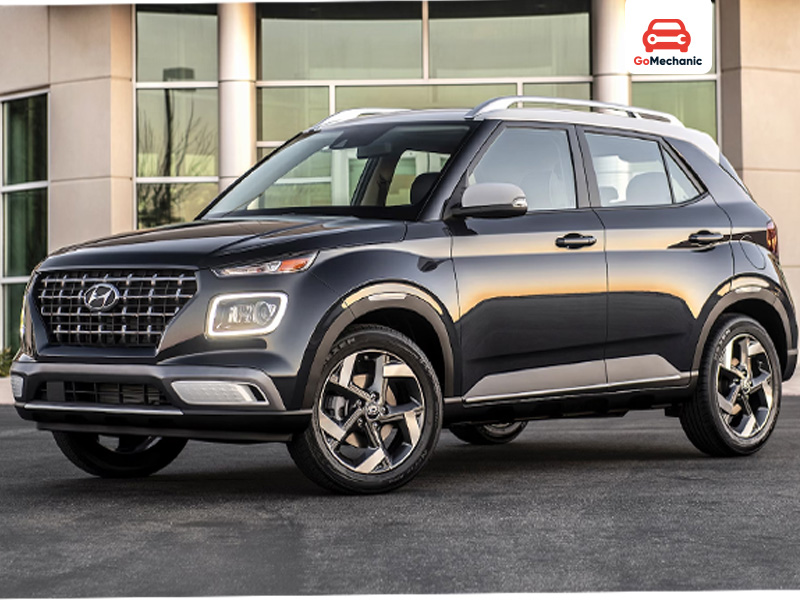
For those who prioritize safety, the Hyundai Venue stands out as an excellent choice in the compact SUV segment. A global NCAP test rating of 4 stars, which gives the appropriate protection to both adult and child occupants of the Venue has been obtained. If the level of sophisticated driving support, including Autonomous Emergency Braking (AEB), Lane Keeping Assist and Blind-Spot Monitoring, is bundled with an enhanced driving environment in potentially traffic-heavy roads, then this may be dealt with.
Even though accidents continue to occur that could have been prevented by better protection of the people in the vehicle, the crashworthiness of the Venue and the protective technology that goes with it allow it to be one of the safest vehicles in its class. No matter which mode of transport you choose (commuting, driving at a distance, etc., the Venue makes the safety of the user and his/her passengers a job.
Also Read- How Safety Ratings Influence Car Buying Decisions
FAQ’s
- What is the Hyundai Venue Safety Rating?
Based on the Hyundai Venue adult and child compartment protection rating (4 star rating for adult occupants and 3 star rating for child occupant) by Global NCAP, the performance of such safety features is shown by these ratings.
2. Is Indian Venue a safe car?
The Hyundai Venue has subsequently been given a reputable safety score, which in turn places the vehicle in a favourable position in the compact SUV market.
3. Will there be a 2025 venue?
The Venue, a generation of the competitive Indian market, is the first Hyundai to be manufactured in a new Tataengaon Hyundai facility that Hyundai acquired from GM in 2023. Compact SUVs are forecasted to reach the production line roughly by the end of October 2025.
4. Is Hyundai a safe car brand?
The Hyundai Motor Group took the most prizes (total score highest) in the year 2024, collecting 6 Top Safety Pick+ and 10 Top Safety Pick.
5. Which is the no. 1 safest car in India?
Tata Harrier – 5-star GNCAP rating is the safest car in India.


