






The Kia Sonet is a subcompact SUV in the B-SUV segment, which means it stays compact enough for everyday city traffic. But still offers the slightly higher seating position people expect from an SUV. In crowded Indian roads that height actually helps quite a bit, visibility improves and the driver usually feels more in control while driving. Since its launch the Sonet has stayed one of the popular choices in this segment. Part of that comes from its design and long feature list. But a big reason is the number of options available for buyers as you can choose between petrol and diesel engines, manual and automatic gearboxes, along with several variants that cover both practical needs and more premium expectations.
But once the car settles into daily use, attention slowly shifts away from the features that looked impressive in the showroom. What begins to matter more are the mechanical details that affect how the car actually behaves on the road. Tyres are one of those details. They sit between the vehicle and the road surface, and everything the driver feels through the steering wheel or seat passes through the tyres first.
Because of that, tyre pressure becomes an important part of regular ownership. When the pressure drops below the recommended level, the car may start feeling slightly heavier to steer and mileage can fall a little, tyres also begin wearing faster along the outer edges over time. If the pressure goes too high, the ride usually becomes firmer and the tyre loses some of its ability to absorb uneven surfaces. The correct Kia Sonet tyre pressure keeps the tyre shape stable so the contact patch stays even on the road. And once owners start paying attention to that detail, the next questions usually follow naturally, what is the correct Kia Sonet tyre size, and what should a Kia Sonet tyre price look like when replacement time arrives. This guide breaks those things down clearly.
Kia Sonet Tyre Size by Variant
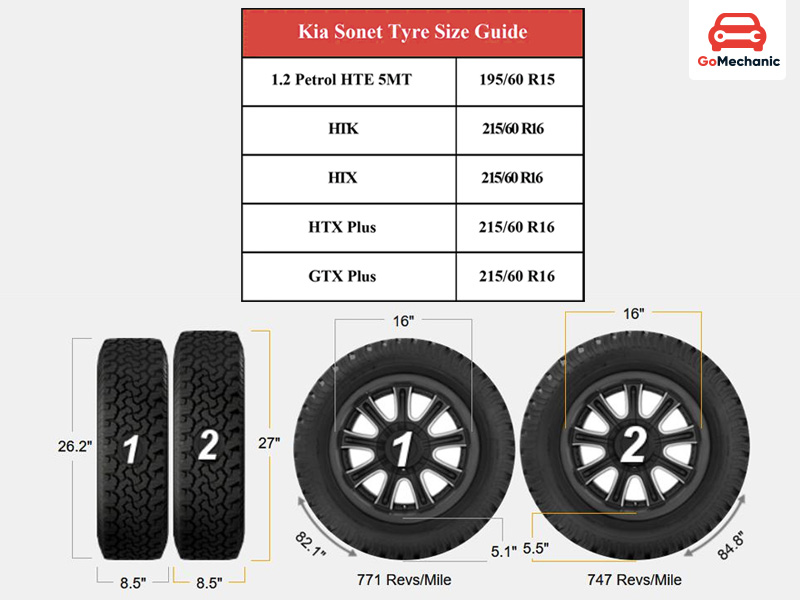
Understanding the correct Kia Sonet tyre size starts with knowing which variant you own. Kia does not use the same tyre across all trim. The size changes depending on the variant and wheel setup, and that difference slightly affects how the car behaves on the road.
Kia Sonet Tyre Size Table
| Variant | Kia Sonet Tyre Size | Wheel Type |
| HTE | 195/65 R15 | 15-inch Steel |
| HTK | 215/60 R16 | 15-inch Steel |
| HTK+ | 215/60 R16 | 16-inch Alloy |
| HTX / HTX+ | 215/60 R16 | 16-inch Alloy |
| GTX+ | 215/60 R16 | 16-inch Alloy |
| X-Line | 215/60 R16 | 16-inch Alloy |
Base variants use 195/65 R15, while higher trims move to 215/60 R16. The change is not just for appearance. It slightly alters grip, stability, and overall road behaviour. Now let’s decode what those numbers actually mean.
Take 215/60 R16 as an example.
- 215 is the tyre width in millimetres – A wider tyre generally creates more road contact, which helps improve grip.
- 60 is the aspect ratio – It shows the sidewall height as a percentage of the tyre width.
- R16 is the rim diameter in inches – This number must always match the wheel size of the car.
Kia Sonet Tyre Pressure (Recommended PSI)
Make owners overlook tyre pressure, but it affects the way the car behaves. And the correct Kia Sonet tyre pressure helps maintain proper road grip and increase tyres life, but if the pressure drops below the recommended level, the steering feels heavier, and if the pressure goes too high, the opposite happens.
Here is the recommended Kia Sonet tyre pressure for normal driving conditions.
| Tyre Position | Normal Load | Full Load |
| Front Tyres | 33 PSI | 36 PSI |
| Rear Tyres | 33 PSI | 36 PSI |
The PSI pressure should be kept around 33 PSI, and when the car is carrying extra passengers or luggage, the pressure can be increased slightly to 36 PSI to maintain proper stability and support and one small detail many drivers often miss is checking tyre pressure when the tyres are cold. Ideally the pressure should be measured after the car has been parked for a few hours, because driving for longer distance can raise tyre pressure by around 3–5 PSI. If you check it immediately after driving the reading may appear slightly higher than it actually is.
Kia Sonet Tyre Price in India
Tyre prices usually vary for a simple reason – the brand and rubber compound used in the tyre. Premium brands like Michelin or Bridgestone often sit on the higher side because they focus more on ride comfort, stable grip and longer tread life.
| Tyre Size | Kia Sonet Tyre Price Range (Per Tyre) |
| 195/65 R15 | ₹4,500 – ₹7,500 |
| 215/60 R16 | ₹5,500 – ₹9,500 |
Best Tyre Brands for Kia Sonet
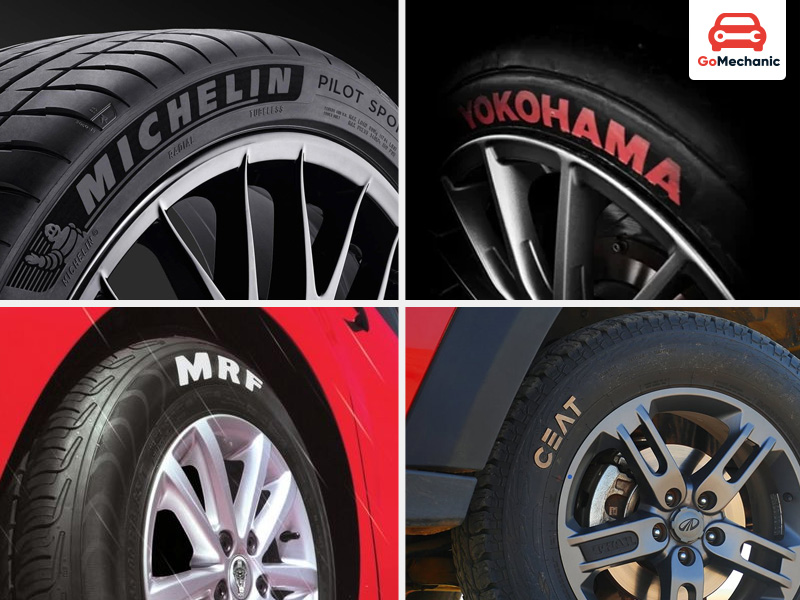
Now that you understand the Kia Sonet tyre size and tyre price, the next thing that usually comes to mind is which tyre brand should actually be chosen when replacement time comes. Well, for that, you need to understand your requirements and choose accordingly. Because different tyre brands focus on different priorities, some put more attention on ride comfort, while others are designed to last longer and handle rough conditions better.
| Tyre Brand | Popular Model | Why Owners Choose It |
| Michelin | Primacy 4 | Strong wet grip and smooth ride quality |
| Bridgestone | Turanza T005 | Stable highway performance and comfort |
| Yokohama | BlueEarth-GT | Balanced grip with lower road noise |
| MRF | ZTV2 | Durable and suited for Indian road conditions |
| CEAT | Milaze X3 | Affordable and long tread life |
Signs Your Kia Sonet Tyres Need Replacement
Tyres usually don’t fail suddenly. Most of the time they start showing small signs before grip and safety begins to drop. Paying attention to these signs helps owners replace tyres at the right time, instead of waiting until the car’s behaviour starts feeling noticeably different.
- Tread Depth Below 1.6 mm – Tyres slowly lose tread as they wear with use. Once the tread goes below 1.6 mm, the tyre cannot push water away properly and grip begins to reduce, this gets especially dangerous problem on wet roads.
- Steering Vibration While Driving – Sometimes a vibration through the steering wheel can indicate uneven tyre wear, however, it can also happen due to alignment or balancing issues, but worn tyres are often part of the reason as well.
- Longer Braking Distance – When tyre grip reduces the car may start taking a little longer to stop. Many drivers first notice this during sudden braking or while driving in rain.
- Uneven Tread Wear – If one side of the tyre looks more worn than the other it usually means the pressure or wheel alignment has not been correct for some time. Over time this uneven wear reduces tyre life and can slightly affect the car’s stability while driving.
For more information – Click Here.
Kia Sonet Spare Tyre Details
The Kia Sonet includes a compact spare tyre meant for temporary use during a puncture or tyre failure. It is not designed for regular driving. The spare usually comes in 195/65 R15 size and is mounted on a steel wheel, even in variants that use alloy wheels for the main tyres.
Because it is a space saver tyre, its construction is slightly different from the standard tyres fitted on the car. It is built to help the driver continue driving only until the damaged tyre is repaired or replaced.
| Specification | Details |
| Spare Tyre Size | 195/65 R15 |
| Tyre Type | Space Saver |
| Wheel Type | Steel |
| Maximum Speed | 80 km/h |
| Recommended Distance | Around 80 km |
Note – When the spare tyre is installed, the vehicle should not be driven faster than 80 km/h. Additionally, the tyre is also not meant for long distances.
Can You Upgrade Kia Sonet Tyres?
Some Kia Sonet owners consider upgrading tyre size to improve grip or change the stance of the car. However, changing the tyre size too much can affect mileage, and driving patterns.
Here are commonly discussed Kia Sonet tyre upsize options.
- 195/65 R15 can be turned into 205/60 R15.
- 215/60 R16 can be turned into 215/55 R17
| Original Tyre Size | Possible Upsize |
| 195/65 R15 | 205/60 R15 |
| 215/60 R16 | 215/55 R17 |
Conclusion
The Kia Sonet comes with different tyre setups starting with the base variants that usually run on 195/65 R15 tyres, while higher ones move to 215/60 R16. The difference may look small on paper, but it does change and effect how the car grips on road. In addition to the size, maintaining the right Kia Sonet tyre pressure also matters as it help maintain proper road contact and keeps the car stable. So comparing both before replacement usually helps owners select an option that suits their driving needs and that is what we suggest you to do as well.
FAQ’s
1. What is the price of tyre size for Kia Sonet?
The price depends on size and brand. A 195/65 R15 tyre usually costs between ₹4,500 and ₹7,500. A 215/60 R16 tyre costs more, usually ₹5,500 to ₹9,500. Premium brands raise the price slightly, because of the advanced compound quality and tread design.
2. What is the tyre pressure for a Kia Sonet?
The recommended Kia Sonet tyre pressure is about 33 PSI for normal driving. This applies to both front and rear tyres. When the car carries passengers or luggage, the pressure may rise to 36 PSI. It helps the tyre hold its shape and keeps the car stable.
3. Which is the best tyre for a Kia Sonet?
Several tyres suit the Sonet like Michelin Primacy, Bridgestone Turanza, Yokohama BlueEarth and MRF ZTV2 as they usually offer better grip and quieter driving. However, many owners still choose MRF or CEAT, as they last longer on rough roads.
4. What is the price of Kia Sonet 15 inch tyres?
Base variants of the Kia Sonet use 195/65 R15 tyres. These tyres usually cost between ₹4,500 and ₹7,500 per tyre. The exact price depends on the brand, tread design and dealer pricing. Installation or balancing may sometimes add a small extra cost.
5. Is it safe to drive Kia Sonet with low tyre pressure?
Driving with low pressure is not safe as the tyre flexes too much, causing the heat to build inside the rubber. This causes the wear to increases along the edges and steering becomes heavier and braking distance increases.
6. What is the cost of one tyre?
One Kia Sonet tyre usually costs between ₹4,500 and ₹9,500. WitSmaller tyres cost less and larger, on the other hand, tyres cost more. The brand and tread technology influence the price.
7. Should tyre pressure be 32 or 34?
For the Kia Sonet the recommended value sits between those numbers. The correct pressure is usually around 33 PSI. Because of that, 32 PSI or 34 PSI both fall close to the acceptable range, what matters more is keeping pressure consistent and avoiding long periods of low pressure.
8. What is the best tire pressure for a Kia Sonet in winter?
Tyre pressure generally stays the same across seasons. For the Kia Sonet it remains around 33 PSI during winter as well. Cold air slightly reduces tyre pressure, which means tyres may lose a little air overnight. Because of this it helps to check pressure more regularly in colder weather.


