






McLaren did not start as a road car brand chasing speed records. It began in racing, built by Bruce McLaren around the idea that engineering discipline matters. And Formula 1 success shaped how the company thought about weight, aerodynamics, and power. Every decision was tied to lap time. Over decades, that mindset moved from the track to the road. When McLaren entered the supercar world, it did not follow tradition. It focused on carbon fibre chassis, precise power delivery, and cars that felt controlled. That philosophy explains why conversations around McLaren’s fastest car rarely focus on just top speed. They focus on how speed is achieved.
As the brand evolved, each generation pushed the limits further. From early icons to modern hypercars, McLaren kept refining the same core principles. Lighter structures. Smarter aerodynamics. Engines tuned for response as much as raw output. This steady evolution is what places McLaren among the fastest car makers in the world today. People love McLaren because the speed feels purposeful. Not dramatic for show. Fast because it has to be. That obsession with measurable performance is why enthusiasts keep asking which model sits at the top. And that is why this blog looks closely at McLaren’s fastest cars in detail.
Top 5 McLaren’s Fastest Car in the World
1. 2020 McLaren Speedtail
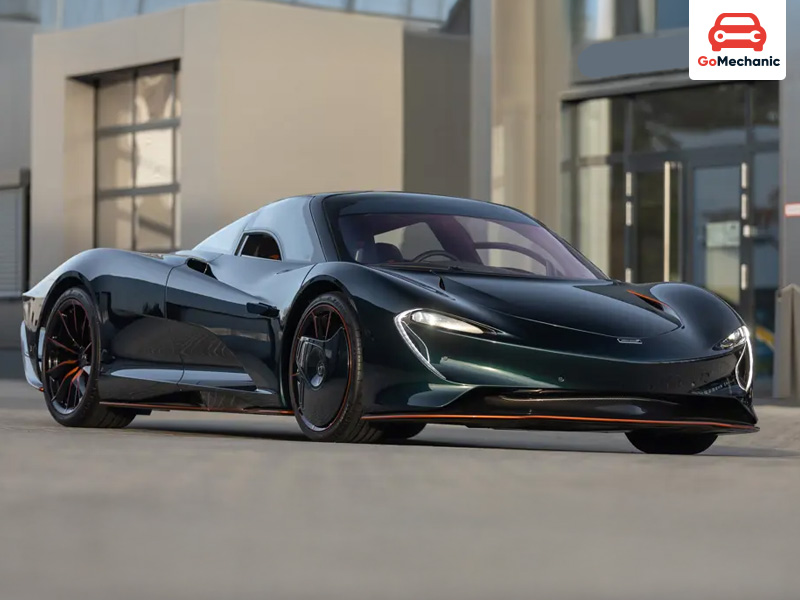
The McLaren Speedtail, McLaren’s Fastest Car, was introduced in 2020 as a car built around one clear idea – Pure efficiency. Unlike other McLarens, it was not designed for lap times or sharp cornering. It was designed to cut through the air for long, sustained high-speed runs. And the design tells a lot about the vision, with a long body that reduces drag, plus the active aerodynamic surfaces replace a traditional rear wing, and air is guided smoothly over the car. Additionally, the hybrid system adds instant torque, while the twin-turbo V8 delivers continuous power. The specifications below show how this approach is applied in numbers.
| Specification | Detail |
| Engine | 4.0 L Twin-Turbo V8 Hybrid |
| Power | 1,036 hp (total) |
| Torque | Approx 1,150 Nm |
| Transmission | 7-Speed Dual-Clutch |
| 0–100 km/h | Approx 2.9 sec |
| Top Speed | Approx 403 km/h (250 mph) |
2. 1995 McLaren F1
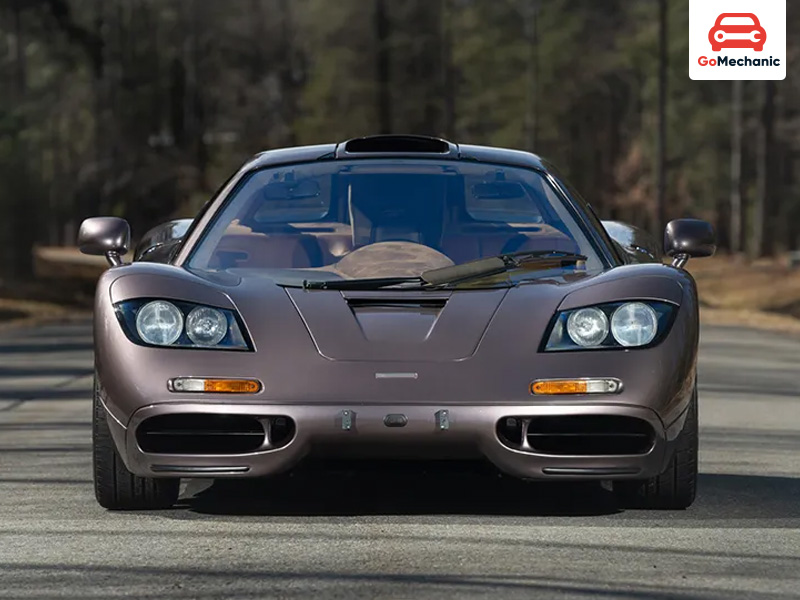
The McLaren F1 was introduced in 1995, at a time when road cars were not built with speed as the main goal. It followed a simple philosophy – keep it light, keep it pure, and remove anything that did not serve performance. And the carbon-fibre monocoque was revolutionary for its time. The central driving position improved balance. The long, clean body reduced drag naturally, without wings or active aids. The stability came from shape and weight distribution. The specifications below show how this approach helped the car to become the 2nd fastest McLaren car in the world.
| Specification | Detail |
| Engine | 6.1 L BMW S70/2 V12 |
| Power | Approx 627 hp |
| Torque | Approx 650 Nm |
| Transmission | 6-Speed Manual |
| 0–100 km/h | Approx 3.2 sec |
| Top Speed | Approx 386 km/h (240 mph) |
3. 1995 McLaren F1 LM
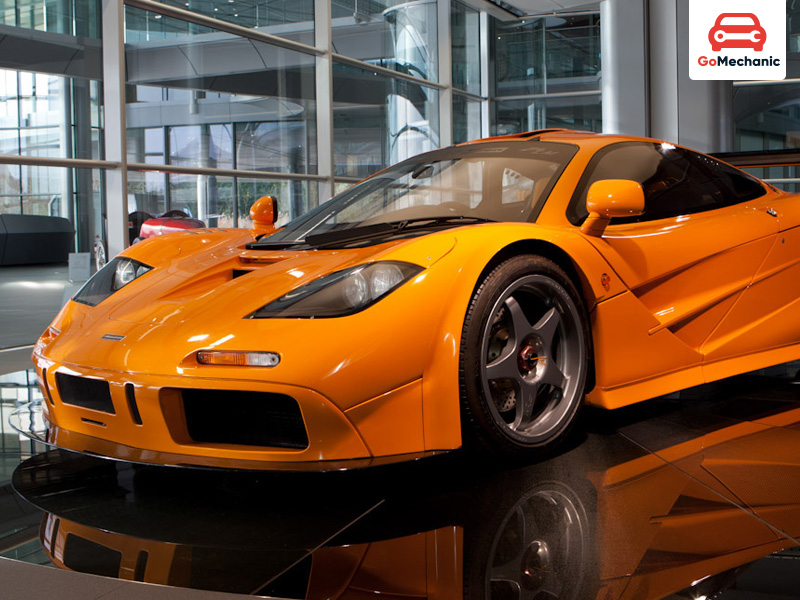
The McLaren F1 LM was an upgraded version of the F1, designed with racing intent, and that shows in every detail. If compared to the standard F1, the LM was lighter and a fixed rear wing for added stability at high speeds. Plus, the upgraded V12 delivered more power, but the turning factor came from reduced weight and increased downforce. That combination allowed the F1 LM to reach remarkable speeds. The specifications below show how this race-inspired approach translated into performance.
| Specification | Detail |
| Engine | 6.1 L V12 (LM variant) |
| Power | Approx 680 hp |
| Torque | Approx 705 Nm |
| Transmission | 6-Speed Manual |
| 0–100 km/h | Approx 3.9 sec |
| Top Speed | Approx 362 km/h (225 mph) |
4. 2020 McLaren Sabre
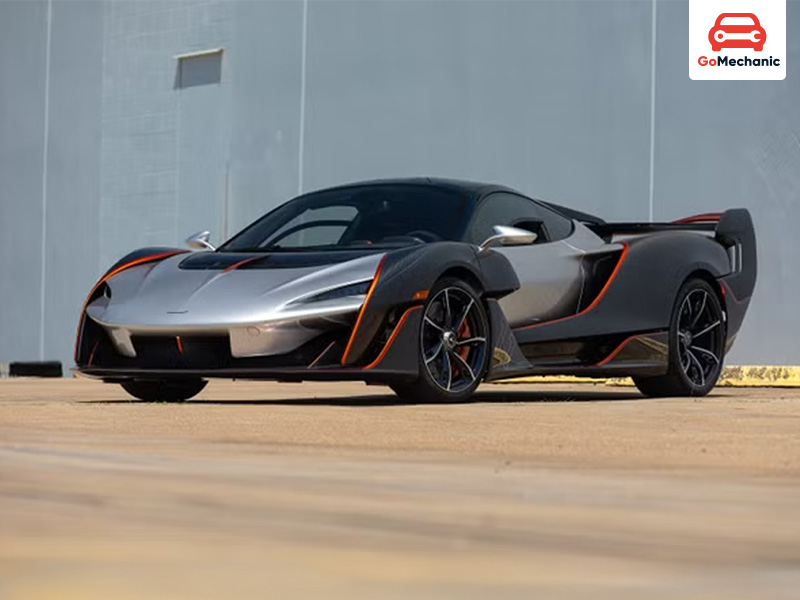
The McLaren Sabre was introduced as a highly exclusive, speed-focused model designed for one purpose – maximum performance with minimal changes. Large aerodynamic elements and a fixed rear wing help manage airflow at high speeds. Add that to the lightweight carbon-fibre structure, and you get a stable car even when pushed hard.
The twin-turbo V8 delivers strong, immediate power, supported by a chassis tuned for sustained high-speed driving. This combination allows quick acceleration and remaining composed at extreme speeds. The specifications below show how this combination works on the road.
| Specification | Detail |
| Engine | 4.0 L Twin-Turbo V8 |
| Power | 824 hp |
| Torque | Approx 800 Nm |
| Transmission | 7-Speed Dual-Clutch |
| 0–100 km/h | Approx 2.5 – 2.8 sec (varies) |
| Top Speed | Approx 351 km/h (218 mph) |
5. 2013 McLaren P1
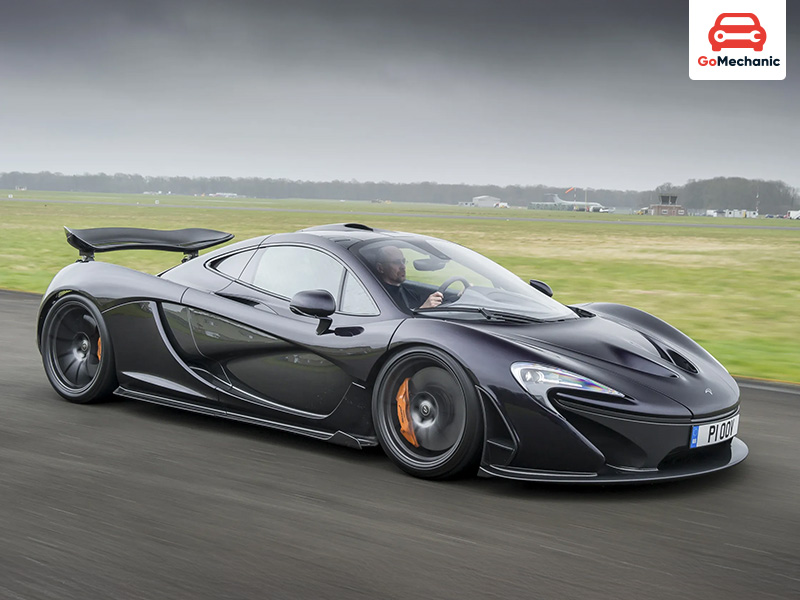
It was introduced as the first hybrid hypercar with the motive to combine racing technology with real road performance. The design was made to deliver speed in a controlled way and maintain stability at high speeds. Plus, the lightweight carbon-fibre structure keeps weight in check, even with the added hybrid system.
The electric motor delivers instant torque, while the twin-turbo V8 takes over for speed. And together, they allow the P1 to accelerate instantly. The specifications below show it in numbers.
| Specification | Detail |
| Engine | 3.8 L Twin-Turbo V8 + Electric Hybrid |
| Power | 903 hp (combined) |
| Torque | Approx 900 Nm |
| Transmission | 7/8-Speed Dual-Clutch |
| 0 -100 km/h | Approx 2.8 sec |
| Top Speed | Approx 350 km/h (217 mph) |
Are McLaren’s fastest a Car Suitable Choice for Indian roads?
- Ground Clearance Comes First – McLarens are designed to sit low for aerodynamic efficiency. On Indian roads, that becomes an immediate challenge. Speed breakers, uneven surfaces, and steep parking ramps demand constant caution. Front lift systems help, but they don’t remove the need for careful planning on every drive.
- Traffic Does Not Match the Car’s Strengths – These cars are built to stay in motion. Indian traffic is slow, and unpredictable. Long idling, sudden braking, and tight lanes limit how comfortably the car can be driven. Mechanically, it copes. As an experience, it feels constrained.
- Heat and Urban Conditions – High-performance engines generate heat, and Indian cities amplify that heat. On top of that, the Long waits in traffic and hot weather cause even more problems, even though they are engineered to manage it.
- Where a McLaren Makes Sense in India – Early morning highway runs. Controlled environments. Private tracks. Well-paved stretches of road. In these conditions, the car feels alive and purposeful.
- Ownership Is About Intention – In India, a McLaren is not a casual daily drive. It rewards planning, route awareness, and timing. With the right mindset and conditions, it works. Without them, it demands patience.
Conclusion
McLaren’s fastest cars are engineering statements. They are built around control, efficiency, and speed that comes from precision rather than excess. On paper, the numbers are extraordinary. In the real world, especially on Indian roads, context matters just as much. These cars are not designed for casual use. They ask for planning, awareness, and the right conditions to be enjoyed properly. When those conditions exist, on open highways, controlled roads, or private tracks, a McLaren delivers exactly what it promises. Speed that feels measured. Stability that feels intentional.
So, the question arises, is McLaren suitable for Indian roads? No, not everywhere. But that does not take away from what these cars represent. They are not built to adapt to every environment. They are built to perform at the highest level when the environment allows it. So, in conclusion, the McLaren’s fastest car is not just about being the quickest on a race track. It is about how speed is engineered, controlled, and experienced. And that mindset remains consistent, no matter where the car is driven.
FAQ’s
1. Which McLaren feels fastest in real-world driving?
Cars like the P1 or Sabre feel quicker in everyday conditions. They deliver instant response at lower speeds. The Speedtail needs space to show its advantage.
2. Why is the McLaren F1 still special today?
It achieved extreme speed without modern electronics. The performance came from light weight and clean engineering. That balance is still rare even today.
3. Are McLaren cars built only for track use?
They are built with racing principles. But they are not limited to tracks. Under the right conditions, they remain stable and predictable on the road.
4. Is McLaren faster than a Lamborghini?
It depends on the situation; McLaren focuses on aerodynamics and control. On the other hand, Lamborghini leans towards drama and raw power. On open roads, McLaren usually is the better choice in terms of speed.


