






Over the years, Nissan has built a reputation for providing reasonable style and fuel efficiency. Their bestsellers have models like the X-Trail, Rogue, and Magnite. But here’s the thing: while the brand gets a lot right, it’s not without its problems. Ask any long-time Nissan owner, and chances are, they’ve had at least one frustrating issue pop up, especially as the car ages.
From transmissions to electrical glitches, Nissan vehicles have developed a reputation for certain recurring problems. That doesn’t mean every Nissan is bad, but it does mean that if you’re planning to buy one (especially a used model), you should know what to look out for.
This blog breaks down Nissan’s common problems across popular Nissan models, so you can make smarter decisions, whether you’re buying, maintaining, or just trying to keep your current ride running smoothly.
Also, look at: Top Ducati Bike Problems & Fixes Riders Should Know
CVT transmission problems
One of Nissan’s common problems that owners deal with is CVT. Continuously Variable Transmission, or CVT for short, is a gearbox type intended to provide smoother acceleration and improved fuel economy.
Numerous Nissan owners complained of problems like jerky driving, delayed acceleration, overheating, and, in the worst situations, complete gearbox failure.
These problems can occur after 40,000 to 60,000 km of running of the car, which is early.
Nissan’s CVTs are not just an occasional problem but a weak point in Nissan’s many models. If you’re considering buying one, especially used, check the service history carefully and see if the transmission has already been replaced or serviced.
Engine Stalling and Performance Issues
Despite Nissan engines’ reputation for reliability, many owners have faced performance issues that appear suddenly and frequently.
- When the car is stopped, it starts roughly and feels like the engine is fighting for survival.
- Unexpected power outage while driving, particularly when accelerating
- Stalls that occur at random, even when moving slowly or stopping
- Even with a healthy battery, hard starts or failure to start
Engine stalling is not just Nissan’s common problem. If your car loses power while you’re in traffic or on the highway, these issues can be dangerous in addition to interfering with your driving experience.
Also read: Honda Scooty Common Problems Every Owner Should Know
Faulty Sensors
To make driving safer, smoother, and more efficient, modern cars have a lot of sensors. However, these sensors may end up being the issue rather than the fix in many Nissan models. Faulty sensors have become one of Nissan’s common problems. Several problems with manufacturing or sensitive sensors are faced by owners, including:
- Dashboard warning lights that are not working properly
- Irregular fuel measurements
- Uncertain speedometer or tachometer behavior
- Automatic braking or collision alerts are not working properly
When they fail, your vehicle does not behave normally. Those warning indicators are your sole hint, so don’t ignore them. Pay attention to any early symptoms.
Also read: Kawasaki Bikes Common Problems
Brake and ABS System Failures
Brakes are one of Nissan’s common problems you never want to second-guess, and yet, for some Nissan owners, brake-related problems show up more often than they should.
- The brake pedal feels soft or sinks to the floor
- ABS warning lights flash for no clear reason
- Drivers report early brake pad and rotor wear
- In some cases, random pulsing or vibration during braking, even on smooth roads
- In the worst case, partial loss of braking power
- Brake problems don’t just mean higher maintenance costs; they directly affect safety. If you’re buying a secondhand Nissan car or already have one, then don’t ignore even small signs like delayed braking or dashboard lights. These issues start quietly and get worse over time.
Also read: Rolls-Royce Common Problems With Their Solutions
Air Conditioning and Heating System Malfunctions
Nobody wants to be sweating buckets in summer or freezing in winter just because their car’s climate system decided to check out. But for a noticeable number of Nissan owners, that’s exactly what happens.
- The AC stops blowing cold air, even when fully gassed
- The heater doesn’t warm up, especially when idle
- AC compressor failures are common, which can lead to the full replacement of the AC.
- If the climate control sensor is faulty, it leads to inaccurate temperature readings or unresponsive controls
Strange clicking noises from vents or the dashboard when changing air direction or temperature are one of the Nissan’s common problems. While this issue is not as dangerous as transmission or brake problems. Faulty AC and heating can make daily driving a pain, especially in places with extreme weather. It’s also one of those issues that often returns if not fixed properly the first time.
Also read: Hero Scooty Common Problems: Everything You Should Know
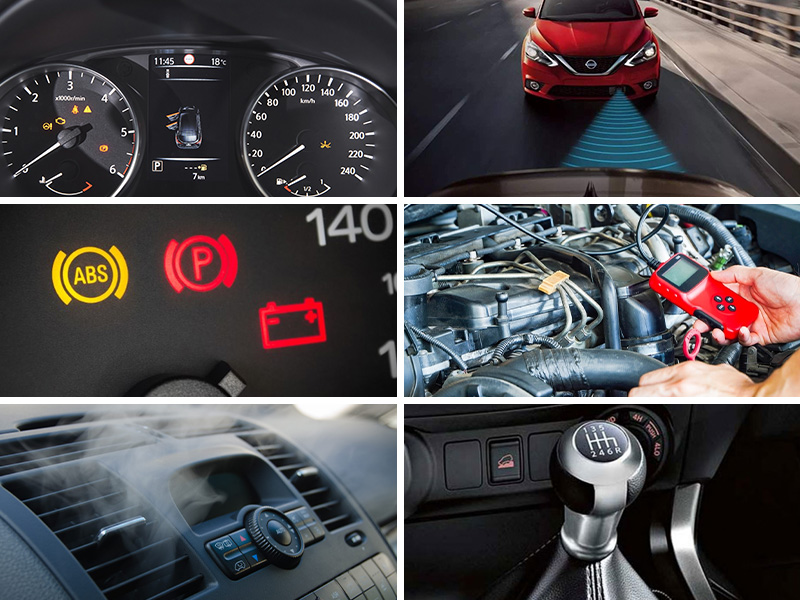
Tips to Avoid or Fix These Problems
You should follow these tips to avoid and fix these Nissan’s common problems
1. Don’t Skip routine maintenance
Sounds obvious, but most issues—especially with brakes, suspension, or AC—start small. Stick to service intervals. Change fluids on time.
2. Be Extra watchful with CVTs
Even though the manual says the gearbox fluid is “lifetime,” if you have a Nissan with a CVT, you should still check it often. Listen for any noises of reluctance, jerking, or whining. Get things checked out immediately if something feels off. CVT issues don’t go away on their own; they just become worse and cost more money.
3. Listen to your car
Weird noises, warning lights, unusual smells—they’re all early signs. A clicking noise from the dash could point to a bad actuator. Grinding while braking might mean worn pads or rotor warping. Don’t wait for it to become “undrivable.”
4. Use an OBD scanner at home
Purchase a simple OBD-II scanner. These tiny instruments are incredibly helpful for identifying sensor issues, ABS warnings, or gearbox problems before they become serious repairs because they can read error codes from your car’s computer.
5. Don’t Trust random garages for diagnostics
Especially with complex systems like CVTs or climate control modules, it’s better to go to a Nissan-authorised service centre or at least a workshop that knows what they’re doing. Guesswork can cost you double.
Conclusion:
Nissan produces some attractive, reasonably priced, and effective automobiles, but like any brand, it has a number of persistent issues. Brake problems, engine stalling, sensor malfunctions, and CVT gearbox failures are some Nissan common problems. These are trends that appear in a variety of models and years.
Does that imply that you should stay away from Nissan completely? Not always. However, it does mean you should enter with an open mind. Ask for service records if you are purchasing a used item. Have the vehicle examined. If you already have one, do its maintenance from time to time and pay attention to minor problems because they can get worse.
At the end, no car is flawless. However, being aware of the problems Nissan drivers have faced gives you an idea of how you can deal with them more effectively or steer clear of them completely.
FAQs
Q1: What is the most common problem in Nissan?
Engine problems are very common in Nissans. You may get problems like misfiring, knocking, or strange noises under the hood. If that happens, don’t ignore it. Go to a good mechanic and check it out so you can catch any serious issues early.
Q2: Is Nissan a reliable car?
Nissan usually scores well when it talks about reliability. In the past few years, it has scored high for long-term dependability. Models like the Sentra and Altima have especially stood out—they’re known for lasting a long time without costing much to maintain.
Q3: What are the disadvantages of Nissan cars?
Weak infotainment system, leaking engine oil, and rusted body parts. buyers of the modern era, as they tend to favor automobiles that fit in with the latest fashions. reduced customer safety worries, which results in a decline in trust and a damaged reputation.
Q4 What is Nissan famous for?
Nissan is a global player that has been making cars for over 80 years. Over time, Nissan has made its name and is known for its commitment towards providing quality to customers, innovation, and reliability.


