






Do you know that vehicles are responsible for about 40% of air pollution in major Indian cities? You did not know that, right?
Indeed, the present air pollution is one of the most vital factors for the Indian government to be so severe in the Pollution Under Control (PUC) certificate clause concerning all motorists. The PUC certificate seems to be very vital for its legal and ecological value for any type of vehicle.
Thus, this text will enlighten you on what a PUC certificate is, what its PUC meaning is, how to apply for a PUC certificate online and how quickly it can be obtained. Before we move further, it is important to know what pollution is doing to the environment.
Harmful Impacts of Pollution Coming from Vehicles
Air quality is deteriorating with regard to pollution from vehicles thereby leads to respiratory diseases, diseases related to the heart, and even cancers. Chemicals like carbon monoxide (CO), nitrogen oxides (NOx), and particulate matters (PM) will eventually enter the atmosphere to help form smog, acid rain, and the greenhouse effect which also brings adverse effects to men and their environments.
Also Read: How Does a Car Engine Work, which explains how vehicle engines contribute to emissions in the environment.
PUC Meaning and What is PUC Certificate for Vehicle?
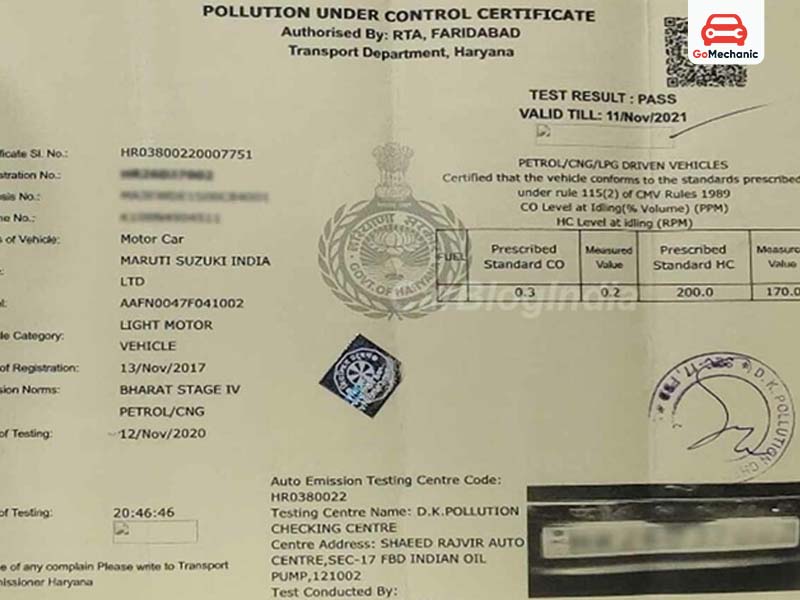
It’s better to know what a PUC certificate is before going ahead with anything. A PUC (Pollution Under Control) certificate is a certificate from an authorized center after they perform an emission test on the vehicle. During the test, it tells how much pollutant is emitted from the vehicle and tests by limits defined. It is mandatory for each vehicle, whether a two-wheeler or a four-wheeler, to have a pollution under control certificate in India.
What Information does the PUC certificate include?
The PUC certificate for the car would have all these details:
- Vehicle’s license plate number
- Vehicle registration number
- Emission test readings
- Date of last test and date of expiry
Why is a PUC Certificate Important?
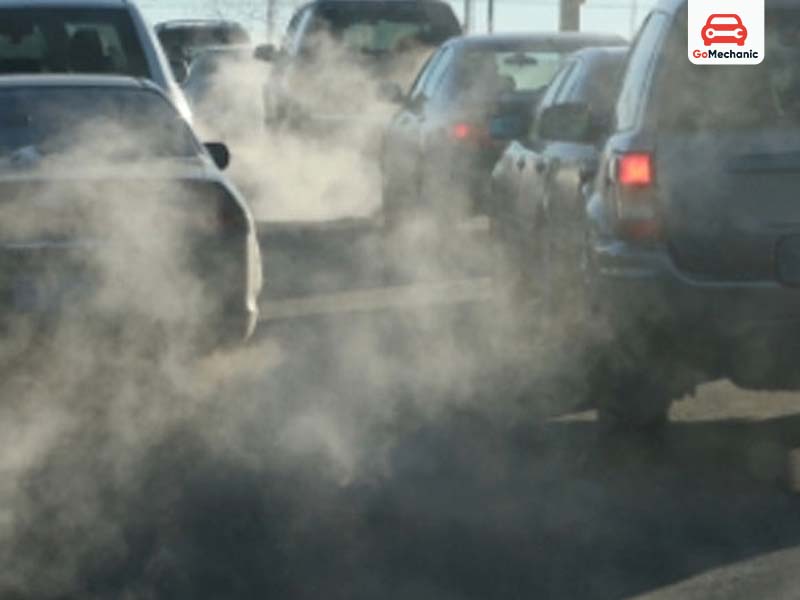
- Environmental and Health Impact:
- This PUC certificate certifies that the vehicles are fitted with pollution control devices and will not emit more pollution, which in turn creates severe effects on the environment and health.
- Emissions mainly from old vehicles like CO, nitrogen oxides (NOx), and hydrocarbon gases are toxic.
- Pollutants like these cause everything from smog to several respiratory conditions to heart disease.
Related: Top 10 Best Electric Cars in India 2025
- Reduction of Harmful Emissions:
- Getting and maintaining the updated PUC certificate helps to reduce harmful emissions in the legal air quality and thus favors the public health of the whole society.
- It brings fresher cleaner air through all the people.
- Legal Requirement and Penalties:
- It is mandatory under the law to have a valid PUC certificate for vehicles.
- Failure will result in penalty charges and fines.
Types of Vehicles and Their PUC Requirements
The type of vehicle decides what sort of PUC would be needed by the vehicle. The requirement for PUC exists in both two-wheelers and four-wheelers, but the age and type of vehicle decide the permissible emission levels in terms of their PUC requirements.
- Two-wheelers have somewhat more user-friendly permissible emission levels, so compliance is easier, but it doesn’t mean that the vehicles shouldn’t be maintained regularly.
- Four-wheelers have much more rigid requirements, especially for older models, because they are fitted with bigger engines which result in high emissions.
- Electric and hybrid vehicles are different to some extent they do away with regular emission tests or may have other performance requirements. That is because they emit a very low level of pollutants compared to conventional vehicles.
How to Get a PUC Certificate for Your Vehicle
Getting a PUC certificate is quite easy, and you can get it either offline by visiting an authorized center or online through the VAHAN portal. Let’s learn about both options.
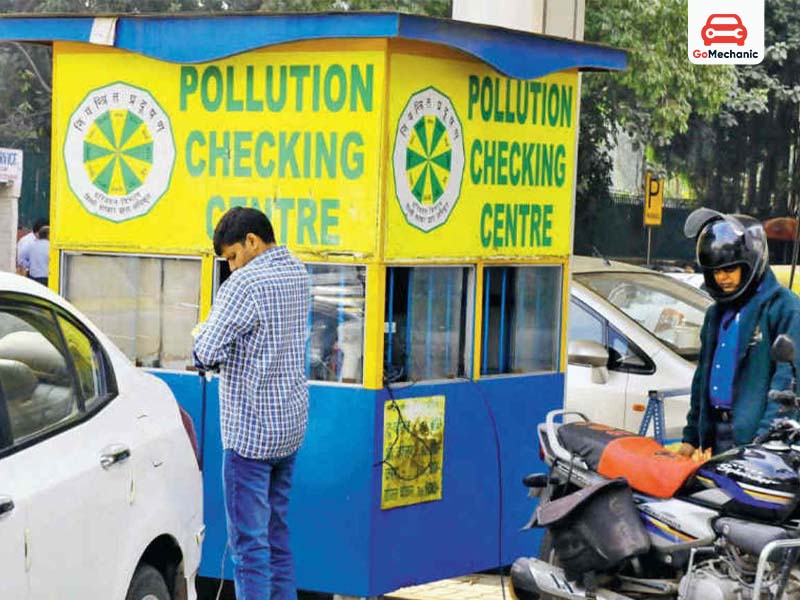
1. How to get PUC Certificate Offline
- Visit a nearby PUC center: You can visit a fuel station with an emission testing center or an authorized PUC center.
- Get your vehicle tested: The technician will insert a device into the exhaust pipe of your car or bike and measure the level of harmful gases emitted.
- Wait for results: The emissions like carbon monoxide and hydrocarbons will be measured, and the device will put up results on the monitor.
- Pay testing fee: Immediately after the test, you will be requested to pay the testing fee.
- Issue of PUC Certificate: Upon payment, a PUC certificate will be released, which you can take after payment.
2. How to get PUC Certificate Online
- Visit the VAHAN portal: Go to the website of your vehicle at Parivahan official VAHAN for your vehicle.
- Input your details: You are going to input your vehicle registration no, chassis no. It is the last 5 characters of verification code
- PUC details check: On completion of the above details you are free to view your current status about PUC certificate
- Download/print: If your PUC certificate is valid then you may download/print it straight from your portal.
You can check or download an already-issued PUC certificate online. However, you cannot apply for a fresh one online. For the fresh issuance of a new PUC certificate or renewal of an already issued one, an actual emission test is mandatory.
How to Check Your PUC Certificate Status Online?
Follow the official website or the app of your state transport department to check the status of your PUC certificate. Enter the registration number of your vehicle, along with the date of the PUC test. The website then shows the status, validity, and expiry date of the certificate.
How to download the PUC certificate
The necessary steps to download your PUC certificate are as follows:
- Open the respective state’s transport department’s webpage or other platforms like Parivahan.
- Enter the vehicle details, such as registration number and engine number.
- Cross-checks are followed by selecting the option for the PUC certificate.
- Download the PUC certificate as a PDF file.
Keep the PUC certificate in print and saved version for any future reference. Put a stamp of printed-in-manual-style format on the same.
What is the Emission Test Procedure?
The procedure followed to get the PUC certificate involves a very simple emission test, which takes hardly a few minutes:
- Visit an authorized center: Take your car to an emission test center or a fueling station.
- Car inspection: The technician will examine your car whereby he shall check the car’s registration number.
- Level of emission: The technologist shall insert a machine into your car’s exhaust pipe measuring the emission level that the car emits.
- Test Results: Emission test results will be taken through the device. These are then matched up with government-permitted limits.
- Issue of certificate: In case your vehicle succeeds in passing the emission test, it will be provided with the PUC certificate containing emission results and validity period.
Different Types of Tests for Vehicles
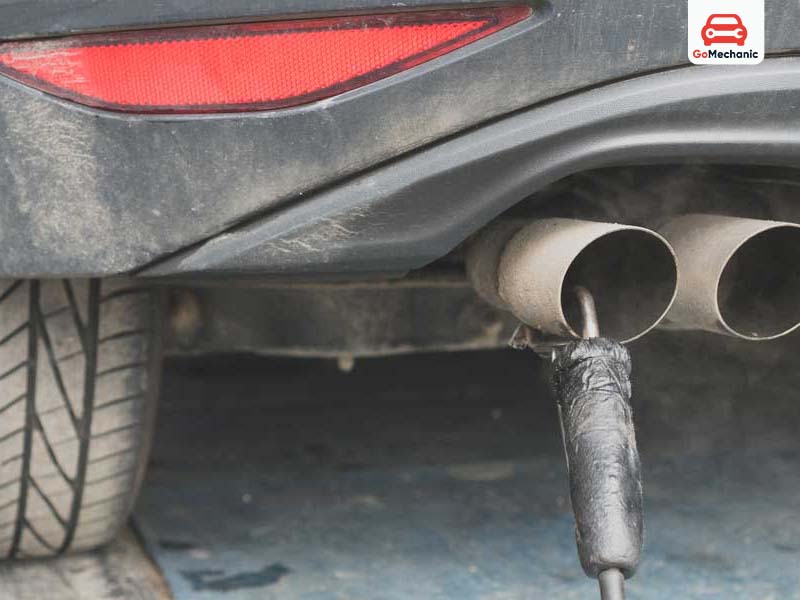
There are different types of tests for vehicles, including:
- The idle test (measuring pollutants when the vehicle is stationary)
- The driving cycle test (for more advanced emissions testing while the vehicle is in motion)
- OBD (On-Board Diagnostics) test for modern vehicles to check if the emission control systems are functioning properly.
What Happens if the Vehicle Fails the Emissions Test?
If your car fails the emission test, you may not get the PUC certificate. You will have to repair your car in order to bring out the reduced emissions, and then visit the testing station again. It may be that your car is emitting more than the permissible limit and thus requires immediate repairs.
Moreover, if the vehicle crosses the prescribed limits, the PUC certificate of that vehicle is likely to be restrain, and he has to go for another test within seven days, or else higher penalties shall prevail.
Cost and Validity of a PUC Certificate for Cars
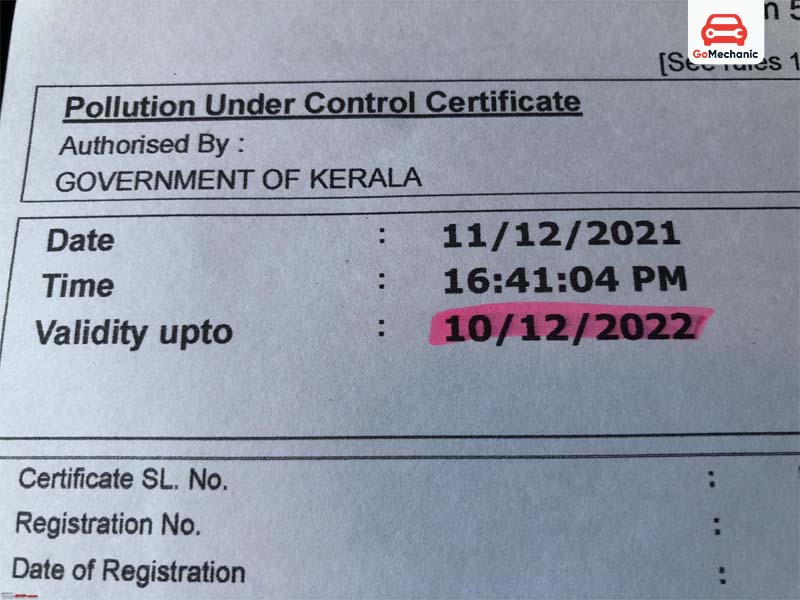
The Pollution Under Control (PUC) certificate is valid for the following duration for cars:
- New cars: A PUC is issued for one complete year from the date of issue and later needs to be renewed every six months.
- Renewal of PUC Certificate: PUC renewal may be completed at any fuel station offering emission-testing facilities, designated local RTO offices or authorized pollution control center.
- Cancellation of Validity: The validity of the certificate may be canceled earlier than the completion of the six-month time frame if the vehicle does not meet the standards for emissions in a PUC test.
- Non-compliance: If a car exceeds the permissible carbon emissions limits, the testing center shall furnish the registration number to RTO (or Deputy/Assistant RTO) within 24 hours.
Cost of PUC for Cars:
The tests and certificate are fully free for PUC, ranging between ₹60 to ₹100 across cars depending on the fuel type. It varies from state to state.
Pollution Certificate for New Cars (Permissible Levels)
As per The Motor Vehicles Act, a pollution certificate is mandatory for new cars to legally drive on Indian roads. Below are the permissible levels of emissions for new cars based on their fuel type and emission standards.
| Type of Vehicle | Carbon Monoxide (in %) | Hydrocarbon (in PPM) |
| BS6 and BS4 Four-Wheelers (CNG/LPG) | 0.3 | 200 |
| BS6 and BS4 Four-Wheelers (Petrol) | 0.3 | 200 |
Pollution Certificate for New Bikes (Permissible Levels)
The pollution certificate is also mandatory for new bikes as per The Motor Vehicles Act. Below are the permissible levels for two-wheeler pollution certificates.
| Type of Vehicle | Carbon Monoxide (in %) | Hydrocarbon (in PPM) |
| BS6 Two-Wheelers/Three-Wheelers (CNG/LPG) | 0.5 | 500 |
| BS6 Two-Wheelers/Three-Wheelers (Petrol) | 0.5 | 500 |
Pollution Certificate for Diesel Vehicles (Permissible Levels)
Diesel vehicles are tested differently from petrol vehicles, and the permissible limits for emissions are also different. Below are the details regarding permissible levels for diesel vehicles.
| Type of Test | Light Absorption Coefficient | Maximum Smoke Density in Hartridge Units |
| Free Acceleration Test of BS4 Diesel Vehicles (Naturally Aspirated & Turbocharged Engine) | 1.62 | 50 |
| Free Acceleration Test of Pre-BS4 Diesel Vehicles (Naturally Aspirated & Turbocharged Engine) | 2.45 | 65 |
Pollution Certificate for Old Vehicles (Cars, Bikes, and Three-Wheelers)
For older vehicles, the permissible emission levels are stricter to curb pollution. Below are the permissible levels for old cars, bikes, and three-wheelers.
| Type of Vehicle | Carbon Monoxide (in %) | Hydrocarbon (in PPM) |
| Old Four-Wheelers (Petrol) | 0.5 | 450 |
| Old Four-Wheelers (Diesel) | 0.5 | 600 |
| Old Two-Wheelers (Petrol) | 0.5 | 550 |
| Old Three-Wheelers (Petrol) | 0.5 | 550 |
Penalties for Not Having the PUC Certificate
- It is mandatory to carry the PUC certificate while driving your vehicle. Failing to get the certificate during an inspection can result in a fine or penalties. Obtaining a PUC or Pollution Under Control Certificate, has its importance since it is mandatory for every vehicle to acquire this certificate.
- According to the Motor Vehicles Act of 1988 of India and it has various provisions for serious penalties if one rides or drives a vehicle without having a valid PUC. Section 190(2) states that the penalty for the first offence is Rs 1,000 imposed on the vehicle owner or a driver and for further offences, the amount considered is Rs 2,000.
Conclusion
A PUC certificate is one of the most important things to have for an automobile owner in India. It shows that the vehicle adheres to the emission norm of the permissible limits of air pollution and really goes a long way in environmental and air pollution protection. With the increasing levels of pollution in many cities, the need for a valid PUC certificate becomes more of a social responsibility than a legal requirement. Vehicle owners should renew their PUC certificate regularly to keep them updated about the law compliance. They will help cut down emissions that can be harmful to health, thereby safeguarding a cleaner, healthier atmosphere for everyone. It’s not just a law, it helps in making a better environment and public health for a better future.


