






The rainy season, everybody likes it,right? This rainy period indeed brings a wonderful cool atmosphere with rain drizzles, feeling fresh, but the rainy season simply makes driving tougher: slippery roads punctuated by potholes filled with water, with visibility on the lower side. And, just to make things more complicated for drivers, you are not alone on the road, and thus, everyone is moving slower than usual. Majorly, water logging along with street dirt and debris. If you have a car, rain can create a handful of problems, such as faulty brakes, bald tires, worn wiper blades and some electrical problems.
Rainy weather affects your car’s already challenged working conditions in hot temperatures, which leads to wear and tear on your vehicle. With all of the moisture, this can damage your car or truck parts. If your car isn’t in optimal working condition, there is a good chance it will malfunction when you need it to run, not to mention it can be very dangerous. We have provided some simple and basic Car Safety Tips for the Rainy Season that will keep you as safe as possible and keep your car operating in your rainy season.
Also read: Maintenance Checks for the Rainy Season: Cars Safety Tips
1. Inspect & Maintain Your Tires
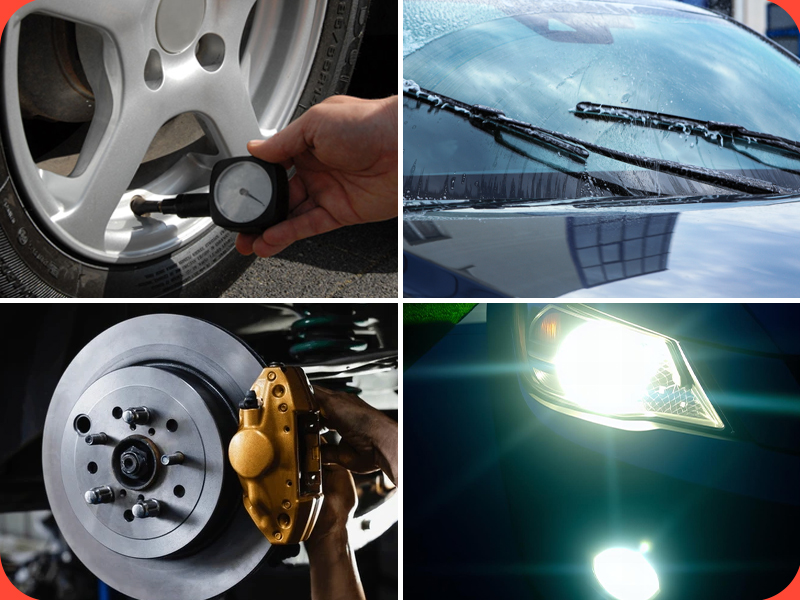
The first category of the Car Safety Tips for the Rainy Season, is about the most key part of a car, which is tire. Any worn or under-inflated tire during the rainy season can ultimately result in losing control of a vehicle. Make sure that you have a tread depth of at least 2 or 3 mm & check the tires for any uneven wear, bulges or cracks. Must check tire pressure regularly as well so that you have the correct pressures, and you will have no under-inflation or over-inflation, which could affect grip on wet surfaces. Tires are a chance for a first line of defence against any hazard, that can come with the rainy season.
2. Check & Service Brakes
Wet road conditions can exaggerate your stopping distance, even on a good day. Here is a list of some things to consider before rain falls. Make sure your brake system is in order. Most of the time monsoon season, actually, do strengthen brakes, but moisture getting into brake components, sometimes cause a failure. If possible, check the brake pads at least weekly, and make sure enough brake fluid is in the car. If you hear any squealing/tapping noise, or if brakes feel spongy or semi-responsive, or even if the pedal doesn’t feel right as it’s going down through its entire range of motion, take the vehicle to a certified mechanic immediately, after all, your life may be at stake.
3. Inspect Wiper Operation
Visibility is highly impacted while driving in heavy rain, and is an extremely important roadway safety concern. So here is one more tip to help you during the rainy season, is make sure your car’s wipers are functioning properly. Visibility in such weather majorly relies on functioning of your car’s wipers.. Wiper blades that have seen better days will leave streaks or puddles of water on the windshield, thereby impeding rather than aiding visibility. If your blade has been on the car for over six months or there is any visible lack of contact to the windshield or obvious damage, it’s time to replace the blades and wipers.
Read this too, 14 Best Car Accessories To Buy: Monsoon Edition
4. Test All Lights
Another one Car Safety Tips for the Rainy Season, which you cannot miss, is to test your car lights. Not only does visibility decrease when it rains for you as a motorist, but also for others on the road too. When visibility decreases, make sure that you are checking that your vehicle lights are in good working order. Check that you are using all your lights, head-lights, brake lights, turn signal indicators, etc. Dull headlights can diminish your vehicle visibility causing other road users to not clearly see your vehicle, this is very common in heavy rain. You should clean the lenses of your lights and change burnt out bulbs. Driving with your low-beams are going to reflect into other drivers’ eyes making glare for others; high beams are also a lesser illuminator of the travelled road when it rains.
5. Avoid Crossing Streets Covered by Floods
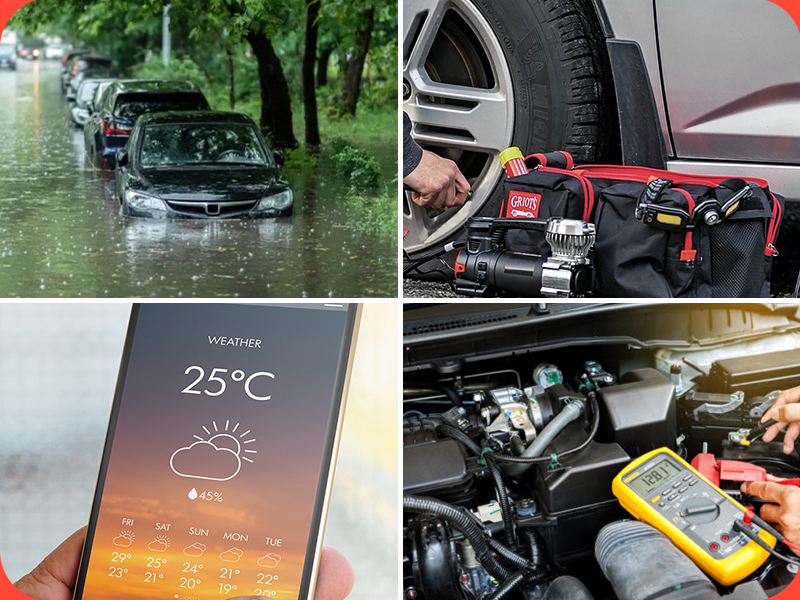
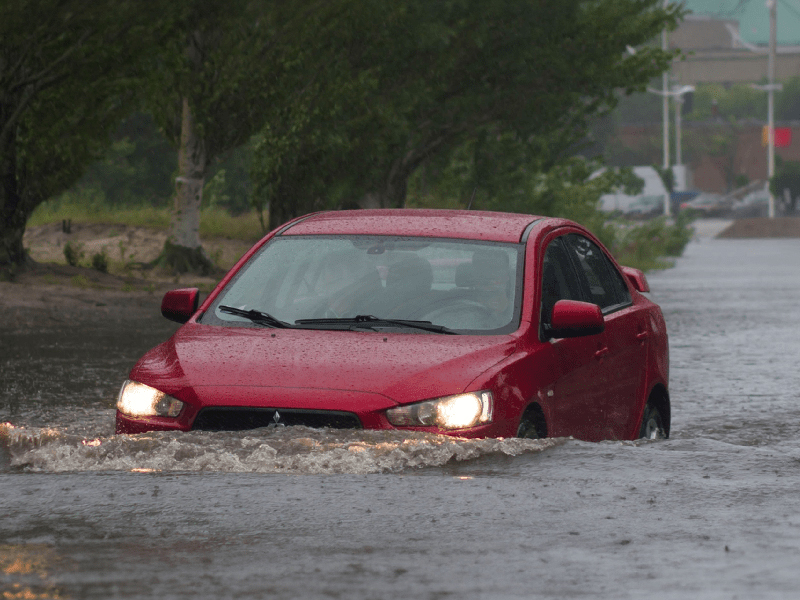
Flooded streets are usually caused from heavy rains and flooding and can be a danger to you and your vehicle. When you drive through standing water (floods) with your vehicle it can create potential damage to your engine, have brake failure, or electrical problems. If the standing water rises over the exhaust pipe, or fills the engine bay, the problems can be worse than what is reported. There can be potholes, open manhole covers, and debris could force you into a crash.
6. Maintain a Car Emergency Kit
Sometimes,you are unlucky enough to be stranded by unforeseen weather conditions or mechanical failure. Having an emergency kit to use in emergencies to minimize the effect of an unplanned moment. Items like batteries, flashlight, basic tool kit, jumper cables, first aid kit, drinking water and cellphone charger should be in kit. Its worth preparing to double check that you ready for breakdowns in poor weather. These are all small efforts that will create peace of mind and safety while driving.
7. Battery and Electrical System Inspection
Rain and moisture may cause short circuits, battery drain or some kind of electrical fault with your vehicle. Water could penetrate connectors or fuse box connections that will affect your vehicle’s ignition and lighting systems. Before the harsh months of the monsoon season arrive, check the battery for charge and for any levels of corrosion on the terminals, check for wiring and insulation wear & tear and, lastly, avoid parking in areas that are prone to waterlog to prevent excess moisture exposure.
8. Stay Updated on the Weather
Talking about Car Safety Tips for the Rainy Season, weather updates must be emphasized. Monsoon brings usually unpredictable weather with sudden heavy downpours and thunderstorms. Always check the latest weather news and traffic alerts before you hit the open road. This will allow you to avoid areas that are known to flood or clog. Being aware of the weather beforehand, at least half an hour prior to setting out, helps you in making better decisions on whether or not …
What are Ways of Self-Assessment for Driving Safety in the Monsoon?
Being extremely cautious is necessary when driving during monsoon season due to the weather conditions. It makes paved roads slippery, reduces visibility, and affects vehicle handling. And to avoid any problems, your car should be in the best operating condition before proceeding. Check your tires: they require sufficient tread (2-3 mm in depth) in order to maximally grip wet roads, and they must also be free from cracks or bulges. Also consider checking your pressure on a regular basis. Check your brakes. Your braking distances will become much longer on slippery roads, so if you feel a spongy sensation or your brakes make a squealing noise, consult a mechanic. Your headlights, fog lamps, stop lights, and blinker lights have to be working so that you’ll see clearly and get noticed by other motorists. All these little checks take just a few minutes but could avoid many hassles when it rains.
Must read: When to Replace Car tires: A Car tire Guide for Every Driver
Car Safety Tips for the Rainy Season & Issues
Here are the Car Safety Tips for the Rainy Season one should consider while driving out in monsoon.
| Top Car Problem | Safety |
| Worn tires | The periodic tire pressure and tread depth checks are important. The tire needs to have adequate pressure enough so that they grip the wet road appropriately. |
| Brake Failure | Periodic checks on brake pads and brake fluid level. Making sure the braking system, can stop the car on a slippery road is critical. |
| Faulty Wipers | Replace an old wiper blade with good quality ones, always check, and keep topping up the windshield washer fluid for good visibility during heavy rains. |
| Foggy Headlights | Check for any cloudiness on headlights, and clean or replace as required. Ensure that vehicle lights, including brake lights and turn signals, are working properly. |
| Roadside Emergencies | Keep an emergency kit in your car with essentials like a flashlight, poncho, first aid kit, and other items for unforeseen situations. |
Must read: 5 Monsoon Car Services That’ll Help You Get Through The Rains
Conclusion: Car Safety Tips for the Rainy Season
It is difficult for vehicles and drivers in the wet season. However, put in minimal preparation, and you may avert a lot of problems. Before the rains come, do some inspections on the tires, brakes, lights, wipers, and battery of your car. You are maintaining your safety during floods by driving sensibly and staying off roads that are flooding, so we would suggest an emergency kit that is simple to contain in your car. Having your car in good condition during the wet season will ensure safety to you and your passengers as well as prolong the life span of your car. A small degree of preparation for the wet weather could save you a good amount of further trouble and allow you to enjoy the wet season! Knowing about these Car Safety Tips for the Rainy Season is not just enough, make sure that you actually work on them.
FAQs
1. Why does the inside of my car fog up when it rains? How can I prevent it?
The inside of your car fogs up because the air temperature is warmer than the cold moist air outside and the moisture in the air settles on the shiny glass and quickly submerges your vision. In rain, fogging can be removed by using either air conditioning or the defogger (using both is better) to normalize temperatures. One more thing to remember is ,keep your windows clean, because it is easier to stop fog than it is to get rid of it.
2. Is it safe to use cruise control when it is raining?
yes,it can be unsafe to use cruise control if the surface is wet. In such conditions cruise control may interfere with your quick response to changes in road condition. It may even prevent you from regaining control of the vehicle.
3. What are some of the tips to avoid trouble driving in the rain?
One way to avoid trouble, depending on your car, is to have it rain-ready. Check that the windshield wipers are in good working condition, have your tires suitable for wet conditions; have your wiper fluid all the way up. Make sure your turn signals and brake lights are working alright; and that the size of your vehicle and distanced-based braking will enable you to avoid an accident.
4. How can someone take care of a car during the rainy season?
It is smart practice to inspect your car during the rainy season. Rain, mud, and dirt can cause rust in the paint of your car. It’s important to wash your car frequently to reduce or eliminate mud and dirt. You should pay attention to the effectiveness of the brakes,battery, tires and lights even more frequently then you typically do, regardless if you used to pay attention to them or not. Always take care of your car speed when wet, even if no one else is on the road. A well maintained car will help you avoid situations where you are during rain.


