






A Public Interest Litigation (PIL) asking for a delay in the use of E20 petrol has recently been rejected by the Supreme Court. An initiative to set E20 petrol as the new standard fuel across India was challenged through a Public Interest Litigation (PIL) in the Supreme Court. The formation of E20 petrol requires blending 80% normal petrol and 20% ethanol into a plant-based fuel that is mostly made from crops like sugarcane or corn. The Supreme Court has needfully expressed that the motion to move India onward with ethanol-blended fuel is not just continuing but is on a fast track.
For a significant number of vehicle owners, especially those with old vehicles or two-wheelers, the ruling poses many questions and concerns. Will E20 harm the engine? Is this mixture safe for all vehicles? Then why was this PIL even filed? And how will this decision affect the people who rely on their vehicles for work and living? Let us understand this one by one so as to give you some sort of understanding of what E20 petrol is all about, why it was challenged in court, and how it concerns you directly as a vehicle owner in India.
What is E20 Petrol?
E20 petrol is a blend of 20% ethanol combined with 80% regular petrol. Ethanol is a kind of alcohol that can be derived from sugarcane, corn, or other agricultural products. Ethanol blending into petrol is not a new activity, in fact, India has been using E10 fuels for the last few years. E20 thus stands as the next step in India’s Ethanol Blending Programme (EBP), which tries to reduce the country’s dependence on imported crude oil, reduce carbon emissions, and support local farmers by creating demand for ethanol production.
Ethanol goes by the name of cleaner-burning fuel against petrol. It reduces tailpipe emissions, especially carbon monoxide and carbon dioxide. Additionally, it is renewable, meaning it can be generated over and over from crops in contrast to fossil fuels which are limited. But opponents raise similar problems with ethanol blending with gasoline, especially in engines that were not designed or tuned for it.
Do read about, Why Should You Consider Driving A Petrol Car
Why Was the PIL Filed?
The PIL filed by Akshay Malhotra was not about E20 petrol itself, but concerned the manner of its rollout. There was an argument that many vehicles, notably pre-April 2023 vehicles and some BS6 variants, are not made for E20 and may get engine damages, have mileage reductions, or potential issues with warranty or insurance. The petition further contended that there was no clear demarcation with respect to labelling at fuel stations, with no signboards demarcating between E10 and E20 petrol, and demanded the provision of ethanol-free petrol. It also asked for communication to vehicle owners and a nationwide study on the long-term impact of E20 on non-compatible vehicles prior to making it mandatory.
What Did the Supreme Court Decide?
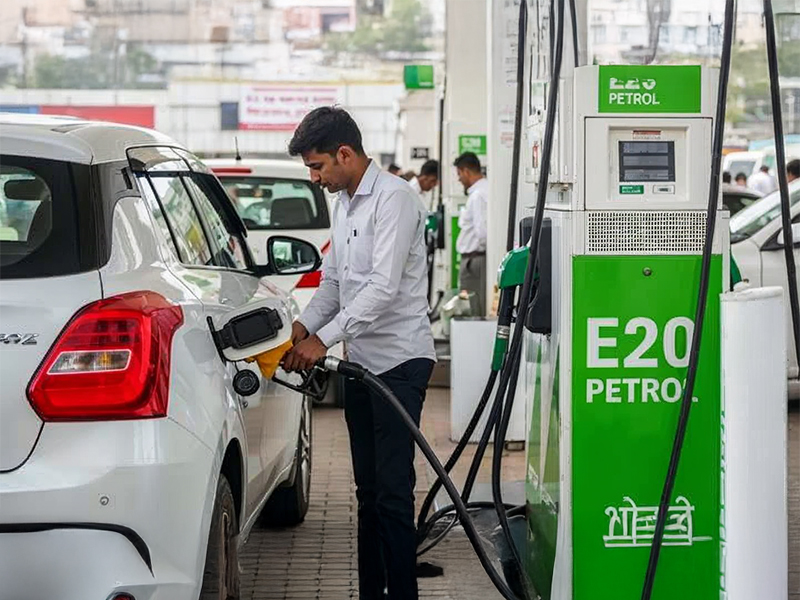
The Supreme Court dismissed the PILs, backing the government in continuing with the rollout of the E20 petrol. According to the court, the government had undertaken sufficient research and had followed due process in designing the policy. The bench led by Chief Justice B. R. Gavai observed that it was not a policy shoved down blindly but one based upon expert advice and national priorities. The court also declined to make ethanol-free petrol mandatory at fuel stations. It said that such decisions are policy matters that fall under the domain of the executive branch and not something the court should interfere with unless there is clear evidence of harm or legal violation.
What Does This Mean for Vehicle Owners?
The decision by the court has some practical implications for everyday motor vehicle owners. The most important implication is that E20 fuel is here to stay. E20 will soon be the default petrol available at the petrol pumps throughout India. If you own a newer vehicle, especially one manufactured after 2023, there is a good chance that your vehicle is E20 compatible, as car manufacturers were notified about the transition to E20 fuel in advance, and many have begun manufacturing cars that can use this new fuel.
If you own an older vehicle, however there might be some caution needed. Vehicles that were not specifically designed to use E20 fuel may experience some long term damage from using this fuel. Ethanol is a solvent and could be a little corrosive to some of the materials used in your older engine and fuel systems. This could result in slow wear and tear, eventually causing blocked fuel supply lines or decreased fuel efficiency. The change might require a greater frequency of servicing and replacement of components that will not withstand the byproducts of ethanol use.
You may have heard from fellow car owners about the concerns regarding whether or not using E20 fuel will void your car warranty or affect your ability to claim with your car insurance. The Government has put at ease all these worries regarding this issue, as the Ministry explained that E20 use does not affect car insurance, driver’s insurance or motor insurance warranties.
Why Is E20 Being Promoted?
- The Indian government is using E20 petrol for more than just the reduction of pollution.
- E20 petrol will allow India to buy less oil from international markets, saving money.
- Farmers have more income because the government purchases ethanol from farmers. Since 2014, ethanol farmers have received over ₹1.25 lakh crores.
- This also keeps farmers producing sugarcane crops, which are used to make ethanol fuel.
- Less harmful gases are released with the use of ethanol in petrol, and this helps combat pollution and climate change.
- So far, this has decreased carbon emissions by a large quantity (736 lakh metric tonnes).
- The number of petrol items available to mix with ethanol has also steadily increased from 10% in 2022 to almost 20% in 2025.
- Oil companies have purchased and mixed significant amounts of ethanol into petrol and demonstrated that the E20 supply system is organized and operational.
What Should You Do as a Vehicle Owner?
If you have a brand new vehicle, then you likely do not need to worry too much. Your car or motorcycle is most likely built ready to accept E20 fuel. However, it is good practice to refer to your user manual and check with the vehicle manufacturer that it can run on E20 fuel. If you drive an old vehicle, so it’s time to investigate the workings of your engine. Make sure you are doing all the preventative service, and that you have clean fuel lines, injectors, and filters. Do not ignore any flow down in your mileage, an increase in noise, or if you get a warning light. Take it to a mechanic for assessment.
Fuel stations don’t have to openly display the ethanol in petrol, but it never hurts to ask the people at the pump what kind of fuel they are dispensing. If you have any concerns about whether your fuel system and engine can handle E20 fuel, just ask them and they will tell you.
Read this too, Power Petrol vs Normal Petrol: Understanding the Best Fuel Choice for Your Engine
What’s the Final Word Here
The Supreme Court has thrashed aside the PIL petition against E20 petrol, but what is clear now is that India’s move to ethanol-blended fuel is now in motion. While this is a step forward for cleaner energy and economic independence, there is a responsibility on vehicle owners to remain informed and care for their vehicles. E20 is not just a new petrol, it is a change in how India perceives fuel, the environment and agriculture. The age of your vehicle, whether it is a brand new car or fifty year old scooter, is not important; what will be important is how you understand this change and how you adapt to the resulting implications for your vehicle’s future.


