






Nowadays, the craze for electric cars has increased a lot, and if you are also planning to buy an electric SUV, then you must check out the comparison of Nexon EV vs XUV400. Both cars are strong in their own category – Nexon EV is famous for its modern look and reliable drive, and XUV400 feels a bit powerful and a bit bigger to drive. In this blog, we will explain in a simple way what all the differences are between the two cars, from design to features, performance, safety, and even price. It will now become clear which one will give you more value and in which one you should invest your money. Come on, then, let’s start this comparison.
Also read: Top 4 Cheapest Mahindra Cars in 2025
1. Design and Road Presence – Nexon EV vs XUV400
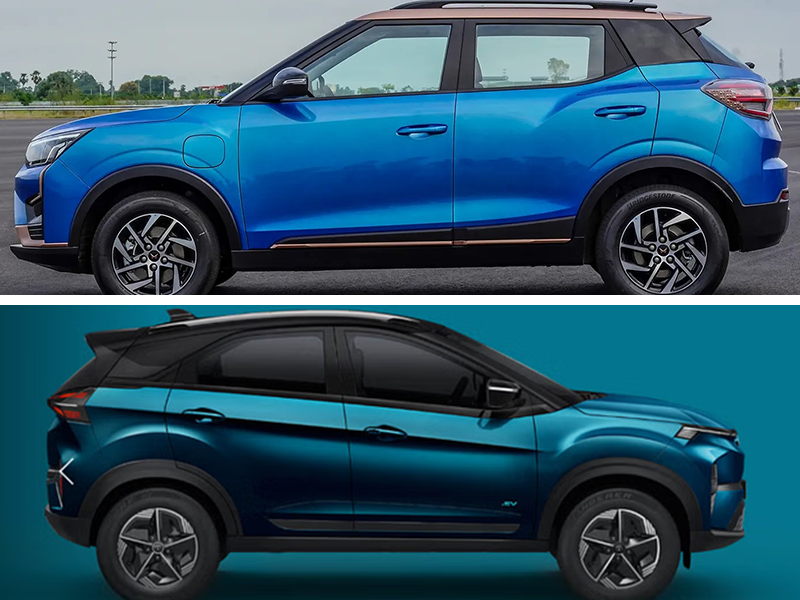
- The Tata Nexon EV looks quite modern and stylish. The LED DRL setup and closed grille in the front give it a futuristic look.
- Nexon comes in a compact size, so it is easy to drive in the city.
- After the latest facelift, Nexon EV has started looking even more premium, especially the connected strip of rear light, which looks quite stylish.
- The design of Mahindra XUV400 is a bit simple but gives a sporty feel. There are blue accents in the front grill, which tell that this is an electric car.
- On the road, the XUV400 appears bolder since it is larger than the Nexon EV.
- From the side and rear, XUV400 may look a bit plain, but the overall stance is muscular.
- Nexon EV vs XUV400 are quite close in terms of design – while the Nexon EV feels more modern and compact, the XUV400’s size and presence feel a bit more solid.
Also read: Tata Nexon EV Safety Rating: A Deep Dive Into Its NCAP Performance
2. Performance and Range – Tata Nexon EV vs XUV400
- Tata Nexon EV gets 2 battery options – Medium Range and Long Range. Long-range variant gets a claimed range of around 465 km.
- Nexon EV’s power delivery is smooth, and driving in the city feels quite comfortable.
- Acceleration of Tata Nexon EV is also decent, but it doesn’t feel too sporty. Perfect for daily driving.
- Mahindra XUV400 gets only one battery option, but its range is also up to approx 456 km (claimed).
- Power is slightly more than Nexon’s, so when you press the accelerator, it feels a bit punchy.
- XUV400 feels more confident on the highway, especially when overtaking.
- In comparison of performance and range of Tata Nexon EV vs XUV400, both are strong. Nexon EV offers smooth and refined drive, while XUV400 has a little more sporty touch. The range of both is almost the same, the only difference is in tuning and feel.
Also read: Upcoming Tata Cars in India: The Future of SUVs, EVs & More
3. Interior, Features and Comfort – Nexon EV vs XUV400
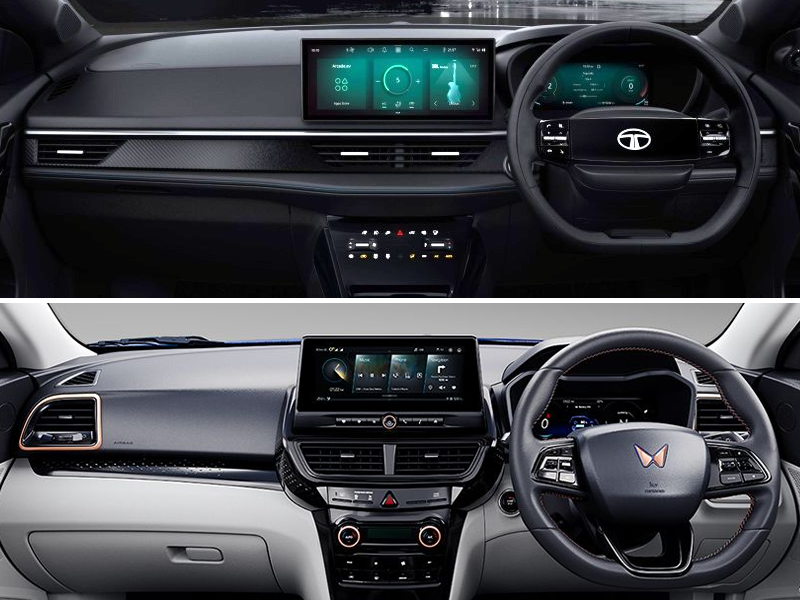
- The interior of the Tata Nexon EV looks quite modern and stylish. It gets a 12.3-inch touchscreen, digital instrument cluster, and touch-based AC controls which give a premium feel.
- The layout of the cabin looks fresh, and the quality of materials is also quite good.
- The seats are comfortable and the front seat support is also decent. There can be a little limited legroom in the rear for larger passengers.
- The interior of the Mahindra XUV400 looks a little simple and basic as compared to the Nexon.
- It gets a 7-inch touch screen, which seems quite basic as per today’s time.
- If we talk about comfort, the seats are soft & supportive, also the rear seat offers a little more space than the Nexon.
- If we talk about the interior & features of both cars, then Nexon EV feels more modern and tech-loaded, but XUV400 offers a little more space and comfort, especially for rear passengers.
Also read: Tata Altroz Safety Rating 2025: A Detailed Study
4. Safety, Build Quality and Tech – Nexon EV vs XUV400
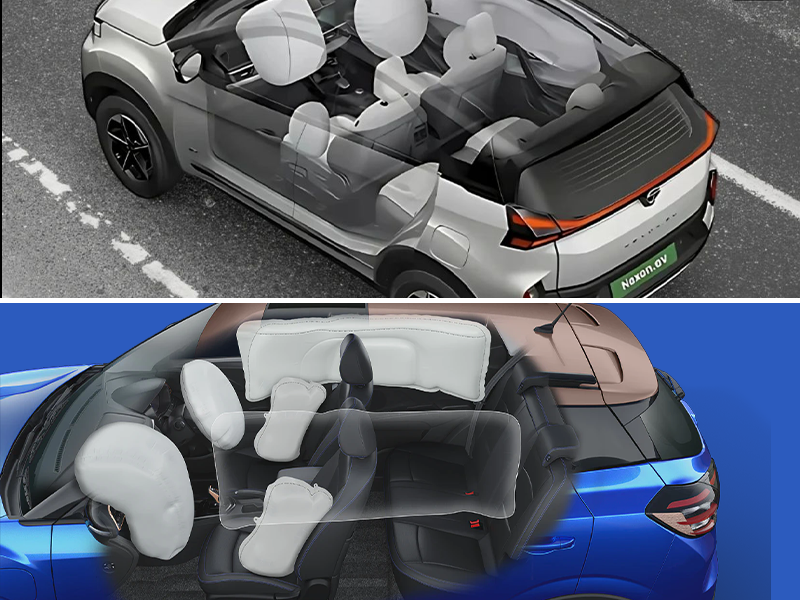
- The Tata Nexon EV feels well-built. This car has already received a five-star rating in Global NCAP for the petrol/diesel versions, which gives assurance of safety.
- Safety features include features like 6 airbags, ESP, hill hold, traction control, 360-degree camera & ADAS (in top model).
- Tech-wise wise the Nexon EV is quite advanced – digital display, big touchscreen, connected car tech, OTA updates, everything is available.
- The build of the Mahindra XUV400 is also strong. The Mahindra XUV400 has received a 5-star safety rating from Bharat NCAP, so there is no compromise in safety.
- It also has features like 6 airbags, ESP, hill assist, but ADAS is not available yet.
- Tech features are basic – the touchscreen is small and the cluster also feels old, but it gets the job done.
- The comparison between Nexon EV vs XUV400. Both cars are strong in terms of safety and tech, but the Nexon EV feels a bit more modern in terms of tech and features. Build quality of both is good.
Also read: Mahindra Upcoming Cars in India 2025: What to Expect
5. Pricing and Variants – Nexon EV vs XUV400 Breakdown
- In Tata Nexon EV, you get 2 battery options – Medium Range (MR) and Long Range (LR).
- There are quite a few variants; there is an option for every budget. The base model also comes with decent features.
- The price may seem a little high for the top variant, but it is worth it considering the features.
- In Mahindra XUV400, you get 2 main variants – EC and EL.
- The variants of XUV400 are a bit simple, but the pricing is a bit aggressive.
- Features are a little less when compared to Nexon, but the space and performance are good value.
| Car Variant | Starting Price | Top Variant Price |
| Tata Nexon EV | Rs.14.49 lakh | Rs.19.49 lakh |
| Mahindra XUV400 | Rs.15.49 lakh | Rs.17.49 lakh |
- Looking at the pricing of Nexon EV vs XUV400, it seems that Nexon is a bit more expensive but offers more features and options. XUV400 is good for the value if you want a simple variant.
Also read: Most Expensive Mahindra Car in India 2025: The All-New XEV 9e
Conclusion:
Overall, both Nexon EV vs XUV400 electric SUVs are strong in their own way. Nexon EV is perfect for those who want modern design, advanced features, and a smooth driving experience. It offers more technology, and after the facelift, it costs quite a premium. While XUV400 is the right choice for those buyers who want a little more powerful performance, more space, and a strong build, that too in a simple budget. Yes, the features are a little less, but what you get is practical and useful. You can decide according to what you want – a modern look and features or a bigger size and power. Both electric SUVs are reliable, just choose your perfect match according to your priority.
FAQ’s
- Which is better, Nexon EV vs XUV400?
Both cars are good in their own ways. Nexon EV comes with more modern features, and the design also looks fresh. XUV400 is a bit powerful and offers more space. You will choose according to your preference.
- Which EV is best, TATA or Mahindra?
TATA and Mahindra are both Indian companies and both have done well in the electric segment. Tata Nexon EV is quite popular; its design is stylish, and the features are also latest. This car is perfect for tech lovers and urban users. Mahindra’s XUV400 comes with a slightly simple design but feels solid while driving, especially on the highway. You get a little more power, and the rear seat space is also a little comfortable. If you want more technology, then Tata will be right, and if you are a fan of performance and space, then you can go for Mahindra.
- What is the real mileage of a XUV400 EV?
The claimed range of the XUV400 is approximately 456 km, but in practice, that isn’t very long. If you are driving the car with AC in normal city traffic, then you get a range of approximately 320 – 350 km. It can be a little better on the highway, & if you drive smoothly & relaxed, then you can get around 350. This range is good enough for daily use.
- Which EV has a 450 km range in India?
XUV400 and Nexon EV are the only EVs that claim to offer more than 450 kilometer range in India. But this is only as per the company’s lab testing conditions. In the real world, when you drive in traffic with AC on, both cars give around 320 to 350 km. Still, this range is good enough for daily city use and weekend highway drives. So if you want a range of 450 km, then you can choose any of these two, but it will be a little less in actual usage.
Related blog:


