






Buying a car under ₹10 lakh today isn’t as straightforward as it used to be back in 2010. With high & rising fuel prices, tighter parking spaces, and growing demands from daily commutes to weekend road trips. Everyone needs something that provides practicality, style, comfort, and cost. That’s where the Tata Tigor and Hyundai Aura come into play. Both belong to the subcompact sedan family, and both are surprisingly well-equipped for their price. So, how do you pick one – Tata Tigor Vs Hyundai Aura? Let’s walk through it and learn about the different aspects of each car.
Others Read – Hyundai Aura: 5 things to know before you buy one
Comparison of Aspects –Tata Tigor Vs Hyundai Aura
1. Exterior Design
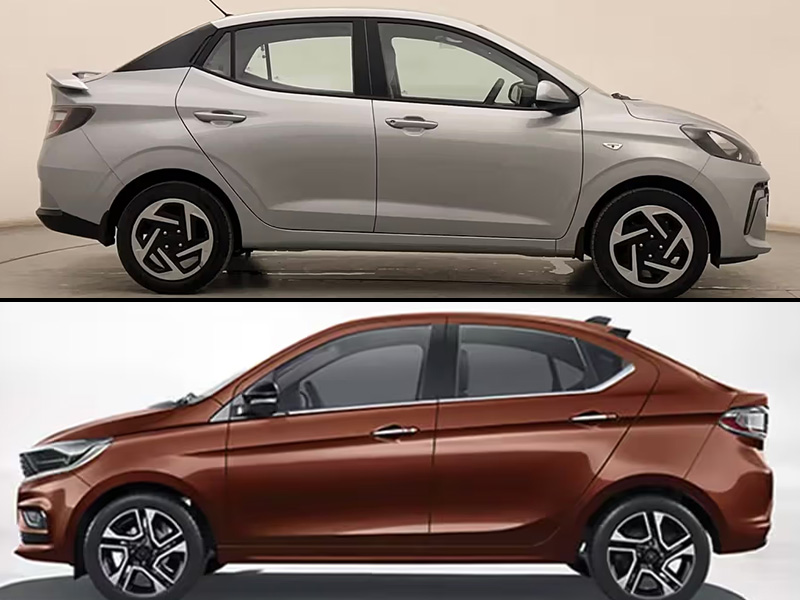
The Tata Tigor feels spacious, especially at the back. The tall roof gives good headroom, and the layout is simple but practical. There’s enough boot space, and small details like chrome AC vents and folding grab handles are a nice touch. The Hyundai Aura feels more upmarket. The black and beige interior with chrome and glossy elements looks stylish. Headroom is slightly less than the Tigor, but the seats are more supportive. Higher variants offer features like ventilated front seats and a cooled glovebox, which add to comfort.
Let’s quickly glance at the size and design highlights:
| Design Highlights | Tata Tigor | Hyundai Aura |
| Length | 3,993 mm | 3,995 mm |
| Height | 1,532 mm | 1,520 mm |
| Ground Clearance | 170 mm | 165 mm |
| Alloy Wheels (Top Variant) | 15-inch diamond-cut | 15-inch dual-tone |
| Boot Space | 419 litres | 402 litres |
| Notable Design Traits | Coupe-like rear, bold face | Clean lines, elegant silhouette |
2. Interior Comfort
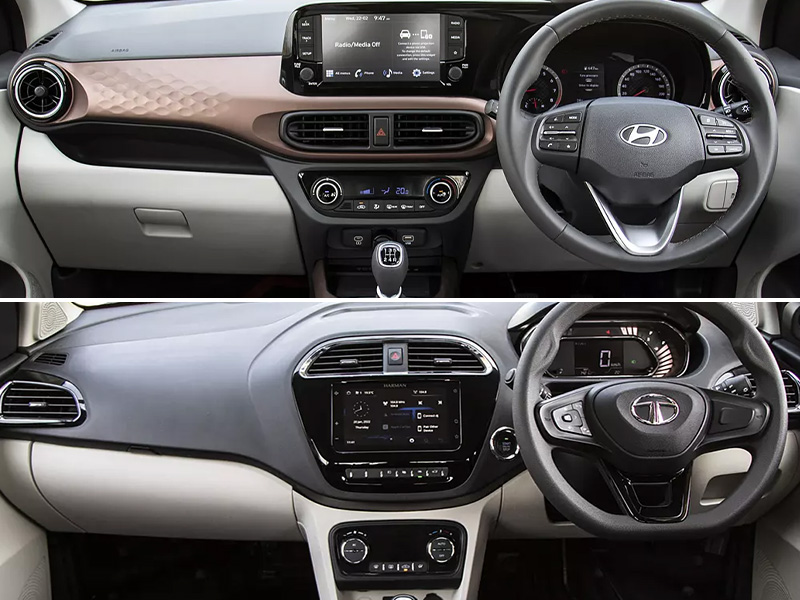
When you get inside the Tata Tigor, the first thing you notice is how spacious it is, especially in the back seat. The tall roofline gives you headroom. The cabin design is simple but quite functional. There’s plenty of boot space too. The Hyundai Aura is more premium with its black and beige interior, and shiny panels on the dashboard.
Here’s a quick comparison:
| Interior Features | Tata Tigor | Hyundai Aura |
| Cabin Theme | Dual-tone (light grey) | Dual-tone (beige + black) |
| Rear AC Vents | No | Yes (top variants) |
| Boot Space | 419 litres | 402 litres |
| Ventilated Seats | No | Yes (top variants) |
| Rear Seat Comfort | More headroom | Better under-thigh support |
| Extra Touches | Chrome AC vents, collapsible handles | Cooled glovebox, ambient footwell lighting |
3. Performance & Mileage
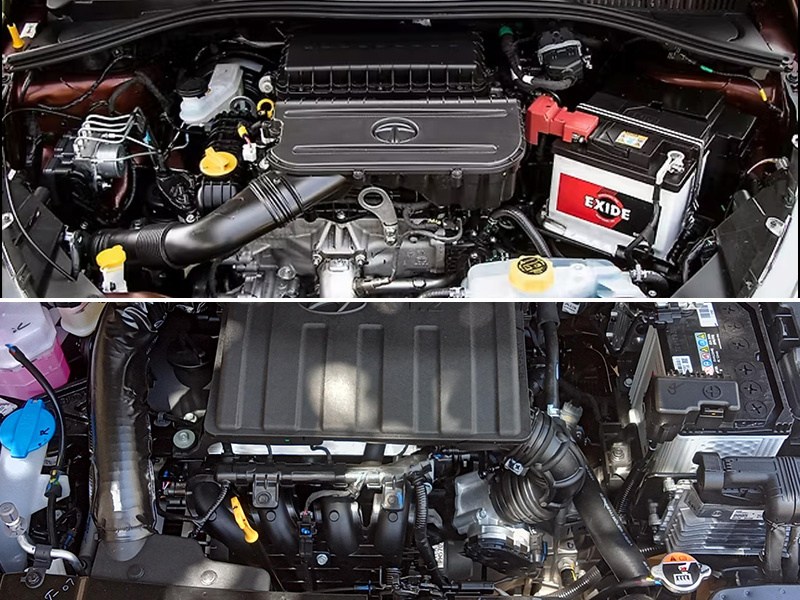
Both the Tata Tigor and Hyundai Aura come with 1.2-litre petrol engines, but they feel quite different when you actually drive them. The Tigor uses a 3-cylinder engine that makes 84.8 bhp. It’s fairly responsive and light to drive in the city, and while you may feel a bit of vibration at low speeds. What stands out is its fuel economy of around 19.2 kmpl for the petrol version and a segment-best 26.49 km/kg for CNG. That’s a huge plus if you’re looking to save on running costs. The Aura runs on a 4-cylinder engine, which is slightly less powerful at 82 bhp but smoother and quieter. It gives about 17 kmpl with petrol and 22 km/kg on CNG, which is not as high as the Tigor.
Here’s a quick comparison:
| Performance & Mileage | Tata Tigor | Hyundai Aura |
| Engine | 1.2L, 3-cylinder | 1.2L, 4-cylinder |
| Power | 84.8 bhp @ 6000 rpm | 82 bhp @ 6000 rpm |
| Torque | 113 Nm @ 3300 rpm | 113.8 Nm @ 4000 rpm |
| Petrol Mileage (ARAI) | 19.2 kmpl | 17 kmpl |
| CNG Mileage (ARAI) | 26.49 km/kg | 22 km/kg |
| Transmission Options | 5-speed Manual / AMT | 5-speed Manual / AMT |
4. Technology & Infotainment
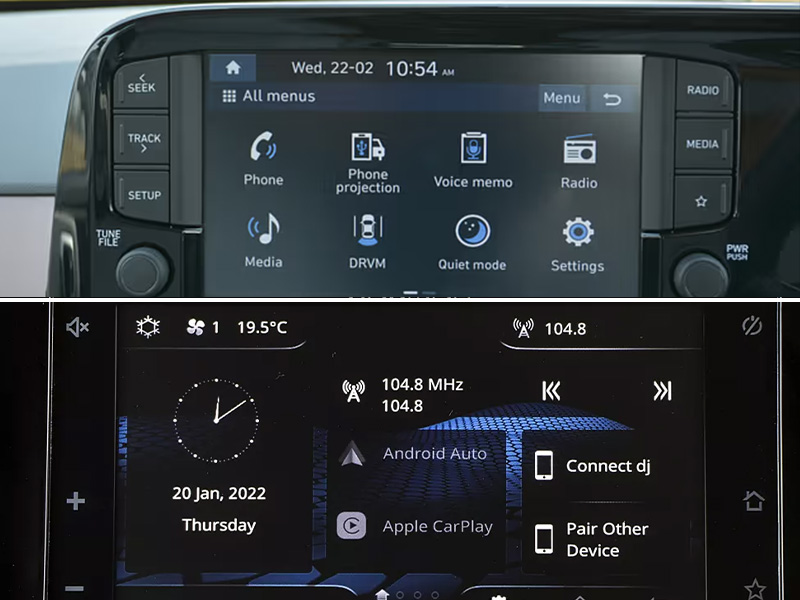
When it comes to infotainment and tech, both sedans offer enough for everyday use, but one leans toward quality and the other toward extra features. The Tigor comes with a 7-inch touchscreen powered by Harman, which is great for this price range. Plus, you get Android Auto, a semi-digital instrument cluster. But it doesn’t support wireless connectivity or voice commands. The Aura offers a slightly bigger 8-inch touchscreen and adds conveniences like voice commands and a wireless phone charger in top variants. It’s also got a more informative digital display between the dials, showing real-time mileage and fuel details.
Here’s how they compare:
| Infotainment & Tech | Tata Tigor | Hyundai Aura |
| Touchscreen Size | 7-inch | 8-inch (top variants) |
| Audio Quality | Harman (4 speakers + 4 tweeters) | Standard system |
| Android Auto | Yes | Yes |
| Wireless Charger | No | Yes (top variants) |
| Voice Commands | No | Yes |
| Instrument Cluster | Semi-digital | Semi-digital |
5. Safety
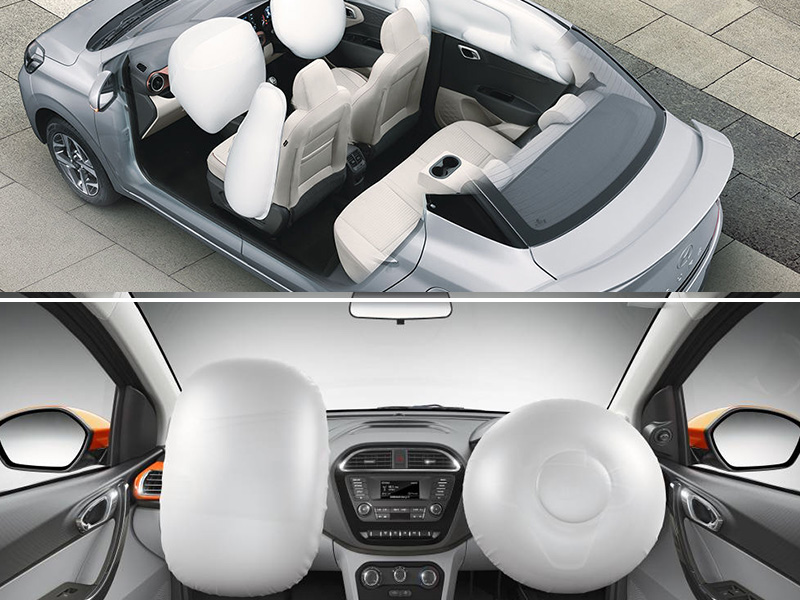
The Tigor has earned a solid 4-star Global NCAP rating, making it one of the safest sedans in its class. It’s built strong and includes standard safety features like dual airbags, ABS and ISOFIX child seat mounts even in the lower variants. You don’t get many extra electronic safety features, but the structure and crash performance speak for themselves. The Aura, meanwhile, offers more advanced safety features in higher variants. You get up to six airbags, Electronic Stability Control (ESC), Hill Start Assist, and Tyre Pressure Monitoring System (TPMS). However, its 2-star Global NCAP rating tells a different story about structural strength.
Know more about Safety – Hyundai Aura Safety Rating: A Smart, Safe and Stylish Compact Sedan
Let’s lay it out:
| Safety Features | Tata Tigor | Hyundai Aura |
| Global NCAP Rating | 4 stars | 2 stars |
| Airbags | 2 (dual front) | Up to 6 (top variants) |
| ABS + EBD | Yes | Yes |
| ESC & Hill Assist | No | Yes (top variants) |
| ISOFIX Child Seat Mounts | Yes | No |
| TPMS | No | Yes (top variants) |
What Should You Buy Between Tata Tigor Vs Hyundai Aura?
Choosing between the Tigor and Aura really comes down to what matters most to you in a car. If you’re someone who prioritises safety, low running costs, and spaciousness, then the Tata Tigor makes a lot of sense. It’s built tougher, comes with a larger boot, and its fuel efficiency, especially in the CNG version. Even the petrol variant gives you good mileage, making it great for long commutes or regular road trips. But if you’re someone who enjoys comfort and a smoother engine, then the Hyundai Aura will suit you better. It comes with ventilated seats, rear AC vents, and even wireless charging if you pick the top variants.
Here’s a quick guide to help you decide:
| Pick Tigor If You: | Pick Aura If You: |
| Value safety and want the highest crash-test rating | Prefer a smoother and more refined engine feel |
| Drive long distances or use CNG regularly | Want modern comforts like rear AC vents and tech extras |
| Need a large boot for family trips or luggage | Spend more time in traffic and want cabin comfort |
| Are okay with fewer frills if basics are strong | Like having more features even if it costs a little more |
Conclusion
The decision between the Tata Tigor vs Hyundai Aura comes down to your preference. Both Tigor and Aura are the top contenders in the sedan segment of the Indian market. Tigor, on one hand, is more dependable, solid and trustworthy. The Aura, on the other hand, is more sophisticated, comfortable, and comes with a quieter engine. Whichever you decide on, you’re getting a car that’s built for Indian roads and designed to handle the daily tasks.
FAQ’s
- Is the Hyundai Aura a hit or flop?
It’s not a flop. The Aura sells decently and has its own set of buyers who want a feature-rich, comfortable sedan. It may not be the most popular car out there, but it does well in its segment.
- What is the drawback of Aura car?
The biggest downside is safety. It only got a 2-star Global NCAP rating, which is low. Also, its fuel efficiency isn’t as good as the Tigor, especially in CNG.
- Is Tigor good for long drive?
Yes, it’s great for long drives. It has good mileage, a big boot, and enough space. The engine isn’t the smoothest, but it’s efficient and easy to drive.
- Why was the Hyundai Aura discontinued?
It hasn’t been discontinued. It’s still on sale with petrol and CNG options. You might be thinking of older variants that were replaced or updated.
Want to Compare More Cars? Read these:
- Maruti S-Presso vs Maruti WagonR Compared | The Sibling Shootout
- Citroen C3 vs Maruti WagonR
- Tiago CNG vs WagonR CNG vs Santro CNG
- Maruti Suzuki WagonR vs Ignis | The Arena vs Nexa Battle
- Maruti WagonR vs Hyundai Santro | Battle Of The Economy Hatchbacks
- MG Comet vs Tiago EV vs Citroen eC3
- Tata Tiago XZ Plus VS Tata Punch Accomplished – Choose Wisely!
- Skoda Kushaq Vs Volkswagen Taigun- Which One Should You Pick in 2025?


