






Car Cruise control allows you to maintain a constant speed without keeping your foot on the accelerator. All you have to do is set the speed, and the system holds it, that’s the basic idea. However, in India, this feature often feels unnecessary because most driving happens in traffic. Sudden lane changes, braking, and uneven road flow make it difficult to use in cities. But Indian roads are changing. Expressways and long highway stretches now allow consistent speeds for extended periods. On these roads, automobile cruise control becomes useful. It reduces driver fatigue, and helps avoid unintentional speeding. Even then, many drivers avoid using it. Some are unsure how cruise control works. Others think it is meant only for high-end cars. There is also confusion about when it should be turned on and when it should be avoided. In this blog, we will explain what cruise control in a car actually does, how to use cruise control properly, and which cars in India offer it today.
How to Use Cruise Control Step by Step?
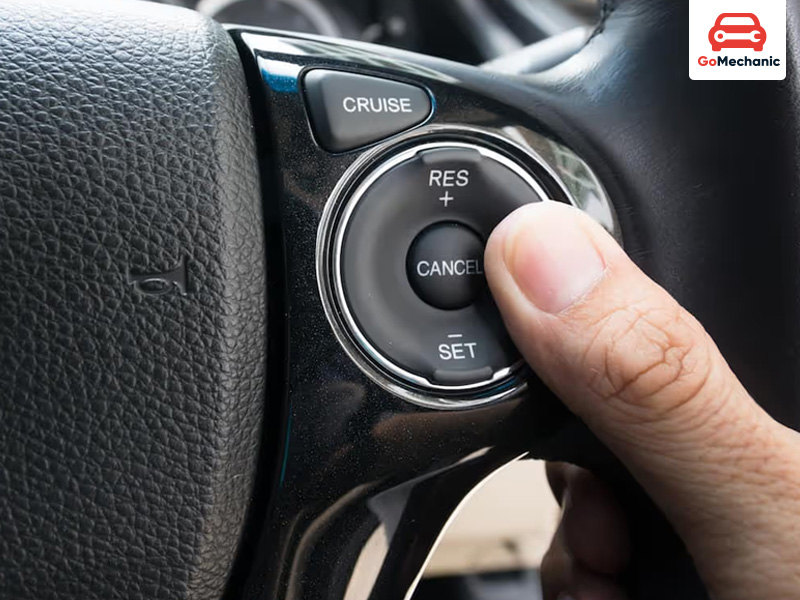
Before deciding whether to use it, it helps to understand how the system actually operates. Car Cruise control begins with you. First, you drive the car to a steady speed, usually on an open road where traffic is predictable. The system is not meant to find speed for you. It maintains what you have already set by yourself. Next, you turn the cruise control system on using the button on the steering wheel or control stalk. Now to fix the speed, you press the SET button. Once you do that, the car remembers the chosen speed and takes over throttle control.
From this point, the system manages acceleration. If the road rises slightly, it increases throttle to prevent speed drop. If the road levels out, it reduces throttle to maintain consistency. The goal remains simple. Hold the speed without constant pedal input.
You can increase or decrease the set speed using the + or – controls and when you press the brake, the system disengages immediately. In manual cars, pressing the clutch also cancels it.
If road conditions improve again, pressing RESUME brings the car back to the previously set speed and continues holding it. Knowing how it works explains the mechanics. But mechanics alone do not tell you when it should actually be used. The road conditions matter just as much as the system itself.
In short:
- Drive the car to a steady speed. Make sure to use it on an open road where traffic is predictable.
- Turn on the cruise control system by locating the button on the steering wheel or control stalk.
- Press the SET button, and the car calibrates according to the current speed. Now, the system controls the throttle, now you can remove your foot from the accelerator.
- Use the + or – buttons to adjust speed. The system updates to the new setting.
- Press the brake to cancel cruise control. In manual cars, pressing the clutch also disengages it.
- Press RESUME to return to the previously set speed. The system takes over throttle again.
Types of Cruise Control in Car
Understanding the types matters, because not all cruise systems behave the same way. The difference is not cosmetic. It changes how the car responds to traffic, distance, and speed variation.
1. Standard Cruise Control
This is the basic system found in many mid-range cars. You set a speed, and the car maintains it using throttle control. It does not detect traffic ahead. If a vehicle slows down in front of you, you must brake manually and disengage the system. It works best on long expressways where speed stays consistent. In mixed traffic, it becomes less practical. The system only holds speed. Nothing more.
2. Adaptive Cruise Control (ACC)
Adaptive Cruise Control adds radar or camera sensors. You still set a speed, but the system now monitors the vehicle ahead. If traffic slows, the car reduces speed automatically. When the road clears, it accelerates back to your preset speed. This makes it more usable on highways with moderate traffic. But responsibility still stays with the driver. It assists, it does not take over.
3. Stop-and-Go Adaptive Cruise
This is an extended version of adaptive cruise control. It can bring the car to a complete stop in slow moving traffic. When vehicles ahead start moving, it resumes automatically or with slight driver input. Useful in ring road congestion or controlled highway traffic. Not suitable for chaotic city driving. The system depends on clear lane detection and predictable flow.
4. Predictive or Intelligent Cruise Control
Found mostly in premium vehicles. This version uses navigation data along with sensors. It can adjust speed before curves, slopes, or speed limit zones. It anticipates rather than reacts. But accuracy depends on maps and calibration. It improves smoothness, not autonomy.
In simple terms:
- Standard cruise holds speed.
- Adaptive adjusts speed.
- Stop-and-go handles traffic flow.
- Predictive reads the road ahead.
When to Use Car Cruise Control vs When Not To
| Situation | Use Cruise Control | Avoid Cruise Control |
| Long expressways | Yes. Best use case. Speed stays consistent and traffic flow is predictable. | — |
| National highways with light traffic | Yes. Reduces fatigue and helps maintain steady speed. | — |
| City traffic | — | Yes. Frequent braking and sudden lane changes make it impractical. |
| Heavy congestion | — | Yes. You need constant throttle control. |
| Rain or slippery roads | — | Yes. Reduced grip requires manual control. |
| Hilly or winding roads | — | Yes. Constant speed changes make cruise control ineffective. |
| Speed-monitored highways | Yes. Helps prevent unintentional overspeeding. | — |
Even when used correctly, two common doubts still remain. Does it actually save fuel? And more importantly, is it safe in real-world driving?
Does Automobile Cruise Control Save Fuel and Is it Safe?
Does cruise control save fuel, or is that just an assumption, the answer depend on where you use it and how you drive. On highways where traffic is steady and speed remains constant, it maintains consistent throttle input, and that consistency reduce unnecessary acceleration, improving fuel efficiency slightly over time. But in city traffic, where braking is frequent and speeds change constantly, the system keeps disengaging, and each reset remove any possible gain. Driving style matter as well. If you already accelerate smoothly and maintain stable speeds, the difference may be small. If your speed varies without you noticing, cruise control can introduce consistency and reduce fluctuation. It is not a fuel-saving feature by design, it is a speed-holding feature. Any efficiency benefit comes from stable road conditions and disciplined usage. When the road allows steady movement, small improvements are possible. When traffic is unpredictable, there is no advantage. Cruise control saves fuel only when consistency exist, not by default and not automatically. Fuel efficiency is one part of the equation. Safety is the other, and both depend on the same thing – context.
Cruise control is safe, but only within limits. The feature itself does nothing more than maintain the speed you set. It does not steer. It does not anticipate traffic. It does not react to sudden obstacles. The responsibility never leaves the driver. On open highways with stable traffic flow, it can reduce fatigue and help maintain consistent speeds. This helps in preventing accidental overspeeding. The problem begins when it is used where it does not belong, places such as heavy traffic, slippery roads, or sharp turns, maintaining a fixed speed is not ideal. Because road conditions change faster than the system can respond, and manual control becomes necessary. At this point, another distinction becomes important. Not all cruise control systems behave the same way, and this is where the difference between standard and adaptive systems matters.
Cruise Control vs Adaptive Cruise Control
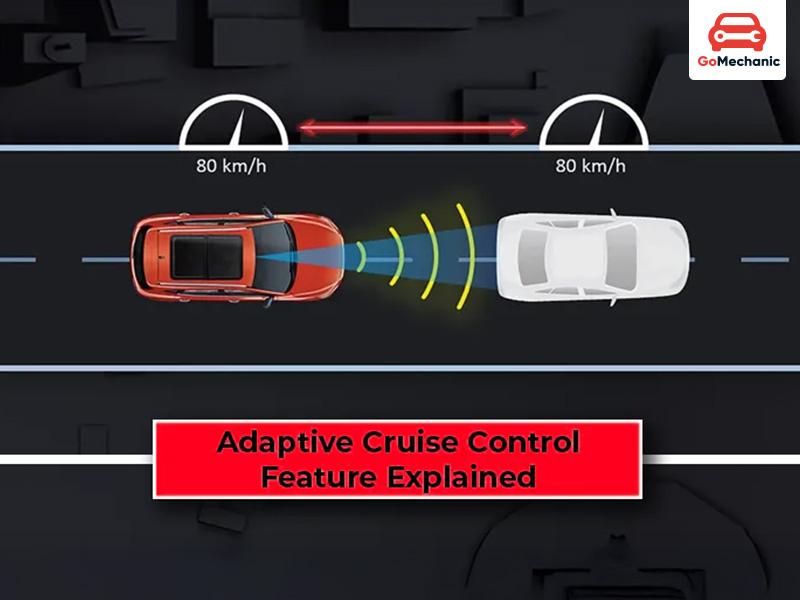
| Feature | Cruise Control | Adaptive Cruise Control |
| Basic Function | Maintains the speed you set. | Maintains speed and adjusts it based on traffic ahead. |
| Traffic Detection | Does not detect vehicles ahead. | Uses radar or sensors to monitor vehicles in front. |
| Automatic Braking | No. You must brake manually. | Yes, slows down automatically if traffic slows. |
| Acceleration Control | Holds constant speed only. | Slows down and accelerates back when road clears. |
| Driver Responsibility | Full responsibility at all times. | Driver still responsible, system only assists. |
| Best Used On | Open highways with light traffic. | Highways with moderate traffic flow. |
| Cost | More affordable, common in mid-range cars. | More expensive, usually in premium vehicles. |
| Complexity | Simple and mechanical in operation. | Sensor-based and more technology-driven. |
Conclusion
Cruise control is nor a luxury, neither a self-driving feature. It’s a basic feature that maintains the speed you set when the road allows it. It’s main application is on long highways and expressways, it reduces fatigue, keeps speed consistent, and helps avoid accidental overspeeding. In city traffic, rain, hills, or unpredictable conditions, it serves little purpose. What matters is understanding its limits. Cruise control only manages throttle. It does not steer. It does not react to traffic. It does not replace driver attention. Fuel savings, if they happen, come from steady road conditions, not from the feature itself. Safety also depends on when and where it is used. Adaptive cruise control adds traffic detection, but responsibility still stays with the driver. One maintains speed. The other adjusts speed. Cruise control is a tool. When used in the right environment, it improves comfort and consistency. When forced into the wrong one, it offers no real benefit.
FAQ’s
- What does cruise control do?
Cruise control maintains a constant speed that you select without keeping your foot on the accelerator. Once activated, it controls throttle input to hold that speed steadily. Its only function is to keep the vehicle moving at the set pace.
- Can you brake while on cruise control?
Yes, pressing the brake immediately disengage cruise control. The system switches off as soon as brake input is detected. In manual cars, pressing the clutch also cancel it because engine load changes. After disengagement, full control comes back to you.
- When should I avoid using cruise control?
Avoid using it in city traffic, congestion, slippery roads, and sharp turns. It is not suitable when speed cannot remain stable. The system works best only when traffic flow is predictable.
- How do I use cruise control?
Drive at a steady speed on an open road. Switch the system on, then press SET to lock the speed. Use the + or – buttons to adjust if needed. Press brake or clutch to cancel.
- Does ADAS reduce mileage?
ADAS does not directly reduce mileage. It may adjust throttle and braking depending on traffic, which can slightly affect fuel efficiency, the impact however, is usually small and depends on driving behaviour.
- Is cruise control the same as autopilot?
No, Cruise control only maintains speed. It does not steer or make decisions. The driver remains fully responsible for control at all times.


