






A shocking drop. The Maruti Suzuki Ertiga, long a trusted choice for Indian families, has seen its safety score take a hit. For years, the Ertiga checked all the boxes like Spacious, Affordable, and Fuel-efficient. But now, the focus has shifted to something else. Something that can’t be ignored which led to a significant drop in Ertiga NCAP rating
What changed? A downgrade. The Ertiga safety rating has slipped from a solid 3 stars to a concerning 2 stars. The reason? Stricter crash test protocols from Global NCAP. Is this a dealbreaker? For many, it’s a red flag.
So, what went wrong? To understand the drop in Ertiga NCAP rating, we need to unpack the stricter testing norms—and the car’s structural realities. Let’s dive in.
The Numbers Behind the Ertiga Safety Rating
When it was first tested a few years ago, the Ertiga NCAP rating was 3 stars for adult occupant protection. Not stellar, but acceptable for its segment at the time. Fast forward to today, the Global NCAP introduced new, more rigorous protocols in July 2022. These now account for:
- Side-impact protection.
- Child occupant safety in detail.
- Electronic stability control (ESC) as standard.
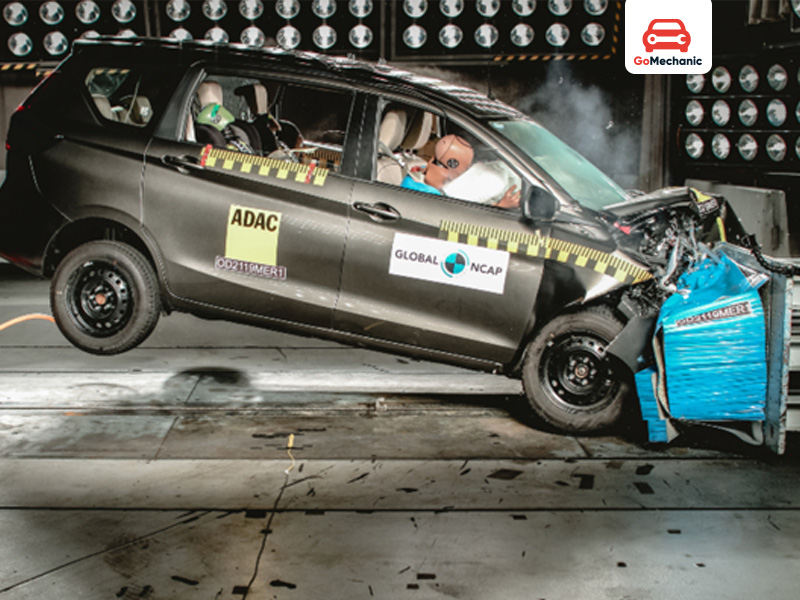
Under these updated protocols, the Ertiga NCAP rating is:
- 2 stars for adult occupant protection.
- 3 stars for child occupant safety.
What caused the drop?
The testing showed that the Ertiga’s structural integrity in frontal collisions was unstable. This instability can result in higher risks to passengers, particularly the driver. Additionally, the lack of side airbags (standard in competitors) impacted its side-impact score, pulling the overall rating down. Thus, causing a drop in Ertiga safety rating.
Related: Maruti Suzuki Grand Vitara NCAP Rating
What Does “Unstable Structure” Mean for You?
An unstable structure means the car’s cabin isn’t strong enough to handle crash forces effectively. When a frontal collision occurs, parts of the cabin might collapse or deform, leaving less survival space for passengers. For the Ertiga, this structural issue poses risks in high-speed impacts. And here’s the catch—it’s not just about airbags. Even with frontal airbags, an unstable cabin limits how much protection those airbags can provide.
Why Didn’t Maruti Suzuki Improve the Ertiga’s Safety?
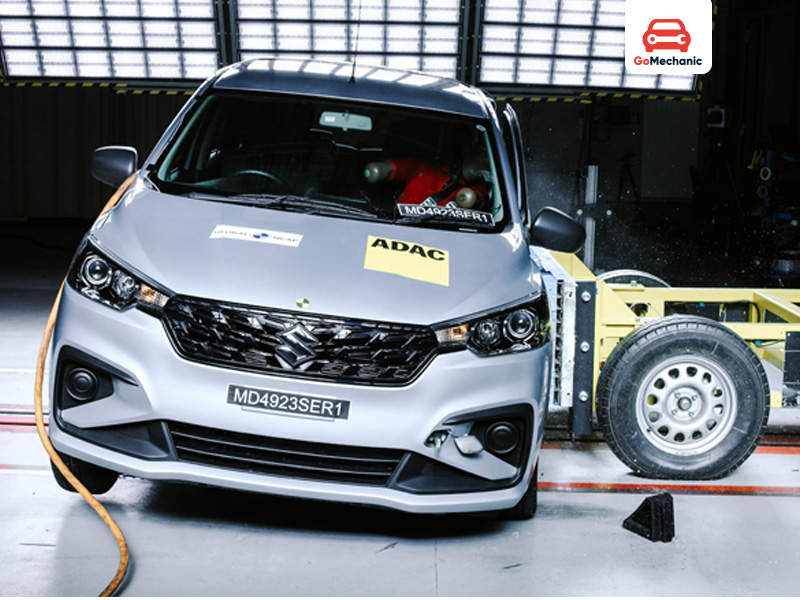
This is most irritating when we see rivals adding airbags, stronger structures, and scoring better on safety tests. But Maruti Suzuki, India’s auto giant, chose to stay where it is. Why?
The answer lies in a word most buyers hate to hear—compromise.
Affordability vs. Safety: The Balancing Act
Let’s be clear—safety isn’t cheap.
Stronger steel.
Side airbags.
Advanced safety tech.
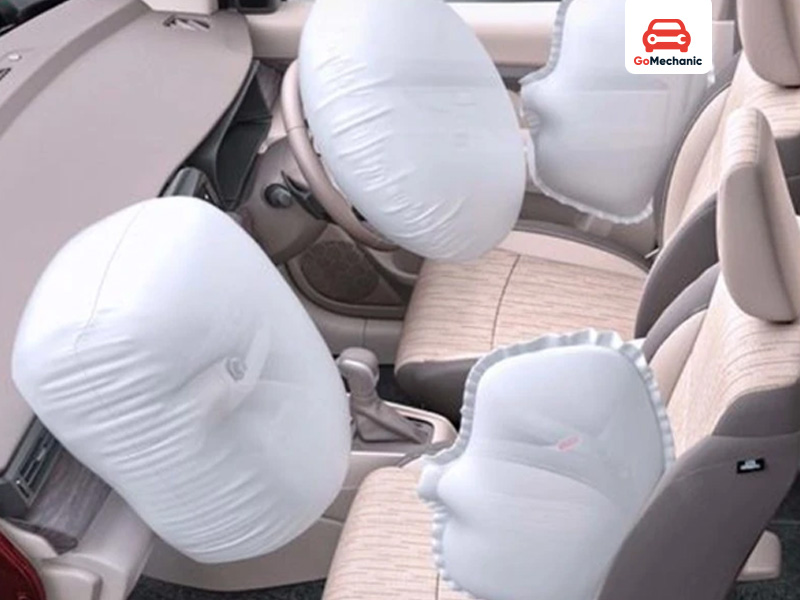
Each of these adds to the cost. And in a market where price often dictates purchase, automakers walk a tightrope. For Maruti, keeping the Ertiga affordable and fuel-efficient meant hard decisions. Prioritizing mileage, seating capacity, and affordability over cutting-edge safety tech was a calculated trade-off.
Would stronger materials and more airbags make it safer? Absolutely.
Would that also drive the price out of reach for budget-conscious buyers? Definitely.
The Tough Reality
This isn’t just Maruti’s challenge—it’s an industry-wide struggle. India’s car market demands affordability first. Safety often takes a backseat. For now, the Ertiga delivers on comfort, mileage, and price. But when it comes to safety, the compromise is evident. Is it worth it? That’s a decision every buyer must make. Ertiga safety rating has become a big issue for the buyers.
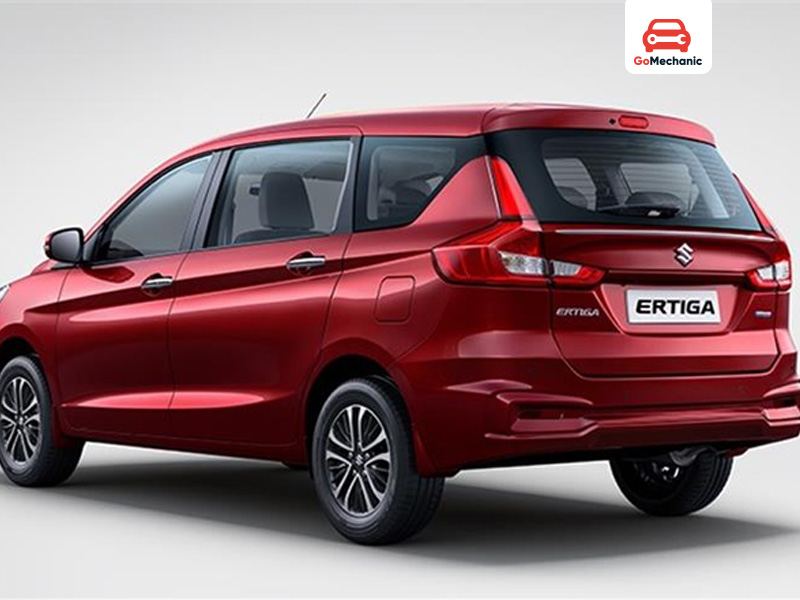
The Ertiga delivers great mileage and comfort but lags behind on structural safety and essential safety features like:
- Side and curtain airbags.
- Electronic stability control (offered only in higher variants).
- Advanced driver assistance systems (ADAS).
What’s Changing the Game in Safety?
India’s road safety awareness is growing. And so are buyers’ expectations.
Competitors in the MPV space, like the Kia Carens and Toyota Rumion, now come equipped with 6 airbags, better structural stability, and advanced safety features.
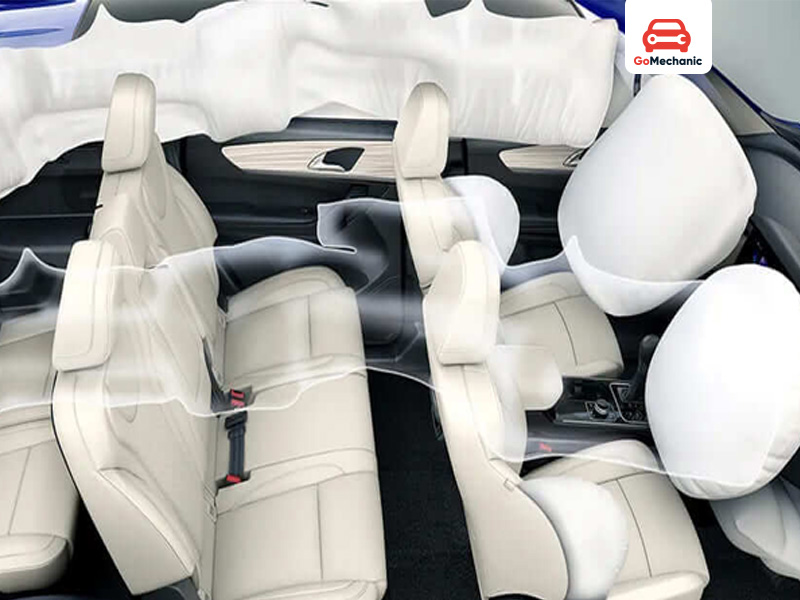
The government is also pushing for:
- Mandatory 6 airbags in all cars.
- Stricter crash test standards.
- A focus on pedestrian safety through new norms.
Maruti Suzuki will have to catch up. Or risk losing a significant market share.
Do Read: Maruti Suzuki Safest Car: Redefining India’s Automotive Industry
What Can Ertiga Owners Do?
If you already own an Ertiga or are considering buying one, here’s what you can do:
- Prioritize top variants.
Higher variants usually include ESP (Electronic Stability Program) and Hill Hold Assist, both of which improve safety. - Drive defensively.
Avoid high speeds, especially on highways, to mitigate the risks posed by structural instability. - Aftermarket solutions.
Consider adding dash cams, better seat covers with padding, or side airbags if available in the aftermarket.
How Does the Ertiga Compare to Its Rivals?
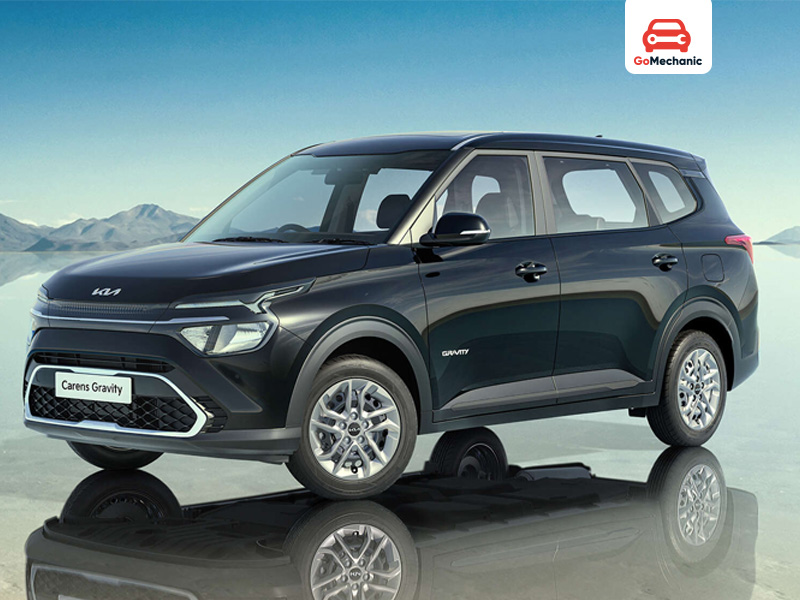
Let’s break it down:
| Model | NCAP Rating | Airbags (Standard) | Price Range |
| Ertiga | 2 stars | 2 | ₹8.64 – ₹13.08 lakh |
| Kia Carens | 3 stars | 6 | ₹10.45 – ₹18.95 lakh |
| Toyota Rumion | Yet to be tested | 2 | ₹10.29 – ₹13.68 lakh |
The Ertiga remains competitive in terms of price, but rivals are pulling ahead on safety.
The Bottom Line
The Ertiga holds its ground as a reliable value pick—spacious, fuel-efficient, dependable. But safety? That’s where it falters. With Ertiga NCAP rating of just 2-stars, it leaves a lot to be desired, especially with competitors like the Kia Carens raising the bar on protection.
So, should you buy it?
Absolutely. But tread carefully. If safety is non-negotiable, consider opting for a higher variant or set your sights on safer choices.
FAQs
1. Is the Ertiga safe for families?
Safe-ish. The Ertiga offers basic child safety features, but its 2-star NCAP rating raises concerns for adult protection. Families should opt for top variants, including ESP and Hill Hold Assist, for added security.
2. What is the safety rating of Ertiga?
The current Maruti Ertiga has not received a 5-star Global NCAP rating in India. Earlier ASEAN NCAP tests rated it respectably, but Indian crash test data under the latest protocols is limited. Structurally, it is built for family use, not heavy impact performance. Safety rating depends on test year and specification, so it is important to check the exact version.
3. What’s the future of Maruti Suzuki safety ratings?
Critical. Maruti needs to improve its safety structures and add mandatory 6 airbags to stay competitive and meet future regulations.
4. Is Maruti Suzuki Ertiga a premium MPV?
The Maruti Suzuki Ertiga is an affordable MPV with a premium looking exterior and upmarket creature comfort feature.
5. Is Ertiga better or XL6?
Mechanically, both are very similar because they share the same platform and engine. XL6 feels slightly more premium with captain seats and extra features. In terms of core safety and structure, difference is minimal. So the choice is more about seating layout and styling preference, not crash strength.
6. Which car has a 5 safety rating?
In Maruti’s line-up, the new Dzire has scored a 5-star rating under Bharat NCAP. Maruti’s eVitara has also secured a 5-star Bharat NCAP rating, so yes, the brand finally has proper 5-star cars now. Just remember, this rating is tied to the tested model and spec, so don’t assume older versions match it.
7. How safe is the Ertiga?
The Ertiga offers dual airbags, ABS with EBD, and stability features in newer versions. For regular family driving, it provides basic protection and predictable road behaviour. It is not positioned as a high safety benchmark vehicle. It does the essentials, but it is not the strongest in crash test comparisons.


