






If you have been driving long enough, you already know this feeling. You cross a junction thinking everything is normal and two days later an SMS pops up informing you that an e-challan has been issued. No cop stopped you. No conversation happened. Yet the fine is there, complete with photo proof.
This is the new world of AI traffic challans. And whether people like it or not, it is slowly becoming the default system across Indian cities. The interesting part is that this shift did not happen overnight. It came out of necessity. Traffic volume grew, violations became harder to track manually, and enforcement needed a scalable way to function. AI happened to be the tool that made that possible.
Let us break down why this system emerged, how it works underneath, and why it is quietly redefining road discipline in India.
Why AI-Based Challans Came Into the Picture
Traditional enforcement had simple limitations. One officer standing at a busy junction cannot monitor ten lanes, fast turns, pedestrian crossings and hundreds of vehicles moving at the same time. Most violations happened when no one was watching. Behaviour varied depending on who was on duty. And let’s be honest, on-ground challans often came with unnecessary arguments and inconsistency.
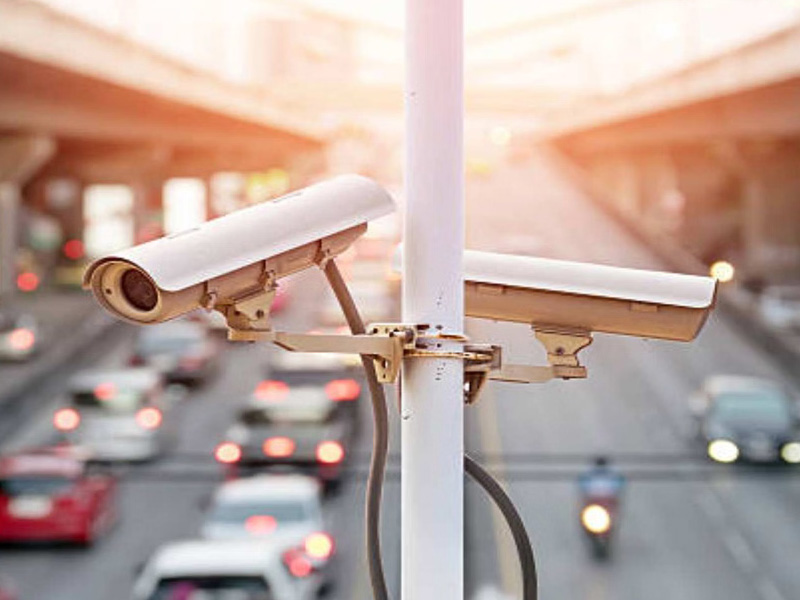
Cities needed a system that was:
- Operational 24×7
- Unbiased in detection
- Capable of capturing small but dangerous violations
- Good at documenting evidence
- Scalable across junctions and highways
AI solved all of those problems at once. With AI-enabled cameras, enforcement becomes a continuous process instead of a human-limited one. And once cities saw the difference in compliance rates, they doubled down.
How AI Cameras Actually Work as Enforcement Tools
The camera is only the surface. The real engine sits underneath.
Every smart camera traffic challan follows the same flow. A high-resolution camera captures every vehicle entering its frame. The AI model analyses the feed in real time. It checks if the signal is red, whether the vehicle crossed the stop line, whether the rider is wearing a helmet or not, whether the car is moving in the correct lane, or if someone is on the phone while driving.
If it detects a violation, ANPR (Automatic Number Plate Recognition) reads the vehicle number, the system pulls owner details from VAHAN, attaches the frame as evidence, timestamps it, and an automated traffic challan gets created. No human needs to intervene unless the system encounters something unclear.
From your perspective, it looks like a challan appeared out of nowhere. From the system’s perspective, it simply followed rules written into its logic.
Where AI Challans Are Already Working in India
AI enforcement started in big metros but has expanded faster than people realise. Delhi uses ANPR and AI models at major intersections. Mumbai–Pune Expressway captures overspeeding and lane violations round the clock. Chandigarh mapped most of its smart city cameras to e-challans. Even tier-2 towns like Udupi and Nashik now run AI-based detection at key signals.
The trend is clear. If a city has already invested in CCTV networks under smart city projects, plugging those feeds into AI is the natural next step.
How AI Challans Are Changing Driver Behaviour
Here is something I have personally noticed and heard from others too. When enforcement feels predictable, behaviour automatically adjusts. It is no longer about the fear of a cop watching. It is about the awareness that the system is always watching.
You begin slowing down earlier at yellow lights. You avoid drifting into the wrong lane even for a few seconds. Helmet usage spikes near AI-covered corridors. And once those habits build, they stay with you even in non-monitored areas.
People complain about AI challans, but most will privately admit that roads feel more disciplined where these systems are active. And discipline is not cosmetic. It directly reduces risky behaviour and accident probability.
The Good and Bad Sides of AI Challans
Here is a quick look at how this new system compares to the old one.
| Aspect | AI-Based Challans | Traditional Challans |
| Consistency | Very high, same rules everywhere | Depends on the officer and the situation |
| Coverage | 24×7 monitoring | Limited to officer presence |
| Evidence | Photo or video proof | Mostly eyewitness-based |
| Speed of detection | Real-time | Manual and slower |
| Issues | Wrong plate reads, privacy concerns | Human bias, negotiation, missed violations |
The goal is not to make AI look perfect. It still has blind spots. But compared to the old system, it definitely closes more gaps than it creates.
The Problems We Need to Talk About
As much as I appreciate the efficiency of AI, I also think it is important to talk about the rough edges.
Wrong challans do happen when the camera misreads a plate or when someone uses a fancy, non-standard plate that looks similar to yours. Sometimes, poor lighting or weather conditions confuse the AI. And then there is the bigger question of privacy. Continuous surveillance without transparent data rules can make citizens uneasy, and that concern is valid.
We need stricter guidelines on data storage, plate recognition accuracy and citizen rights for contesting errors. The system is powerful, but power needs accountability.
How You Can View or Pay an AI-Generated Challan
Once a challan is issued through a smart camera, there’s no physical slip and no on-spot discussion. Everything sits online, which is actually easier if you know where to look. The fastest way to check any AI-generated challan is to verify it yourself instead of trusting random SMS links.
You can view or pay the challan in a few simple steps:
- Go to the official e-challan portal.
Visit the central site: echallan.parivahan.gov.in. This is the safest place to check. No pop-ups, no shady links.
- Enter your vehicle number or driving licence number
The system pulls up every pending challan linked to your vehicle. If it’s a genuine AI challan, it will always appear here.
- Check the photo or video proof
You will see the exact frame the camera captured. Honestly, this is the part that settles most doubts. If it’s your car in the wrong spot, you know it instantly.
- Pay directly on the same page
UPI, net banking and card payments are supported. Once paid, the receipt gets stored online so you can retrieve it anytime during resale, NOC, or insurance renewal.
The only thing you should avoid is clicking on “challan payment” links from unknown numbers. AI enforcement is getting smarter, and scammers are getting smarter too. Always verify on the official portal first. That one habit saves you a lot of unnecessary stress.
Conclusion
AI and smart cameras are reshaping traffic enforcement in India. They bring consistency, better evidence, fewer arguments and stronger road discipline. At the same time, they bring challenges like false detections and privacy questions that must be handled responsibly.
But looking at the bigger picture, the shift toward AI traffic challans and smart camera traffic challans is not just a tech upgrade but a culture shift. Roads become more predictable. Drivers behave more cautiously. And accidents reduce when risky habits decline.
If India manages to balance technology with transparency, this automated traffic challan system will not just enforce rules. It will help reshape how we drive as a country.
FAQs
1. How does an AI traffic camera work?
An AI traffic camera records the road like a normal CCTV, but it also analyzes what it sees in real-time. It checks the signal, tracks vehicles, detects violations and reads number plates through ANPR. Once it confirms the rule break, it auto-generates a challan with photo evidence. No human has to intervene.
2. How is AI used in traffic management?
AI has basically become the city’s second pair of eyes. It tracks traffic flow, measures congestion in real time and helps adjust signal timings so junctions don’t choke unnecessarily. It also detects accidents more quickly than manual monitoring and flags dangerous patterns, such as repeated overspeeding on a particular stretch. The goal isn’t just enforcement. It’s making the entire road network behave more predictably.
3. How do smart traffic cameras enhance road safety?
Smart cameras reduce guesswork on the road. When people know a junction is monitored, they tend to follow the basics without thinking too hard. You see fewer impulsive red-light jumps, less last-second lane cutting and better helmet usage near camera zones. The camera doesn’t shout or wave you down, it just records consistently, and that consistency quietly changes behaviour over time.
4. How does a challan camera work?
A challan camera follows a simple flow. It captures the scene, the AI checks for rule-breaking and ANPR reads the plate. If everything matches, an e-challan is generated with the exact time, place and photo evidence. There is no debate or negotiation at the signal. The system just applies the rule as it’s written.
5. What is the difference between an AI camera and a normal CCTV camera?
A CCTV camera is basically a recorder. It stores footage and waits for someone to review it. An AI camera does that plus the thinking. It identifies vehicles, understands movement, detects violations and triggers actions automatically. One shows you what happened. The other tells you what happened and acts on it in real time.


