GoMechanic





Auto climate control is one of the modern car features, which helps to keep the cabin temperature comfortable automatically without the need for the driver to adjust it all the time. In contrast to the conventional air conditioner that needs manual adjustment, the automatic climate control has sensors, electronic controls and intelligent algorithms to control temperature, airflow and humidity in real time. This system is significant as vehicles are becoming more technological and enhance the comfort in driving, lessen the risk of distraction, and enhance energy efficiency. Learning the principles of the auto climate control system will allow car consumers to make the right choice and drivers utilize the system more efficiently in various weather conditions.
1. What Is Auto Climate Control?

Auto climate control is a smart air-conditioning system that automatically regulates the cabin temperature, as set by the driver/passengers. After one chooses a preferred temperature, the system will continuously change cooling, heating, fan speed, and air distribution to maintain a constant environment in the interior. The changing outside weather conditions do not require the driver to change the settings manually.
The system operates with the help of temperature and environmental sensors installed in and out of the car. These sensors then transmit the data to a control unit, which then determines the extent of cooling or heating needed. Auto climate control also controls the humidity and the direction of airflow so that it does not cause any discomfort like fogged windows or disproportionate cooling.
With an auto climate control, unlike the simple AC systems, comfort is prioritized and not merely blowing cold or hot air in. It is present in middle and luxury cars and is regarded as one of the main features of improved convenience in driving.
2. Difference Between Manual AC and Automatic Climate Control
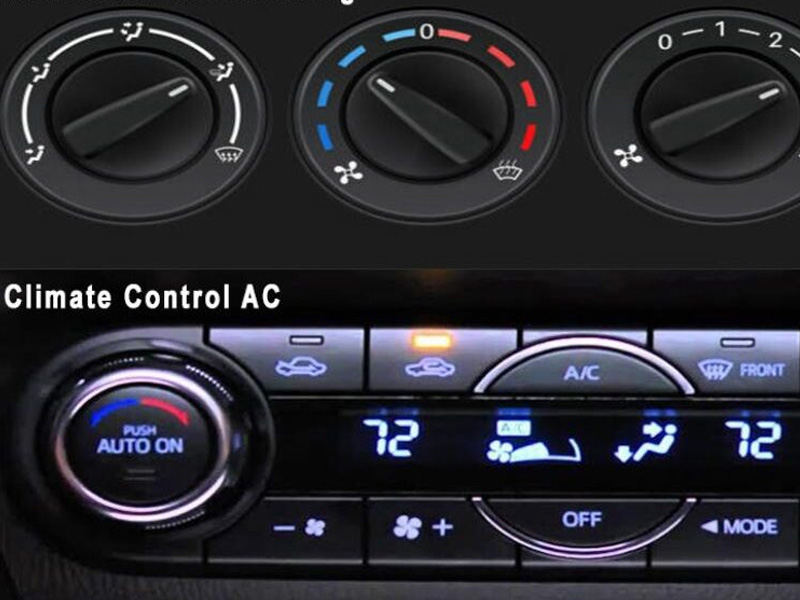
The major difference between manual air conditioning and automatic climate control is the way the temperature and airflow are controlled. In a manual AC system, the driver has to manually control the speed of the fan, the temperature level, and even the direction of the airflow. Whenever weather or cabin alterations occur, it needs to be modified at all times.
Automatic climate control, however, does this in automated mode with a set target temperature. It is automated to regulate a stable environment without human intervention by the use of sensors and electronic controls.
| Feature | Manual AC | Auto Climate Control |
| Temperature control | Manual | Automatic |
| Fan speed adjustment | Manual | Automatic |
| Sensors | Minimal | Multiple sensors |
| Comfort consistency | Low | High |
| Driver effort | High | Low |
Automatic systems reduce distraction and provide more precise temperature regulation, while manual AC systems are simpler and more cost-effective.
3. How Auto Climate Control Works Inside a Car
The auto climate control is operated on a closed-loop system which constantly monitors the conditions of the cab and regulates them. When the temperature is chosen, the system will compare the actual temperature of the cabin with the desired temperature. Depending on the difference, it determines whether the air will be cooled or it will be heated.
The system regulates a number of activities at once:
- Cooling compressor operation.
- Use of heater cores to warm up.
- Fan speed adjustment
- Airflow direction changes
Feedback represents constantly updated information to the control unit by sensors. When the intensity of sunlight increases or when the outside temperature decreases, the system will immediately respond to achieve balance. This is an automatic process where the occupants do not realize any changes.
Since the adjustments are smooth and accurate, auto climate control does not have sudden temperature variations and offers a cabin environment a lot more comfortable and smooth than manual systems.
4. Key Components and Sensors of an Automatic Climate Control System
The automatic climate control system is dependent on a few major components to work in tandem with each other. The key components are the control module, air conditioning compressor, heater core, blower motor and air distribution vents. These parts are electro-mechanically operated to operate accurately.
Important sensors used in the system include:
- Cabin temperature sensor – displays the interior temperature of the air.
- Ambient temperature sensor- measures outside temperature.
- Sunlight sensor – regulates cooling depending on the sun’s heat.
- Humidity sensor (in certain cars) – prevents fogging of the window.
The climate control module uses all sensor data to determine the amount of cooling or heating needed. Such coordination provides proper temperature management and standardized air circulation. The sensor accuracy and its correct calibration are of great importance to the work of the system.
5. Single-Zone vs Dual-Zone vs Multi-Zone Climate Control
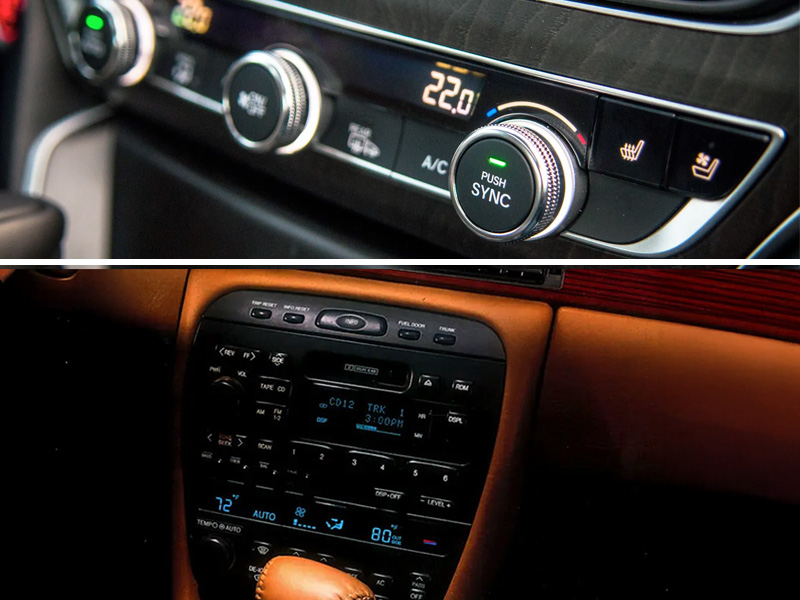
Climate control systems are categorized based on how many temperature zones they support inside the cabin.
| Type | Description | Best For |
| Single-Zone | Same temperature for entire cabin | Small cars |
| Dual-Zone | Separate settings for driver and passenger | Sedans, SUVs |
| Multi-Zone | Individual control for front and rear seats | Premium vehicles |
Single-zone systems are simple and cost-effective but lack personalization. Dual-zone systems improve comfort by allowing different temperatures for the driver and front passenger. Multi-zone climate control offers the highest level of customization, ensuring comfort for all occupants.
The choice depends on vehicle size, passenger needs, and budget. Larger vehicles benefit more from multi-zone systems due to uneven heat distribution.
6. Benefits of Auto Climate Control in Modern Vehicles
Auto climate control has a number of viable benefits that make the driving experience more enjoyable. A steady warmth is one of the key advantages because the system ensures consistency in cabin temperature when the external environment changes.
Key benefits include:
- Reduced driver distraction
- Improved cabin comfort
- Better airflow management
- Efficient energy usage
- Automatic humidity control
The system eliminates unneeded engine stress or battery load by maximizing the efficiency of compressor operation and fan speed. This helps in a smooth running and in other instances, it enhances fuel efficiency. Visibility and safety are also enhanced with automatic defogging and airflow modification.
All in all, auto climate control will be convenient, particularly when traveling long distances or in harsh weather.
7. Is Auto Climate Control Worth It for Your Car?
The auto climate control is a good purchase, or not, depending on the driving habits, the weather conditions, and the comfort preferences of the person. The system is clearly beneficial in comfort and ease of use to drivers whose long distances or live in areas with extreme temperatures.
It is particularly valuable for:
- Daily commuters
- Family vehicles
- Premium or long-distance travel cars
Nevertheless, the AC systems with auto climate control are costlier to repair and maintain than the manual ones. A manual system might be adequate in the mild climate and in smaller cars.
In the long-term view, the increased comfort, less distraction, and better cabin experience make auto climate control a valuable option to many of the modern automobile purchasers, especially as the feature begins to become more common in newer automobiles.
Conclusion:
Auto climate control is an expedient product that improves comfort, convenience and driving alertness because it automatically regulates the preferred cabin temperature. It also eliminates the manual adjustments and changes and it automatically adapts itself to the changing weather. The drivers who spend much time on the road, who have passengers in their cars, or who have to drive in regions with extremely hot or cold climates have evident daily advantages of this system. Although this might translate into a higher upfront price of a car, the comfort and ease of use in the long run tend to be worth the money. Finally, it is up to your budget, driving style and comfort level in which you decide whether to have auto climate control.
FAQ’s
1. What is the auto climate control on a car?
Auto climate control- This is a system that maintains the temperature in your car-cabin at the temperature you prefer automatically. It only takes a desired temperature and the system will regulate cooling, heating, fan speed, and airflow automatically. It has sensors to check the conditions both indoors and outdoors and you do not have to change the AC settings every minute while driving.
2. Does the auto climate suit the car’s AC better?
Yes, auto climate control is more comfortable and convenient. It does not blow air randomly and it maintains a constant cabin temperature. The system modifies itself in accordance with the weather and cabin conditions; this minimizes driver diversion. Nevertheless, it might be more expensive to purchase and fix than a standard manual AC.
3. What is the distinction between normal AC and automatic climate control?
Normal AC has to be manually controlled in terms of temperature, fan speed, and airflow. When circumstances vary, you are forced to modify it. This is done automatically following a target temperature after you have set automatic climate control. It applies sensors and electronics to make the cabin comfortable by using minimal effort from the driver.
4. What is the 3-minute rule for AC?
The 3-minute rule implies that people should wait several minutes after igniting the engine and then they can switch the AC to the maximum power. This will enable the engine system and AC system to stabilize, which will assist the compressor to work effectively. It has the potential of alleviating pressure on the engine and has the potential to enhance cooling performance and long-term AC durability.
5. Should it have automatic climate control?
There is no necessity for automatic control of the climate, but it is highly convenient. Manual AC is suitable for short journeys and cool weather. But in the case of long journeys, harsh climates or heavy traffic in the city, auto climate control is more comfortable and less distracting than manual climate control, which makes driving much easier and enjoyable.