






If there is one thing that has never really gone out of style in India, it is a good hatchback. Walk into any Tier 2 city, drive through any crowded Mumbai lane, or peek into any apartment complex parking lot in Pune and you will see what we mean. These cars just make sense here. The roads are unpredictable, the parking spots are basically puzzles, and fuel costs enough that every kilometre per litre actually matters to real people with real budgets. A hatchback does not ask you to compromise on any of that. It squeezes into gaps that would give an SUV owner anxiety, it does not punish you at the pump, and it handles the kind of daily beating that Indian city roads dish out without falling apart on you. For someone buying their first car, or upgrading from years on a two-wheeler, or just wanting something dependable that does not empty the savings account, it is genuinely hard to find a more practical starting point.
Now within the hatchback space, the segment below six lakhs is where things get really interesting. This is where lakhs of Indians buy their very first car, where every fifty thousand rupees makes a genuine difference, and where the shortlist almost always comes down to the same few names. Not because of fancy advertising or celebrity endorsements, but because certain cars have simply proven themselves on real Indian roads over the years. And when you talk to people who have gone through this buying process, two names come up again and again without fail.
The Maruti Suzuki Alto K10 and the Maruti Suzuki Celerio. Same manufacturer, similar engine, similar target audience on paper. But spend a little time with both and you quickly realise these are two pretty different cars built for two slightly different kinds of buyers. The Alto K10 vs Celerio question sounds simple on the surface but there is actually quite a bit to unpack before you can give someone a straight answer.
So that is exactly what we are going to do here. We are going to go through the price, the mileage, the features, the space, and the ownership experience in enough detail that by the time you finish reading, you will know exactly which one makes sense for you and why.
Alto K10 vs Celerio – Engine Specification and Performance
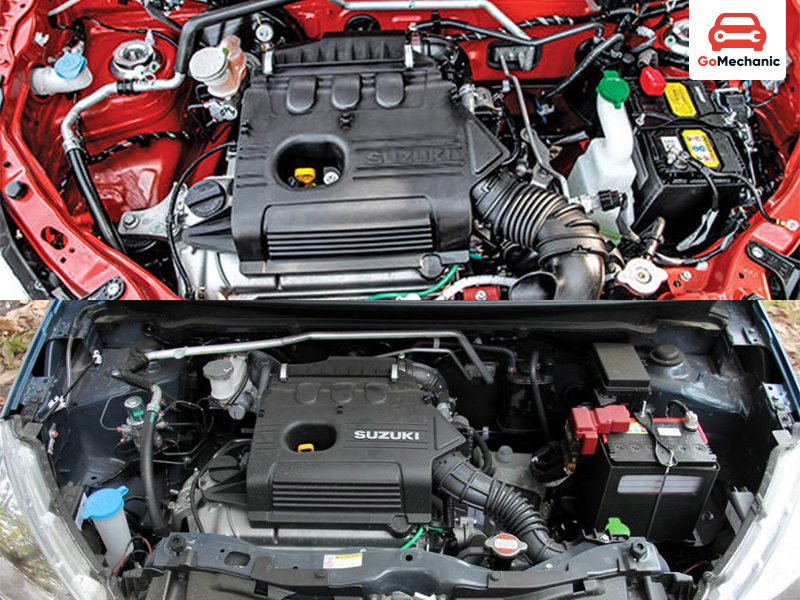
Short answer: Both share a 998cc engine, but the Alto K10 feels peppier in the city while the Celerio feels more settled on longer drives.
Both cars run on a 998cc three-cylinder petrol engine making around 66 bhp, and yes, that means the spec sheet looks almost identical when you put them side by side. But driving them back to back tells a different story. The Alto K10 is the lighter car, and that makes the same engine feel noticeably more eager in city conditions. Gaps in traffic, quick overtakes, zipping through a crowded lane – the K10 handles all of it with a little more snap. The Celerio, being slightly heavier and longer, gives up a tiny bit of that sharpness but makes up for it with a more planted, settled feel on longer stretches of road.
Transmission options matter here too, especially if you are buying for city use. Both cars come with a five-speed manual as standard, but the auto variants are where they differ slightly. The K10 gets Maruti’s AGS unit while the Celerio comes with an AMT. Neither is a proper torque converter automatic, so do not expect buttery smooth shifts. But for someone stuck in Bengaluru or Delhi traffic every single morning, even a basic auto option is a massive quality-of-life upgrade. Your left knee will thank you after the first week.
Look, nobody is buying an Alto K10 or a Celerio to attack a mountain road on a Sunday morning. That is just not the brief here and everyone knows it going in. What these cars are actually for is the Monday morning office run when you are already ten minutes late, the school pickup in the middle of peak hour traffic, the Saturday grocery run where you just need something that starts reliably and gets you there without drama. And for all of that, both cars do the job without complaint. You will not finish a drive in either of them feeling like you just missed your calling as a rally driver, but you will arrive without stress, without burning through fuel, and without worrying about whether the car is going to behave itself. For most people buying in this segment, that is honestly the whole point.
Alto K10 vs Celerio – Ownership Cost
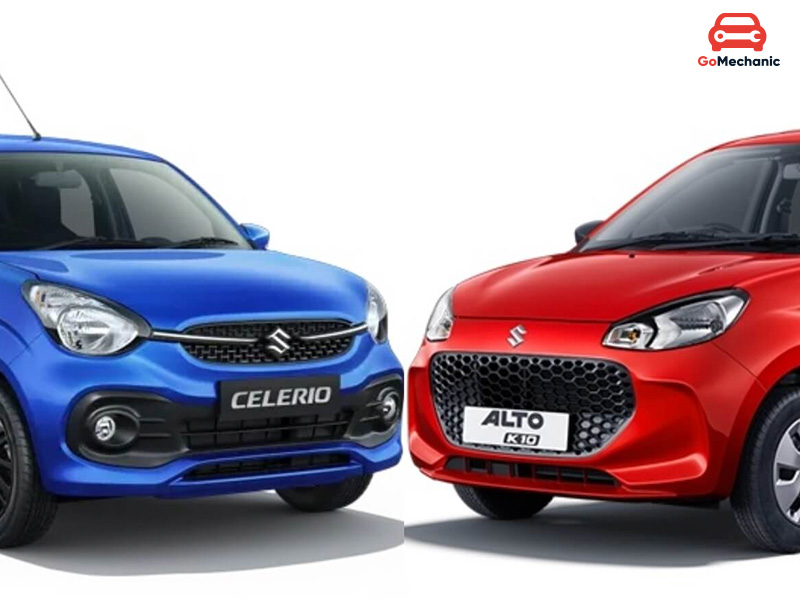
Short answer: The Alto K10 is about Rs. 3.99 lakh and Celerio is about Rs. 5.36, but the Celerio saves you more fuel money over the long run.
The price gap between these two is the single biggest factor in the Maruti Alto k10 vs Celerio decision for most buyers, and rightfully so. The Alto K10 starts at around Rs. 3.99 lakh ex-showroom. The Celerio starts at roughly Rs. 5.36 lakh. That is a difference of close to one and a half lakh rupees at the base level, and the gap can stretch wider as you climb the variant ladder. For a buyer working within a strict budget, that is not a small number. That kind of difference can mean the gap between buying the car outright and signing up for an EMI that puts pressure on your monthly finances for the next five years.
Running costs are where a lot of first time buyers get caught off guard though. You budget for the EMI, you budget for insurance, and then petrol prices do what petrol prices do in India and suddenly the monthly math looks a bit different than you planned. This is where the Celerio quietly makes up some ground against the K10. Its ARAI mileage of 26.68 kmpl against the K10’s 24.39 kmpl does not sound like a massive gap but think about it over twelve months of daily commuting and it translates into a few thousand rupees saved without doing anything differently. If you go the CNG route, which both cars support, the per kilometre cost drops so significantly that the fuel conversation almost becomes irrelevant. A lot of buyers in Delhi and Mumbai are already doing exactly this and the monthly savings are hard to ignore once you see the actual numbers.
Here is a quick breakdown of the numbers:
- Alto K10 starting price: Rs. 3.99 lakh (ex-showroom)
- Celerio starting price: Rs. 5.36 lakh (ex-showroom)
- Alto K10 ARAI mileage: 24.39 kmpl
- Celerio ARAI mileage: 26.68 kmpl
- CNG variants: available in both
If you are looking at total cost of ownership over three to five years, the Celerio does make a reasonable case for itself. Better mileage and slightly stronger resale perception help close the gap over time. But for a buyer where the upfront number is the hard constraint, the K10’s lower entry price is a very difficult argument to counter.
Alto K10 vs Celerio – Space and Features
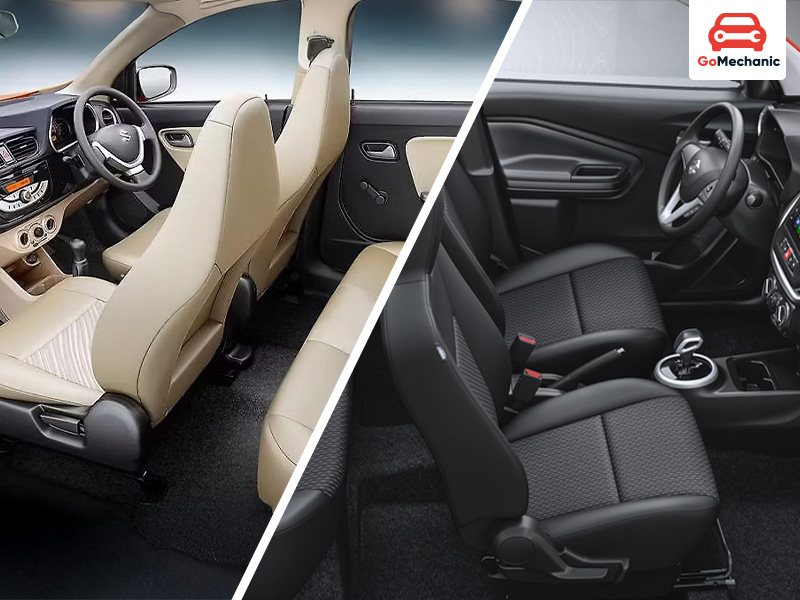
Short answer: The Celerio offers more cabin room, a larger boot, and a slightly more refined feel inside. The K10 keeps things simple but functional.
The Celerio is a bigger car and you notice it the moment someone sits in the back. Rear seat passengers actually have room to stretch out a bit, which sounds like a small thing until you are on a two hour drive to your parents place with three adults crammed in. The boot difference is 235 litres on the Celerio against 214 on the K10, and look, twenty one litres does not sound like a revolution. But pack for a weekend trip sometime and the K10 boot will humble you pretty fast. Two bags, a small cooler, maybe a stroller if you have a toddler, and suddenly you are doing a game of Tetris near your car on a Sunday morning with your wife watching from the window. The Celerio just swallows stuff more willingly and that is genuinely useful in day to day life, not just on paper.
Features are where things get a bit more even between the two though. Both cars get a 7-inch touchscreen with Android Auto and Apple CarPlay on the higher trims, dual front airbags as standard, ABS with EBD, and rear parking sensors. The CNG option is available across both ranges too, which is honestly one of the smartest reasons to buy either of these cars right now given where petrol prices have been sitting. The Celerio’s upper variants do feel a touch more put-together inside, and ISOFIX child seat mounts show up more consistently across its trim levels, which matters if you have young kids. The K10 is more spartan but that is not necessarily a bad thing depending on what you actually need from a car.
One genuinely uncomfortable truth in the Alto K10 vs Celerio conversation is that neither car has been rated by Global NCAP. Both come with the basics like airbags and ABS, but if you are the kind of buyer who checks crash test scores before signing anything, this segment is going to frustrate you regardless of which one you choose. That is a broader industry problem more than a specific knock on either car, but it is worth knowing going in so you are not caught off guard later.
Who Actually Buys Each of These Cars?
Short answer: The K10 is for first-time buyers and smaller cities. The Celerio suits urban commuters who want a bit more room and convenience.
Spend any time on Indian car forums or at a Maruti dealership and the buyer profiles for these two cars become pretty clear pretty fast. The Alto K10 draws in first-time buyers, young professionals buying their very first car, and families in smaller cities and towns where road conditions make a compact, nimble car the only sensible choice. There is a certain straightforward appeal to the K10. It does not try to be more than it is, and a certain type of buyer genuinely appreciates that about it.
The Celerio buyer is a slightly different person. This is typically someone who looked at the K10 and decided they wanted a bit more room and a slightly more polished experience, and was willing to stretch the budget by a lakh or so to get it. In metro cities especially, the Celerio is popular among people stepping up from two-wheelers, largely because the AMT option makes the transition to four wheels significantly less stressful. Stop-go city traffic in a manual car is exhausting. In an AMT, it is at least manageable.
When people ask about Celerio vs Alto K10, which is better, the honest answer is that neither car is universally better. They are built for different buyers with different priorities and different constraints.
Alto K10 vs Celerio: At a Glance
| Feature | Maruti Alto K10 | Maruti Celerio |
| Ex-Showroom Price | Rs. 3.99 lakh onwards | Rs. 5.36 lakh onwards |
| Engine | 998cc, 3-cylinder petrol | 998cc, 3-cylinder petrol |
| Max Power | 66 bhp | 66 bhp |
| ARAI Mileage | 24.39 kmpl | 26.68 kmpl |
| Transmission | 5-speed MT / AGS | 5-speed MT / AMT |
| Boot Space | 214 litres | 235 litres |
| Touchscreen | 7-inch (select trims) | 7-inch (select trims) |
| CNG Option | Yes | Yes |
| NCAP Rating | Not rated | Not rated |
| Best For | Tight budget, smaller cities | Metro commuter, more space |
Alto K10 vs Celerio – Which One Should You Actually Buy?
Short answer: Tight budget or smaller city? Go with the Alto K10. Metro commuter who wants more room and an auto option? The Celerio is worth the extra spend.
Honestly, if someone asked us to just pick one without knowing anything about their situation, we could not. Because the right answer genuinely depends on where you live and what you are working with financially. That is not a cop-out, it is just the truth.
If you are in a metro, you deal with heavy traffic daily, your budget stretches to around five and a half lakh, and you are open to spending a little more for a noticeably better daily experience, go with the Celerio. The extra cabin room, the better mileage, and the AMT option combine into something that makes a real difference when you are driving this car every single day.
But if budget is the primary constraint, if you are buying in a smaller city or town, or if you simply want to keep your financial commitments as lean as possible without giving up Maruti’s famously extensive service network, the Alto K10 is not a compromise. It is a deliberate, sensible choice that millions of Indian buyers have made and been happy with. In the Alto K10 vs Celerio which is better debate, the K10 wins on value and the Celerio wins on experience. Pick the one that matches your reality.
Whichever way you go, keeping the car properly serviced is what makes the difference in the long run. GoMechanic has service packages for both the Alto K10 and the Celerio, transparent on pricing and carried out by trained technicians. Book a service whenever your car is due and the rest takes care of itself.
FAQ’s
1. Which is better, Celerio or Alto K10?
Depends entirely on what you are walking in with. If your budget is tight and you need something reliable that does not ask too much of your wallet upfront, the Alto K10 is the smarter pick. If you have a little more room to spend and you are driving in a metro where cabin space and an auto gearbox actually change your daily life, the Celerio earns its higher price tag. Neither is the wrong answer, they are just right for different people.
2. What are the disadvantages of the Celerio?
The price is the obvious one. At Rs. 5.36 lakh to start, it is significantly more expensive than the K10 and that gap is hard to ignore when you are buying in a tight budget segment. The AMT gearbox, while useful in traffic, is not the smoothest unit out there and can feel a bit jerky at low speeds if you are not used to it. Boot space is better than the K10 but still not generous by any stretch. And like the K10, it has no Global NCAP rating, which is something safety conscious buyers will find frustrating.
3. Why did the Alto K10 fail?
This one needs some context because “fail” is doing a lot of heavy lifting here. The Alto K10 did not exactly fail, it just got squeezed. The original K10 was discontinued for a while because Maruti felt the segment was getting cannibalised by its own lineup. When it came back in 2022 with a new generation, it relaunched into a market that had moved on a bit. Buyers in smaller cities still love it but the competition from the Celerio from within the same showroom, and from rivals outside it, means the K10 has to work harder to justify itself than it used to.
4. Which car is better than the Celerio?
If you are willing to stretch your budget a little further, the Maruti Suzuki Wagon R deserves a serious look. It has more space, a stronger engine option, and a more established reputation in the used car market. The Tata Tiago is another one worth considering, especially if safety ratings matter to you since it has actually been crash tested. The Hyundai Grand i10 Nios also sits in a similar price bracket and offers a more premium feel inside. All of these ask for more money but they give you more in return.
5. Is the Celerio a success or failure?
Somewhere in between, honestly. It has never been a runaway bestseller the way the Alto or the Swift have been, but it has quietly held its own in a very competitive segment for years. The AMT option gave it a loyal following among city buyers who do not want to deal with a clutch in traffic. Sales numbers have never been dramatic but Maruti has kept it going because it fills a genuine gap in their lineup between the Alto K10 and the Wagon R. That kind of staying power usually means it is doing something right even if it is not making headlines.
6. What are the disadvantages of the Alto K10?
The boot is the first thing you will notice. At 214 litres it is workable for daily errands but starts running out of room the moment you try to do anything ambitious with it. The cabin is compact, which is great for parking but means rear seat passengers on longer drives are not exactly comfortable. Rear passengers also get no AC vents, which in an Indian summer is not a small thing. Feature availability is limited on the lower trims and like the Celerio it carries no Global NCAP safety rating. For some buyers these are dealbreakers, for others they are perfectly acceptable trade-offs for a car at this price point.


