GoMechanic





Every sharp turn on a too-winding mountain road, each time one hits the brake, sends one’s heart racing as it falls perfectly into a disaster. It is in such moments, though, that one understands just, how really good the braking system can be when it comes to precision and power, as well as safety in stopping your car.
Braking systems have become more and more sophisticated, moving from primitive mechanical designs to systems driven by advanced technology. They are lifelines for automotive safety. Whether you’re a car buff or a conscientious driver, or if you’re just checking out the maintenance of a car, brakes are something all should understand. This guide explores braking systems, including types of brakes as well as types of brake pads, features, advantages, and limitations that will prepare you with complete knowledge.
What is a braking system?
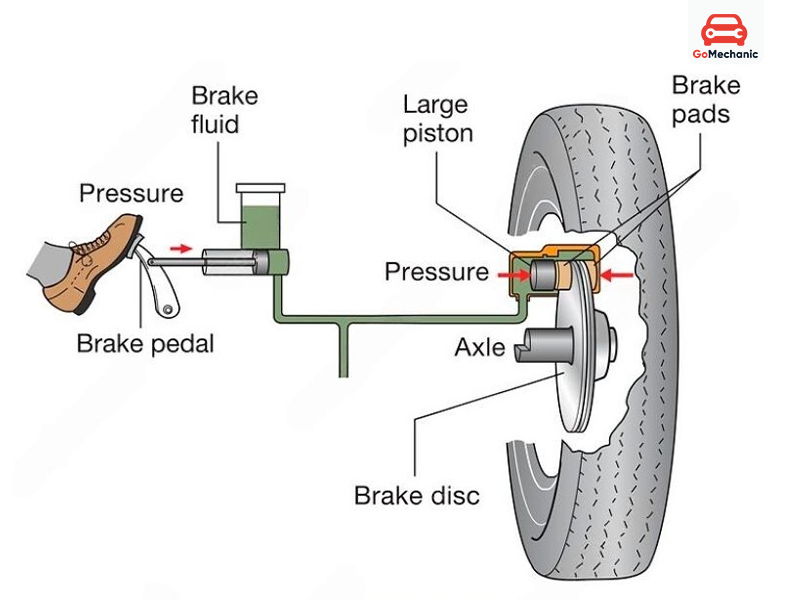
The brake is the mechanical device which is used to stop a moving object or slow down its velocity by absorbing the energy from a moving system, usually with the aid of friction. The braking reduces or stops the velocities of a vehicle. The system is complex but simple in its working; a pedal is pressed down and the brakes at all four wheels get activated. Deceleration happens through hydraulic fluid, which would need bleeding to provide good braking performance-an air-free system is required for the effective operation of all components.
Related: Best Safety Cars in India for 2025
Working of brake system in Car
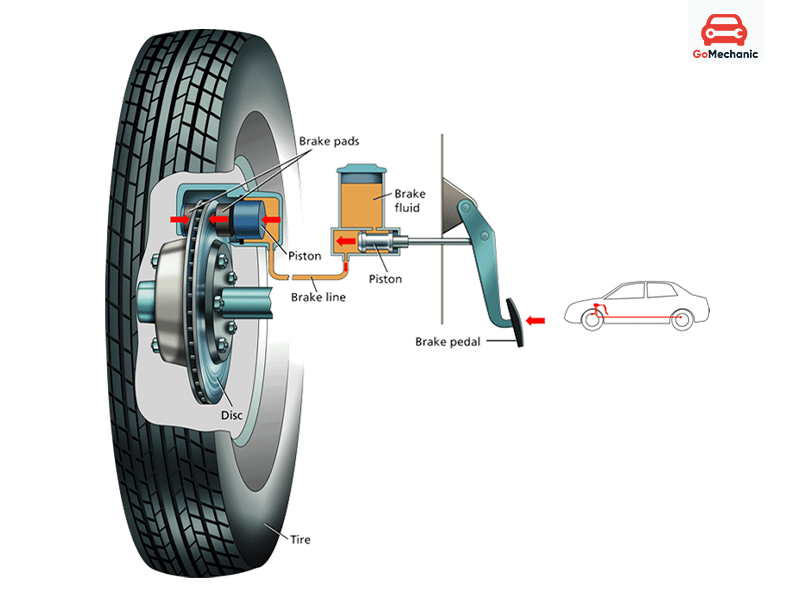
When the driver presses the brake pedal, a force is generated, which will then be intensified by the vacuum coming from the engine. This amplification leads to a quicker and more efficient response of the brakes. Thus, the force introduced by the vacuum booster is applied to push the piston within the master cylinder against the spring into brake fluid to be forced under pressure. This pressurized fluid flows through the fluid lines to the brake caliper (in the case of disc brakes) or the brake cylinder (for drum brakes).
Automotive Braking System Components
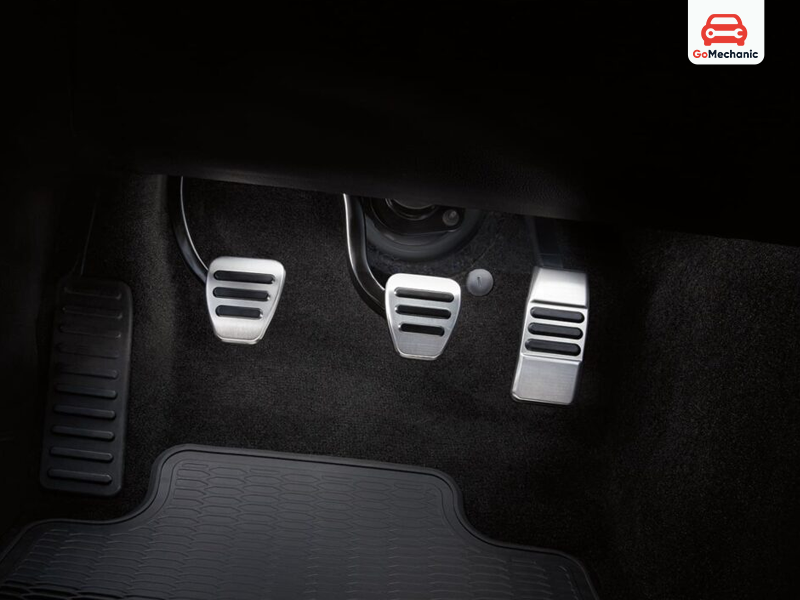
The following are components of the automotive brake system:
- Brake Pedal: This is the one found between the accelerator and clutch pedals inside the vehicle. It is pressed by the foot for activation.
- Fluid Reservoir: Keeps brake oil or brake fluid housed in the braking system.
- Fluid Lines: These are pipes in which brake fluid circulates in the vehicle.
- Brake Pads: A part of a disc brake, brake pads in normal usage are steel backing plates often of ceramic, metal, or very durable composites.
- Brake Shoes: Connected through sheet steel, brake shoes are two pieces that take the form of a brake lining.
- Brake Drum: A drum-shaped component rotating in a drum brake.
- Rotor: A brake disc, rotor connects a wheel or axle; generally made of cast iron or reinforced materials like carbon-carbon or ceramics.
- Brake Lining: Brake lining is the material that occupies the brake shoe and withstands high temperatures and friction, combining softness with toughness.
Braking System: A Complete Overview
The systems on cars all concerned braking allow easy and safe stopping of the vehicle while leaving the foot presses on the driver’s pedals; they keep developing all through, from antique hydraulic systems to modern electronics. Depending upon mechanical or electronic, there will be some different merits and demerits for every mechanism.
Now, let us see the main types of it in detail.
1. Mechanical Brakes
Mechanically, brakes are quite simple, using levers, rods, and springs to completely transmit applied force in the link between the driver and braking surface. By activating the pedal, a series of linkages will be activated to then transfer the mechanical force to the brake shoe on drum systems or pad on disc systems; thereafter, friction is generated to effect deceleration or stopping. All of this is usually being returned by spring upon releasing the pedal so that the brakes are not held on anymore. Therefore, though it may be quite simple in construction, it does depend on the effort of the driver and isn’t anything like modern systems in performance regarding efficiency.
Benefits
- Simplicity and Reliability: Fewer components serve to make mechanical brakes much more graspable and easy to maintain.
- Independence: They don’t have any hydraulic fluid or electrical connections, thus making them safer from fluid and power failures in the system.
Drawbacks
- It is much burden to put one’s foot on a pedal, particularly in the case of bigger cars, to bring them to a stop.
- It also does not add force to stopping the vehicle compared to modern hydraulic or electronic systems.
2. Hydraulic Brakes
Hydraulic brakes use fluid dynamics for the amplification of the force. When the driver presses the pedal, the whole movement pushes the piston into the master cylinder so that it forces brake fluid into high pressure. This high-pressure fluid then travels through brake lines and reaches wheel cylinders or calipers. The pressure forces the pistons outward when it hits a drum brake. This way, a brake shoe gets pressed against the inner surface of the drum. In disc brakes, it forces the piston body of the caliper forward so that it is able to press on the brake pads against the rotor. The resulting friction slows down the rotation of the wheel. This mechanism provides for a pretty efficient transfer of energy, which requires a little force from the driver, but it must be regularly maintained to avoid leakages or contamination.
Benefits
- More Power with Less Effort: It results in better, more consistent braking with much less driver effort.
- Universality: It can be applied to virtually every kind of vehicle worldwide.
Drawbacks
- Maintenance Requirement: It usually requires routine checking and servicing because it falls under leakage and contamination.
- Complication: It has multiple parts, which increases the chance of system failure when proper maintenance has not been done.
3. Brake-by-Wire Systems
A wired brake system electronically controls the brakes in place of mechanical or hydraulic linkages. When a driver presses a brake pedal, pressure or movement is measured by sensors, which send signals to an ECU to activate actuators at the wheels and apply braking force. As traditional hydraulic lines and many associated components of the FWBS become obsolete, this advanced system allows for new, more sophisticated controls while reducing weight and enabling the use of advanced features such as ABS and stability control.
Benefits
- Such systems are characterized by precision since they can enable applications of several other advanced features like Anti-lock Braking Systems (ABS), Electronic Stability Control (ESC), and Automated Emergency Braking (AEB) in the system. It reduces weight and does away with large complex components, such as brake fluid reservoirs and lines.
Drawbacks
- High Dependency on Electronics: Vulnerable to software glitches or electronic failure.
- Costly Repair of High Technology: The advanced cost of damages increases the replacement and repair cost.
Types of Brakes
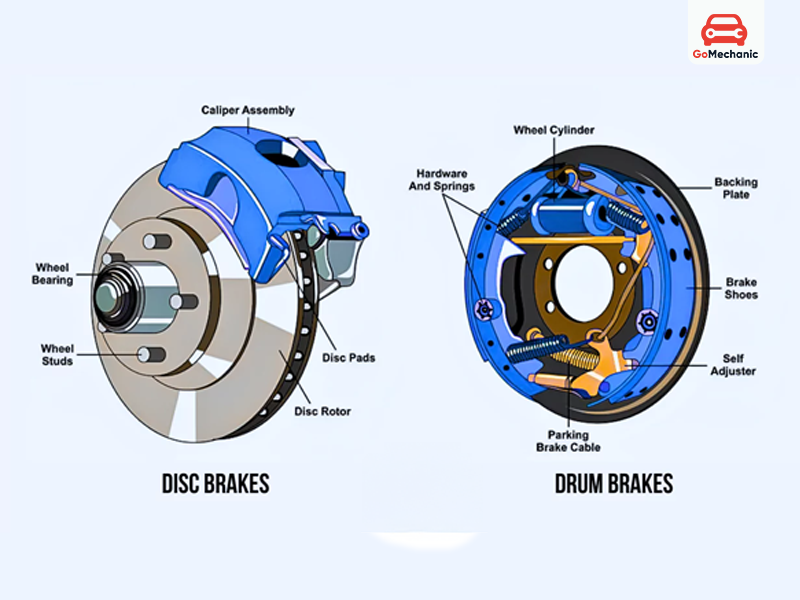
Following are the types of brakes in a car mechanism:
1. Drum Brakes
The drum brake comprises of a mobile drum which is rotated through the wheel along with the brake shoes which lie inside it. The brake shoes bear against the inside surface of the drum, producing friction. It is required to either stop or slow down the rotation of wheels. When used as above, it also protects inner parts from the external environment, thus economizing on the use of space, and since they are cheaper durable, useful drums, this same feature prohibits heat blow-off during extended use. Due to such times, therefore, it is said the brakes become faded.
Advantages:
- Cost-Effective – Cheap during production and maintenance. Dual Functions that act as a park brake too.
Disadvantages:
- Heat Dissipation Problems: the brakes fade out with prolonged use due to heat. Wet Conditions: the effect decreases when wet.
2. Disc Brakes
Discs brake by use of a caliper itself, which contains brake pads in its operation with a spinning rotor/disc attached directly to a wheel. When the brake pedal is pressed, the pistons inside the caliper actuate to hold the brake pads against the rotor’s surface by means of hydraulic pressure coming from the braking system. The clamping generates friction as a result of which the motion of the wheel is slowed down or stopped. Disc brakes are technically superior with respect to either activity or performance since they get rid of heat much more efficiently.
Advantages
- Superior Performance: Effective at heat dissipation to eliminate brake fade.
- Weather Resistance: Reliable in wet conditions.
Disadvantages
- Higher Cost: More complex and expensive to manufacture and maintain compared to the product drum brake.
- Potential Noise: Can produce squealing or grinding sounds if not properly maintained.
Also Read: 15 Common Types of Car Noises
3. Hand Brakes/Parking Brakes
Handbrakes, known commonly as parking brakes, are parts of an automobile that serve a purpose independently from that of the main brake system. Just like any other cable mechanism, when such a handbrake is pulled, it applies force to the rear brake to hold the vehicle stationary. When the driver pulls the lever or presses the associated parking brake button, a cable tightens inside, applying force to the brake shoes (in drum brakes) or brake pads (in disc brakes). This mechanism as such can be used to ensure that the automobile does not move down an incline and to further act as an emergency brake in cases in which the primary brakes fail.
Advantages
- Emergency Use: A backup in the event of primary brake failure.
- Parking Assistance: Important for securing vehicles on inclines.
Disadvantages
- Limited stopping power
- Adjustment Requirements: Requires frequent adjustments to be effective.
Modern Braking Features
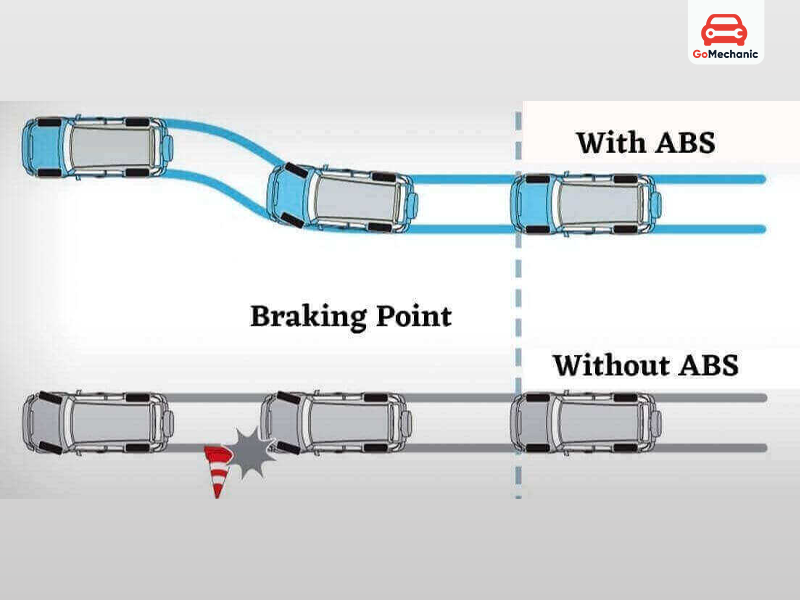
1. Anti-lock Braking System (ABS).
An anti-lock braking system keeps a car moving if sudden braking screeches lock the wheels. While the brake pedal presses, the speed at the wheels is sensed through sensors at each wheel. Once the system senses the near lock condition of the wheel, which indicates that a specific wheel will stop when the vehicle still moves, the message goes to its ABS control unit for action.
2. Electronic Brake-force Distribution (EBD)
EBD is an advanced-sounding feature in automobile brake engineering in which brake force gets distributed between the front and rear wheels as a stabilizing and braking-enhancer element in the automobile. In reality, this system continuously senses the vehicle’s speed, load events, and road conditions – causing neither rest nor work at the point-of-brake application – until it gets accurate measurement data inputs from sensors.
3. Electronic Stability Control (ESC)
The ECS is a fantastic safety mechanism for the driver making a correction while doing high-speed maneuvering or intense steering, sudden turns, direction changes, or skids on ice. Different sensors measure the steering angle of the vehicle with all relevant parameters like its speed, lateral acceleration, and yaw rate (the angle at which the vehicle rotates about its vertical axis).
What Is a Break Pad?
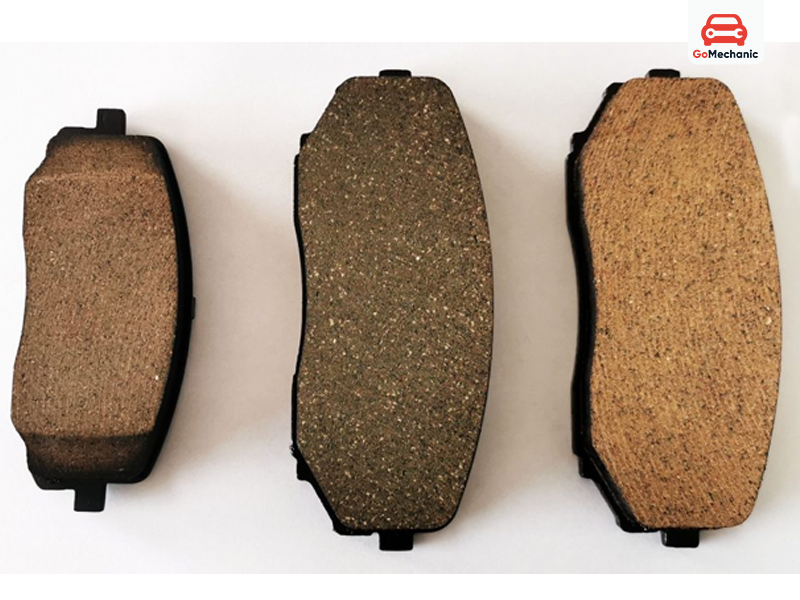
A brake pad refers to a piece of friction-generating material that pushes itself on to the rotor or disc of your car, thereby enabling it to slow down and stop. They were made of steel and had heavyweight friction material at the one end. Hence, when you push the brake, the brake pads squeeze the brake disc, thus slowing or stopping the car.
How do brake pads work?
The hydraulic fluid builds indentation in the caliper while forcing the brake pads closed against the brake disc as it moves toward the surface brake pads and encounters the rotor. That friction makes the speed of the vehicle decrease.
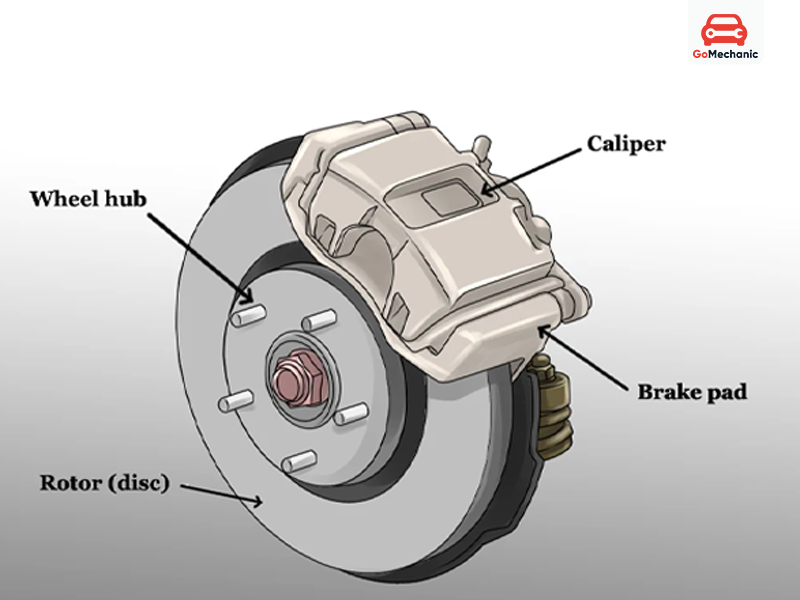
Follow these steps to understand how disc brakes work:
- When you press the brake pedal, then the cylinder is activated and sends the brake fluid through hoses toward the calipers.
- The calipers focus on engaging your brake pads. These brake pads then press against the rotor that is tied to every wheel. This press produces the ‘friction’ which, to put it simply, makes the vehicle slow down. As this rotor slows down, the speed of the wheels, which are connected to it, equally decreases.
What are the types of Brake pads?
There are basically 4 types of brake pads. They include:
1. Semi-Metallic
Almost all brake pads are semi-metallic, with 30–70% metal like copper, wood, steel, wire, and so on. They are the best, cheap and efficient. Strong and heat-resistant, these types of brake pads would be perfect for those who love high performance with quick responses.
2. Ceramic
Ceramic brake pads are usually higher in cost compared to semi-metallic pads and are most often known for their optimal brake capability and heat assimilation. In comparison to other types of brake pads, they are cleaner and low noise. In addition, ceramic brake pads have excellent durability than semi-metallic pads.
3. Low-Metallic, Non-Asbestos Organic (NAO)
The low-metallic NAO variety contains 10%–30% steel or copper amalgamation. The low-metallic NAO pad is good for braking with heat transfer efficiencies. Though it’s a bit noisy, it doesn’t let dust accumulate, so there’s no frost in the caliper.
4. Non-Asbestos Organic
Non-asbestos brake pads are made from organic sources, hence softer and comparatively less noisy. The latest models also offer rubber and fiberglass options. Although these pads are good for the brake discs, they wear off quickly and are not so good for off-road driving.
How Car Brakes Work
Car brakes which are one of the most important parts of a vehicle’s safety system. It allow the drivers to stop a vehicle when needed. Most passenger vehicles today use hydraulic braking systems, which operate by applying pressure to brake fluid in the brake lines when the brake pedal is pressed. Fluid pressure pushe in the brake component tools at each wheel to either activate disc brakes or drum brakes, creating pressure against the wheel to slow it down. This process uses friction to convert the energy of the moving car into heat energy, effectively stopping the vehicle.
How Do Brake Discs Work
Disc brakes, or brake discs, are commonly used on the front wheels of modern cars, and are being used increasingly on all four wheels of vehicles. Brake discs works with using any caliper that will grab brake pads and squeezes them between itself and a spinning metal disc connected to the wheel hub. When the brake pedal is pressed, hydraulic pressure causes the caliper to clamp the brake pads against the brake disc. The resulting friction causes the rotation of the wheel to slow down to stop the vehicle. Brake discs are excellent for stopping vehicles and are quite effective in heavy braking or wet conditions.
How do Brake Drums Work
Some cars and trucks uses brake drums on the rear wheels instead of disc brakes to stop the vehicle. These Brake’s drums work differently than disc brakes as the brake shoes inside,Drum brakes will reach out and press against the inner surface of the rotating drum, not clamp the spinning disc it is connected to. From an efficiency and effectiveness point, drum brakes generally are not as effective as disc brakes, drum brakes are economical and provide adequate braking force for many applications.
How Does ABS Work in a Car
ABS in car stands for Anti-lock Braking System and is a safety feature in cars. This prevents the wheels from locking up if the driver needs to brake suddenly. When a driver stops the car fast, the ABS will control the brake pressure at each wheel very quickly. This ABS will allow the driver of car to steer the car in a controlled manner.
Why is a Brake pad replacement necessary?
Such frictional power consumption or energy loss has a tendency to increase as the hydraulic pressure increases. The further the movement of the car, the more effective those forces are applied. Moreover, they have not undergone any severe friction, and it causes this difference in their values. When you’re applying that much pressure on the brake system, it simply means that we will have to replace these brake pads. Since the brake pads are metallic, the sound begins once the brake pad starts to damage because of continued wear and tear. Hence, there’s an obligation for servicing to maintain the good performance of the vehicle.
The Future of Braking Systems
The braking systems are becoming better every day along with the evolution of vehicles. Innovations like regenerative braking in electric vehicles (EVs) and autonomous braking systems are among the future developments that can promise even greater safety and efficiency in cars. Advancements in the modern age make braking systems more intelligent and efficient, and even better fulfilling the requirements of the modern-day driver.
Car Brakes Maintenance
Follow these steps for maximum performance and safety:
- Regular Checking: Periodic checking of the brake pads, rotors, and fluid levels.
- Replacement of Deteriorated Parts: Replace brake pads and shoes that are severely worn down so that other parts are not damaged.
- Lookout For Warning Signs: Unusual noise, vibrations, or a decrease in braking performance indicates some hiccups.
- Flush Brake Fluid: It would render the brake performance unattractive if contaminated/old brake fluid is not duly flushed per the manufacturer’s recommendation.
Conclusion
Brakes are not merely mechanical components. They are rather life-saving systems that are crucial for your car’s overall safety. Knowledge of the types of brakes and how they function will help you make wise decisions concerning their maintenance and upgrades. Sturdy drum brakes, efficient disc brakes, and advanced features add to safe journeys.
But there are no compromises on regular maintenance and repairs at the right time. Add to that the latest automotive insurance, and you can ride worry-free. Drive safe and stop safer!
FAQs
- What are the three types of braking?
Three types of braking include disc, drum and parking or emergency braking. Disc and drum braking is the means braking down a vehicle or stopping it while utilizing its motion, whereas parking braking is emergency braking that ensures the vehicle’s stationary position while parked.
- What are the automobile brakes?
When we use the term brakes in automotive language, the brakes we are usually referring to are disc, drum, and handbrake or parking brake. They help provide means to maintain the motion of the vehicle, including the disc and drum active braking while on the road and the parking brake when coming to rest providing a control for the fall.
- What are three brakes?
There are three types of braking systems of a vehicle, including: mechanically for mechanical braking systems (i.e. handbrakes); hydraulic braking systems (disc and drum brakes); and electric, regenerative-braking systems (electric vehicles and hybrids). These types of braking systems are related to the application or control of the brake force.
- How does a vehicle braking system work?
The vehicle braking system works by converting whatever force our foot was applying by pressing the brake pedal into hydraulic pressure, which then forces pressure either disc, drum or into electric/regenerative push/pull brake pads, etc.