GoMechanic




Nowadays, cars are much more intelligent than older cars and one of the main reasons for this is the ECU unit in a car. The ECU’s full form is Electronic Control Unit. The car computer is small. It is very important. It helps control things in the car. The Engine Control Unit or the ECU does a lot of things like controlling the engine, helping the car use fuel properly and keeping the safety systems working. This makes the ECU an important part that helps the car run smoothly & efficiently.
Most cars nowadays have ECUs working together and they control many different things in the car such as the Engine Control Unit, which helps the car run properly. The Engine Control Unit or the ECU is in charge of things. The ECU in the engine regulates fuel injection, ignition timing and air intake for better performance and emissions reduction. If the ECU unit is not functioning correctly in the vehicle, the engine might not operate well and other systems also may have problems. In this blog, you will learn what ECU means and how it works, what the types of ECU units are and you will get to know some common symptoms of ECU failure in simple and easy words.
1. ECU Full Form in Cars – What Does ECU Mean?
The complete name of the ECU is Electronic Control Unit. An electronic gadget fitted in modern vehicles to regulate and control various systems of the vehicle. It can be compared to the brain of the car in that it takes in data from sensors and makes rapid decisions to maintain the car at a level of efficiency. The car’s ECU regulates such things as fuel injection, engine timing, air/fuel ratio, brakes and transmission performance. ECU could be installed in a number of different ways in modern vehicles, with one ECU controlling a particular aspect.
Main Functions of ECU:
| Function | Purpose |
| Fuel Management | Controls fuel supply to the engine |
| Ignition Timing | Adjusts spark timing for better performance |
| Emission Control | Helps reduce harmful exhaust gases |
| Sensor Monitoring | Collects data from vehicle sensors |
| Safety Support | Assists ABS, airbags, and traction systems |
Why is the ECU important?
- Improves fuel efficiency
- Helps the engine perform better
- Reduces pollution levels
- Supports safety systems
- Detects vehicle faults quickly
Without the ECU unit in the car, modern vehicles would not be able to deliver smooth performance, better mileage, and advanced safety features.
Also read: TSI Full Form: Meaning, Working, Benefits & Is It Good for India?
2. What Is an ECU in a Car and How Does It Work?
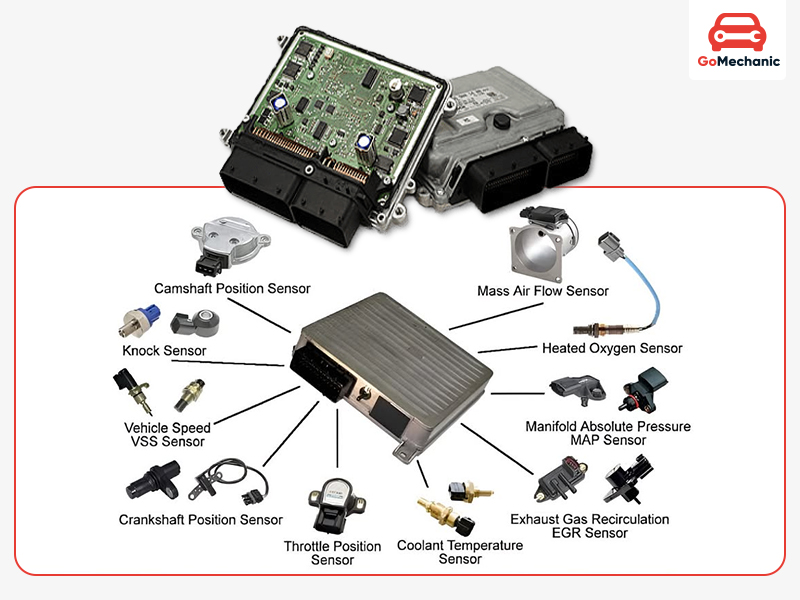
A car has something called an ECU. The ECU is like a computer that helps control things in the car. It does this by getting information from sensors around the car. These sensors tell the ECU what the temperature is, how much air is coming in, what the fuel pressure is, how fast the car is going and where the throttle is. The ECU gets all this information. Then it sends messages to different parts of the car. For example when the car’s engine needs fuel because the car is going faster the ECU controls the fuel injection system. The ECU does all this to help the car run properly. The ECU is very important for the car.
How does ECU Work Step-by-Step?
- Sensors collect data from the car
- ECU receives and processes the data
- ECU checks the best settings for performance
- Commands are sent to engine parts and other systems
- The car responds accordingly
Components Connected to ECU:
| Component | ECU Function |
| Fuel Injectors | Controls fuel delivery |
| Spark Plugs | Manages ignition timing |
| Oxygen Sensors | Checks the air-fuel ratio |
| ABS System | Supports safe braking |
| Transmission | Controls gear shifting |
The ECU unit in the car continuously works while driving. It helps improve engine performance, fuel economy, and overall driving comfort. Modern vehicles depend heavily on ECU systems because they make driving safer and more efficient.
Also read: DCT Full Form in Cars: Meaning, Working, and Benefits Explained
3. ECU in the Engine: Role of the Engine Control Unit
The main role of the ECU in the engine is to control the functions of the engine to ensure it can perform smoothly and efficiently. It continuously monitors various conditions in the engine and changes settings as needed for various driving conditions. The most crucial task of the engine ECU is to control the air-fuel ratio. The correct amount of air and fuel is necessary for proper combustion. If mixed incorrectly, the engine might lose power or use additional fuel. The ignition timing is also controlled by the ECU in the engine. This controls when it is time for the spark plug to fire and ignite the fuel mixture in the engine cylinder.
Major Functions of the Engine ECU:
| Function | Benefit |
| Fuel Injection Control | Better mileage and performance |
| Ignition Timing | Smooth engine operation |
| Idle Speed Control | Stable engine speed |
| Emission Management | Reduced pollution |
| Turbo Control | Improved engine power |
Signs of Engine ECU Problems:
- Engine misfiring
- Poor fuel economy
- Difficulty starting the car
- Check engine light turning on
- Reduced engine performance
The ECU unit in the car helps the engine work efficiently in different driving conditions. Without it, modern engines would not be able to maintain performance and fuel efficiency together.
Also read: DPF Full Form in Cars: Meaning, Working, and Importance
4. Different Types of ECU Units Used in Cars
In modern cars, there is more than one ECU unit that is used in the car. Each ECU is designed to control a specific system. Over 50 ECU units are connected together in a luxury/ advanced car.
Common Types of ECU Units:
| ECU Type | Function |
| Engine Control Unit | Controls engine performance |
| Transmission Control Unit | Manages gear shifting |
| Brake Control Module | Controls ABS and braking |
| Body Control Module | Handles lights and windows |
| Airbag Control Unit | Manages airbag deployment |
| Climate Control Unit | Controls AC and temperature |
Why Cars Need Multiple ECUs
- Better control of vehicle systems
- Faster response and performance
- Improved safety features
- Easier fault detection
- More comfort and convenience
For example, the engine ECU only focuses on engine operations, while the brake ECU handles braking safety systems. This division allows the car to work more efficiently. The ECU in the car also communicates with other ECUs through a network system. This helps different parts of the vehicle work together smoothly. As vehicles become more advanced, the number of ECU units in the car continues to increase.
Also read: MUV Full Form and Its Role in Cars
5. Signs of a Faulty ECU and When to Replace It
Several of the ECU functions affect the car’s functioning, and if it fails, it can give rise to numerous driving issues. Failure of ECU operation can cause the engine and other vehicle components to fail to respond properly. A frequent indicator of a bad ECU is the check engine light that will show up on the dashboard. The vehicle may also have a loss of power or fail to start or run inefficiently.
Common Symptoms of a Bad ECU:
- Engine stalling frequently
- Difficulty starting the vehicle
- Poor acceleration
- Increased fuel consumption
- Warning lights are staying on
- Gear shifting problems
Causes of ECU Failure:
| Cause | Impact |
| Water Damage | Short circuits in the ECU |
| Battery Problems | Voltage issues |
| Wiring Faults | Communication errors |
| Overheating | Internal damage |
| Sensor Failure | Incorrect data processing |
When Should You Replace the ECU?
If fixing the ECU is not possible. If it is completely damaged then it needs to be replaced. There are times when a software update or a small fix can solve the problem. If ECU issues are not fixed it can affect how the engine runs and even the safety of the vehicle. Regular servicing and maintenance of the vehicle is crucial to ensure the ECU works and the engine runs smoothly.
Also read: LMV Full Form: Meaning, Types, Vehicles Covered, and Rules in India
Conclusion:
The ECU unit in the car is one of the most important parts of modern vehicles. The full form of ECU is ‘Electronic Control Unit’ it is like the brain of the vehicle that controls various systems. The ECU in the car can enhance performance, fuel efficiency, and comfort by managing various functions like fuel injection, ignition timing, braking, anti-lock braking system & safety systems. The ECU in the engine is a very important component of the engine’s smooth running and performance in various driving conditions. Today’s cars are equipped with several ECU systems which control individual functions separately. Knowing how the car systems work will help drivers find problems and take good care of their vehicle. If you see something is wrong like the car is not getting mileage or the engine is not working right or there are warning lights on the dashboard you should get the ECU unit in your car checked right away. Getting your car serviced on a regular basis can help the ECU unit last longer and make the car run better. The ECU unit is a part of the car so regular maintenance is necessary to keep the car running smoothly & the ECU unit working properly. Regular servicing can really help the ECU unit & the car’s performance.
FAQ’s
1. What is an ECU used for?
The Electronic Control Unit or ECU is really important in a vehicle. It helps control a lot of things. The ECU gets information from sensors. Helps the engine, fuel system, brakes and airbags work properly. The ECU can make decisions quickly while you are driving, which helps the vehicle perform better, use fuel more efficiently & be safer.
2. What are ECU and ECM?
The Electronic Control Unit, which is the ECU is the same as the Engine Control Module or ECM. They are like the computer in your car. The ECM mainly helps with things related to the engine like how much fuel to use and when to ignite it. The ECU does more than that. It can also control things like airbags, the transmission and the brakes in vehicles.
3. What is the ECU in an EV car?
In a vehicle or EV the Electronic Control Unit or ECU controls important things like the electric motor, the battery, charging and braking. It helps the vehicle run smoothly & safely. The ECU also makes sure the power is flowing correctly and keeps an eye on the battery. The ECU even helps with fuel economy. Prevents the battery from getting damaged.
4. How much does an ECU repair cost?
The cost of ECU repair depends on the car model and the level of damage. In most cases, ECU repair can cost between ₹3,000 and ₹15,000. If the ECU needs replacement, the cost can be much higher.
5. How do I know if my ECU is damaged?
Common signs of a damaged ECU include engine warning lights, poor mileage, starting problems, engine misfires, sudden power loss, or the car not starting properly. A professional diagnostic scan can confirm the issue.