GoMechanic

Spec sheets have a strange way of making buyers feel underprepared. Every second line is an abbreviation, and somewhere between ABS, EBD, ESP, and TPMS, another term slips in without much explanation. Most people do what all of us have done at some point, read it, accept it, and move on. That is exactly what happens with IRVM too, even though it is sitting in front of your eyes on every single drive.
Sounds like a small thing until you drive at night in India and realise how much it depends on that little mirror. A car behind you with full beam on, a bus flashing up close on an expressway, or a dark road with patchy lighting can change your comfort level instantly. The IRVM in the car helps you stay aware of what is happening behind while reducing the kind of glare that makes driving tiring.
So instead of leaving it as another spec-sheet term, let’s make it useful. We are going to cover the IRVM full form, how it differs from the mirrors on your doors, how auto dimming works, which cars offer it, and whether paying extra for it is smart. Five minutes on this topic can save lot of confusion later there, especially when you are comparing variants and trying not to overspend on the wrong feature.
What is IRVM in Car and What Does IRVM Full Form Stand For?
IRVM is one of those things you use without thinking about it, until someone actually asks what it stands for and you pause for a second. The IRVM full form is Interior Rear View Mirror, and it is the mirror placed inside your car, right above the dashboard, facing the rear windshield. Every time you check traffic behind you without turning your head, this is the mirror you are using. Simple in concept, but used far more often than most people realise.
The role of the IRVM in car is pretty straightforward on paper, it shows you what is happening behind your vehicle so you can make better driving decisions. But in real Indian driving conditions, that simple function becomes critical very quickly. Think about lane changes in city traffic, reversing out of tight parking, or keeping an eye on a bike that just slipped behind you at a signal. You are not checking it once in a while, you are using it constantly without even noticing.
This is also where many people confuse it with the side mirrors, but the IRVM in car works differently because it gives you a central, wider view of what is directly behind. It is not about angles or blind spots on the sides, it is about that straight line of visibility that keeps you aware of vehicles approaching from behind. Ignore it or set it incorrectly, and you are basically driving with half the information missing. That is where small mistakes begin to stack up.
IRVM vs ORVM: What is the Difference and Why Does It Matter?
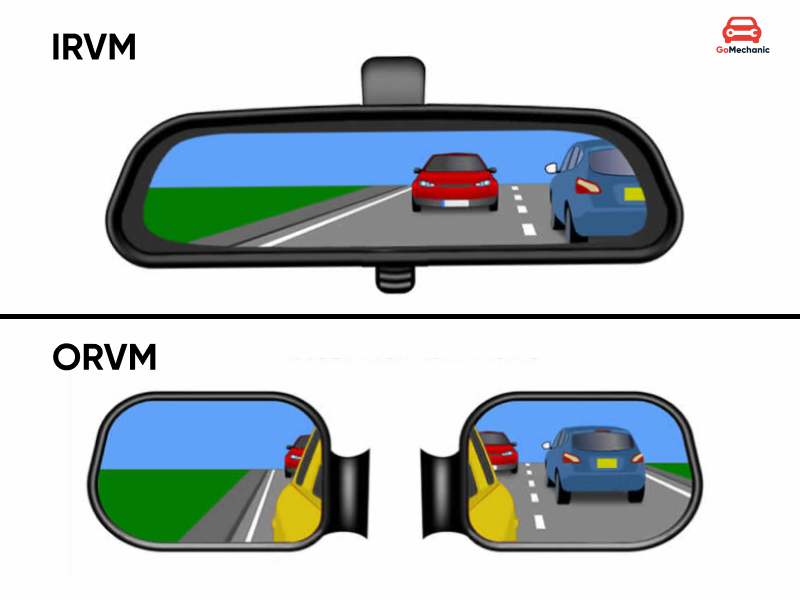
This is where a lot of buyers get casually confused, and honestly, it is understandable. IRVM and ORVM sound like brochure language, the kind people skim past during a showroom visit and pretend they understood. But these are not two names for the same thing. The IRVM in car sits inside the cabin and shows you what is directly behind, while the ORVMs on the doors help you see traffic on both sides and slightly behind.
The reason this matters is simple, both mirrors give you different kinds of information. The IRVM in car helps you judge how close the vehicle behind actually is, which is why you instinctively look there first in flowing traffic. ORVMs are wider in coverage, but they are more about angles, side movement, and blind spot awareness. That is useful, no doubt, but it also means they do not replace the central rear view you get from the mirror inside the cabin.
Here’s a quick comparison that clears it up fast:
| Mirror | Full Form | Location | Main Job |
| IRVM | Interior Rear View Mirror | Inside cabin, above dashboard | Shows direct rear traffic |
| ORVM | Outside Rear View Mirror | On both front doors | Shows side and rear-side traffic |
The mistake starts when drivers treat one as enough and ignore the other. You will see this a lot in city traffic, someone checks only the side mirror, cuts lanes, then brakes because a faster car was already closing in from behind. That is exactly why both mirrors exist. One gives you the straight story, the other fills in the sides, and when you use them together, driving feels far more controlled and less like guesswork.
Why IRVM Matters for Night Driving Safety in India?
Night driving in India is unpredictable in a very specific way. One minute the road is properly lit, the next minute you are driving through a dim stretch with barely any visibility, and then suddenly a car behind you switches on full beam like it is their right. This is where the IRVM in car stops being just a mirror you glance at and becomes something you depend on constantly. It is not just about seeing behind, it is about staying comfortable enough to keep your focus on the road ahead.
- The biggest issue at night is glare, and it builds up faster than people expect. One vehicle behind you on high beam is manageable for a few seconds, but when it continues, your eyes start reacting to that brightness again and again. The IRVM in car reflects that light straight into your line of sight, and over time it starts affecting how clearly you can see the road ahead. That is where driving slowly becomes more tiring than it should be.
- Distance judgement also takes a hit when glare is involved. You look at the IRVM in car to check how close a vehicle is, but strong light from behind makes everything feel closer or more aggressive than it actually is. On highways, where speeds are higher, this can make you brake earlier than needed or hesitate during lane changes. It sounds small, but that hesitation breaks your driving flow and creates unnecessary stress.
- Fatigue is the part most drivers do not connect immediately. Night driving already demands more attention because visibility is lower, and your brain is constantly adjusting. Add continuous glare from behind, and now you are dealing with visual strain on top of that. Many drivers end up tilting or misaligning the IRVM in car just to escape the light, which means you lose proper rear visibility. That is where small errors begin to creep in.
- This is exactly why features like auto dimming start making sense in real conditions. Instead of adjusting the mirror again and again, the IRVM in car reduces glare automatically and keeps the reflection usable. You still see what is behind, but without that harsh brightness hitting your eyes. Once you get used to that, going back to a normal mirror feels uncomfortable, because now you notice the strain that was always there.
How Auto Dimming IRVM Works: The Technology Explained Simply
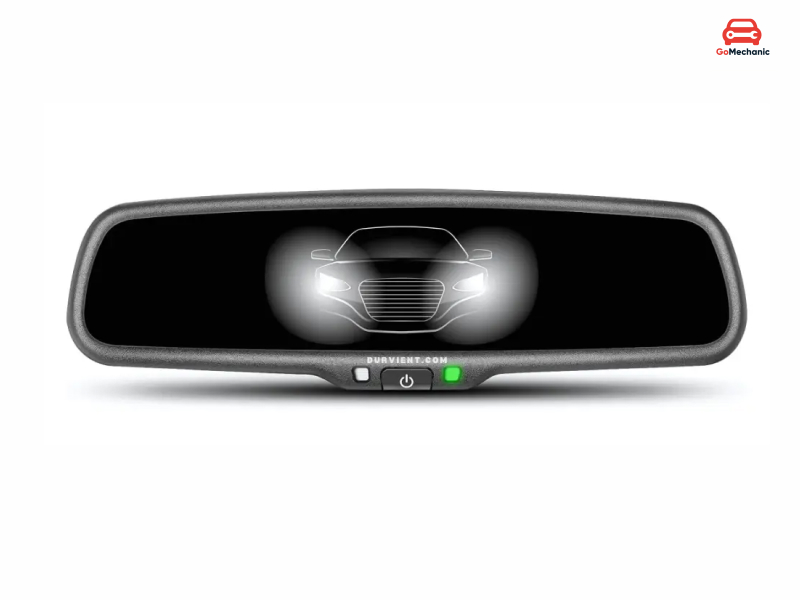
Most people hear “auto dimming” and assume it is some complicated sensor-heavy system that you won’t really understand unless you are into car tech. It is actually much simpler than that once you break it down properly. The idea behind an IRVM auto-dimming system is not to block the light completely, but to control how much of it reaches your eyes so you can still see clearly behind.
At the core of an auto dim IRVM are two light sensors and a special layer inside the mirror. One sensor faces forward to understand the ambient light outside, while the other faces the rear to detect how strong the light is coming from vehicles behind you. When the rear sensor picks up intense light, like high beams, the system reacts instantly. The IRVM in car adjusts its reflectivity so that the glare is reduced but the image remains visible.
- The mirror uses an electrochromic layer, which changes how much light it reflects when voltage is applied
- Sensors constantly compare front and rear light levels in real time
- When glare increases, the mirror darkens slightly to cut down brightness
- When the glare reduces, it goes back to normal without any manual input
What makes this useful is how seamless it feels in actual driving. You do not have to flip a tab or adjust the mirror every few minutes when someone behind forgets to dip their lights. The IRVM in car just adapts on its own, quietly doing the job without interrupting your focus. That small convenience adds up, especially on longer night drives where constant adjustment becomes frustrating.
There is also a practical advantage here that many people overlook. Because the mirror dims only as much as needed, you do not lose visibility of the vehicle behind you. It is not like covering the mirror or turning it away. You still see movement, speed, and distance, just without the harsh brightness that normally forces you to look away. That balance is what makes IRVM auto-dimming more than just a comfort feature, it actually improves how confidently you drive at night.
How to Maintain and Clean Your IRVM Properly
The IRVM is one of those parts people almost never think about until it starts looking dull, streaky, or slightly off angle. Then suddenly you realise the rear view is not as clean as it should be, especially at night when every reflection looks harsher. The IRVM in car does not need much maintenance, but it does need some basic care if you want it to stay clear and useful. Ignore it for months, and the drop in clarity happens so slowly that most people do not even notice it.
- Use a clean microfiber cloth only – This is the safest option because it lifts dust and fingerprints without scratching the surface. Old napkins, rough cloth, or the random rag lying in the boot can leave fine marks over time. On a mirror you check so often, even small scratches start becoming annoying later. That is where the view stops feeling crisp.
- Spray the cleaner on the cloth, not on the mirror – People love doing this the lazy way, one spray directly on the glass and done. Bad habit. Excess liquid can run down the edges and get into places where it should not, especially if your IRVM in car has electronic components for auto dimming. A light spray on the cloth is more than enough to clean the surface properly.
- Wipe gently, do not scrub like you are cleaning a kitchen slab – The mirror does not need force, it needs patience. A soft wipe in a couple of passes is usually enough to remove dust, smudges, and that thin oily film that builds up inside the cabin. Press too hard and you can shift the mirror slightly without realising it. Then the next drive starts with you adjusting it again at the signal.
- Check the angle after cleaning – This sounds basic, but it gets missed all the time. Once you finish wiping, sit in your normal driving position and make sure the IRVM in car is still giving you a proper rear view. Even a small tilt changes what you see, and sometimes that missing bit of visibility is exactly where the problem sits. That is how silly little mistakes become driving irritations.
- Be more careful with auto-dimming mirrors – If your car has an auto dim IRVM, do not use harsh chemicals or strong glass cleaners just because they smell powerful. These mirrors have a special layer and sensors working in the background, and rough cleaning can damage the surface over time. Once that happens, the feature may stop working the way it should. And now the fancy mirror is just expensive dead weight.
Conclusion
Most people don’t think twice about the mirror sitting inside the cabin, and that is exactly why it gets ignored during buying decisions. But after everything we have broken down, it is clear the IRVM in car is not just a basic reflective surface, it is something you rely on constantly without even realising it. Especially in Indian driving conditions, where unpredictability is normal, having clear and comfortable rear visibility makes a bigger difference than most spec sheets will ever tell you.
The real takeaway is simple. A standard IRVM in car does the job, no doubt, and millions of drivers use it every day without issues. But once you understand how glare, fatigue, and visibility actually affect your driving, features like auto dimming stop feeling like luxury extras. They start feeling like practical upgrades for people who drive at night often, deal with highways, or just want a more relaxed experience behind the wheel. That is where the decision becomes personal, not technical.
At the same time, even the best mirror will not help if it is poorly maintained or misaligned. Small habits like cleaning it properly, setting the angle right, and paying attention to how it behaves during night drives go a long way. The IRVM in car works best when you actually use it the way it is meant to be used, not as something you set once and forget forever. That is where most drivers quietly lose out.
And if your mirror feels loose, unclear, or not functioning properly, it is worth getting it checked before it turns into a bigger inconvenience. GoMechanic workshops handle these small but important issues as part of regular car care, whether it is mirror alignment, replacement, or checking auto dim IRVM functionality. Because sometimes, fixing a small detail like this is exactly what makes your daily drive feel easier.
FAQ’s
What is Auto-dimming IRVM?
Auto-dimming IRVM is the inside rear-view mirror that cuts glare on its own when a vehicle behind you throws strong light at it. So when some genius sits on full beam right behind your car, the mirror darkens slightly instead of reflecting all that brightness straight into your eyes. You still see the vehicle behind, which is the whole point. The mirror just makes that view easier to live with. On Indian roads, especially at night, that is not a fancy feature. That is relief.
What is the full form of IRVM in cars?
The IRVM full form is Interior Rear View Mirror. It is the mirror mounted inside the cabin, usually at the top centre of the windshield area, and it shows you what is directly behind your car. Sounds basic, and honestly it is. But it is also one of the most used mirrors in the whole car, and most people use it daily without ever knowing what the term actually means. That is classic spec-sheet behaviour. You use the thing every day, but the abbreviation still sounds like exam material.
What is ORVM and IRVM?
IRVM means Interior Rear View Mirror, and ORVM means Outside Rear View Mirror. The IRVM gives you the straight rear view through the back glass, while the ORVMs on the doors show traffic on the sides and rear corners. One helps with what is directly behind, the other helps with angles, side movement, and blind spots. A lot of drivers treat them like they do the same job. They do not. Use only one properly, and you are still missing part of the picture.
When should you use IRVM?
You should be using the IRVM throughout the drive, not just once in a while when you remember it exists. It helps during lane changes, braking, reversing, slow traffic, and especially when something is approaching quickly from behind. At night, the IRVM matters even more because judging speed and distance gets harder once visibility drops. This is not one of those features you use occasionally. It is part of how you stay aware every few seconds. Ignore it, and you start reacting late. That is where the mess begins.
What is the price of an Auto-dimming IRVM in India?
The price of an auto-dimming IRVM in India usually falls somewhere between ₹2,500 and ₹8,000 if you are buying it separately, depending on the brand, fitment, and whether it is made for your car or added later. But here is the thing, most buyers do not buy it separately. They get it as part of a higher variant. So the real decision is not mirror price alone, it is whether the full upgrade pack makes sense for how you drive. Otherwise you end up paying extra for a mirror and five other things you did not even want.
What are the benefits of Auto Dimming?
The biggest benefit is simple, it reduces glare from high beams without asking you to keep adjusting the mirror manually. That means less eye strain, less irritation, and better focus during night driving. You still know what is happening behind the car, but without that harsh reflected light making every drive more tiring than it needs to be. It also makes longer highway runs feel easier, especially when traffic behind is badly behaved, which in India is not exactly rare. Small feature on paper. Big difference when you actually live with it.