GoMechanic





Maruti Suzuki Wagon R has never been the car people buy to impress anyone and that is exactly why it works so well in India. It is practical, easy to live with, fits families without fuss, and somehow keeps going through years of daily driving without drama or surprises. But even the most practical owners miss one thing and it usually shows up at the tyre shop. Wrong size, random pressure, delayed replacement, and trusting whatever the shop guy says without checking anything first. That is where money quietly leaks over time.
This guide fixes that. We will break down the exact tyre size by variant, explain what those numbers actually mean, show correct pressure figures and what happens when you get it wrong. We will also get into buying decisions so you are not overpaying at the counter. By the end you should be able to walk into any tyre shop with clarity, ask the right questions and avoid the usual upsell traps that happen almost every time. You do not need to become a tyre expert, just know enough to make the right call for your Wagon R tyre size. Once you see how small changes affect comfort, mileage and tyre life you will not ignore it again before your next replacement decision. That alone saves you real money.
How to Read Your Wagon R Tyre Size Number
Most Wagon R owners see something like 165/70 R14 on the tyre sidewall and skip past it, which is fair because it does look more confusing than it needs to. But this one code tells you the full basic spec of your tyre, and once you understand it, tyre shops have a much harder time pushing random suggestions. If you are trying to confirm the correct Wagon R tyre size, this number is where the whole story starts. It looks technical at first, but it is actually very easy once we split it properly.
Here is what each part means of Wagon R tyre size means:
- 165 = tyre width in millimetres
- 70 = sidewall height as a percentage of the width
- R = radial construction
- 14 = rim size in inches
The main thing to remember is that these numbers are connected, not random. Change the width and the car can feel different. Change the profile and the ride quality, grip, mileage, and even speedometer reading can shift a bit, which is exactly why blindly changing tyre specs is usually a bad idea. A lot of shops suggest upsizing very casually, and honestly, that is where many owners start spending extra without fully understanding what they are changing on the car.
Variant Wise Wagon R Tyre Size Breakdown
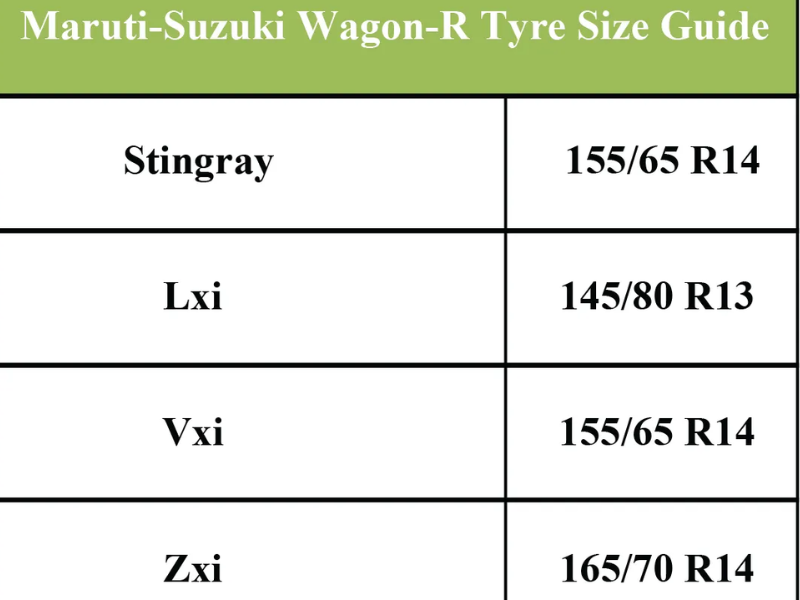
Now that you understand how to read the number, the next question is simple. What is the correct Wagon R tyre size for your car specifically, because this is where confusion usually starts. Wagon R has been around for years, different generations, different variants, and not all of them run the exact same tyre setup. If you walk into a shop without knowing your variant, chances are you will get whatever is in stock, not necessarily what is right.
Here is the general breakdown you will usually see across Wagon R variants:
| Variant Type | Tyre Size |
| Older models / base variants | 145/80 R13 |
| Mid variants | 155/80 R13 |
| Newer / higher variants | 165/70 R14 |
This table gives you a starting point, but here is the part people ignore. Just because a bigger tyre fits does not mean it should be used. Many Wagon R owners get pushed toward wider tyres like 165 or even more, thinking it will improve grip and road presence. Yes, it can help slightly with grip, but it also adds rolling resistance, which means lower mileage and slightly heavier steering, especially in city traffic where you already deal with slow speeds and tight turns.
If you are using your Wagon R the way most people do, daily office runs, family trips, CNG usage, stop go traffic, then sticking close to the recommended Wagon R tyre size usually makes the most sense. The car was designed around that spec for a reason. Going too far off just to experiment often leads to more compromise than benefit, and that is something many owners realise only after spending extra money at the tyre shop.
What Happens When You Fit the Wrong Wagon R Tyre Size
A lot of Wagon R owners think tyre upsizing is a simple upgrade. Wider looks better, taller sounds more comfortable, and the tyre shop guy usually says it will be “better only”, which is exactly the kind of vague line that causes problems later. The truth is, the Wagon R tyre size affects much more than just how the car looks from the outside. It changes the way the car steers, rides, brakes, and even how efficiently it does its daily job.
Here is what the wrong tyre size can do:
- Heavier steering – Wider tyres can make the steering feel less light, especially in city traffic and tight parking.
- Drop in mileage – Bigger or wider tyres add rolling resistance, which can quietly reduce fuel efficiency over time.
- Ride quality changes – Taller sidewalls may soften bumps, while lower profile tyres can make bad roads feel harsher.
- Handling gets affected – Go too far from stock size and the car can start feeling less balanced or slightly awkward at speed.
- Speedometer accuracy can shift – Changing tyre diameter too much can make the speed reading slightly off.
The biggest mistake is assuming every change is an upgrade. In real life, most Wagon R owners want the car to stay easy, light, cheap to run, and stress free over potholes, speed breakers, and daily commutes. That is why the recommended Wagon R tyre size usually works best for this car. Once you go too far from it, you may gain one small benefit, but you often lose something else that matters more in everyday use.
Wagon R Tyre Pressure: Correct Figures and Why They Matter
Tyre pressure is one of those things people either ignore completely or get wrong in a very confident way. You go to a petrol pump, the guy fills “35” without asking, you nod, and drive off. Done. But the correct Wagon R tyre pressure is not a random number, it depends on load, tyre size, and how the car is actually being used day to day.
Here is the correct reference you should keep in mind:
| Condition | Front Tyres | Rear Tyres |
| Normal load | 30–32 PSI (2.1 – 2.2 BAR) | 30–32 PSI (2.1 – 2.2 BAR) |
| Full load | 32–35 PSI (2.2 – 2.4 BAR) | 32–35 PSI (2.2 – 2.4 BAR) |
Now here is where things get real. Slightly higher pressure may feel like it improves mileage, and yes, it can a little. But overdo it and the ride becomes harsh, the car starts bouncing more over bad roads, and grip can reduce because less tyre surface is actually touching the road. On the other side, low pressure makes the car feel sluggish, increases tyre wear, and you end up burning more fuel without realising it.
What most people miss is consistency. One tyre slightly lower than the others can already change how the car feels, especially while braking or turning. And since the Wagon R tyre size is already tuned for balance and efficiency, getting the pressure wrong just throws that balance off for no good reason. Honestly, this is one of the easiest things to maintain, but also one of the most casually ignored.
Wagon R Tyre Buying Guide: OEM vs Aftermarket, Which is Actually Better?
This is where most Wagon R owners get confused, and honestly, tyre shops do not always make it easier. You walk in asking for a replacement, and within two minutes you are hearing about “better grip”, “longer life”, “premium option”, all of which sounds convincing in the moment. But the real question is simple. Should you stick to OEM tyres or go aftermarket, and what actually makes sense for your usage with the Wagon R tyre size you have?
Let’s break the difference first:
- OEM tyres (factory fitted) – Designed for balance, comfort, and mileage. Usually the safest and most predictable choice.
- Aftermarket tyres – More variety in brands and features. Can offer better grip, longer life, or softer ride depending on what you pick.
Now here is the practical side that most people only realise later. OEM tyres are chosen by the manufacturer to match how the car is meant to behave on Indian roads. That means decent comfort, decent mileage, and low running cost, basically what Wagon R owners actually care about. They may not feel exciting, but they rarely give you surprises either.
Aftermarket tyres, on the other hand, can improve certain things, but only if you choose correctly. You can go for better grip, quieter ride, or slightly longer life, but that usually comes with trade-offs. Some tyres reduce mileage, some feel harder on bad roads, and some simply cost more without giving a noticeable benefit in daily driving.
The smart move is not blindly upgrading just because someone says “premium is better”. It is choosing what matches your driving. If your use is mostly city, stop-go traffic, CNG runs, tight parking, then sticking close to stock behaviour makes more sense. The moment your tyre choice starts affecting mileage or comfort too much, the whole idea of owning a Wagon R starts getting diluted, and that is not something most owners want.
Best Tyre Brands and Maruti Suzuki Wagon R Tyre Price
| Brand | Approx Price (per tyre) | What to Expect |
| MRF | ₹3,000 – ₹4,200 | Good durability, decent for daily use |
| Apollo | ₹3,200 – ₹4,500 | Balanced option, slightly better comfort |
| CEAT | ₹3,000 – ₹4,300 | Value for money, works well in city |
| Bridgestone | ₹3,800 – ₹5,200 | Better grip and stability |
| Michelin | ₹4,500 – ₹6,500 | Premium feel, quieter and smoother ride |
When Should You Replace Your Wagon R Tyres?
Most people don’t replace tyres on time, they stretch them. A little more use, one more month, maybe after the next service, that is how it usually goes. But tyres don’t fail suddenly out of nowhere, they give signs, and ignoring those signs is where things start getting expensive or risky. The Wagon R tyre size may be correct, but if the tyre itself is worn out, it does not matter much anymore.
Here are the clear signs you should not ignore:
- Tread is worn out – If the grooves look shallow or almost smooth, grip is already compromised, especially in rain.
- Cracks on sidewall – Small cracks mean the rubber is ageing, and that can lead to sudden failure.
- Frequent punctures – If you are visiting the puncture guy too often, the tyre is telling you something.
- Vibration while driving – Not always alignment, sometimes it is uneven tyre wear or internal damage.
- Tyres older than 5 years – Even if they look okay, rubber hardens with time and loses effectiveness.
Now here is the part people usually ignore. Even if you do not drive much, tyres still age. A car parked for long periods, exposed to sun, heat, dust, that also affects tyre life. And since most Wagon R usage involves daily city runs, short trips, stop go traffic, tyres go through more wear cycles than people realise.
The smarter approach is to replace before things get bad, not after. Because once grip drops, braking distance increases, and on Indian roads, with unpredictable traffic and sudden situations, that is not something you want to test in real time.
How to Take Care of Your Wagon R Tyres and Make Them Last Longer
Tyres don’t wear out overnight, they wear out slowly, and most of that wear depends on how you drive and how much attention you give them. A lot of Wagon R owners focus on mileage, fuel type, service cost, but forget that tyres are quietly taking the hit every single day. The Wagon R tyre size may be correct, but if basic care is missing, even the best tyres won’t last the way they should.
Here are some simple habits that actually make a difference:
- Avoid hitting potholes hard – Slowing down even a little helps more than you think, especially on rough city roads.
- Maintain correct tyre pressure – Too high or too low, both reduce tyre life and affect comfort and grip.
- Get alignment and balancing checked – Not every month, but regularly enough to avoid uneven wear.
- Rotate tyres periodically – Front tyres wear differently from rear ones, rotation helps even that out.
- Don’t overload the car – Especially common with family trips, but it puts extra stress on tyres.
Now here is the honest part. Most of this is basic stuff, nothing complicated, but people still ignore it because it does not show immediate results. Skip it for a few weeks, nothing happens. Skip it for months, and suddenly tyres wear unevenly, ride quality drops, and you are back at the tyre shop earlier than expected.
Taking care of tyres is not about being extra careful, it is about being consistent. Because once tyres start wearing out badly, there is no fixing that, only replacement. And for a car like Wagon R, where running cost matters, making tyres last longer is one of the simplest ways to save money without changing anything major.
Conclusion
Wagon R has always been the kind of car people buy after thinking things through, not after watching ads or chasing trends. It does the job, runs cheap, fits the family, and just keeps going without asking for too much attention. But tyres, for some reason, are where even careful owners slip up. Wrong pressure at the petrol pump, upsizing because the shop guy said “looks better”, or just delaying replacement till the car starts feeling off, all of this adds up quietly.
Now you at least know what the correct Wagon R tyre size looks like and what those numbers actually mean when someone throws them at you. You know what happens when you change it, how pressure affects the drive, and why not every “premium tyre” is worth the extra money. And honestly, half the problem is just this, people don’t ask questions at the tyre shop, they just nod and agree, and that is exactly how unnecessary spending happens.
If your tyres are worn, the ride feels rough, or the car just doesn’t feel as stable as it used to, guessing is not the move. Getting it checked properly saves time and avoids the usual confusion. GoMechanic can help with tyre checks, pressure correction, alignment, and proper replacement options, so you are not stuck making decisions in five minutes while someone is already removing your wheels.
Because at the end of the day, tyres decide how your car behaves on real roads, not on paper. And once that setup feels right, everything from comfort to mileage just falls into place without you constantly adjusting around it.
FAQ’s
What is the correct tire pressure for Wagon R in PSI?
For most Wagon R owners, 30 to 32 PSI is the safe everyday number. If the car is loaded with family, luggage, maybe one extra bag somebody insisted was “small only”, then you can go a bit higher, around 32 to 35 PSI. Just do not let the petrol pump guy throw in whatever number he feels like that day, that happens way too often and it is honestly annoying. Too much air makes the car feel jumpy, too little makes it feel dull and heavy.
Which tyre is best for Wagon R?
There is no one perfect answer, no matter how confidently the tyre shop tries to sell you one. MRF and CEAT usually work well if your focus is budget and decent life. Apollo feels like a sensible middle option for many people, while Michelin is smoother and quieter but also more expensive, and not every Wagon R owner needs to spend that much for grocery runs, office traffic, and CNG station queues. Best tyre really depends on your roads, your budget, and how much comfort you actually care about.
What is the average life of a Wagon R tyre?
In real use, a Wagon R tyre usually lasts somewhere around 40,000 to 60,000 km. That is a big range because not everybody drives the same way. Bad roads, low pressure, skipped alignment, hard braking, all of that eats tyre life faster than people realise. On the other hand, if you keep the basics in check and do not attack every pothole like the car owes you something, tyres hold up pretty well. Most owners notice tyre wear late, that is the truth.
What is the tyre size of Wagon R VXI and LXI?
Most Wagon R LXI and VXI variants commonly come with 155/80 R13. Some newer or higher versions may use 165/70 R14, which is why blindly ordering tyres online or agreeing instantly at the shop is not the smartest move. Variant matters, model year matters too, and people really do end up buying the wrong size. Check the sidewall on your current tyre once, it saves a lot of nonsense later.
Can I drive 2 km with a flat tire?
You can, technically, in the sense that the car may still move. But it is a bad idea. Even a short drive on a flat tyre can damage the sidewall badly, and once that happens, the puncture repair you were hoping for turns into full replacement. If the road is rough, and let’s be honest, it usually is, the rim can also take a hit. So no, “just 2 km” is not always as harmless as people make it sound.
What is 165/80 R14 tyre size?
It is just the tyre code, though it always looks more complicated than it really is. 165 is the width in millimetres. 80 is the sidewall height as a percentage of that width, not 80 mm, and this is exactly where many people get confused. R means radial, which is standard now, and 14 is the rim size in inches. So when you read 165/80 R14, you are basically reading the tyre’s full size format in one line, nothing mysterious about it once you know the breakdown.