GoMechanic




You’re at a tyre shop with your Tata Punch, and the guy behind the counter asks, “Which size?” You pause. He says two or three numbers quickly, something like 185/70 R15, and suddenly you’re nodding like you understood everything. We’ve all done this. The car is yours, the tyre is yours, but the number still feels unknown.
This happens because nobody really explains tyres when you buy the car. The salesperson talks about mileage, safety, touchscreen, and maybe sunroof if the variant has one. Tyre details are buried somewhere in the manual, somewhere you probably never checked after delivery. So when replacement time comes, most owners start from zero. That’s why knowing the Tata Punch tyre size before you visit the shop saves you from confusion and wrong advice.
Which is why, this blog will explain it to you and keep it simple every step of the way. We’ll look at the correct tyre size for each Punch variant, including the EV, the right air pressure, and what PSI means. We’ll also cover tyre life, uneven wear, bigger tyre upgrades, tubeless tyres, good budget brands, and real replacement cost in India.
Tata Punch Tyre Size for All Variants (Including EV)
So let’s clear the biggest confusion first, “What is the actual Tata Punch tyre size you need to ask for?” Because this is the one thing you should never guess at the shop, as even a small mismatch here can change how the car behaves on the road.
Most Tata Punch petrol variants come with 185/70 R15 tyres, which is the standard size. It means the tyre is 185 mm wide, has a 70% side height, and fits a 15-inch wheel. Sounds technical, but think of it like this – It gives balance, good comfort, decent grip and works well on bad roads, too.
Here’s a simple breakdown so you don’t mix things up:
| Variant | Tyre Size | Wheel Size |
| Tata Punch Pure / Adventure | 185/70 R15 | 15-inch steel |
| Tata Punch Accomplished | 185/70 R15 | 15-inch alloy |
| Tata Punch Creative | 185/70 R15 | 15-inch alloy |
| Tata Punch EV | 195/60 R16 | 16-inch alloy |
Now notice the EV, it gets a slightly wider tyre and a bigger wheel. That is because EVs are heavier, need better grip and stability. So Tata has changed the setup a bit. And here’s the honest advice. Stick to the same Tata Punch tyre size your car came with. Don’t let someone at the shop push a random “bigger looks better” idea. Bigger tyres can affect mileage, ride comfort, and even steering feel. Keep it simple.
What is the Correct Tata Punch Tyre Pressure?
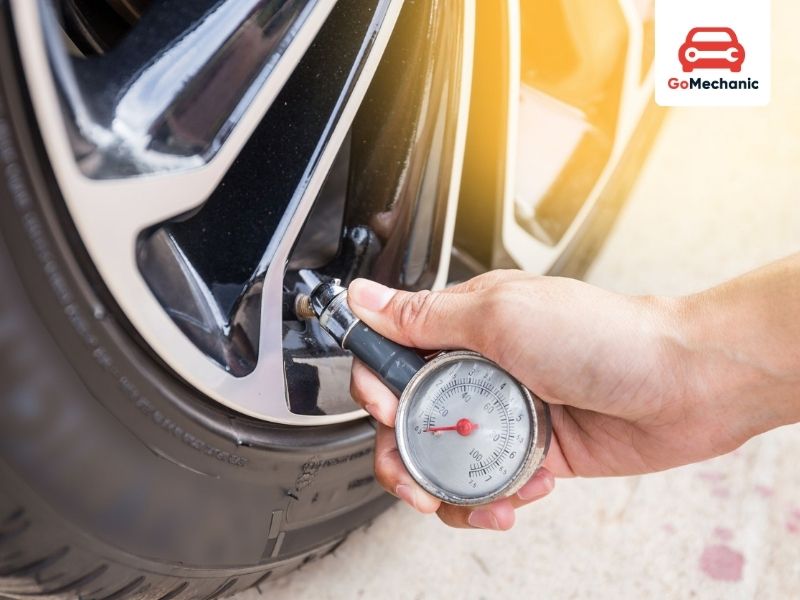
Moving on to the Tyre pressure, sounds small, but it changes how your Punch drives every single day. For the Tata Punch, the recommended tyre pressure is usually 32 PSI. PSI means how much air is inside the tyre. In simple words, how hard or soft the tyre feels. In BAR, that is around 2.2 BAR. You will see both numbers at petrol pumps.
Here’s a simple reference so you don’t guess:
| Condition | Front Tyre | Rear Tyre |
|---|---|---|
| Normal city driving | 32 PSI (2.2 BAR) | 32 PSI (2.2 BAR) |
| Full load (5 people + luggage) | 34 PSI (2.3 BAR) | 34-36 PSI (2.3-2.5 BAR) |
Now here’s where people mess up, they either run low pressure because they forgot to check, or too much because “more air is safer.” Both are wrong. Low pressure makes the car feel heavy and burns more fuel. High pressure, on the other hand, makes the ride hard and reduces grip.
Honestly, this is one habit worth fixing. Check tyre pressure once every two weeks. It takes two minutes and always check when tyres are cold.
What Happens if Your Tata Punch Tyre Pressure is Low?
Low tyre pressure looks like a small issue, but it affects your car slowly. You may not notice it on day one, but your Punch will start feeling different.
- Steering feels heavy – The car feels harder to move and turn.
- Mileage drops – The engine works harder, so fuel burns too quickly.
- Tyres wear faster – The tyre edges take more load and wear out early.
- Ride feels dull – The car does not roll smoothly.
- Braking gets weaker – The car may take longer to stop.
- Wet road grip reduces – This can become risky during rain.
Honestly, low tyre pressure is one of those mistakes that costs money quietly. Check your Tata Punch tyre pressure every two weeks. It takes two minutes, but it saves tyres, fuel, and stress.
How Long Do Tata Punch Tyres Last in Indian Conditions?
This is the question everyone asks after a year or two of driving. “How long will these tyres last?” The honest answer is, it depends. But we can still estimate the range, so you’re not guessing. On average, Tata Punch tyres last around 35,000 to 45,000 km. Some people get more, some get less. It all depends on how and where you drive.
Here’s what affects tyre life the most:
| Road conditions | Bad roads and potholes wear tyres faster. |
| Driving style | Hard braking and fast acceleration reduce tyre life. |
| Tyre pressure | Wrong pressure wears tyres unevenly. |
| Load on the car | Carrying full weight often puts more stress on tyres |
| Wheel alignment | If alignment is off, tyres wear on one side. |
Honestly, most people don’t lose tyre life because of the tyre. They lose it because of habits like not checking the low pressure, alignment, and rough driving, all these add up over time. One small tip, rotate your tyres every 8,000 to 10,000 km. That just means swapping front and rear tyres. It helps them wear evenly and last longer.
Read to know about Punch – Tata Punch Maintenance and Service Cost in India
How to Check if Your Tata Punch Tyre Needs Replacement
You don’t always get a warning before a tyre goes bad, it suddenly fails one day. It wears out slowly, and most people miss the signs until it is too late. So you need to know what to look for, and honestly, it is easier than you think.
| Sign | What it Means |
| Tread looks shallow | The tread is the pattern that grips the road. If it looks flat, grip is going down. Try a coin test. If you can see most of the coin, the tyre is getting old. |
| Cracks on the side | Small cracks mean the rubber is ageing. This can happen even if you don’t drive much. |
| Bulges or bumps | A bump means internal damage, usually from potholes. It is not safe to drive on. |
| Vibration while driving | If the car shakes at certain speeds, tyres could be the issue. It often means something is off. |
| Tyre feels hard and smooth | Old tyres lose softness. They feel hard and don’t grip well, especially in rain. |
Why is My Tata Punch Tyre Wearing Unevenly?
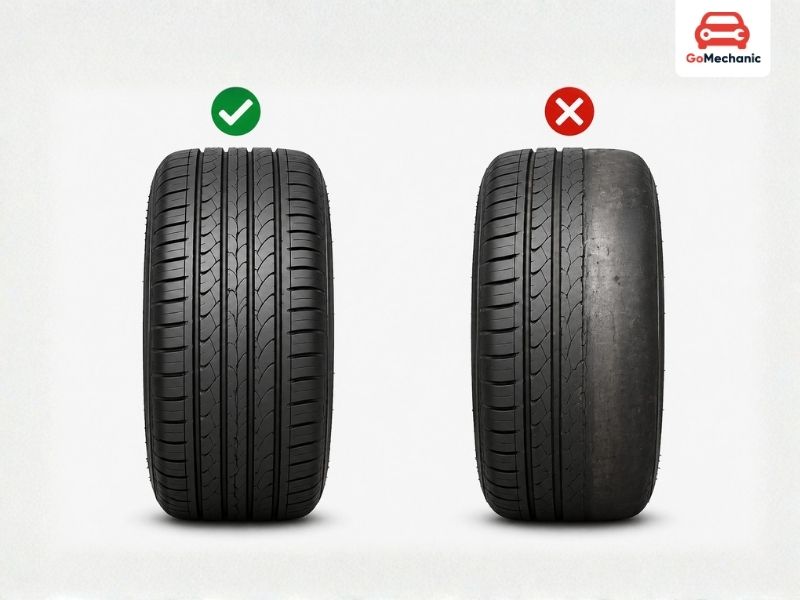
Tyres are supposed to wear evenly. But many Punch owners notice something odd. One side looks more worn, or patches show up in random spots. That’s not normal, and it usually means something else is off.
Here are the common reasons this happens:
- Wrong tyre pressure
- Wheel alignment is off
- Wheel balancing issue
- Suspension problem
- Driving habits
Here’s the honest part. Most uneven wear starts small and gets worse because it is ignored. People notice it, but keep driving anyway. By the time they act, the tyre is already damaged beyond fixing.
Can I Upgrade to Bigger Tyres on Tata Punch?
The short answer is yes, you can. But should you? That’s where things get tricky. Many owners feel the stock Tata Punch tyre size looks a bit small. And honestly, it’s a fair thought. Bigger tyres do make the car look stronger and more SUV-like. But this is not just about looks. Changing tyre size affects how the car drives.
Here’s what happens when you go bigger:
- Better road presence – The car looks fuller and bigger.
- Slightly better ground clearance – Bigger tyres raise the car a bit. Helpful on bad roads.
- Mileage can drop – Bigger tyres are heavier. The engine works harder.
- Steering may feel heavier – You might notice it more in city traffic.
- Speedometer can become inaccurate – The reading may not match the actual speed.
Now here’s the important part. If you do upgrade, keep it small. Don’t jump too far from the original Tata Punch tyre size. A slight increase is okay, anything too big starts creating problems.
Honestly, unless you really care about the look, sticking to the stock size is the safer choice. It keeps everything balanced the way Tata designed it.
Tubeless vs Tube Tyres on Tata Punch: Which is Better?
Most modern cars, including the Punch, come with tubeless tyres. But still, people ask this question. Tube or tubeless? And it’s a fair question, because not everyone knows the difference.
Tubeless tyres don’t have an inner tube, the air is held directly inside the tyre. Tube tyres have a separate rubber tube inside that holds the air. Simple difference, but it changes how the tyre behaves.
Here’s a quick comparison:
| Type | What it Means | Real Life Use |
| Tubeless Tyre | No inner tube | Slower air loss, safer during puncture |
| Tube Tyre | Has inner tube inside | Air leaks fast if punctured |
Tubeless tyres are clearly better for daily driving. If you get a puncture, air leaks slowly. You usually get enough time to stop safely or drive to a repair shop. With tube tyres, air can escape very fast. That sudden loss can be risky, especially at speed.
Another small thing. Tubeless tyres are easier to repair. Most punctures can be fixed quickly without removing the tyre completely.
Honestly, there is no real reason to switch away from tubeless on a Tata Punch. The stock Tata Punch tyre size already comes in tubeless form. It’s safer, more practical, and just easier to live with.
Best Tyre Brands for Tata Punch Under Budget
Walk into any tyre shop and you’ll hear a lot of brand names. Some you’ve heard before, some you haven’t and suddenly you’re expected to decide in five minutes. That’s where most people just pick whatever the shop guy suggests. Not the best idea.
For the Tata Punch tyre size, you don’t need something expensive. But you also don’t want the cheapest option. You need a good balance, something that lasts, grips well, and doesn’t cost too much.
Here are some solid budget-friendly options:
| Brand | Tata Punch tyre price (₹ per tyre) | What You Get |
| MRF | ₹4,000 – ₹5,500 | Strong build, good for rough roads |
| Apollo | ₹3,800 – ₹5,200 | Good balance, easy availability |
| CEAT | ₹3,800 – ₹5,000 | Comfortable, decent life |
| JK Tyre | ₹3,700 – ₹4,800 | Affordable, works fine for city use |
| Goodyear | ₹4,500 – ₹6,000 | Slightly premium feel, smoother ride |
Know more about Tyres – When to Replace Car Tyres: A Car Tyre Guide for Every Driver
Conclusion
Here’s the thing, most owners don’t think about tyres until something goes wrong. A puncture, a worn-out tread, or that moment when the car just doesn’t feel right anymore. But tyres are not something you fix later. They affect how your car drives every single day.
If you remember just three things, you’re sorted. Stick to the correct Tata Punch tyre size. Keep the tyre pressure right. And don’t ignore early signs like wear or cracks. That alone saves you money and keeps your drive safe.
Honestly, tyres are one of the easiest parts of car ownership to get right. But also one of the easiest to ignore. And once ignored, they start costing you slowly.
If you’re unsure about your tyres right now, just get them checked by GoMechanic. We can help with tyre inspection, pressure check, and replacement if needed. It takes very little time, but it makes a big difference in how your Punch feels on the road.
FAQ’s
What is the price of Tata Punch tyres?
Tata Punch tyre price usually starts around ₹3,800 to ₹4,000 per tyre and can go up to ₹6,000 depending on the brand. For a full set, keep around ₹16,000 to ₹24,000 ready. Don’t walk in blind. That’s where shops start playing the “sir better tyre” game.
What is 185/70 R14 tyre?
185 is the tyre width in mm. 70 means the side height is 70% of the width. R means radial tyre, and 14 means it fits a 14-inch wheel. Sounds like maths, but it’s just the tyre’s size code.
Can tyres last 60,000 km?
Yes, tyres can last 60,000 km, but don’t assume they always will. It depends on roads, driving style, pressure, alignment, and age. In Indian conditions, 35,000 to 45,000 km is more realistic for most people. Stretching too much is where the risk starts.
What is the cost of one tyre?
For Tata Punch, one tyre usually costs around ₹3,800 to ₹6,000. Budget brands sit lower, while better-known brands cost more. The smart move is not buying the cheapest one. Cheap tyres save money once and annoy you for years.
Should I replace 7-year-old tyres?
Yes, replace 7 year old tyres even if they look okay. Rubber gets hard with age, and grip drops slowly. This matters more in rain and sudden braking. The tyre may look fine from outside, but inside, it’s already past its best days.
Can I drive 2 km with a flat tyre?
Honestly, don’t. Driving even 2 km on a flat tyre can damage the tyre, rim, and sidewall. If there’s no air, stop safely and use the spare or call help. That short drive can become a much bigger bill.
What is the 3 tyre rule?
The 3 tyre rule usually means you should not replace just three tyres and leave one old tyre on the car. Tyres should have similar grip and wear. If one tyre is much older or weaker, the car can feel uneven. Replace in pairs or all four when needed.